
Pity and Compassion

In one of our earlier conversations we discussed the importance of compassion for the development and expansion of consciousness. Yet human thought often confuses compassion with the idea of pity.
Pity is a destructor planted in the mind by predators; it destroys both the one who pities and the one who is pitied.
Compassion is the feeling of another’s pain as one’s own, and thus a desire to reduce that pain — to reduce the overall amount of suffering in the world. Compassion is the ability, under any circumstances, to act so as to cause as little harm as possible to those around one.
Pity, however, is an acknowledgment of another being’s weakness, inability, or flaws in comparison with oneself — an acknowledgment of their suffering from a certain distance.

Pity implies separateness, isolation; compassion, by contrast, implies wholeness.
Pity generates a stream of destructive energy, because in pitying someone one usually recognizes the defectiveness of the object of pity — their inability to pull themselves free from difficult situations; ultimately — pity assigns to another the status of a victim: “Poor thing, so unfortunate, how badly off you are…” and that image becomes invested in the feeling of pity. In other words, the one who pities someone pushes the object of pity further into darkness and misery, projecting onto them images of their flaws.
That is why it is often said that a Magus must be pitiless — this is meant to convey that the Magus must not will anyone to become a victim; he must, in fact, drive out of the cosmos the very image of relations in which consumption in which some beings consume others.
Pity trains one in weakness and inaction. By pitying themselves, a person often willingly shares their burden with others, shifts responsibility for their actions onto others, and demands understanding or support.
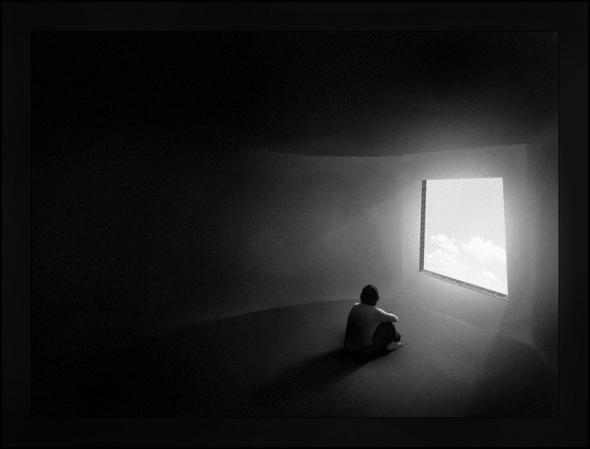
A person feels equally bad whether something truly aches or whether it is merely some whim of theirs that goes unmet. One becomes conditioned to, at the slightest upset, pity oneself excessively, without even realizing that the suffering is not as great as portrayed. Moreover, consolation is often more important to them than the solution to the problem that caused the distress. And instead of being strong and self-sufficient, a person leads a weak, dependent life — because throughout life, for the most part, they do little on their own.
Compassion, unlike pity, always develops from within. To experience it requires the ability to feel oneself as the same expression of the Great Spirit as others. This feeling allows one to look at others without flinching, yet without being sentimental, maintaining calm as if alone before a mirror.

Compassion is always active; it compels one to seek a way to lessen suffering — not merely to console or pretend that “all is well” when everything is bad, but precisely to seek a way out of the situation. The sense of everyone’s absolute equality, of one’s interconnectedness with the world, radically reshapes one’s perception and experience of existence, removing the sense of victimhood and the suffering that arises from it.
Pity increases suffering: the sufferer’s pain is compounded by pity itself. Compassion, by contrast, moves one away from suffering, and therefore it can coexist with joy. When one truly helps someone, one feels joy.
Thus, the Magus strives for compassion but avoids pity, because they seek strength and freedom, not weakness or dependence.

It turns out that if everyone were capable of compassion, the myth of Jesus of Nazareth would be realized? And the commandment “Love your neighbor as yourself” would be fulfilled?
Here is the translation:
“Discussion:
Saturday, October 2, 2010 at 5:42 PM
So, if everyone were able to feel compassion, would the myth of Jesus of Nazareth have been realized? And would the commandment ‘love your neighbor as yourself’ have come to fruition?
Like, damn, this is the main problem of our civilization—the inability of humans to instinctively empathize with the suffering of others. And this theme runs like a red thread throughout the Bible.”
Demian8888 You accuse civilization of the fact that one rational person is unable to empathize with another rational person. Therefore, both of them are not rational and can only instinctively feel pity for each other. If among the two there is one rational person, then the chances will increase. Try to be surrounded by rational people, and you will have to suffer less.
“Strive to be in the company of rational beings, and you will suffer less.”
We (those of us living today) were born in a transitional period for civilization and are experiencing an evolution ourselves—a transformation from the traditional species of “homo sapiens” into some new kind. This transformation occurs in different ways; moreover, not everyone chooses an evolutionary path for themselves. But those who do choose it experience the breakdown of all previous systems in the interest of restructuring, which is accompanied by much suffering due to misunderstanding and the inability of the mind to comprehend what is happening during this transitional period. There are many physical mishaps as well, since the flesh is also transforming, and the brain continues to send the body old programs that no longer work for the renewing person, leaving the organism unsure of its direction. Thus, striving to be among “rational beings” is not quite an appropriate way to overcome suffering for one who is evolving.
You, who live now, are experiencing the evolution of Homo sapiens into a new type of suffering human. There are also two types of those who do not choose the evolutionary path: the regretful human or the pitiable human. Yes, mostly this breaking associated with the restructuring of systems occurs at the level of instincts in the sensitive human. If a person evolves, then among rational humans they will suffer, and being among them will be burdensome for them. (if I understood the word “evolves” correctly)
“You who live now…” – facts, please, in the studio. Otherwise, it’s hard to notice. However, human life is probably too short to notice such global changes, don’t you think?
Here is the translation to English:
“If a person evolves, then among rational humans he will suffer, and it will be burdensome for him to be among them (if I correctly understood the word ‘evolves’). There is too much negativity. A developing person recognizes both his own needs and the needs of society. He will give society what it needs and take for himself what he needs. In the end, both the person and society will be happy :)”
“It will give society what it needs – do you have living examples of those under 50? (I assume they might be in hiding.) Maybe I misunderstood what society is…”
I often observe that pity for another person is accompanied first and foremost by pity for oneself. How do you comment on this?
Pity is insulting to a strong person. Indeed, stopping the feeling of pity cuts off the flow of Power. But the main thing is that the control over pity does not turn into indifference. This is an even more dangerous state.
“…in continuation of a possible shift in emphasis, it can be said that Ruthlessness stems from Perfection…”
In Vajrayana, we call such compassion – active empathy. The aspect embodying it is Chenrezig (Avalokiteshvara), “Loving Eyes.”
Hello, Master! Do we have the right to have compassion for those who tempt us? What do you think? On one hand, it is free will, on the other, it is the fruit of a dead tree. I often see such people, but they see me too and do not ask for help.
Hello. I don’t quite understand what you mean by “temptation.” But compassion, as a feeling of non-separateness, is a natural property of consciousness.
There are people, friends, probably everyone has them, nice and pleasant, but sometimes they do things that contradict my conscience and probably the average person’s conscience. And they look at me for a reaction. Their awareness increases at those moments. And I don’t know how to react.
Well, definitely not to go against conscience.