
Demons of War
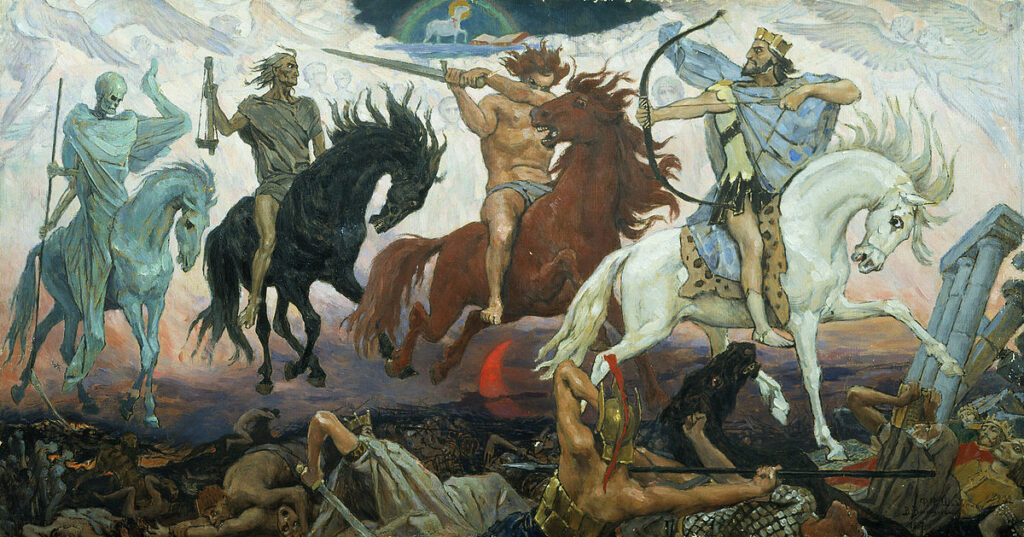
The four great calamities that can befall people — despotism, wars, famine and epidemics — are not portrayed as the “Riders of the Apocalypse” without reason, since any one of these phenomena immediately opens all the Gates of Hell. Each calamity does not merely bring suffering; it damages human nature itself, driving people to acts previously unthinkable for them, and plunging them into terrible moral confusion and crimes.
There are many interpretations and systems describing the symbolic aspects of each ‘rider’, among which the goetic approach also has therapeutic potential, relating the calamities to the supreme demons — Bael, Belial, Asmodeus and Beelzebub. It is clear that, since each of them opens the gates of the netherworld, any of these calamities is accompanied by an unprecedented influx of maluma into the world, a veritable invasion of predators and pests; yet, depending on the ‘Rider’, the leading roles in each case belong to certain demons especially active in that case.
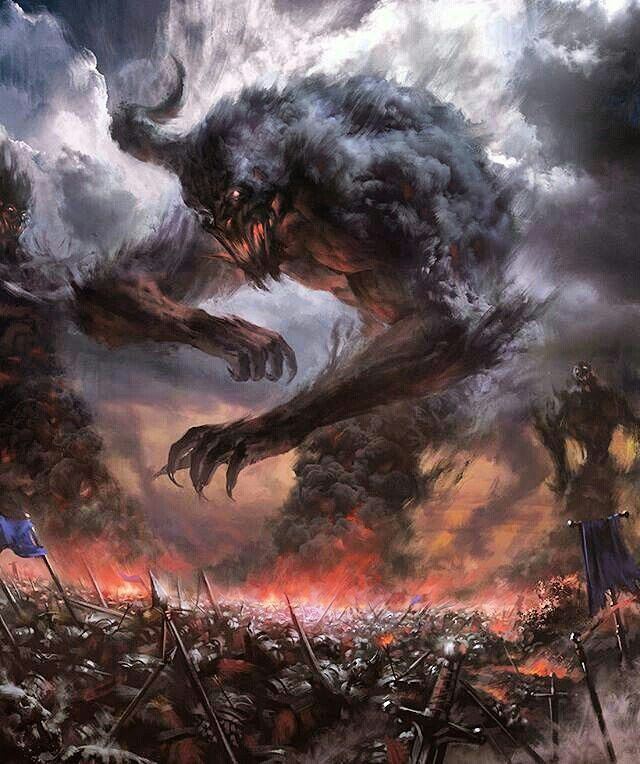
In the case of war, the leading currents of evil in Belial’s retinue are the demons of cruelty — Gaap, Glasya-Labolas and Flauros — the “propagandists” led by Naberius, and the false values instilled by Leraje.
Consider the structure of the “infernal foundation” of war in more detail.
At the root of any conflict lies a false sense of community, the opposition of “ours” and “theirs”, where “ours” is unconditionally considered good, noble and right, and “theirs” is bad, criminal and mistaken. This false unity is inspired by Belial, while his servant Andras sharpens the opposition to all that is “other”, instilling a sense of separateness and xenophobia. At the same time, Belial assumes the guise of the Sacred Executioner — Alastor — and instills the urge to “punish the unworthy.”
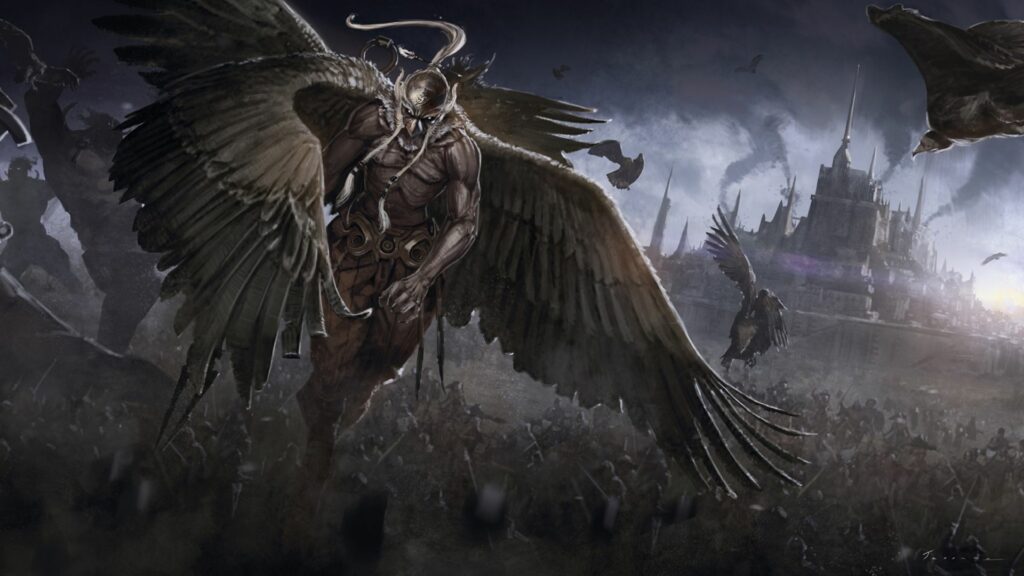
The executors of the “sentence” are Gaap, who instills in soldiers the desire to assert themselves by dominating the defeated, and in officers — through command; Glasya-Labolas and Leraje, who inspire the reawakened childhood complexes by inflicting pain; and Flauros, who stirs bestial cruelty at the sight of blood.
The propaganda machine is also actively used, and among the “singers of war” in the mass media there are outright deceivers and opportunists led by Adramelech, and fanatical orators who are under the sway of Naberius.
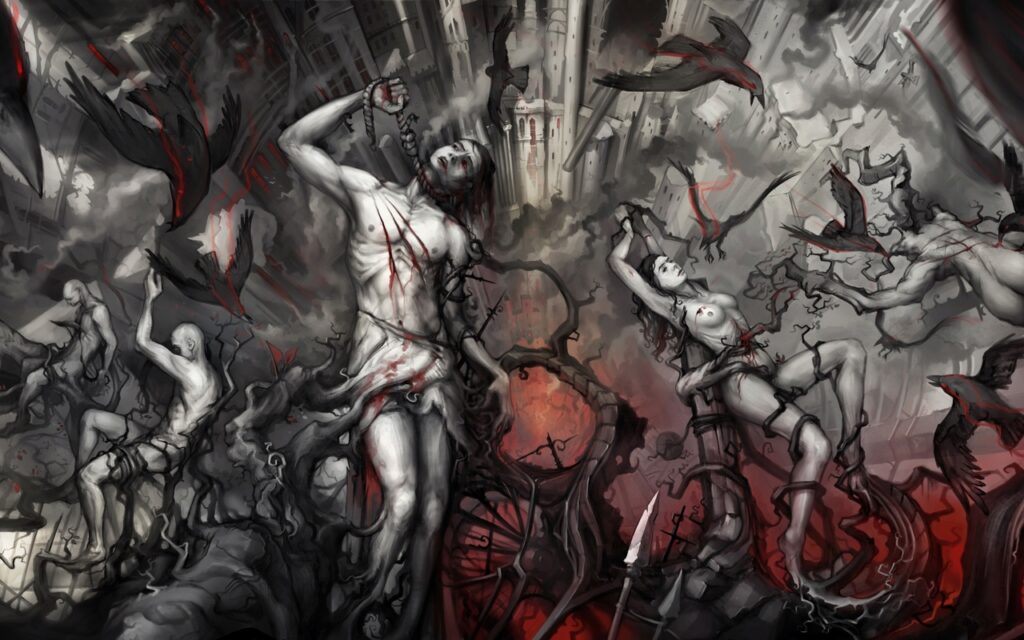
Then the “derivative” retinue join in — Balam, who sows ideas of superiority, and Paimon, who stokes pride, with their followers. The remaining demons descend on the combatants like a vast avalanche, followed by lesser instigators and hangers-on, causing a massive outflow of sevelya (the energy of suffering), gavavkha (the energy of pride) and kineakha (the energy of envy), which together form the primary food source of these predators.
Unfortunately, the number of souls lost in any war is significantly greater than the number of bodies killed. Despite the obvious material losses, the chief calamity of war lies in the degradation of the mind, in the deep embedding into it of destructive demonic patterns, often disguised as respectable images and socially approved feelings. If hatred has taken hold in the mind, if anger has turned into aggression and the survival instinct into cruelty, one can be sure that the mind has been infected by predators, and is no longer a warrior but a victim, a food source.
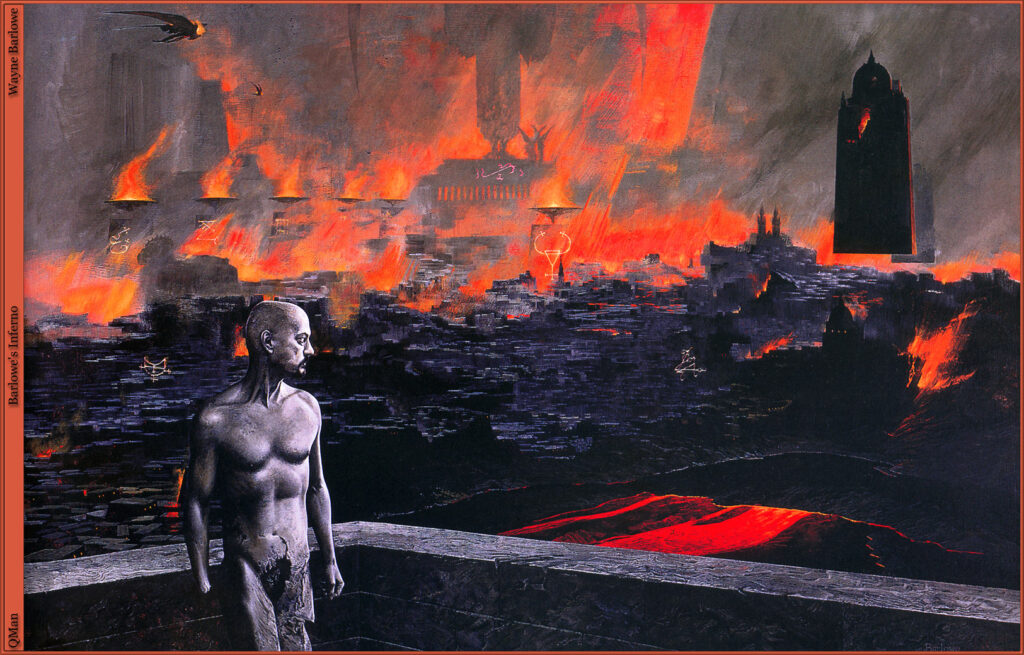
Regardless of the “external” outcome of the war, the true victors are always the demonic hordes, for whom the energy gained in the quarrels provides sustenance and the means for further expansion. Moreover, the afterlife becomes flooded with lost, bewildered, angry and suffering Elementers, bleeding energy in abundance, who likewise form the food source for the predators of the interspace.
It is clear that love and healthy individualism, as well as a sense of pleromic unity, form the foundation of resistance to Belial’s retinue. The primary task of anyone caught in the whirlpool of war is to keep their soul alive, and only then strive for the survival of the body. To survive physically while losing one’s soul is far worse than losing the physical body.
Another answer to the unspoken question. Tell me, do I understand correctly that the great harvest and Armageddon are one and the same? And is the three days of darkness part of this event?
How right you are… Wishing us all a swift Peace.