
Balam’s “Manipulators”
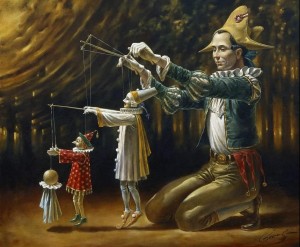
Any mind, as an active agent in worldly processes, tends to seek control over the situation in which it develops.
On the one hand, without control over forces and agents, the situation can lead to lamentable results; on the other, a mind limited by its bounds seeks control and can also undermine effective sequences.
Uncontrolled power turns the Magus into its prisoner, but power squeezed into a Procrustean bed begins to destroy its jailer.
The destructive force that turns control from a means of increasing effectiveness in battle into an instrument of oppression, including oneself, is widespread and is governed by several demonic forces, among which the leading position belongs to the “demon of cunning” — Balam.
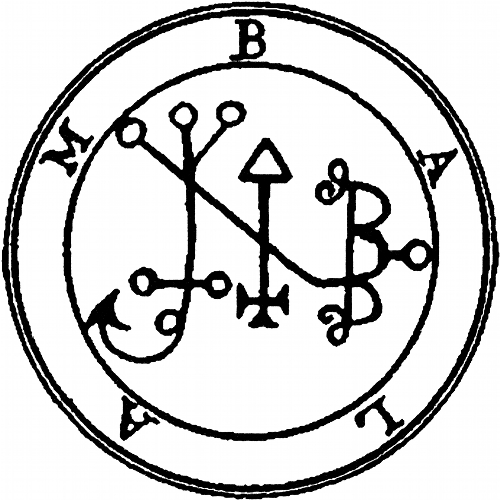
“Balam (Balam) or Balaam (Balaam) — the fifty-first spirit, terrible, great and powerful king. He appears with three heads: the first like a bull, the second like a man, the third like a ram. He has a serpent’s tail and flaming eyes. He rides an enraged bear and carries a hawk on his wrist. He speaks in a hoarse voice and gives accurate answers about events of the past, present and future. He makes people invisible and endows them with wit.”
De Plancy clarifies:
“He… teaches various craftinesses and tricks…”
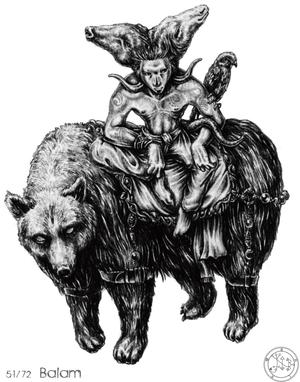
The demon’s three heads signify an aspect of his nature: the human head (the capacity for control) is wedged between the bull’s and the ram’s heads — those of powerful, authoritative but inflexible manifestations of the mind — and the demon’s activity is primarily directed at unconscious inclinations in the emotional sphere.
The bear, as his mount, once again points to the demon’s “forceful” method of operation, while the hawk he controls signifies the restraint of the faculty of reason.
Astrologically, Balam is a “nocturnal” demon of the solar sphere; his gates lie in the sign of Leo, and the nature of this “night sun,” this western sun, is the nature of “playing with the unconscious,” which in contemporary psychological terms is called “manipulation.”
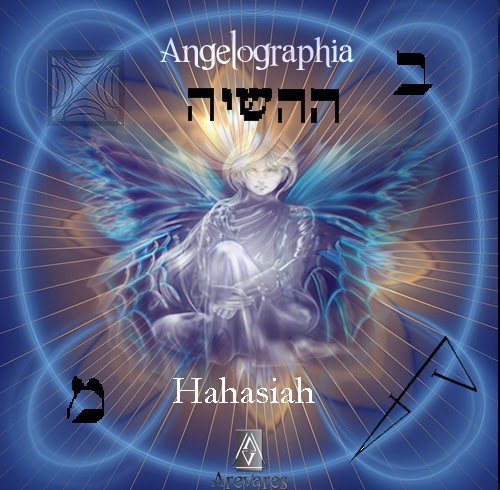
The corresponding Genius — Hahasiah — is the genius of “secret knowledge,” that is, the capacity to see the hidden drivers of processes. Accordingly, the demonic aspect of this capacity — Balam — is the impulse not merely to “see” but to use these motives for selfish ends.
It is clear that Balam can affect only fairly developed minds, since his manifestations require solid abilities in discerning and analyzing the structure of the mind, identifying its strengths and weaknesses, and then exploiting others’ weaknesses for his own purposes.
A mind follows Balam when it yields to the temptation to “play on others’ weaknesses” to its own advantage and thus — instead of promoting the development of those around it — becomes an obstacle to them, indulging their weaknesses and shortcomings, and thereby becomes a demonic actor.

The methods and techniques of manipulation are well known and widely described, and they all reduce precisely to “playing on faults,” and therefore are destructive by their very nature.
At the same time, every moderately successful manipulator considers himself extraordinarily wise and “advanced,” and regards his methods of achieving his aims as entirely justified and legitimate. After all, who is to blame if people seek deception?
The harm a manipulator inflicts on his victims is obvious: it involves both the use of their resources and the obstruction of their development. Yet the manipulator does no less damage to his own mind, turning it into a parasite and consumer, dependent on others’ resources and reliant on others’ weaknesses. The demonization of the mind in this process can be considerable, and Balam’s “kingly” dignity underscores his leading position among the destroyers of the psychocosm.

Opposing Balam consists not only in the ability to allow “others to be others,” not only in respecting others’ freedom as paramount, but also, of course, in seeing these destructors and helping overcome them. Such help, however, must be nonviolent; it must not consist of replacing one bondage with another, but in creating conditions that let the mind overcome shortcomings and attain a higher degree of inner harmony. For the Magus, this mode of action — active resistance — is a key characteristic of his Way. The Magus does not play on others’ faults, but neither “smiles condescendingly” at them; he attempts actively, yet nonviolently, to promote the development of his mind and the general harmony around him. Then the qualities Hahasiah grants can manifest fully, and thus his self-realization will be successful and effective.
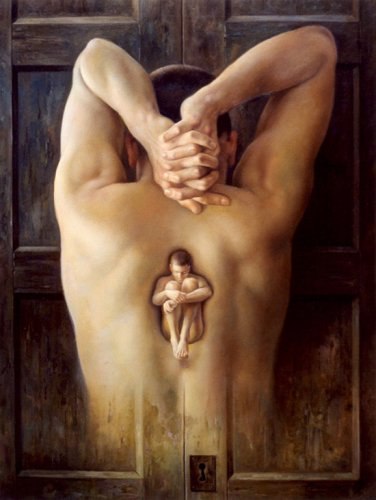
There is a saying: ‘We cannot NOT influence other people’. And the second: ‘99% of the time a person acts on the basis of habits, instincts, and learned reflexes’. In my opinion, the second one is enough. What choice remains for an intelligent person? They want to achieve something from another person. They see a way to do it easier, they see a more complicated way. Ideally, in a vacuum, to not manipulate, a magician must evoke a flash of awareness in everyone, up to the shop assistant, so that upon interacting with them consciousness is clear and not subjected to the low influence of the material mind. Agree, this is utopia. And in any other case – we influence people one way or another. ‘Please, give, if it would not be difficult for you’, instead of ‘Give’ – is already manipulation. Although I wouldn’t mind being fully aware at my own wish at least for myself. Not that I would want to put every random passerby into this state.
‘Agree, this is utopia.’ This is reality. And it works perfectly with shop assistants. Does the shop assistant enjoy sorting out coins and pressing buttons for everyone who treats her as a lifeless counting machine, ready to take any reproach? There is a whole stream of these customers… Who here has more freedom to take the first step? Try it, and you will understand. “‘Please, if it isn’t too much trouble,’ instead of ‘Give’ – is already manipulation.” … “give, if you want” – is no longer.
‘To evoke a flash of awareness’ instead of ‘to treat politely and humanely’. Or do you think that when you politely, with a smile and friendliness address a hypothetical shop assistant, divine light descends on them immediately, they realize their place in the world, your place, the nuances of your interaction, and with full awareness of all karmic consequences and ties hand you a receipt? If so, then you are a guru and I ask to be your student. I’ve tried and didn’t understand.
..lord.. why does she need karmic sequences?.. she is a shop assistant, I am a customer, this is a store, this is our world for a couple of moments… I smile, she smiles… What else is needed?.. A smile?… Where does your smile come from?.. How many of you are there in your smile?.. Yes, yes.. ‘To evoke a flash of awareness’. ..Try some more. 🙂
Theo, it seems to me that ‘Please, give’, ‘Give’ and ‘Give, if you want’ – all of these can be manipulation depending on the context. Nesas, why evoke a flash of awareness in the shop assistant? For events like payment for a purchase, usually, it is enough to evoke polite and benevolent relation towards oneself. A person working as a cog in the machine needs to be reminded that first of all, they are a human being. I don’t understand how humane treatment towards another becomes manipulation. Agree on the terms, comrades. And those who casually evoke awareness everywhere likely don’t go shopping:)
Does this border on the topic of power?
Let me clarify my thought. We have: you are an intelligent person. You understand others, see their weaknesses and peculiarities. Your task: to get something from a person. Be it a certificate from a bureaucrat, sex, a position in a company, etc. The goal is not being discussed now. So, let’s say, you see that the person loves respectful treatment, politeness. You would act accordingly, right? But what if the person is an absolute scumbag and you know this? (let’s not get into the ‘you wouldn’t deal with him’ – we live in the world). Or the other way around: you know that a person reacts negatively to politeness and only respects toughness and even rudeness? What would you do? Is this manipulation already or not? And if you know that the person really loves pineapples and will be very happy if you gift him one and will sign for it? A bribe… And what if you thought it through in advance and just sometimes dropped by to chat and bought pineapples just so they relate well to you? Calculation? And if you did it without ulterior motives, that would be fine and human, wouldn’t it? Turning up the heat: your best friend seriously abuses alcohol. Just talking doesn’t work, but you know how to play on his fear of his mother to get him to quit. Your boss constantly screams at the employee who cannot reply, but you might press a letter to some committee or his superior. And so on and so forth. As I stated in my above post: people CANNOT NOT influence each other in PRINCIPLE. Where is the line between influence and manipulation? In everyday terms, it is drawn based on ‘to the detriment of others for selfish gain.’ But, agree, that is childish. And not to the detriment, but just for selfish gain, while being neutral to others or benefiting them? And not for selfish gain, but for entertainment? And for the benefit of another? Or for the benefit of another, but also for your own? Where to draw the boundary between understanding people and choosing the optimal strategy for interaction and manipulation. It’s very easy to describe this abstractly, in a vacuum. I allow myself to propose the only criterion that follows from En’s article (let him correct me if I’m wrong): the measure is the amount of energy and awareness of the being. That is, if someone leaves after interacting with you at plus or zero – you are simply intelligent. If at a minus – a manipulator and a scoundrel. And like any simple and grand answer, it is almost inapplicable in real life. Everything again boils down to personal feelings and understandings. That is, in general, you can leave this criterion in the form of ‘do you consider this ethical, do your beliefs allow you to do this.’ And depending on the level of development, everyone will answer for themselves. I have slightly strayed into verbosity. Let’s say this is just some reflections on the topic, not criticism or dispute. After all, my initial comment was not of such size 🙂 PS My example about the shop assistant was aimed at saying that the full absence of manipulation and influence can only be considered an action by a person that they performed 100% AWARELY in the most enlightened sense of the word.
To obtain something needed, you need to give something needed. Look at the Gebo rune. There are no universal answers for how to act in this or that situation, of course. There is no border between manipulation and influence, and it cannot be, because ‘to influence’ is related to the word ‘to pour in’. The manipulator pours in their strength in any case. But there is a boundary between manipulation and possession. ‘To possess’ means ‘to handle.’ A demon manipulates. A genius arranges.
Is it correct to consider the status of a demon (king, count, etc.) as the minimal requirements for the field of its manifestation? For example, a king can manifest only in a kingdom, a duke in a duchy, etc.?
What are the ‘self-serving goals’ and ‘interests’ of Balama? The ability to ‘allow others to be different’ does it not mean that ‘people want to be deceived’ and can leave it to their (the people) own discretion?!
Good morning… Inspired… In this Myth, as far as I understand, only the Flow of Power is considered reality. I like this Myth; I can even say it resonates with me. Flow, dynamics, life, movement… And in this Myth, there’s a description of angels and demons as operational spirits, ascending and descending flows. Regarding names, they are still important for contactees. There are thoughts, but speculation. That is, in this Myth – this is the description of Forces. “The entire World is Force.” (from another Myth) So that is more accessible to my understanding. To me… And if Monad is an individual, unique substance, if I understand correctly. That is, the Law. I recently heard one… It sounds harsh but it is Law. Logoi, hierarchies, various unions. Different Laws. I also like something else, from another Myth: The World is Brahman, consisting of Atmans. I am an Atman, both a cell and a monad.. (Like in an organism: specific cells are united by a common law of existence.) And there are common Laws for all. If the cell, the cells do not work for the organism, they perish or turn into cancer, and the organism dies… Pride… Rather, in my understanding, a violation of one of the main Laws. One of the slices, for example. If a racist is drowning and only a person of another race can save them, and they are alone. If they refuse, they will perish. Or violate one of the principles (which for them are supposedly laws). It is a voluntary matter. For me, pride is something related to destructiveness. Destructive towards oneself or others. Demonic Forces are destructive. It is important for me not to be destructive. And at the same time to be protected from others’ destructiveness. Another slice: “And lead us not into temptation, but deliver us from evil.” (My perception, I do not impose it). And what I notice, is what is said about love. Only saints can do such a thing. Truly saints. But the aspiration is also important; it is the process itself. For me, at this moment in time, this is truth. We will see further. I have always greatly appreciated the Author’s statements about development, supporting such people. Not everyone has Path Maps, sources, knowledge; not everyone is lucky. But many don’t “get lucky”. My personal experience showed me just how weak a person can be and how they can become a toy of destructive Forces. But forewarned is forearmed (not about people). For some, a myth, for others – a Myth. That’s how disparate it is… I understand and it feels good.
What if we perceive people as tools? Tools of the Universe, which it uses to establish balance, to work out karmic situations… One can whine and complain about a person who has wronged you. Or one can understand that he was just a tool fulfilling his task. On the one hand, the situation loses the coloring of “bad – good”, leaving only the action, its causes, and consequences, but on the other hand… Tools are used… For example, my inner self can use other people to shout out to myself. Sometimes what I say to people is actually what I say to myself, and this concerns only me because I have a closed system. That is, I use people to talk to myself, to see myself without seeing others. Will this be manipulation? Manipulation is when tools are used improperly… forcing a shop assistant to do something that doesn’t relate to her duties and responsibilities.
I had a dream. I flew like a bird, and a bear tried to catch me. If your bird relates to the element of the mind, and the bear to forceful methods, what could this mean in the context of my dream?