
Semiyaza: the Sky Tearing toward the Earth
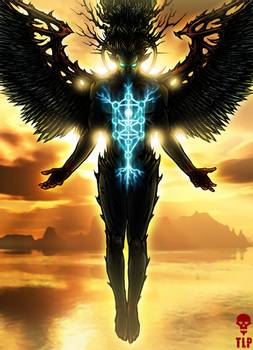
An acute sense of imperfection, experienced by the limited, created world, is expressed as two forces:
- the evolutionary drive, the desire to overcome that imperfection, and
- a sense of guilt, a painful focus on that imperfection.
The first desire, of course, is the constructive response and is the engine of evolution; the second is a destructive force, leading to the needless squandering of resources.
As we have often said, any force, any “spirit of the stream” is objectified in metaphysical space as a being or essence that has both macro- and psychocosmic manifestations.
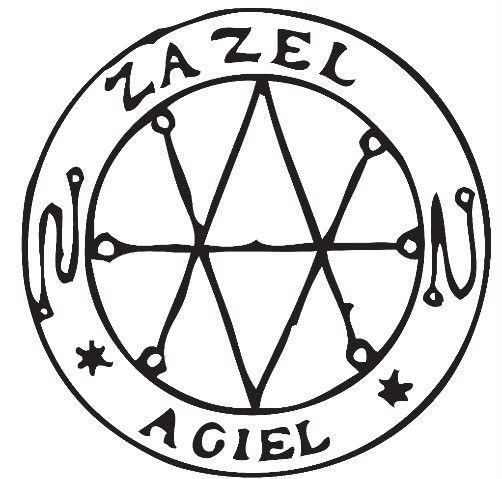
Thus, the Myth we are examining describes the matrix of guilt in the figure of Azazel — one of the leaders of the “fallen” angels.
At the same time, the “cry of imperfection,” the painful awareness of the limitations of the “lower” world, elicits in the “upper” world a counter impulse that also has constructive and destructive sides. The first side is expressed in the image of the “descent of God,” the embodiment of the Logos and the birth within limited beings of the “aspiration to Heaven.” The second side is the spirit’s desire to master matter regardless of the medium’s readiness to accept mind.
And just as the “aspiration to seize Heaven by storm” produces the Lord of Pride — Lucifer — Heaven’s urge to “take the earth by force,” effectively depicted as its rape, is embodied in the figure of the Leader of the Grigori — Semiyaza.
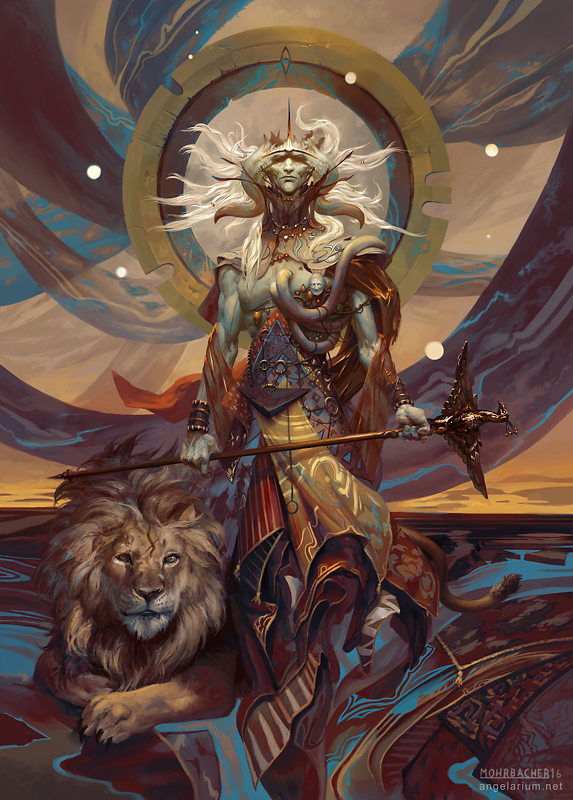
The name Semiyaza (Heb. שמהזאי; Samaazai or Tamhazai; Samhazay; Shamahzay; Semiaz; Semiaza; also Heb. עזה; Aza, Azza) means “He Who Has Seen the Name” and refers to one of the leaders of the rank of Seraphim, more precisely — the so‑called “Angels of Justice,” who became the leader of the “fall of the angels” and the emergence of the Watchers. By “the Name” one obviously means Shem‑ha‑Mephorash, which brings the image of Semiyaza close to the “Angel of Mysteries” — Raziel.
The Books of Enoch repeatedly emphasize the sexual element of this “fall,” accusing Semiyaza (and the other Watchers) of lusting after the “daughters of men.”
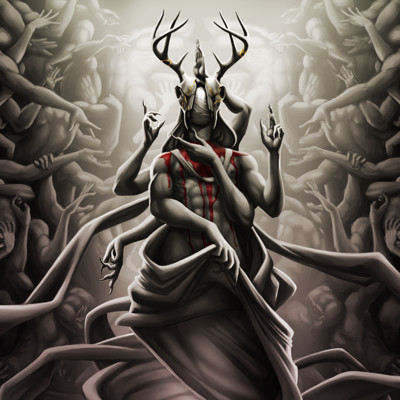
This tale can be viewed from a macrocosmic perspective as the process of condensation of angelic vortices into the “dense” world, and from a psychocosmic perspective as the striving of higher mental matrices to manifest themselves as quickly as possible in the world’s actual layers.
According to one legend, Semiyaza (Shamhazay) was enchanted by an earthly woman (bearing the decidedly symbolic name Ishtar); he freed himself from her spells by revealing to her the Secret Name, by means of which that seductress ascended to Heaven. The meaning of the legend is clear: enchanted by the “charms” of the material plane, the spirit falls into its captivity, and matter, having lured the spirit, acquires the possibility of an “illicit” ascent.
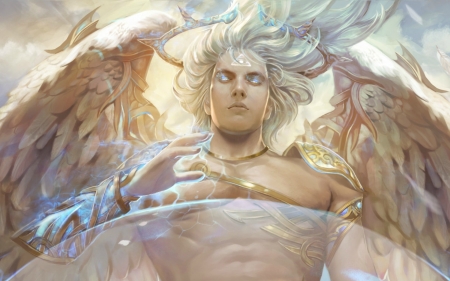
It is thought that the primary “guilt” of Semiyaza and the other Watchers was not sexual relations with human women, but teaching people — that is, the unlawful acceleration of their evolution (for which the Great Flood was meant to correct the consequences).
According to the Book of Giants, the sons of Semiyaza fought Leviathan (the demon of chaos), though they did not entirely defeat him. They are not portrayed as heroes; rather, they boast of their victory, which also describes the confrontation between the “Knower of the Name” and the tendencies of matter.
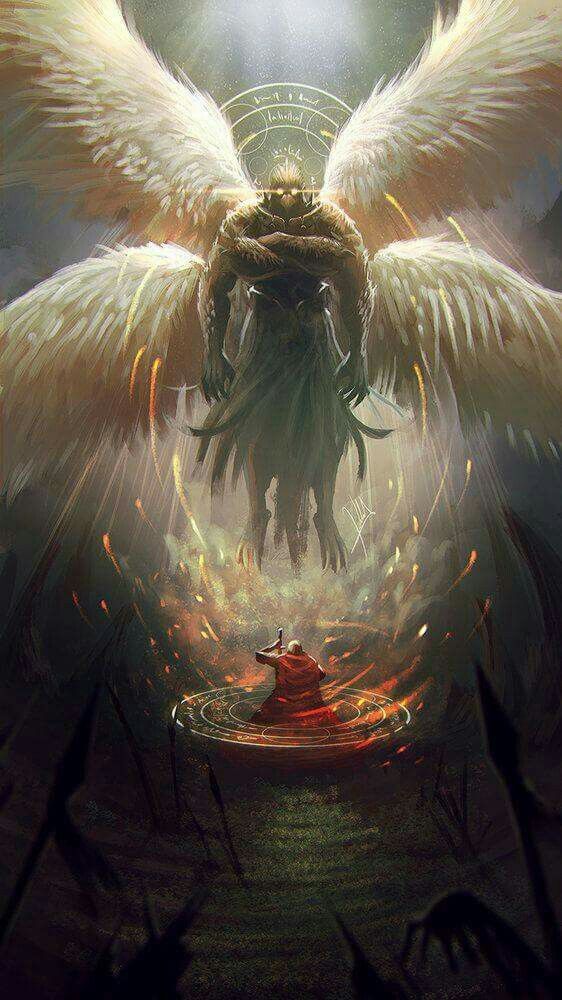
Finally, in Talmudic tales it is precisely Semiyaza (together with Azazel) who revealed heavenly secrets to King Solomon, knowledge that raised him above earthly sages and also stoked his pride. According to the Book of Enoch, Semiyaza taught people all the incantations — that is, the Magic of the Word.
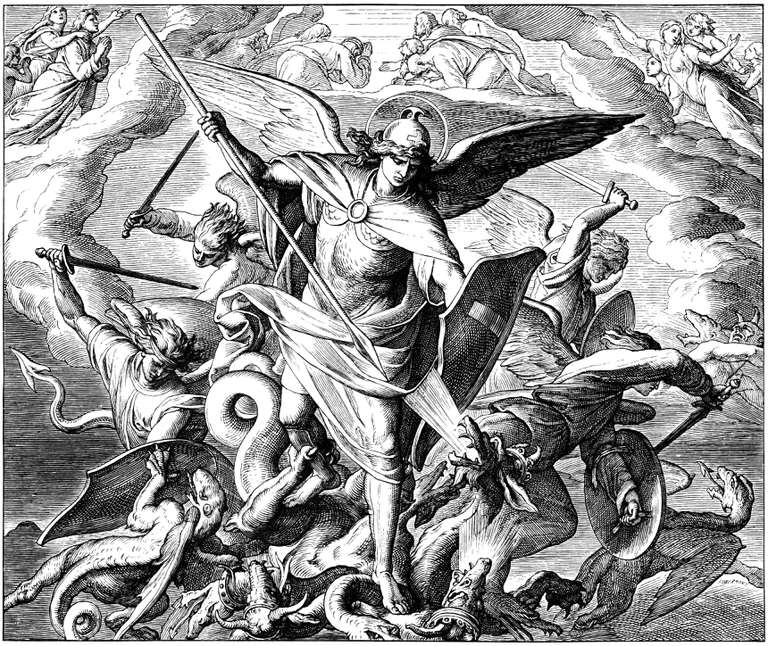
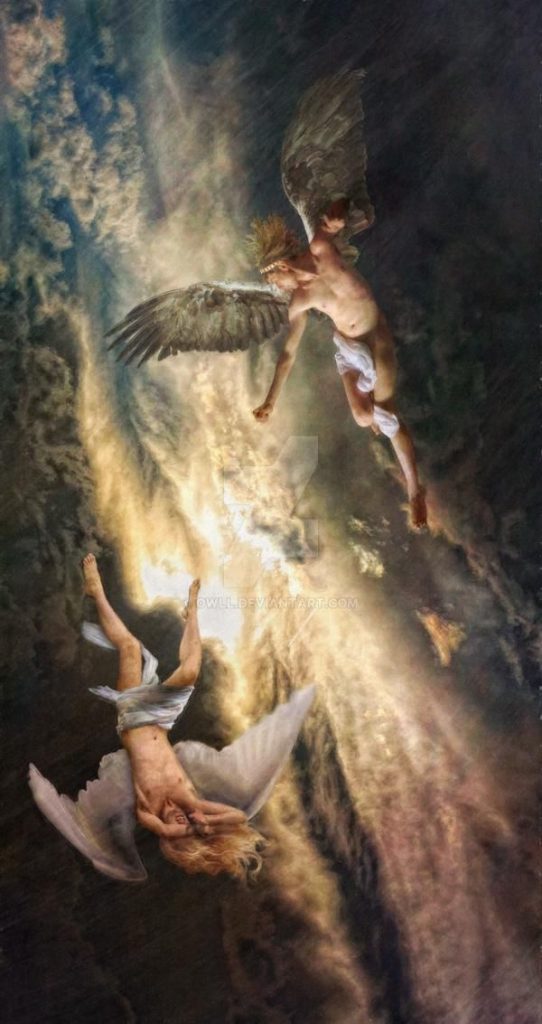
Like all “opponents of the Heavenly plan,” Semiyaza was defeated by archangel Michael, and was suspended between Heaven and Earth along with Azazel (this image is compared to the constellation Orion), and at the end of the world will be cast into the fiery channel Dinur.
Overall, Semiyaza is the expression of the world’s matrix of the “rebellion of the Heavens” taking place not within “themselves” (as in the case of Lucifer), but in relation to the earth. The striving of the higher layers of the macro‑ or psychocosmos to “master” the lower levels, to subjugate them, to take them by force, is a widespread destructive force. This is precisely how superheroes become supervillains when the sense of their superiority and the “weakness” of the lower levels serve not as an incentive to foster the development of those lower layers, but as a rationale for their “forcible enlightenment,” forced benevolence.
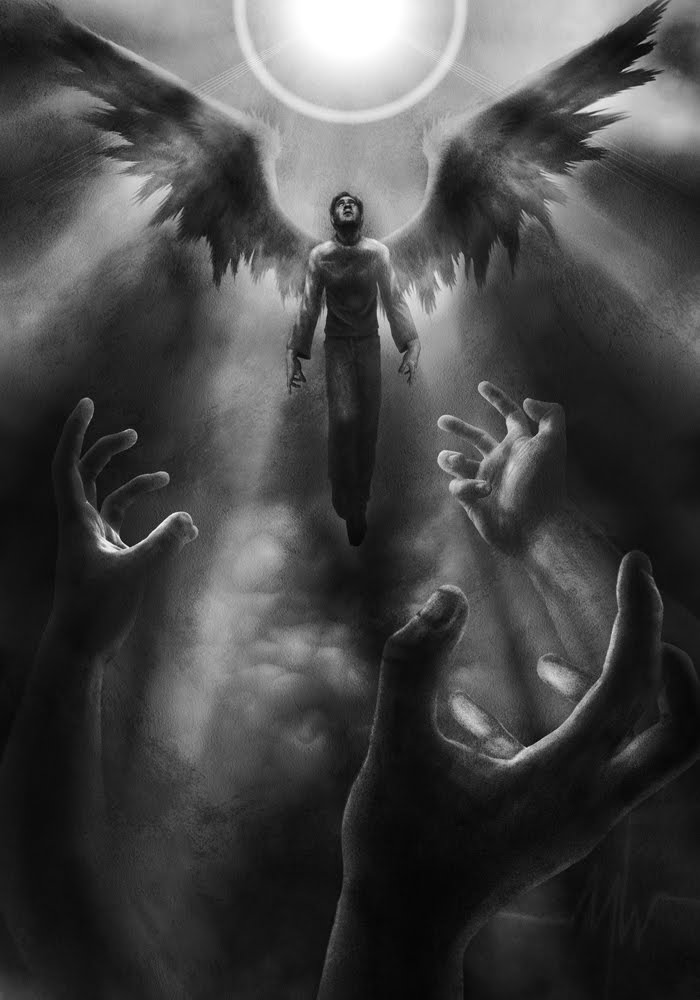
In individual forms this destructive tendency often manifests in many people who surpass others (or believe they surpass others) by some criteria and decide that this superiority gives them the right to “lead” the weaker against their will.
Resistance to the “rebellious superego” lies in the awareness of the inevitability of action toward self-development, in understanding that no one will save us, enlighten us, or walk our path for us. The desire to “storm the Earth” is no different from the wish to “seize the Heavens,” and in the same way it disrupts cosmic harmony. Acceleration of evolution can occur only by increasing its intensity, not by uniting forces that are unprepared for contact.
Leave a Reply