
Fiery Serpents
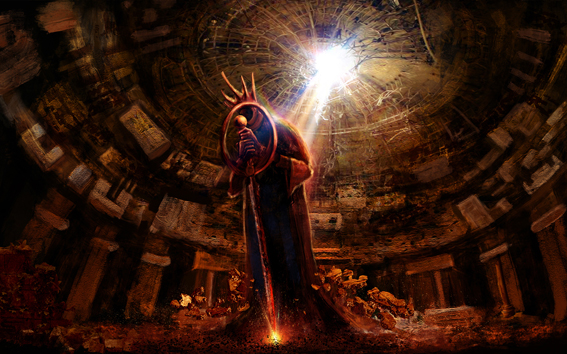
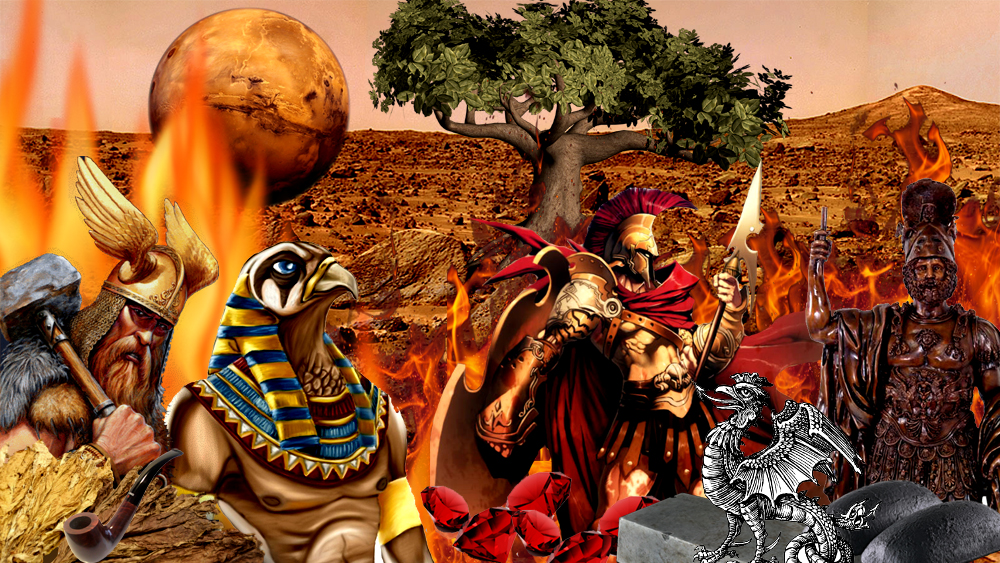
Sefira Geburah (גבורה), the sphere of Divine wrath, stands out on the Tree not only for its destructive activity, but also for the greatest “freedom” of the Light’s manifestation within it, and for its maximal “mobility.” As we have already mentioned, this freedom is connected to the fullest expression of active will — no longer so tightly bound to Divine Duty and not yet so constrained by the material conditions characteristic of this sphere. We have discussed that this very “freedom,” on the one hand, binds the Tree of Life and the Worlds of retribution (through the Black Gates Shaarimot), and on the other hand, binds the hierarchies of the “ministering spirits” and the “Free” beings.
It is therefore unsurprising that the forces expressing the influence of Divine wrath are most ambivalent in their manifestations: this is both the “dual” nature of the archangel Samael and the “schism” among the angels of Geburah — the Seraphim — which led to the emergence of the Grigori.
Let us pause on this latter duality.
The name “Seraphim” (Heb. שָׂרָף, śārāf; plural — שְׂרָפִים, śərāfîm) derives from the verb “soref” (שׂוֹרֵף), “to burn.” In addition, the word “שְׂרַף־” also means “poisonous serpent.” The same word (שְׂרָף) is used for pine resin or pitch — meaning a “combustible substance” permeating wood.
The biblical reference to the Seraphim by the prophet Isaiah is well known: “Above Him stood the Seraphim; each of them had six wings: with two he covered his face, and with two he covered his feet, and with two he flew” (Isaiah 6:2–3). This six-winged, blazing image has become fixed in iconography and allows the Seraphim to be distinguished from the blue, four-winged Cherubim.
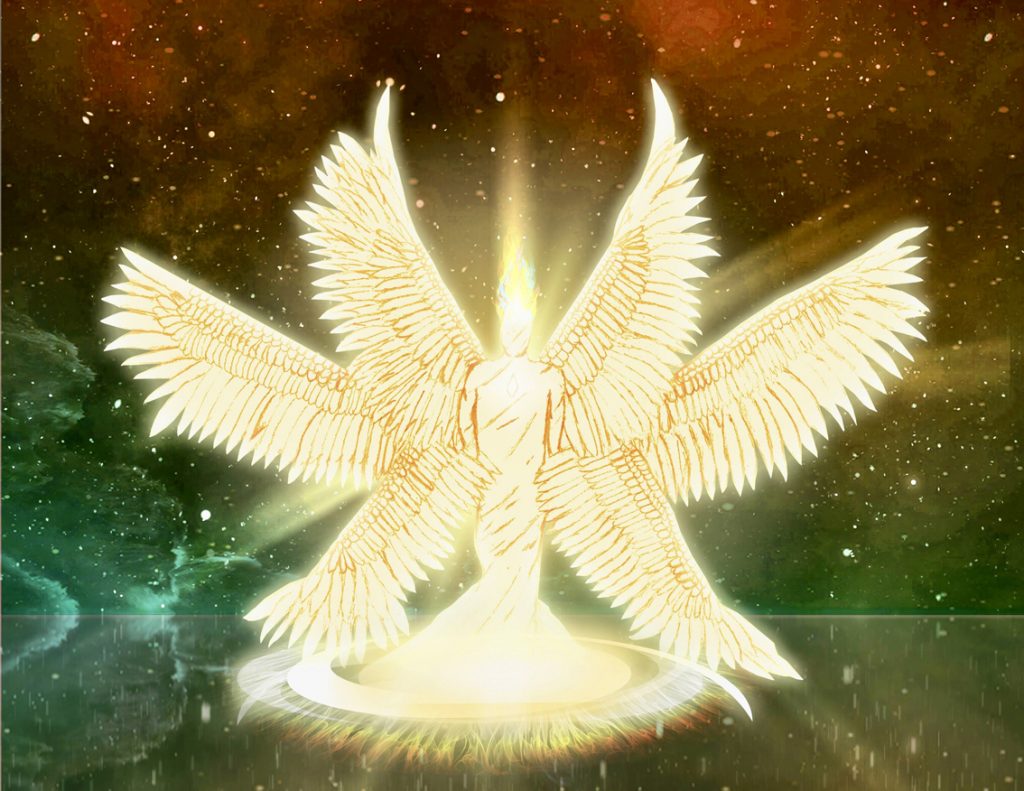
“Zohar” assigns the Seraphim to the highest class of angels (apparently relating them to the sephira Keter), and names Yehoel (יהואל) as their leader — an angel whose name is formed by the determinative “אל” (this suffix denotes God’s presence in being) from the three-letter combination Yod-He-Bay (denoting the self-creative activity of the Absolute). Such an association is largely based on the fact that the numerical value of the word “Seraphim” (630) equals the numerical value of the designation of the divine Force — “Ruach Ha-Kodesh” (קרישא רוחא), “Holy Spirit,” and on the idea that Geburah of Briah gives rise to Keter of Assiah.
In any case, the distinguishing feature of the Seraphim is their “primordially fiery” nature (all angels are born from the “stream of Fire,” Dinur, but the Seraphim have the closest affinity with the substance fohat). According to the “Book of Enoch,” the light emanating from these spirits is so bright that no one, not even other angels, can discern their faces.
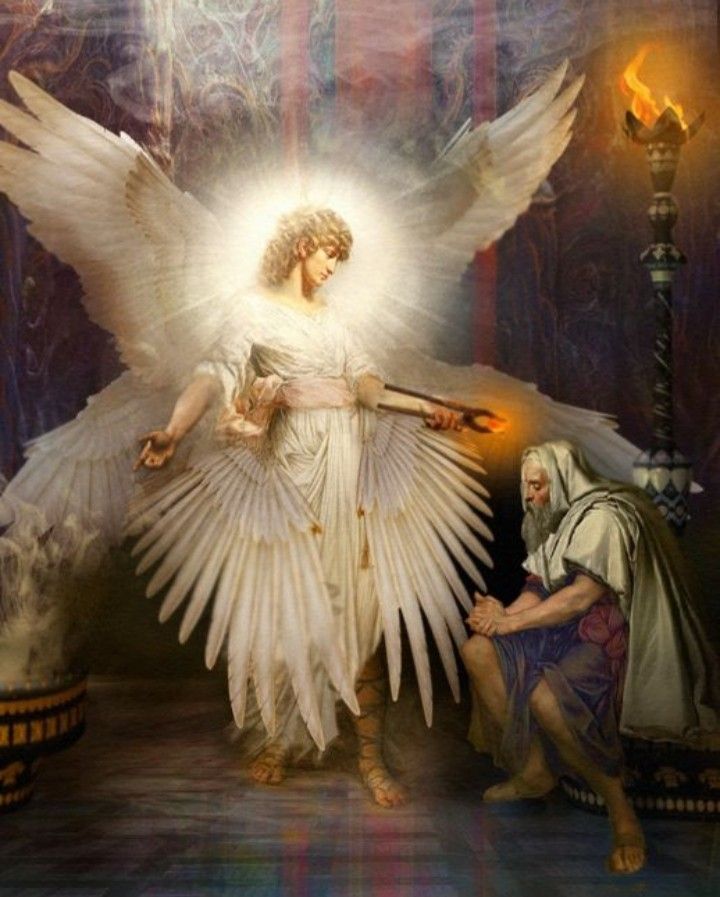
It is clear that this light, when encountered carelessly, can injure or even kill, hence the typically subjectively traumatic experience of confronting the Seraphim, which led to their comparison with “poisonous serpents.”
Just as resin runs through wood, the Primary Fire and its carriers — the Seraphim — form the basis of the principle of mobility and activity inherent in matter. One of the early Christian angelologists, Dionysius the Areopagite, also remarks that “the Seraphim are in constant motion around the divine and illumine all around them with the heat of their swiftness and infinite flight.”
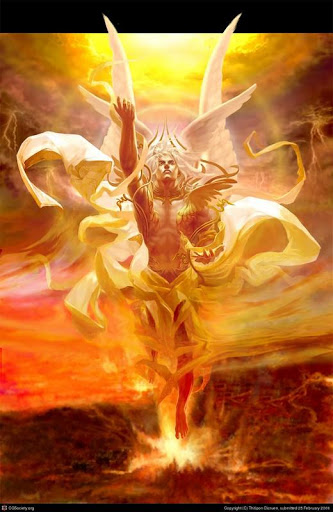
Whenever a Magus seeks or activates the power of the primary activity of matter, they, in fact, interact with the order of the Seraphim. Thermal energy, in the most original and abstract sense of the term, is the material manifestation of this activity.
At the same time, when we consider fiery energy in its destructive, consuming aspect, the Seraphim (and the sephira Geburah) have a shadow side — Golahab (“the arsonists”), symbolized by “hellfire” (הגיהנום אש), also called “ashit” (אשית) — “vengeance.”
Accordingly, to maintain balance and to avoid descending into the “destructive” aspect of the primary fire, one must remember that destruction is justified only when it is part of an overall evolutionary process, not merely a “reaction,” a “vengeance” against hostile acts, nor dictated by destructive intentions. This is also indicated by the Divine Name corresponding to Geburah, God of Strength (גבור אלהים), and by reading the Archangel’s name as Camael (כמאל), “He who sees God.”
Leave a Reply