The Crossroads and Thelesmi
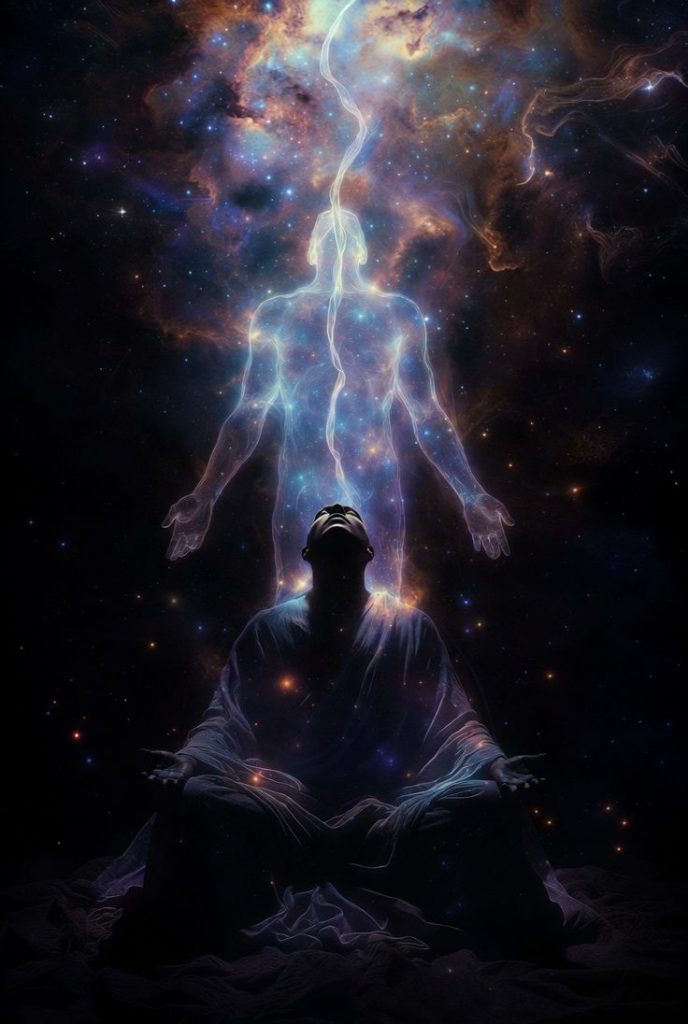
We have already discussed that every time consciousness shifts the focus of its perception away from the fixed and defined structures of the world, it, in fact, finds itself in the unstable In-Between. We also said that since the subjective experience of such a “shift” often begins in a similar way, in non-traditional descriptions the entire set of what is perceived is lumped into the extremely vague category of the “astral”, and in order to classify and organize different results of “astral experience”, the notions of different “layers” or “levels” of the “astral” are introduced.
From a Traditional point of view, any weakening of consciousness’ reliance on its body (whether in the conditions of Ritual, trance, dreaming, intoxication, illness, and so on) is always accompanied by a shift of perception to the border region of the so-called “Crossroads of worlds” (limen), from which a wide range of diverse movements is then possible — from the simple perception of “etheric” processes to a shift into the “real” Interworld (limb).
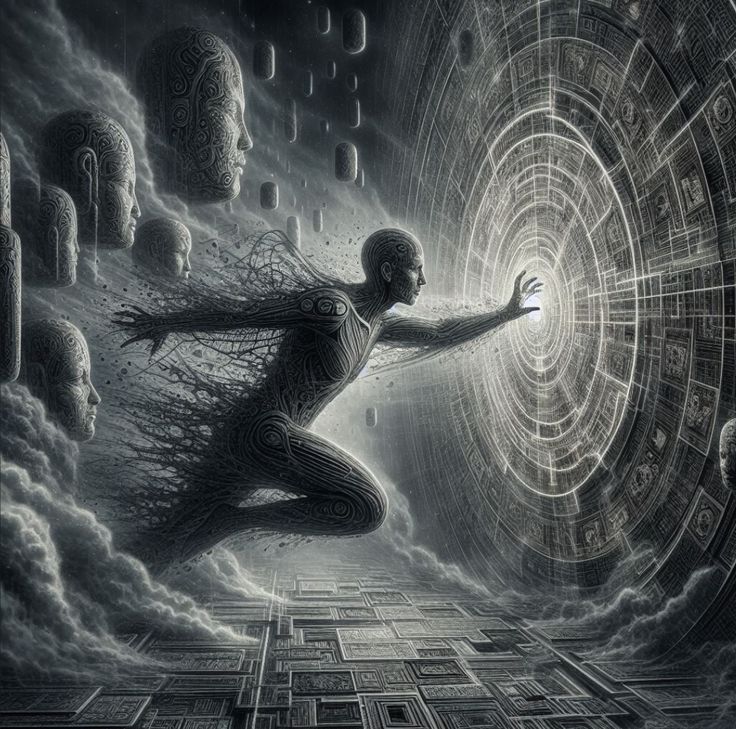
In fact, this initial liminal experience of “loss of support” already shifts consciousness into a special intermediate state (or space), which is known as “Tex” (or TEX, from Greek “τέξη” (texe), “mastery” or “art”) — a space of superposition, uncertainty, and transition, which is itself “transitory”, leading either into a world, or — through Interworld hyperspaces. When TEX is an autonomous field of perception, its central image is the Gate, but if consciousness fails to fixate on it — darkness, fog, or other threshold images arise.
TEX is a state in which consciousness has left the world’s inherent order but has not yet entered a different order. Therefore, the experience of TEX is necessarily marked by uncertainty. In this state, consciousness not only observes but also tries to assemble perceptions into a coherent picture, and it is precisely here that the main source of errors arises: gaps in perception are filled not with the properties of the environment itself, but with guesses drawn from habit — memory, expectations, fears, desires. And then the “astral” is perceived as a kind of “editing”, where perception and projection are joined so that they become hard to distinguish.
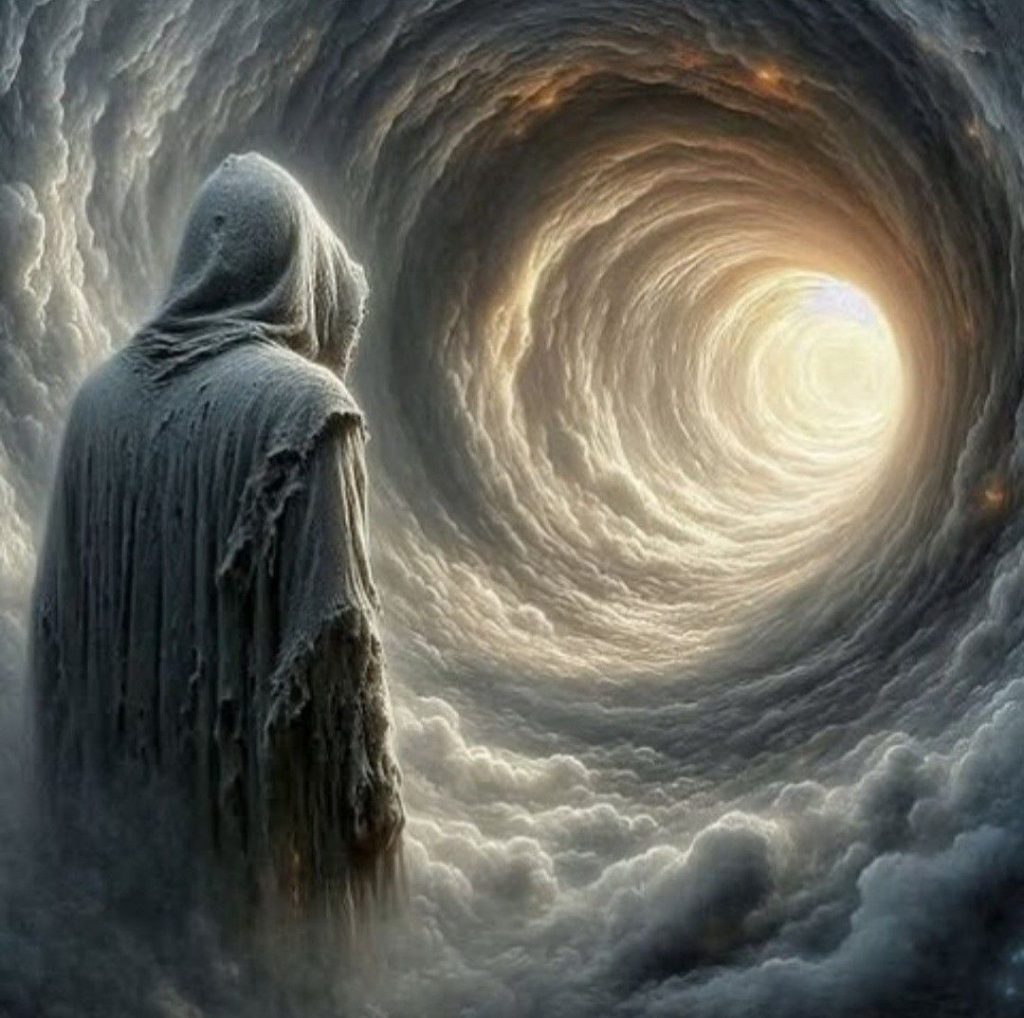
It is precisely TEX that is that “substrate” or first principle from which manifested worlds arise; it is precisely it that is the “wave function before collapse”, a state of uncertainty that contains all possible outcomes, and therefore in the gnostic view is identified with the Space of Sophia — a divine aeon that is the source of all manifested reality.
Thus, we can say that from TEX one can see two neighboring realities or forms of manifestation of the universe — onto the field of the “reverse-side” activity of worlds — the “world of feelings” or thelesmi, and into the transitional space, the In-Between in its “measurable” aspect — the space of Teletos — the aeon of striving (or the so-called “ether RII” (from Greek “ρίζα”, “root”) — the passageway of the afterlife and home to most known Interworld beings.
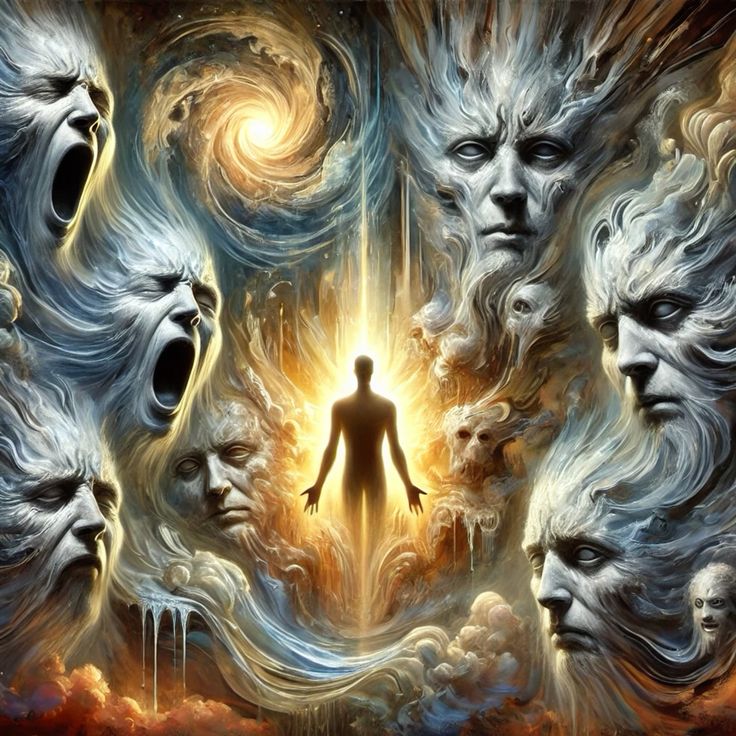
Both of these environments are unstable and passive. In thelesmi, the source of activity is the volitional impulses of the beings of the worlds, and therefore this level is called the “world of desires”: it is the totality of disturbances, vortices emerging in the potential field of the universe — the prima materia, the world’s passive medium — under the influence of all sentient beings. Thelesmi is not a “space of the Interworld” in the proper sense; however, it is also no longer quite a “world” because it is shaped not by the world’s laws but by the radiations of its sentient activity. At the same time, thelesmi is “energetically charged”: the inhabitants of worlds are limited by the conditions of their incarnations, and therefore within it not all impulses can be realized, but only those that are aligned with the nature of their worlds that generate them. In the space of Teletos, all activity is also born from its sedentary and transient inhabitants; however, this activity has no integrating or directional supports like bodies, and therefore it is disordered, non-directional, and thus energetically neutral. In this space there are no limitations associated with worlds and incarnations, and therefore any activity of consciousness finds external expression there, but at the same time, no potential difference exists; there is no gap between desire and manifestation — hence energetic emptiness. From this point of view, thelesmi and RII are related in that both “spaces” easily produce forms; however, the origin of these forms is different: in thelesmi they come from the desires and limitations of the incarnate, whereas in the ether they manifest as “residual” radiations of beings and entities who have often lost their identities.
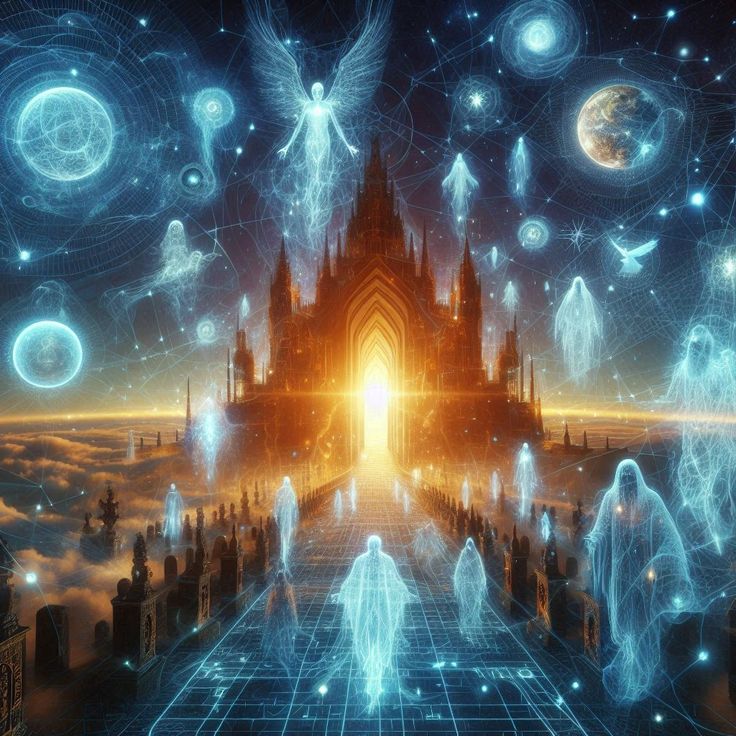
Therefore, thelesmi is mainly a space of entities; there are virtually no native inhabitants; all energy there is “someone’s”, and vortex predators that penetrate it cannot persist beyond resource limits — that is, as long as prey exists and is accessible. Teletos, however, is a real, although energetically poor, “empty” space; it is totipotent, has infinite possibilities, and therefore is suitable for habitation, though limited by instability and hunger. It is precisely there that boundary and elemental beings dwell. Therefore, for example, the goetic Gatekeepers that dwell on the Boundary (“Firmament”) of the intermediate space “hunt” in the environment of thelesmi.
Accordingly, the Crossroads, TEX, is the space or “boundary” between two kinds of potentiality — energetically charged and balanced.
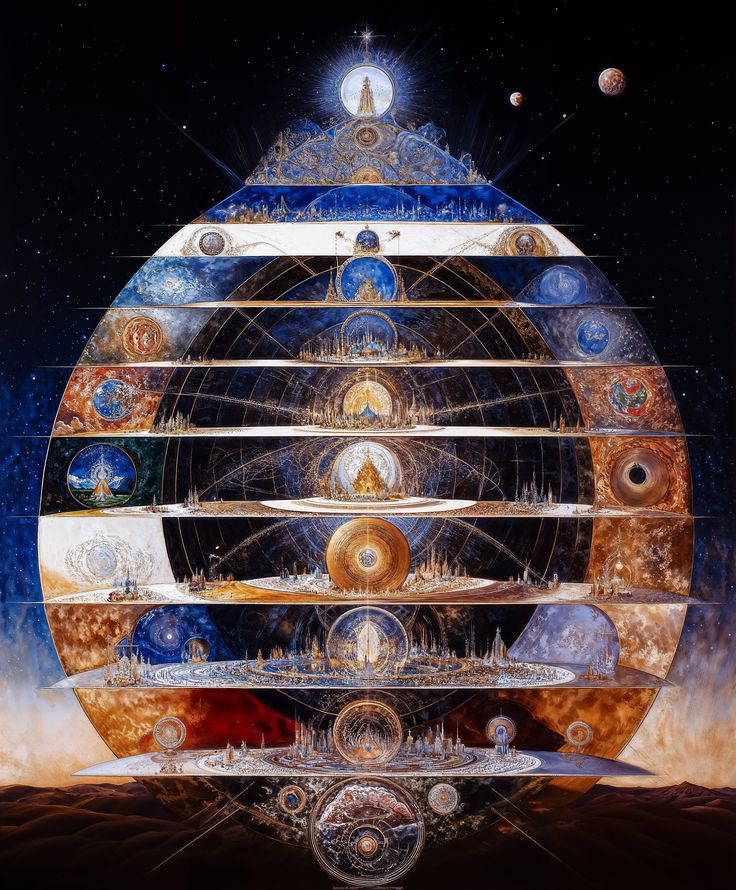
When the liminal mind, having lost fixation, “gravitates” toward certain worlds and processes, then, being in the state of the Crossroads, it perceives the aspect of thelesmi, the “reverse side” of the world. It is this perception that is most often called “astral” vision; it is precisely through it that one can interact with beings or objects located far away.
If, however, consciousness turns its attention to freedom to manifest, if it is important for it to perceive or manifest what the manifested world prevents from appearing — then it perceives the limb, the space of the Interworld, with its characteristic “landscapes” and predatory inhabitants.
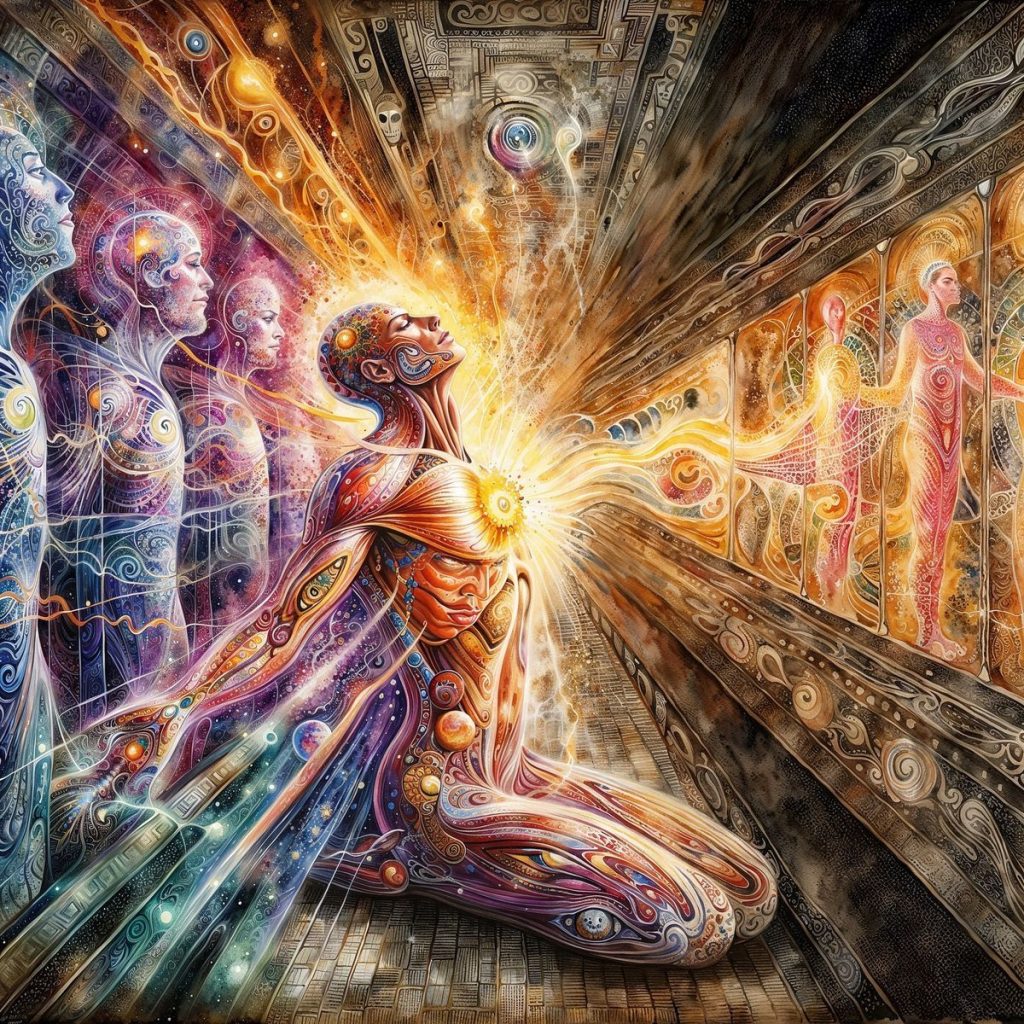
Thus, the “full” transition of consciousness from the stable state of the world into the potential space of the In-Between requires sequentially shedding two identifications, or overcoming two “facets”: first, the subject’s identification with the physical body is overcome, and mind moves into the so-called “small vedogon”, then, the identification of the object, when the field of perception goes beyond the fixed world, and mind is transferred into the “dream body” (or, when the physical body is destroyed — into the “afterlife body”).
Finally, from the liminal state of TEX, contact is possible with the informational field of the universe — the “Library” or the space of imprints. Subjectively, this is often called a variety of “astral” experience, although the interaction here occurs with a completely different level or “stratum” of reality, and the mind’s vehicle is the so-called “mental” body.
It is important to understand that separate ethers or levels are not distinct worlds located in separate spaces, but different modes of perception, different aspects of one reality, which manifest across the multiverse’s timelines of the multiverse. Accordingly, from the In-Between one can perceive any universe, any timeline, and they all generate their own “layers of feelings”, their own aspects of thelesmi.
In general, it is important to remember that any experience of perception beyond the world is valuable only insofar as it strengthens and frees consciousness. And this means that the practitioner should not hoard impressions or accumulate confusing experiences, but cultivate sober discernment, synthesizing and analyzing what is perceived, and translating it into vedenie of the essence. This is the path that makes conscious presence in life clearer, calmer, and less vulnerable to substitutions, and therefore truly develops rather than entertains or helps escape problems.
Thank you! A lot has fallen into place.