
The Importance of Tradition
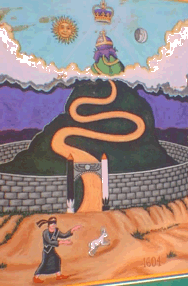
So, Power, as we have seen, can be acquired in three ways: from “past merits”, from lineage, or by hunting.
And, it would seem, one and a half depend on a person’s will. Does that mean it is possible to accumulate Power through “trial and error”, independently choosing methods and tricks to pursue it?
Yes and no.
On the one hand, this way is, of course, possible. In theory a person can find their own means of accumulating Power and reach great heights. Such examples exist.
History records self-initiates who penetrated deeply into the essence of their experiences; the most striking example of this is Aleister Crowley.
At the same time, there are far more examples of people who, having abandoned the support of Traditions, came to nothing, having gained nothing but arrogant conceit.
The main reason for such an outcome is, of course, the activity of the Parasite of mind and other destructive forces and tendencies both within and around the stream of consciousness, which obstruct not only excessive “liberating” accumulation of Power but also the discovery of ways to accumulate it.
As mentioned, in an individual magical Way, completely different approaches may be combined, and choosing approaches that fit a person’s psychological and energetic traits is no easy task.
On the other hand, Traditional organizations — Orders, Schools and Lines — have enormous historical experience both in overcoming the Parasite of mind and in the selection of Ways to accumulate Power.
It is precisely the aggregate of methods proven over time by many practitioners that help, first, to overcome the resistance of destructive tendencies and, second, to increase the effectiveness of one’s actions, which is called Traditional Training.
At the same time, even the word “traditionalism” has recently begun to acquire a distinctly negative connotation. For the mass consciousness, being “a traditionalist” means clinging to the old, the obsolete, rigid and unchanging. Nevertheless, it is hard to express the essence of traditionalism better than the Austrian musician and thinker Gustav Miller: “Tradition is the passing of the fire, not the worship of the ashes.” But however often this or similar thoughts are repeated, unfortunately the label “traditionalism” often becomes a stigma, and even the representatives of Schools and Lines themselves often lose themselves and insist on “worshiping the ashes”.

Nevertheless, Tradition is not a set of dogmas or rigid rules; it is a set of views and approaches, on the basis of which one can construct one’s own effective trajectory of development. Tradition is more spirit than form or letter, and therefore “to be a traditionalist” does not mean repeating the words or actions of predecessors but striving to reproduce the approach to the Way that they used. It is pointless to copy someone else’s “techniques”; what matters is understanding the idea, the foundations on which those techniques are built.
The Way has important milestones, markers that numerous preceding wanderers have described, and therefore anyone can compare their progress to them to check their course. The Way has characteristic dangers, the means of overcoming which have also been described, and by using these approaches the traveler can significantly save time and effort.
Thus, to be a traditionalist means to respect the efforts, discoveries and achievements of predecessors, to rely on their attainments, but not to try to copy them; to approach them creatively while acting in their spirit. Tradition is the style of the Way, a particular style of composing one’s own Book of Wanderings.
It should be emphasized that genuine Traditional organizations are quite far from modern analogous institutions, since the former include lengthy and individual training, while the latter economize on time and prefer a short “young recruit’s course”, ending in Initiation (this, at best).
Let us not underestimate the significance of “Initiation“, the traditional meaning of which, however, differs somewhat from the modern one.
Tradition calls the “Degree of Initiation” the objective level of a person’s Power, since it has long been known that its accumulation occurs in leaps, when small changes are followed by large transformative leaps. Initiation rituals known since Ancient Egypt were intended only to attest to this level, to reinforce it with the support of the school, but they could never replace it.
The modern notion of Initiation is closer to the shamanic “Transmission of Power“, when, during the Ritual itself, the Initiand receives a certain surplus of Power that opens up new possibilities.
It is hard to say which approach is better; however, the results of the Traditional approach are certainly more stable and longer-lasting.
Another important point inherent in the Traditional system of training is the aforementioned Support of the Line.
As mentioned, practically every School, Order or Line possesses its own surplus of Power. Moreover, a School and an Order, as egregoric organizations, also provide the support of their Egregores.
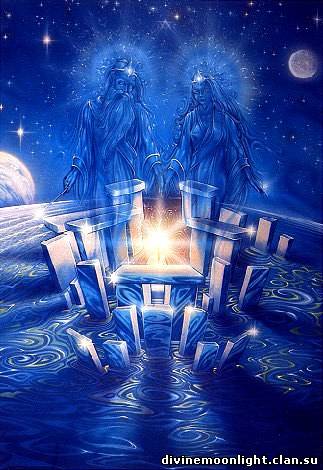
Lines avoid the formation of Egregores (which has both advantages and disadvantages, since on the one hand the support of an Egregore can be very useful in difficult situations, but on the other hand an Egregore largely deprives a person of independence); they also have a surplus of Power, because the very purpose of all the organizations under consideration is precisely to use this surplus — usually attributed to a deity — for the initial boost of Power.
So, we see that traditional training relates to all three sources of Power.
First, such organizations have always selected people capable of accumulating Power.
Second, they provided a “Loan” or “Gift” of Power necessary for initial progress and for overcoming the resistance of the Parasite of mind.
And third, they identified the most effective personal accumulation method, relying on their historical experience.
Thank you, this article is necessary. Dedication gives a person the opportunity to reveal deep knowledge within themselves.)))
And which tradition would you classify Terry Pratchett under? 😉
Is it really so difficult or sad to admit that all world poetry and indeed all artistic literature is “about this”?
And, after all, what do you call “strength”? Inspiration? Then you should write “hunting for mood” (cf. “to whet the appetite”) 🙂
In my view, Terry Pratchett perfectly depicts Slavic and pagan myth. And probably not just that – smiling and talking about duality from the middle. And very practically – for example, a true witch does not use magic where it can be avoided – this is what I learned there, and also that if you have a God, or it has appeared, then sometimes you need to believe in him more than he believes in himself, and the attitude towards death, at least a different view on it, a way of movement along the Path, in the style of an odd tourist – that’s from there too. But for me, it is a beautifully described Pagan myth. And I also learned from it that the world is held up by three elephants standing on the back of a giant turtle) That is the most important thing)
“Pagan” is a tale told in some language (myth = сказ [http://ru.wikipedia.org/wiki/%D0%9C%D0%B8%D1%84]). However, the language of music or painting (http://ru.wikipedia.org/wiki/%D0%9F%D0%B5%D1%89%D0%B5%D1%80%D0%B0_%D0%B7%D0%B0%D0%B1%D1%8B%D1%82%D1%8B%D1%85_%D1%81%D0%BD%D0%BE%D0%B2) – of poetry in the broad sense, as an artistic description of reality, is understood without words.
“I realized: either I was poisoned by a slug, or this – inspiration!” Timon, “The Lion King 3” 🙂
“It has been established that the bones of the elephants on which the Flat World stands are made from living stones and iron, and the nerves are made of gold. According to the theory of the Fifth Elephant, originally there were five elephants, but millions of years ago the fifth elephant broke off from the turtle’s shell and, having described an orbit around it, crashed forcefully into the Disk. Over time, deposits of gold, iron, fat, and other useful minerals formed from its body, which are now actively extracted in Uberwald.” A metaphor understandable in translation into any language, isn’t it?
And the most important thing, in my opinion, is that the Turtle has offspring (and it doesn’t matter at all what gender it is). 😉
Is Enmerkar interested in Musa Jalil with his “The Moabit Notebook” as a “magician”?
Timotheos, I am curious who you consider a “magician”? Please share…
Wow) I just stopped and sat down because of your comment and scratched my head with my paw) What I know about the pagan Myth is that a person there is not a slave of God. From this point of view, of course, I am a pagan – I was also scratching my head when handed a children’s bible. And Pratchett is, for me, a pagan in this regard. And he tells about a whole world, and it doesn’t need to be supplemented with anything else, and please don’t run off adding more. And also I know that men know a lot of theories and various exact meanings of words and like to measure tails. It can be pleasant to watch if everything generally goes peacefully. Clinging tightly to words, in my opinion, is like with Torsunov – he seems to be saying normal things, but you want to climb away from him to the cupboard. We all want to build our own world, whatever it may be. Otherwise, it will be a lie.
If the only reason for paganism is to not be a “slave of God” – that is merely the opposite of such “servitude”. What if “work” lies within life itself? Note the resemblance of the altar of the Urartian god Haldi (http://ru.wikipedia.org/wiki/%D0%A5%D0%B0%D0%BB%D0%B4%D0%B8) to a toilet – can you refuse such sacrifices? 😉
Pratchett is a pagan in the same way that the “pagan” “Rorschach” from “Blindsight” by Peter Watts or any newborn exploring the world through the words of others is a pagan. “A tale is a lie, but it has a hint…”
As for the difference between male and female thinking, I would compare the male mind with a manual gearbox, and the female with an automatic – one is faster, and the other more precise))) See also “Wings, Legs, and Tails” 😉
And also – here (and about “elephants” and about the Word) – http://otvety.google.ru/otvety/thread?tid=1e2bd580d07d03a2
It’s a shame that I can’t show my face here) and how surprised I am) I know nothing of this and did not feel the need for it. I give up and probably will go live; and I very much ask to leave me the right to self-determination)
You can’t even show your face, how can I take away your right to self-determination?) I just wanted to note that “… The sciences that are empty and full of delusions, which are not born of experience, the father of all veracity, and do not conclude in visible experience…” (attributed to Leonardo da Vinci). By the way, I liked your first comment about Pratchett; don’t think that I am trying to argue with you or the author of this blog, I am just asking questions…
…And I don’t particularly enjoy answering them myself.
Timotheos, I understand your dissatisfaction; I also wanted to understand everything at once. Judging by the number of authors and sources you mention, you read a lot. Please show a little more patience – read the blog, and you will find more answers than you have questions. Moreover, you will start getting responses not in one or two phrases but whole posts. However, answers in silence are no less significant.
I read the blog, although, of course, I haven’t read it all.
“Any deceptive sound.
Silence is scarier…”
http://megalyrics.ru/lyric/splin/romans.htm
Or here, “silence is a sign of agreement”?
The blog responds to me, as you write, with whole posts and even external links, but I would like to read Enmerkar’s response, who is considered its author…
Sorry, but I do not participate in discussions conducted in such a tone 🙂
I apologize if I offended in any way. But is ignoring profanity (let’s call it that – I don’t mind) the best way out? If I write nonsense – you can laugh at it, not sulk 😉
I do just that 🙂
Nope, you seem to be mocking.
But the one who laughs last laughs best.
http://ru.wikipedia.org/wiki/%D0%9D%D0%B0%D1%81%D0%BC%D0%B5%D1%88%D0%BA%D0%B0_(%D1%84%D0%B8%D0%BB%D1%8C%D0%BC)
I got bored with you…
Greetings, Timotheos.
I have attempted to respond to you several times, but stopped for the reason of the already mentioned intonation.
You write in an author’s blog, dumping unrelated information and demanding a response. Well.. it’s like I would break into your house, collapse in your favorite chair, light a cigarette with a grand gesture and carelessly say: “Something’s wrong here with how your curtains hang, and the upholstery on the chairs isn’t great, by the way, who did you order them from? Uncle Vanya covers chairs better, here take his business card.” I would be thrown out for that.
Certainly, conducting live discussions is much more interesting than reading archived articles. But for a discussion to take place, it needs to be started properly.
I am very interested in what understanding of the Path such diverse knowledge can provide. You weren’t just trying to argue this with me. I wished to say that we all have quirks – some don’t like to talk and importantly curl their mustaches; some fit such intricate reference webs in their heads that you wonder; some like me are somewhat awkward and kind. And all of this is generally good, and it’s nice that we want to talk. If only we could learn (I am talking about myself in this case).
“A tangle of links” – this is tantra 😉
Compare King’s “The Ballad of the Flexible Bullet” and Bekmambetov’s “Specially Dangerous”…
http://megalyrics.ru/lyric/nautilus-pompilius/klietka.htm
If you like, you can understand “the cage” in a purely biological sense. I somehow see no particular reason to separate “magic” from “science” or “everyday life”, because there is a shortage of it there, what do you think?
Great article! Very interesting and helpful.