
Vedogon — the dreaming body
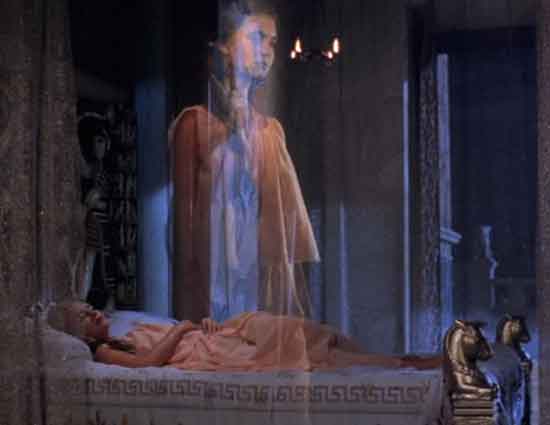
Since ancient times people have noticed a curious phenomenon: sometimes the image of a sleeping person is seen by other people far from where they sleep. This ghostly double was observed by the ancient Slavs.
Accordingly, it received different names and was studied to varying degrees. Shamanic cultures, for example, Native Americans, focused primarily on techniques to isolate and develop this “dreaming body.” More rational cultures, such as the Egyptians, developed from studying the “Double” an entire concept of the “Astral,” later elaborated by European hermeticists in the Middle Ages and early modern period.
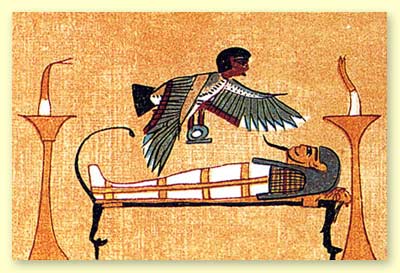
The Egyptians were the first to discover and study a separable component of the mind, and they called it “Ba” (as opposed to the “Double“, the Life Body – Ka). At first it was thought that Ba existed only in gods and pharaohs. Later, however, Ba was found in ordinary people as well. Ba and the human body were closely linked, and Ba, for example, took part in reanimating a deceased person’s mummy. After death, Ba could remain in the tomb or leave it and ascend to the heavens, but ultimately return to the body. Tombs often included narrow corridors for Ba’s visits: while remaining in complete unity with the deceased, it could separate from the person and move, accompanying them in the afterlife.
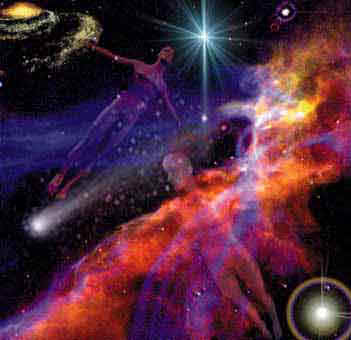
Study of Ba‘s journeys led to the discovery that this “Double” often travels in a distinct but fully formed world. The Alexandrian school gave this world the name “Astral“, i.e., the “Starry World.”
Thus arose the idea of two “subtle bodies” in which the human mind may reside when deprived of its anchor to the physical body: the “dreaming body“, which is formed mainly from the mind’s mobile part — the “Body of Thought” or “Ba“, to which are added components of the Body of Desires and the Life Body; and the “postmortem body“, which is formed on the basis of the Life and “Astral” bodies and separates from the mental level after death. In other words, the Dreaming Body is an early attempt to create a stable conduit in the absence of the physical body.
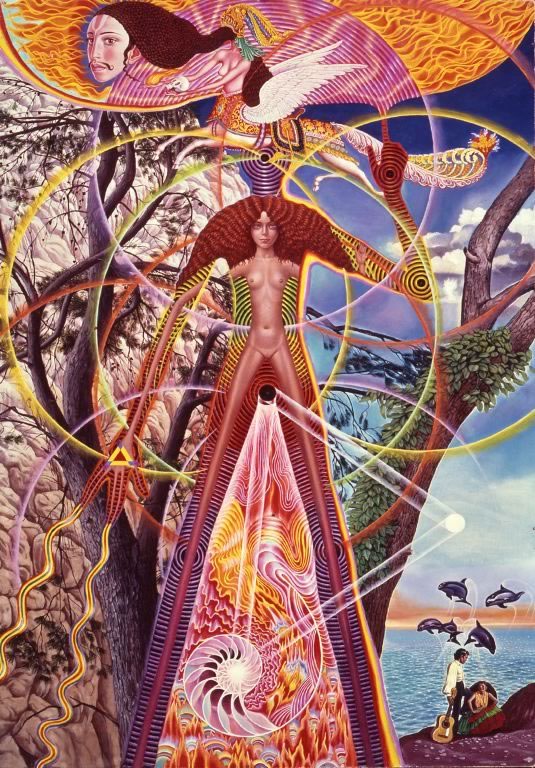
In modern times the “astral” was imprecisely equated with the World of Feelings, an aspect of telesma — the immanent medium where volitional impulses appear as vortex formations. This, on the one hand, opened new horizons for studying this plane but also introduced vagueness into understanding these spaces.
Note that the dreaming body is constructed; it develops like other conduits of the mind; it is not something “innate,” and it differs across many parameters among beings. It is also important to understand that the experience of journeys in the Dreaming Body, although similar, is not the same as postmortem wandering, because Vedogon draws energy from the living body, while the postmortem Body uses its own reserves.
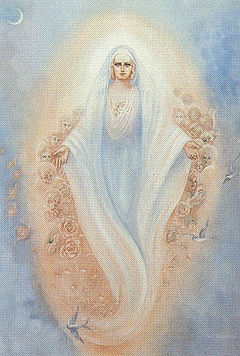
Moreover, perception of the dreaming body is independent of the perception of the physical body. The development and refinement of the dreaming body leads to the emergence of a second personality within a person — two memories form: memory of the physical (diurnal) and dreaming bodies. One can regard the dreaming body as a close relative, yet it remains another personality with its own temperament, character, and motivation. Developed awareness can bridge waking and dreaming.
Buddhists call such intermediate bodies ‘bardo bodies’ (since ‘bardo’ denotes an intermediate mental state — both sleep and the afterlife), while, for example, the ancient Slavs used the term “Vedogon.” At first they, like the earliest Egyptians, thought that Vedogon was simply a separate spirit inhabiting a person and able to leave the body during sleep. They also initially believed that not everyone had a Vedogon, but only those born with a caul (i.e., born with a caul).
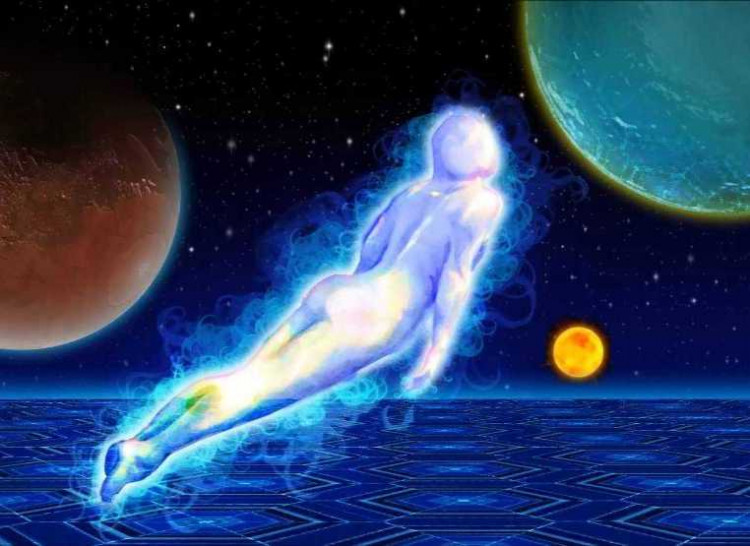
Later, the Vedogon came to be regarded as one of the constituent parts of the human soul. “To wander as a Vedogon” means to travel bodiless in sleep or in trance.
It was believed that during sleep the Vedogon emerges from the person and guards their property from thieves and protects them from enemies or from other, malevolent, Vedogons. Vedogons often quarrel and even fight with one another, and if in such a fight one Vedogon is wounded or killed, then its human host soon falls ill or dies.
Nevertheless, the boundary between the Vedogon and the “Ghost,” the postmortem body, was often indistinct.
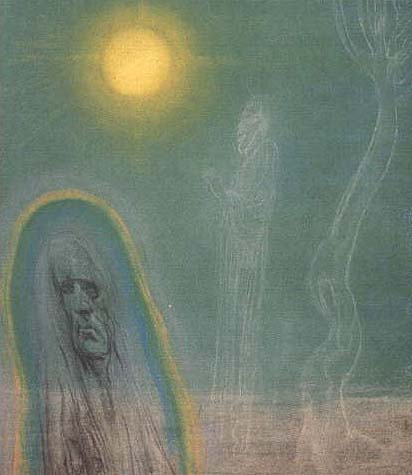
In some cases Vedogons can become visible to the human eye. It is believed that if one strikes a Vedogon with an iron point (for example, a knife) — the person whose Vedogon was struck will receive a corresponding wound on the physical body.
In Belarus, people still believe that each boy is born with a ‘sorka’ spirit — and each girl with a ‘bratek’ guardian against misfortunes and troubles. These spirits are thought to be the same as the Vedogons of the ancient Slavs.
Scandinavians also studied and used the dreaming body. Today this practice is often unjustifiably conflated with seiðr magic.
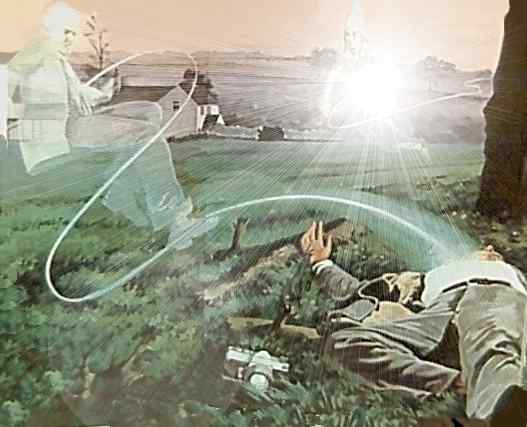
In the modern world, however, ideas about the dreaming body, the “astral” body and the “etheric double” regrettably remain stuck in the late 19th century with vulgar mediumship à la Cagliostro, muddled and unclear.
Instead of the relatively clear pagan notions of the place and the functions of Ba, Ka, and Vedogons, we have sentimental cries about ‘going into the astral’ and “lucid dreaming.” Hopefully, serious groups studying and applying this phenomenon and understanding all the dangers, merits, and shortcomings of “astral” journeys, will bring clarity to this confusion.
If one can harm a person through vedogoni, is it possible to do the opposite — restore the damage caused by vedogoni with any effort, or does it manifest only through illness?
Of course, the reverse is also possible: by influencing vedogoni, one can heal diseases.
Does Slavic vedagoni correspond to the Scandinavian one – fulya?
is quite consistent
The substance allows for the following things: meeting with the right people and transferring (receiving) information. Also: the possibility of entering someone else’s dream.
Can I get practical advice from personal experience on how to work with Vedogonia? What specifically needs to be done to ensure that Vedogonia is a stable form of manifestation of a person’s essence? How to better identify it within oneself. More examples would be great.
Train.
One of the schematics is to make a request when falling asleep – I want to know this, I want to be there.
Another good practice is to catch the moment of transition from wakefulness to sleep. Falling asleep, look after yourself. When you separate from your body, there’s a slight twitching of the body, as well as upon returning.
Another theme is to always ask yourself during the day – am I sleeping or not? A habit, once making its way into life, will work even in dreams. And then – according to circumstances.
The danger is easily going along with those there. THERE THEY can be in any form, whether angels, a certain god, or a relative. They fool to the fullest – that’s their trick, so you need to think before agreeing to something. It is better to open the heart chakra and weigh the decision through it.
And along the way, it seems the article was written not by the author of the blog, but by a woman.
Can you suggest how to build the necessary dream to attract a certain Vedogonia? How to be either in this person’s dream or invite them into my own?
How to work with Vedogon (the body of dreams) is discussed a lot in Castaneda’s works, read his books. Briefly, for this, one needs to first become aware in a dream and examine parts of the Vedogon. Usually, people start with their hands. Examining the Vedogon is not very long; it allows consciousness to stabilize in lucid dreaming. The usual practice with Vedogon is to repeat the same movements in the OSe (lucid dreaming) as the physical body in reality. But there are other exercises as well: mastering the art of piloting (flying of the Vedogon in the dream world), passing through walls, and ‘sprites’ (dream images) among others. For now, that is enough.
Very often a person is sick in the physical world if their Vedogon has gotten lost in the dream maze or is held captive by evil entities. Dream hackers use the following unconventional method to heal the sick: they enter the sick person’s dream, find their Vedogon (usually in a maze of corridors, streets, or dungeons), and bring it out from there, after which the person recovers. But it’s better not to seek a cool dreamer who could enter your dream but to find your own Vedogon and bring it out of the maze.
I liked your thoughts on vedogon. I would like to hear more about it.
I have a long history with dreams – I don’t sleep, I enter the astral, the interworld, into some ‘gray’ zones. And all this happens without intention. The seers diagnose me something created by myself, a phantom standing before me.
Sometimes ‘knocked back’ chakras and consequently a semi-separated astral twin… I read your articles about the astral, dreams, etc. – very impressive, similar to what happens to me and not like the nonsense written by stalkers.
I have a question: if I go, for example, to a healer/magician and he ‘places’ my astral twin in place or removes the Vedogon – is it possible or even necessary to do that?
Olga,
Consider that challenges (inconveniences) are given to us not only for something but also for something.
Attempting to run away (to close yourself) from what you have been given – will it make you better? Stronger? Help you know your destiny or fulfill it?