
What Do We Know About Dreaming?
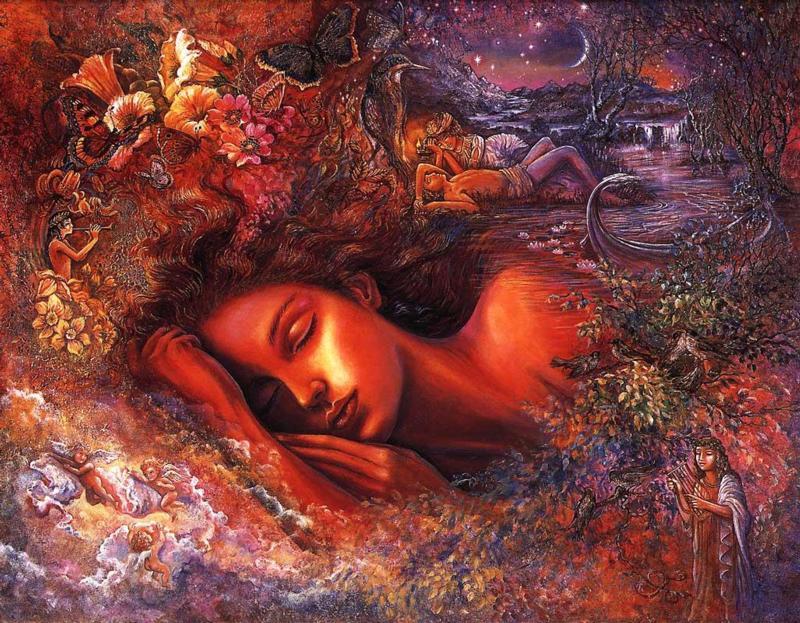
The study of Dreaming has become widely popular thanks to a vogue for Latin American writers who introduced the Western world to indigenous notions of trance visions.
At the same time, from the earliest times traditional Western culture treated such visions and states with considerable caution — neither shunning them entirely nor encouraging their unbridled use.
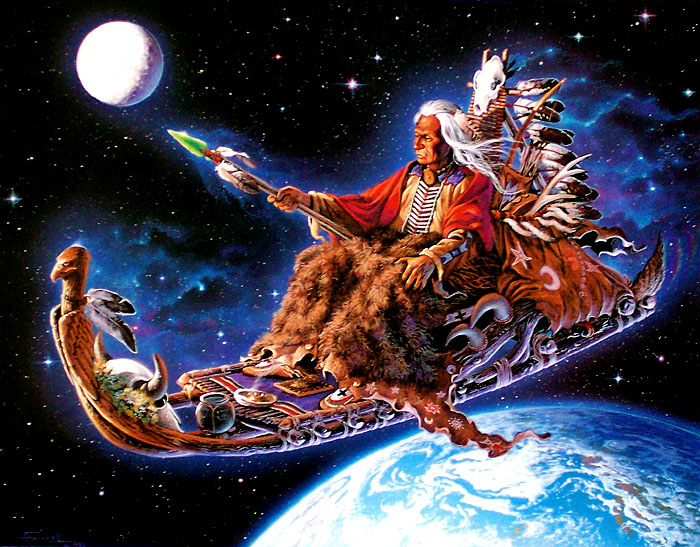
Even the ancient Scandinavians, who lived alongside Karelian–Sámi shamans and acknowledged Laplandic magic as potent, were slow to adopt it; moreover, they regarded this form of magic as dangerous and somewhat unseemly.
The same was true among the Slavic volkhvs, who interacted with the northern peoples, the “Chud”, yet rarely adopted their methods. Holding traditional ideas about dreaming and the dreamer (vedogoni), the volkhvs treated such practices with great caution.
Both dreaming and trance, of course, transport the mind into that liminal state usually called the Interworld or “Elements“.
From a practical point of view, the benefit of such a transition is obvious. Since any transition between worlds cannot bypass the state of the Interworld, direct entry into it facilitates subsequent journeys and is an important component of transition techniques.
Furthermore, it is believed that, since a dead person’s mind resembles the state of a dreamer, learning how to behave in the world of dreams eases the process of disembodiment after death and can even steer that disembodiment along a particular course.
But why, then, did this method fail to gain wide acceptance among Europeans?

Perhaps these peoples — whose activity always emphasized the principles of will and intelligence, i.e., action and understanding — saw no way to make rational use of the imagery obtained in transitional states, when control is weakened and the ability to discriminate is almost entirely absent.
Perhaps they saw that such states make the mind more vulnerable.
Even the Mongolic peoples, for whom trance states were the most characteristic source of transcendent experience, understood the dangers of these states.
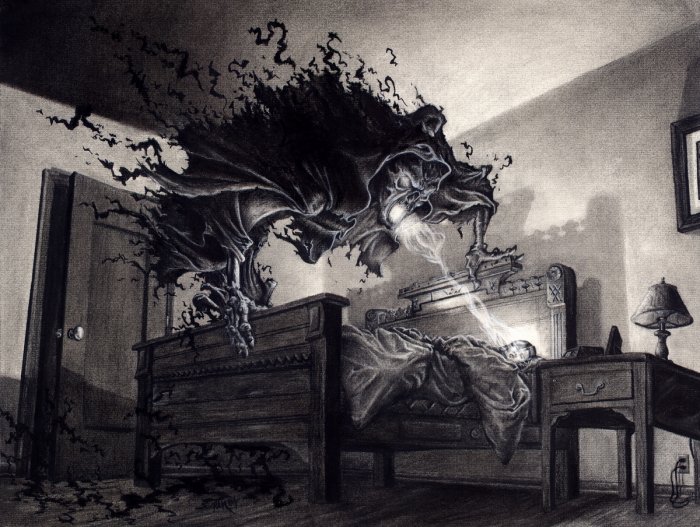
The first traditionally recognized danger lies in the possibility of too-close contact with the inhabitants of the Interworld, who, lacking access to the Great Stream of Power, are inherent predators, pouncing on any creature that enters their field of view. Moreover, these beings are intent on luring potential victims into their domain and have devised a host of stratagems to facilitate that entry.
It is therefore not surprising that all dream and trance techniques included a whole set of protective measures aimed at preventing loss of power in such contact.
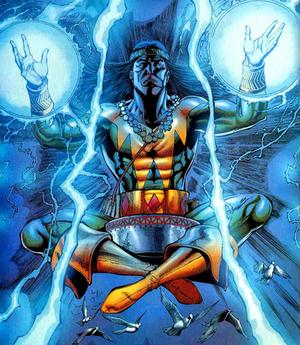
The second, less obvious but no less significant, danger lies in cultivating an uncontrolled state in the dreamer. Since trance (and Dreaming) transport the mind into undirected states, a good dreamer (and medium) must learn specifically to suspend the control of the higher spheres of the mind that filter perception.
In the conditions of a stable world, this control effectively anchors the mind, but stability is not characteristic of the Interworld; therefore control hinders full visions. However, by increasing his receptivity through the deactivating control mechanisms, the medium not only further heightens their vulnerability in the trance (dreaming) itself but, what is most unpleasant, becomes inconstant and capricious in waking life.
Thus Western European magic was not coincidentally oriented toward the waking mind, which within its conception is regarded as the sole state with a maximum control and, accordingly, with minimal external influences.
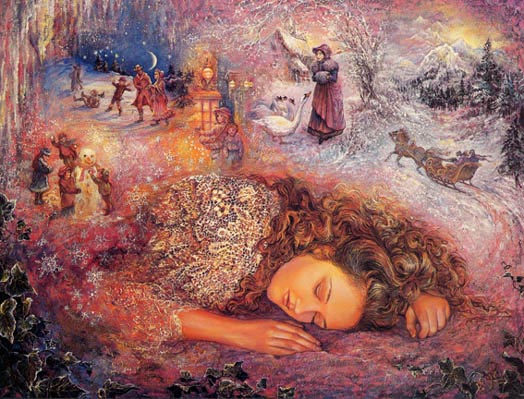
It seems very likely that you are talking about a completely different dream than that discussed by “Latin American writers” 🙂
Indeed, the “Latin American writer” emphasized the dream as an art of increasing awareness through Will and Reason, and even in an inseparable context of removing from personality the qualities of “whimsy and complacency” — that is, the struggle against the parasite of awareness.
Correctly, this method has not found wide acceptance among Europeans precisely because they did not know how to achieve maximum control in this area, and most importantly, how to apply it for their own purposes. The next stage of evolution of “not knowing how to achieve maximum control” was the rejection of magic altogether. Europeans are oriented towards material values; they certainly did not see opportunities to achieve these goals through dreams, and precisely for this reason they turned away from magic, nature, and gods in general — none of this is effective in the “struggle for metal”.
As a reverse example, the art of dreaming is still widespread in Buddhism, Daoism, Native traditions, and other cultures where the goals are completely “non-European”.
It is very unusual for a European to observe, for example, the fact that modern Japanese are still very close to magic and nature: I have not seen any similar animated films by European directors as those by Hayao Miyazaki: Spirited Away, Howl’s Moving Castle, Princess Mononoke.
The fact that you encountered the phenomenon of “some Europeans” (apparently overwhelmingly all) ignoring key positions and detachment from the context in favor of achieving “effect” does not at all imply the inferiority of this magical art.
Is dreaming really that ineffective in the struggle for material values? They’re used by various mediums for finding treasures, etc. And the Native Americans were not such a selfless people either…
Dreaming was practiced by the Greeks; they even had temples of dreams where people came for revelations in sleep.
In defense of Latin American writers, I would say that they balanced the practice of dreaming with the practice of stalking … thus the weak points of one strategy were strengthened by the strengths of the other.
Writers SUGGESTED balancing these practices. But in reality, they did not do very well.
Therion, the point is that among the Greeks this occurred in temples, under protection, and not in their beds or on mats, where any kind of nastiness can creep in if one does not make special efforts to isolate themselves. And one must first figure out how to do that before it gets too late. Perhaps in Europe people dealt with this more cautiously, and again we should not forget about vampires.
I completely agree with NATALYA.
Specifically, writers may not have 🙂 but in the tradition they describe it was … and if we consider the runic tradition, we can find a similar pair Galdr and Seiðr … and in any other tradition, it’s easy to find a place for practices similar to trance transitions between worlds, or acquiring foresight.
Seiðr — although it is trance magic — was practiced only by specially trained people (while dreaming is accessible to everyone and is overly popularized).
I don’t know—I haven’t tried (yet). To find a treasure, someone must have buried it first, so the overall effect is zero — what you’ve buried is what you’ll find 🙂 I “tried” to cleanse a close person — it worked; he says that in the case of “standard” European cleansing, it would have taken several days, but it happened during a short meeting in a dream. The scales of European “civilization” and consequences compared to the “Native American” ones are not the same, but I will not argue about the selflessness of any people. I just wanted to say that the responsibility for applying “Native American” techniques lies with the specific practitioner: I suspect if you tell about practical methods of invocation on the site, the results will hardly differ from the “popular dreaming” — 99.9% will be devoured by demons, and 0.1% of resilient ones will consider themselves the lords of the world. After such an “experience”, should we expect the same article, only now against the Western tradition? But I think comprehensive training will yield different results 🙂
In the end, the only criterion can be the state of power. Everything that gives Power to a particular person or group is beneficial for them, while anything that takes it away is harmful. The only question is the ability to honestly characterize one’s level of power and its changes.
If you have affirmed your strong qualities in your dense body, then in your subtle body during sleep, you can also possess them. You can close the door in front of illness, reflect blows, if necessary, and so on. The earthly plane is a school for honing your qualities, your strength, and developing it.
If you have solidified in your strong qualities in your dense body, then you can also possess them in your subtle body during sleep. – I have paid attention to this fact, indeed, that is so.
In a barrel of honey – a spoon of tar.
In short… this is what a medium does.
Sleep is a state of a PERSON when their SPIRIT, accompanied by a LIGHTHOUSE-PROTECTOR (guarding angel of baptized souls who entered into a CONTRACT with GOD) wanders through the previously CREATED World.
The SOUL can encounter EVERYTHING and EVERYONE… it can even get lost – hence the FOOLS were given a LIGHTHOUSE. In the case of an ATTACK – a DEMON attack (with which the “conversation” did not go well), the Spirit returns to the body through the Lighthouse. This is OUR bulletproof vest against the GOATS in the space between the 3 worlds – HEAVEN, HELL, UNIVERSE.
Those who do not have a Lighthouse MORE – usually suffer DAMAGE… one can die in SLEEP – REALLY DIE IN A CRIB (no soul – no life in the body).
The medium is a guide/accessory to the SPIRIT, who does not know what they WANT AND SEEK. It leads the FOOL on a straight road with firm intentions to the Goal (experience is needed and one must be over 30 years!!!). With 2 Souls, it is HARDER for demons to cope – they may even be afraid to get involved (not all, only the weaklings).
…For example, a Giant – may not attack immediately. But someone like Aamon – …doesn’t care from a HIGH tower (don’t mess with the STRONG!).
Tell me, is there any algorithm or indicators by which one can track changes in the level of strength?
Certainly. 1) Strength is the ability to realize one’s will. The more we live as we want, the more strength we have. 2) Strength is the connection with the Universal. The clearer we can feel love and unity, the more Strength we have. 3) Strength is a characteristic of individuality. The better we know ourselves, the clearer we express ourselves, the more Strength we have.
I understand that lying contributes to the loss of strength. And for example, adherence to the 7 commandments by a Christian contributes to accumulation? How about compliance with rules established by a magician for themselves?
What should one do if there is a feeling that there is no strength? That is, analyzing the points you’ve listed, there is a sense of detachment from the world, a lack of understanding of who I am (what my properties are) and also no vision of the possibilities of realizing my will or the strength to realize it. Is there a way to feel the flow of Life again and start accumulating strength while in such a state?
Yes, gradually restoring connection with the streams of Life and cleansing its channels within oneself. Start by establishing connections with nature.
Thank you for the response!
Mu, the feeling of absence of Strength is most likely caused by a dead end in Fate. This dead end was resolved by coming to this blog, and from here, you regulate it yourself. The strength grows from interaction with it. Try to detach from routine and dedicate your time, as Enmerkar rightly expressed, to ‘nature’. A trip out of town, sitting by the fire, or even just standing by the river or going ‘into the open’ and feeling the element of Air, mentally talking to it, getting acquainted and catching images. This will bring you closer to the fundamentals.
By the way, it’s very interesting to photograph the flame of the fire; you can see many things 😉
I live in a village, but the feeling of a dead end doesn’t go away, unfortunately, with life in nature. Although living in nature and interacting with it are indeed somewhat different things)
My feeling of a dead end is the mismatch between your level of consciousness and how you use it. You are no longer an animal needing to eat, drink, and sleep. It is a thirst for knowledge. New sensations, development. Perhaps this is what the serpent fed Adam and Eve 🙂
I want to complain. I often have dreams that induce stress and drain my energy. Sometimes for several days.