
Fatherhood and Sonship
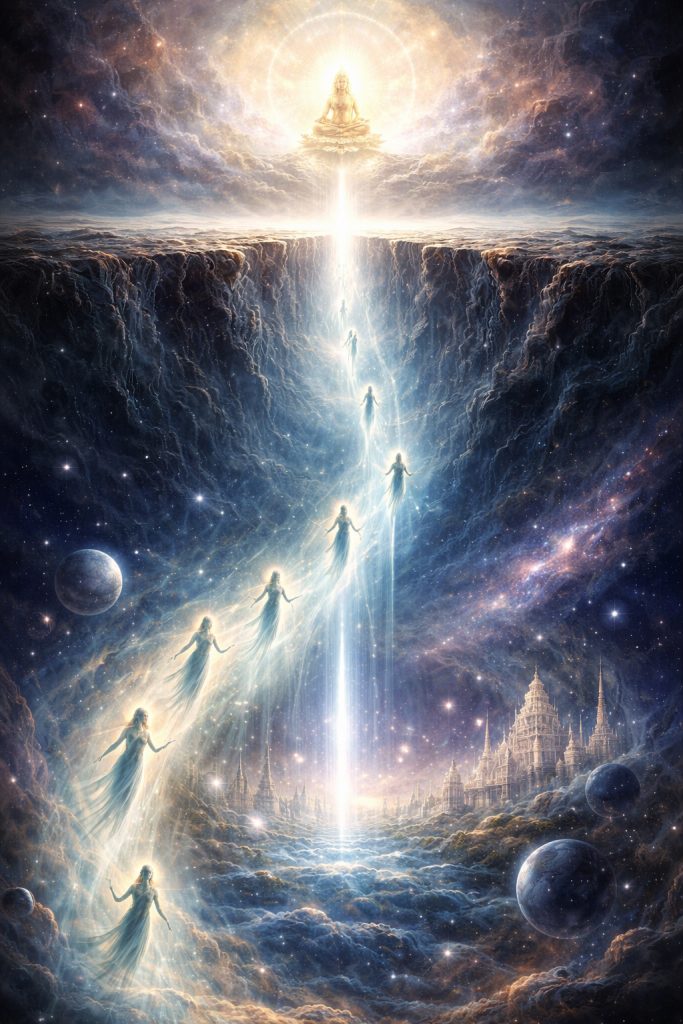
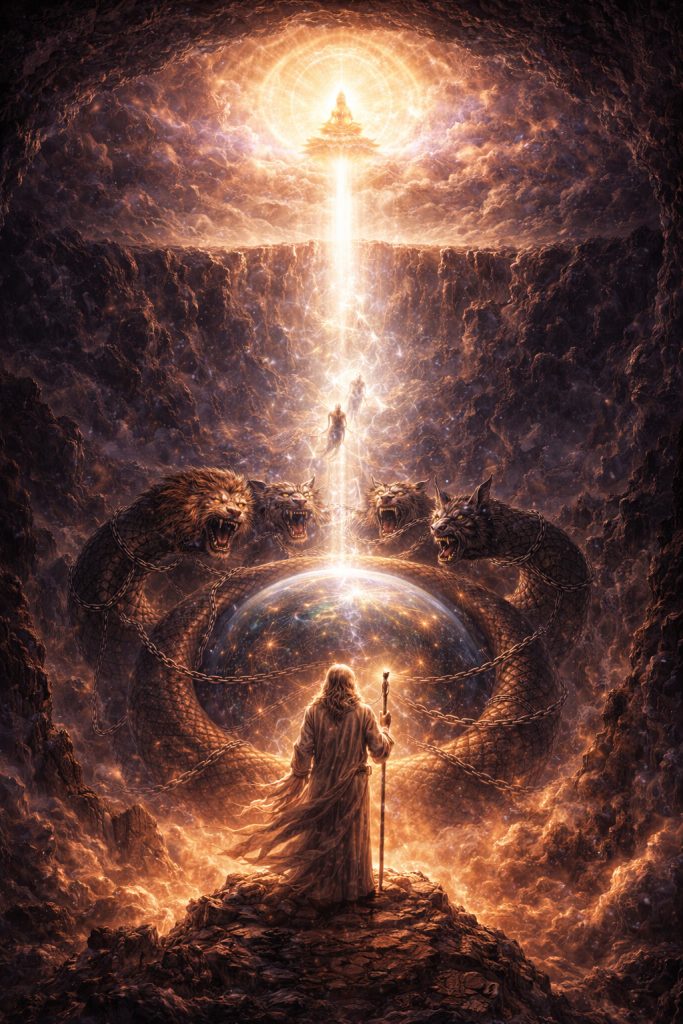
The cornerstone of the entire gnostic system is the idea of an insurmountable rupture between the transcendent deity, the absolute source of life and consciousness, and the material world in which that consciousness must manifest.
In other words, the concept of “chasms,” “abysses,” which are surmountable only by evolutionary effort and require transcendence — a leap — are taken to their logical extreme in Gnosticism. Everything that lies “above” this Abyss (or Limit — Choros) is unknowable, unified, and holy, while everything “beneath” it is corrupted and enslaved. At the same time, the Limit itself is not hostile to mind; it can be a blessing or a mercy, because it prevents potential chaos from consuming an individual before they have a vision of the light and make contact with the source. The Limit becomes a prison when it is declared final, when the boundary meant to separate levels turns into a principle prohibiting ascent, and any memory of the higher is treated as a violation of the “natural order.” Thus the characteristic Gnostic idea arises: the world appears well-ordered — logical and even beautiful — yet that very order restrains growth rather than fostering it, and in this arrangement the Limit proves not to be a gate but an abyss.
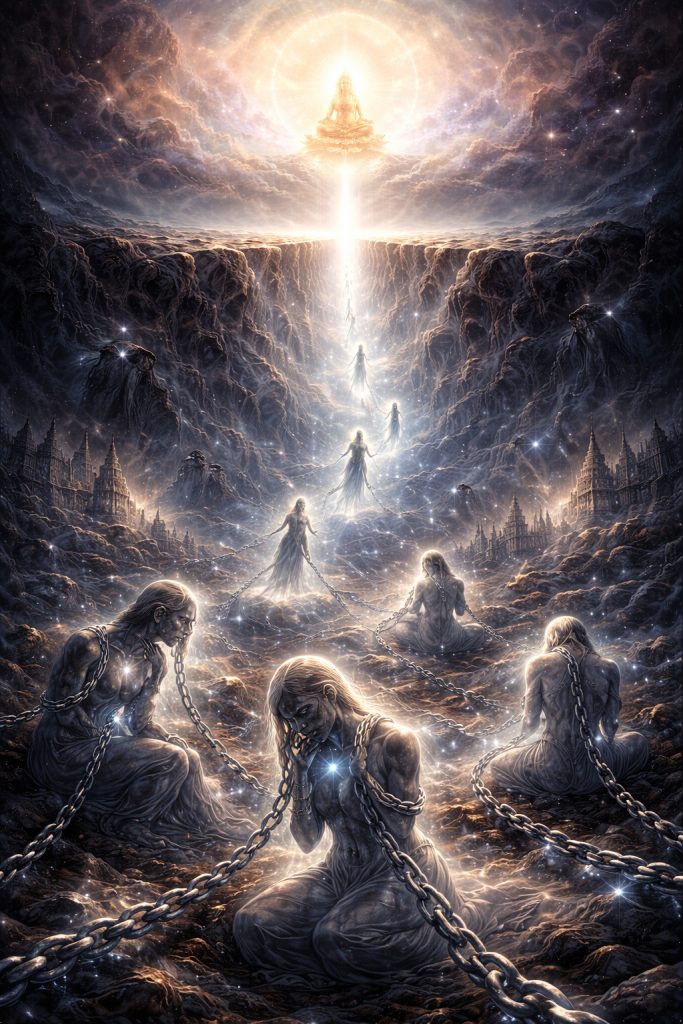
Accordingly, the “overcoming of the chasm” that, on other paths, is regarded as a necessary and important stage of development becomes the primary goal in Gnosticism. One could say that modern Thelemites assign the same fundamental importance to attaining “Knowledge and Conversation,” likewise regarded as the cornerstone and most important stage of the entire Path. The difference is that, whereas Gnostics saw the “enslavement” of mind as the result of the activity of archontic forces, the Thelemic system regards the mind’s obscuration prior to contact with the “Holy Angel” as the direct result of the separation of active levels from their ideal foundations.
The Gnostic description of the world pictures it as a cycle, yet this cycle is discontinuous; it requires the overcoming of abysses and therefore — though generally law-governed — depends on the efforts of the participants. Although the mind’s natural task is ascent from kenoma to pleroma, this does not happen “automatically”; it is not a mere result of chains of cause and effect but requires personal choice and effort. And when it is said that mind is “enslaved” or “imprisoned” in the physical worlds (in hyle), what is meant is that the world is arranged so that there is “no way out” — it is impossible to escape hyle by using hyle; a fundamental change of outlook is necessary: a change of self-identification and of the very support system.
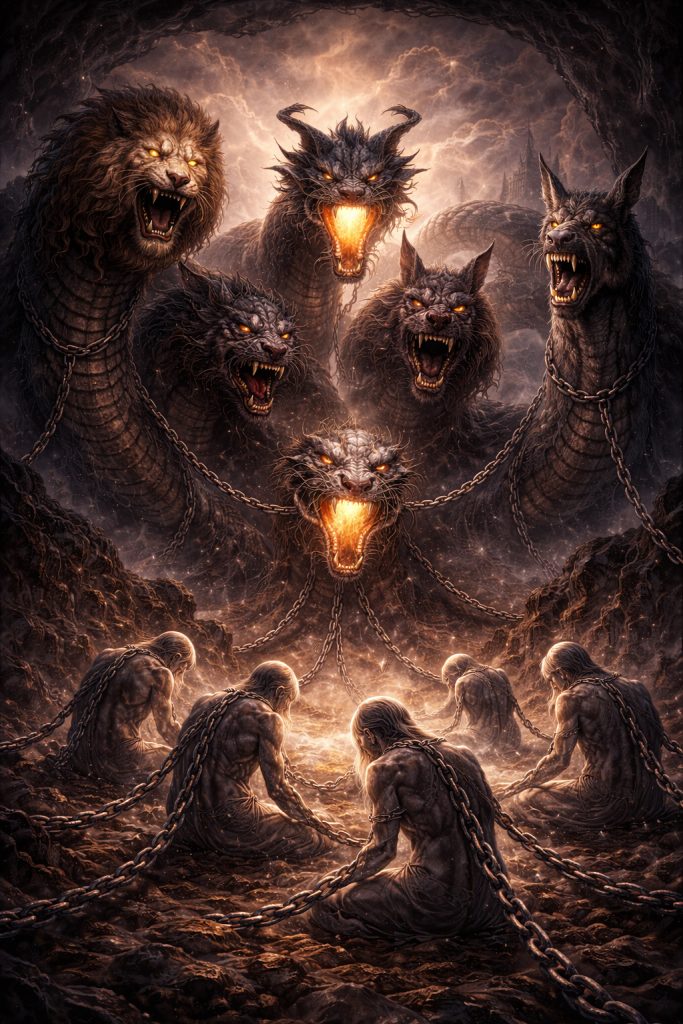
For Gnostics, ascent is a radical shift of the foundations on which the personality is built; it is described as the removal of veils, changing garments, passing through guards and gates; in any case, it concerns the return of the mind to that memory preceding the manifested world in gnosis and independent of it. When mind recognizes itself as a spark emanating from the Pleroma, it gains the ability to recognize the Chasm, and with a sufficient accumulation of wisdom and power it can stand “on the other side.”
This is precisely why ascent depends on effort; however, it is not reduced to mere aspiration or willpower — gnosis is required: the ability to retain the light of knowledge, even when the world offers a thousand convincing reasons to accept the world as the only final reality.
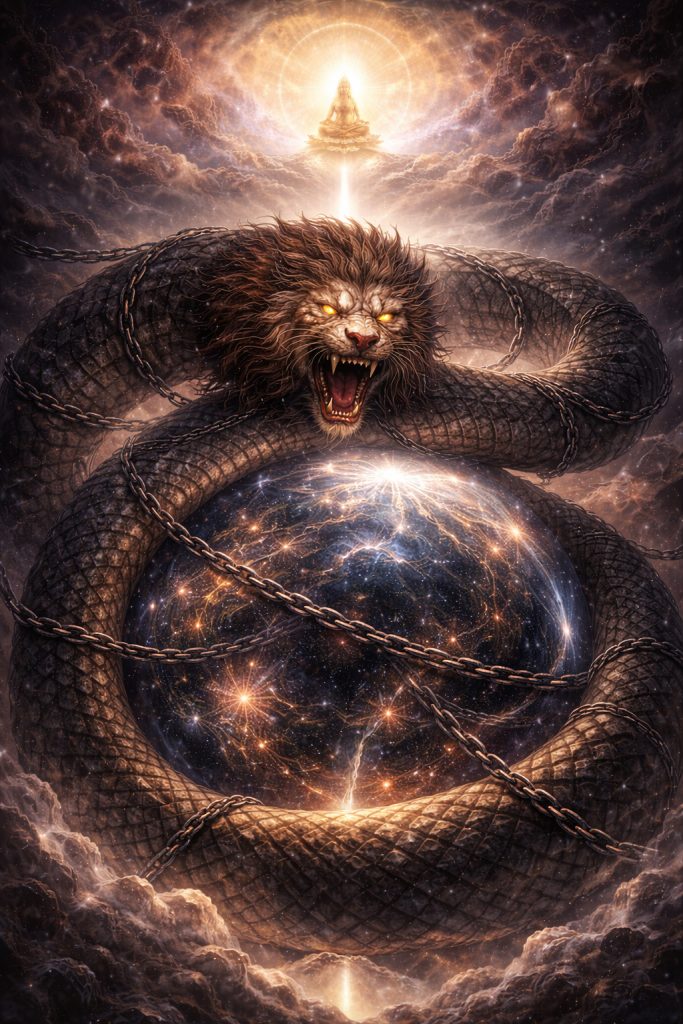
Accordingly, the archons can be seen as forces that hinder the free movement of mind through this cycle, which readily invites identification of ignorance — Yaldabaoth — with the “principle” of the Chasm itself (Choronzon) or with the “illusion” (Mara). In other words, at the boundary between worlds and levels there is almost always an active force trying to persuade the mind that no boundary exists, that there is only the “single reality” — the one already “given to perception.” And then Yaldabaoth can be understood as the principle that usurps the limit: he makes the threshold absolute and makes ignorance the norm; he passes off the law he created as the final truth about being. Thus, for the Gnostic, ignorance is a catastrophic loss of the memory of higher origin and an agreement to live as though the possibility of ascent does not exist at all.
This is why an important moment arises for the Gnostic understanding of the world: when the aeonic reality is “radiated” into the “lower” spaces, spilling into the system of ethers (“heavens”), it proceeds through two stages: descent (or “generation,” “fatherhood”) and ascent (or “fidelity”). At the same time, if generation springs from divinity’s spontaneous outpouring, then “ascent” can be initiated only by the “sons” themselves — that is, by each individual. This is the path, for example, that Basilides had in mind when he said that states of “sonship” are always “higher” than the “fathers” who generate them, because the “father” embodies the path of descent — his activity is directed “downward,” whereas the “son” is the ascending current and the elevating force. This is exactly how the “good Archon” Sabaoth is born, as the “enlightened” brother (or son) of Yaldabaoth, and in the same way the “ascending” Sophia (Pistis) arises as the highest form of aspiring wisdom.
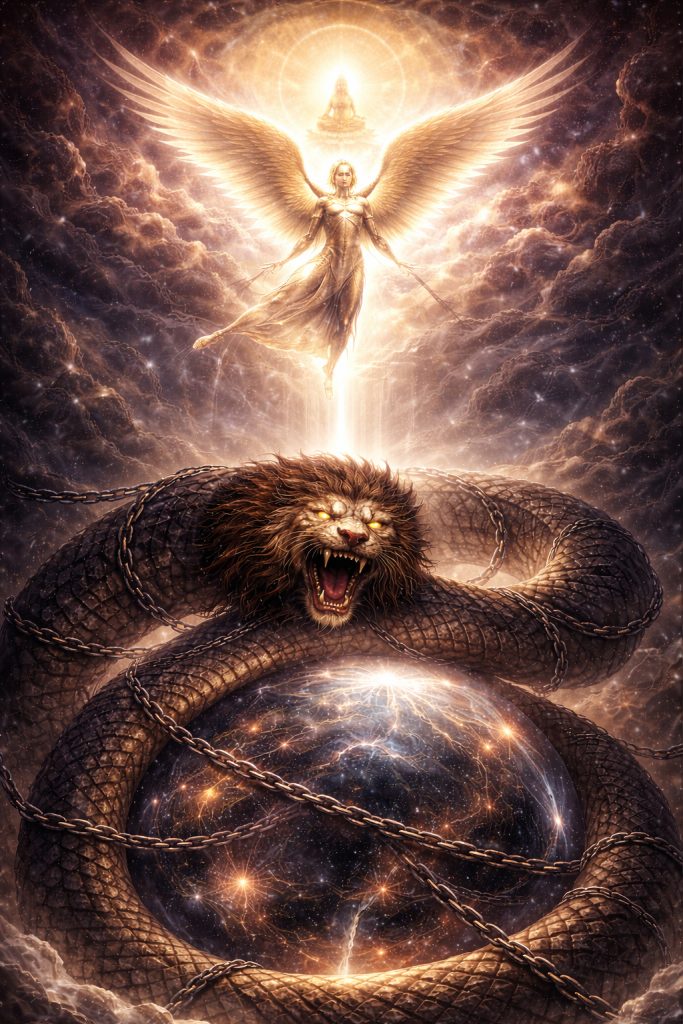
Sabaoth in this sense is an image of the mind which, although still acting within the “lower” world and not yet free from the archontic power that gave birth to it, nevertheless ceases to worship ignorance as the highest principle and embraces the light of wisdom as a means of transcending that established order.
In other words, the descent of divinity generates the world as a “seed” containing both the possibility of growth and the shells that constrain it, and therefore ignorance inevitably arises within it, including among the archons themselves, who, ruling the heavenly levels, sincerely regard their domain as the upper limit. Ascent, however, is a “sorting” and return of the elements of this “mixed world” to their places: the bodily to the bodily, the psychic to the psychic, and the spiritual, the divine, to the higher; and that is precisely why “gnosis” is, first and foremost, an action that breaks open the false finality and restores the correct hierarchy of supports within the mind itself. Thus, the “son” is higher than the “father” because in the reverse movement there appears what is not present in descent — the ability to recognize the limitation of the created order, including the limitation of its “legitimate rulers.”
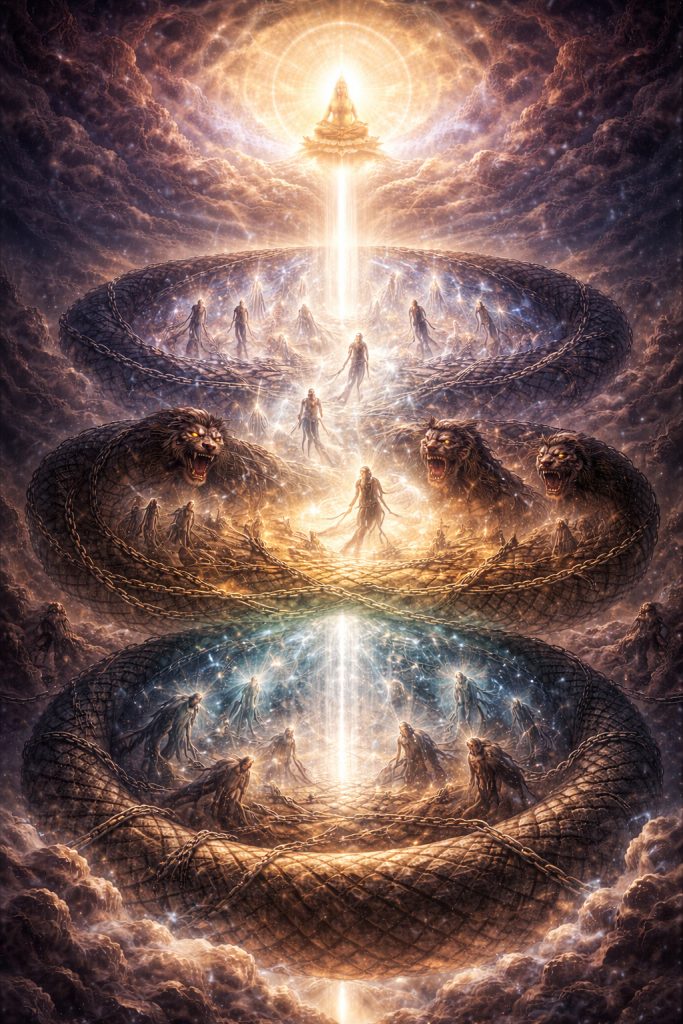
From the Gnostic point of view, the world is originally built as a prison, and therefore the temptation to live in it while justifying its “finality” is great. And then even “knowledge of the prison” turns out to be merely part of the prison; it supports the same ignorance — albeit in a more refined way. This idea was central to the film “The Matrix,” in which the “heroic liberator” is portrayed as a necessary part of the containment system.
The “lower” world is arranged so that the same mechanism simultaneously gives the mind a fixed form and keeps it fixed in that form: law, order, causality, clear explanations.
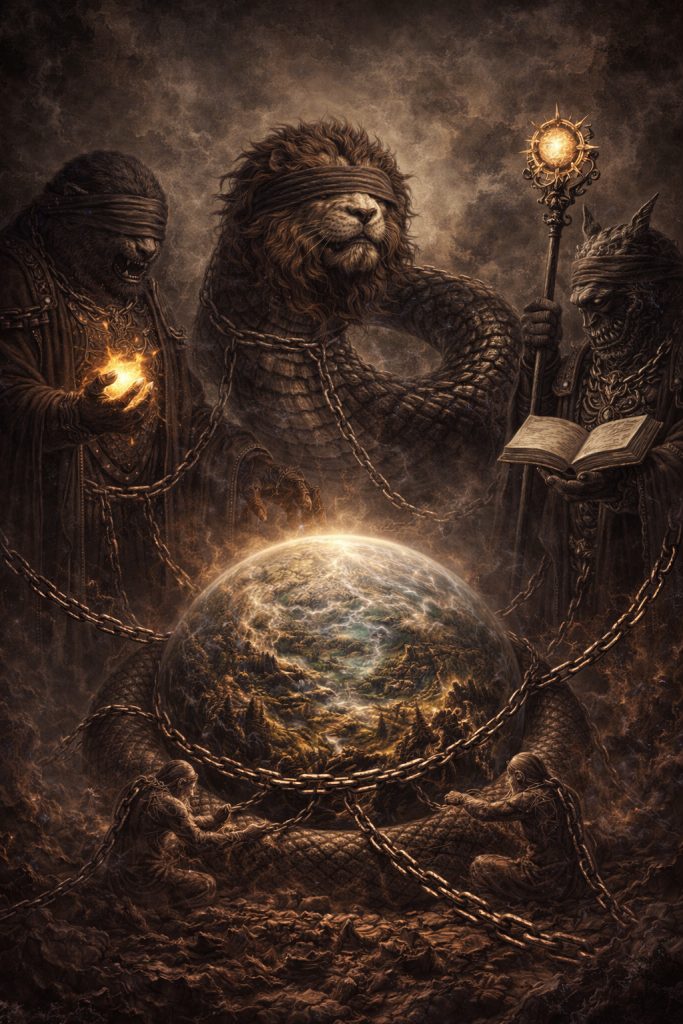
It is important to understand that the Archons are not “demons,” but usurpers; they are the real and “legitimate” creators of the manifested world, yet their ignorance, “blindness,” leads them to create the world as a prison; they fail to see the higher, not because they actively resist it, but because they are blind to it; they are blind, not hostile, to the divine.
However, in the form of “sonship” within the same system a reverse movement arises: knowledge ceases to serve the world’s self-description and becomes an engine of spiritual transcendence. The main sign of “sonship” is the operation of the cognitive process as a separating and returning force, which puts the mind’s layers back in order in their places and thereby makes ascent real.
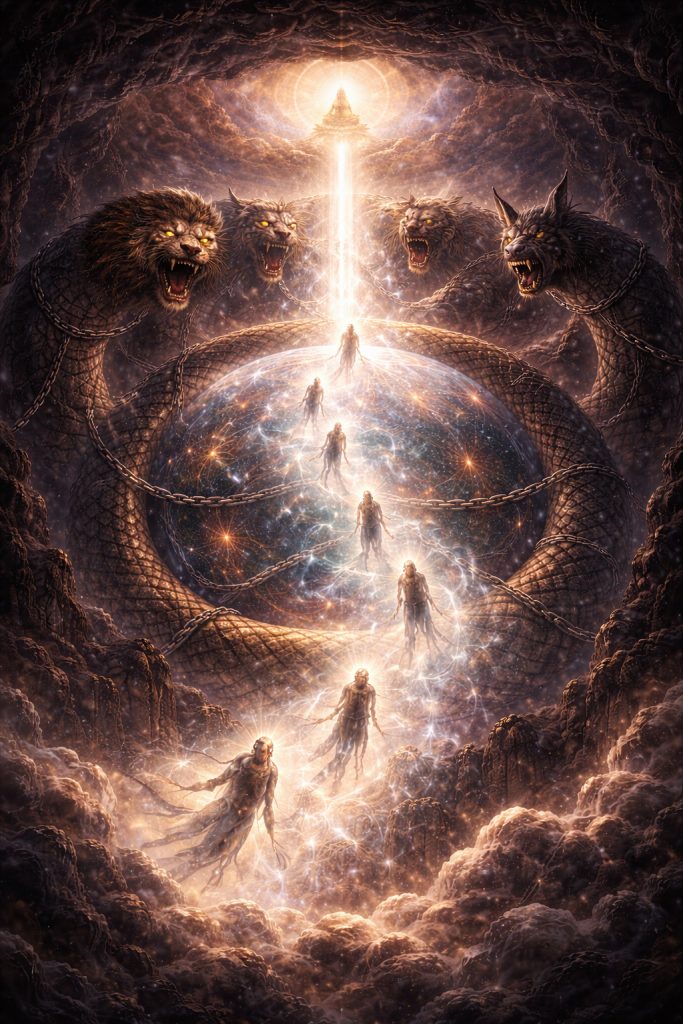
From this point of view, one can say that the Gnostic path as a “method of enlightenment” consists in creating causes, conditions, and drivers for the “ascending” component of the cycle and then, upon reaching the Limit — the Chasm — undergoing a radical change of self-identification: discovering one’s essential unity with the pleroma and thus crossing over to that shore. Therefore, “sonship” is not merely a personal effort to cross the Limit, but an event that changes the status of the very “upper” order.
Accordingly, when cognition becomes direct knowing and restores the mind’s inner impulse to ascend, the mind begins to rise to the Pleroma. As long as knowledge remains merely a system of explanations without a change of support systems and self-identifications and without transformational potential, “fatherhood” prevails again, and the descending current continues downward, proclaiming itself the sole wisdom.
One of the main differences between Catholicism and Orthodoxy is the doctrine of Filioque (Latin Filioque – “and from the Son”) and its meaning is that the Holy Spirit proceeds from the Father and from the Son, or proceeds only from the Father, but does not proceed from the Son.
In your article, you write:
“Accordingly, when knowledge increases direct vision and returns to consciousness the inner impulse of ascension, its rise to the pleroma begins. Then, while knowledge remains only a system of explanations without changing bases and self-identifications, without transformational potential, ‘fatherhood’ wins again, and the descending current continues to flow downward, proclaiming itself to be the only wisdom.”
Does this mean that Sonship, as the spark of the higher light in a person, does not possess the Holy Spirit, continuing to be completely under the authority of the First Archon and its laws until such time as its position is re-oriented in such a way that as an internal point of support a person gains a living connection with their Angel? Indeed, only such living knowledge can be called Wisdom, as a connection with Sophia. Whereas any external knowledge about the structure of the “matrix”, no matter how extensive and detailed it is, is not wisdom until such knowledge lacks the living breath of the Holy Spirit.
The issue at hand is not about the ‘presence’ or ‘absence’ of the Holy Spirit in the spark, but whether the Spirit is activated as a living breath and as the acting force of ascension, or whether the spark remains in a state where everything is reduced to descriptions and a rigid picture of reality. The dispute over Filioque itself describes the order of origin in the Divine, while we are now talking about the order of experience and where the internal point of support of consciousness is located. In this sense, a person can be a ‘son’ by origin, by their very spark nature, and at the same time live as if they are completely one-natured with what is below the Limit: with the physical, with the soulful, with the explainable, with the causal. However, the Spirit does not disappear; it simply does not manifest in the subject as the reality of the path; it remains above them, like light over closed eyes, and thus any knowledge – even accurate, even ‘anti-Archontic’ – becomes just part of the same system of conditionality that it describes.
Accordingly, ‘wisdom’ in this context is the consciousness’s ability to reconstruct its support systems such that the source of its meanings is above the world, rather than within the world. As long as consciousness relies on the world as the final reality, even if it calls it “a prison”, it is still holding onto it; it continues to consider as truth what is permissible within the gile (the world), it builds correct models yet these models do not allow movement upwards. In this state, ‘fatherhood’ still prevails: the descending current of manifestation becomes the only source, and all ‘spirituality’ turns into a somewhat embellished version of that same self-written world. The Spirit in such a person exists as a possibility, as a seed, as memory of the spark, but it does not manifest as the living breath. It can be said that ‘sonship’ is not devoid of Spirit, but until the reorientation of supports, it does not breathe with the Spirit; it carries within itself the potential for ascension but has not initiated the ascending current within itself. When this activation occurs, a person discovers that the primary power of the First Archon is based on blindness and erroneous finality: the Archontic law is insurmountable only as long as consciousness recognizes it as the absolute measure. Conversely, ‘living knowledge’ turns out to be the very ‘breath of the Holy Spirit’ – the very fact that knowledge has become the light of discernment and the engine of return.
Thank you.
Thank you for your work, esteemed Enmerkar! And a special thanks for the articles on Gnosticism!
Is ‘living knowledge’ attained in the process of understanding that our world is not the only one and unique, but merely one realizable possibility from countless potentials of the Absolute? Or rather through the recognition of the illusion of our world in the face of aeonic reality?
From a Gnostic point of view, the world is not illusory; it is just not fixed and not singular. So yes, Gnosis is the understanding (leading) that reality is complex and multidimensional, and that above it (and beyond it) there exists a qualitatively different – higher – aeonic nature.
Thank you!
The father is the descending current, the son is the ascending current. So what ends up descending and ascending? In Gnosticism, do they work with the heart center, like in the practice of Hesychasm? Or does Gnosticism subliminate sexual energy, like Kundalini Shakti for elevation, as Aleister Crowley did? There’s really not much useful information about Gnosticism online… And how can Enochian magic help with Gnosticism, for example?
The creative will descends, consciousness as potential, and actual consciousness ascends. Gnosticism is a unity of wisdom and method, just like other holistic systems, and its different branches have their own techniques and details of beliefs. But the main idea is all about liberation through knowledge.