
Aeon and Chronos

As we have discussed repeatedly, traditional notions of time in various schools and traditions included the concept of its two forms — “being,” that is, the “order of things,” and duration — that is, change. The Egyptians called these modes of time djet and neheh respectively, and the Greeks — aeon and chronos.
Regardless of how the adherents of various schools described the essence, the inner nature of time itself, they all agreed that time is a measure (or description) of the transition of an object or a system from one state to another.

Accordingly, the two aforementioned modes of time also mark two approaches to such a description: djet (or aeon) is a state in which all possible states of the system are already present, can be described, and their mutual transitions exist as an inner logic, an essential hierarchy of their relationships. At the same time, neheh (chronos) is a view “from within” the system, from the position of its particular state, from which the transition to a more perfect, more realized mode of existence looks like “moving forward,” while relations with a “less developed” state look like “a look into the past.”
It is clear that these two ways of description (or modes of existence), in fact, correspond to the “absolute” and “relative” views, the view from the side of the “perfect” and from the side of the “limited.”
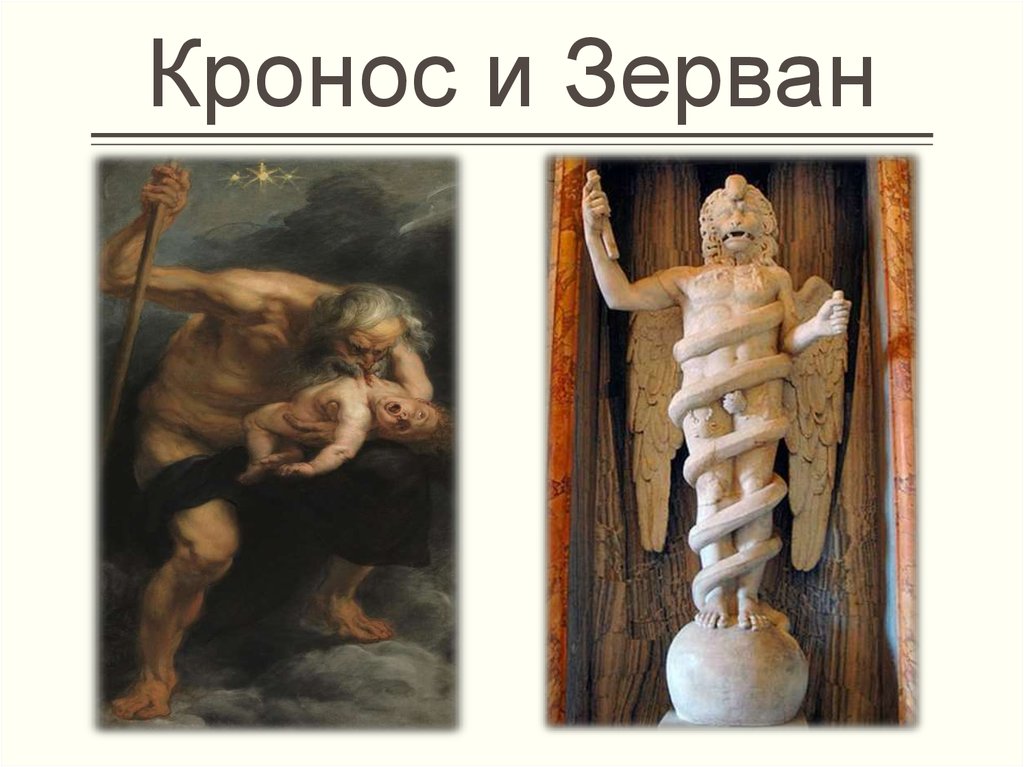
Therefore, the deities (and hence, the corresponding matrices of mind) included the characteristics, capacities, and limitations of each of the views. The deities of the aeonic view (Aion, Zurvan, Atum) are expressions of “eternal” mind, for which the world’s processes are merely a convention, a limited way of describing already existing regularities and correlations. At the same time, the deities of the “chronological” view (Kron/Chronos, Khepri, Kala) are forces of “becoming,” creation and destruction.
As long as such a hierarchy is clearly perceived by an individual mind, as long as it clearly sees that the “chronological” view of the nature of time is a relative section of the “aeonic” view – such a mind also sees its position in this overall hierarchy as a single point, one position within the overall perfect system. In Eastern terms, as long as we understand that samsara is only a limited view of the same reality, whose clearer aspect is nirvana, – we are free from obscuration. But if it begins to seem to us that the process of becoming, and therefore time, is an absolute, objective category, we fall into the clutches of ignorance, we fall into heimarmene.
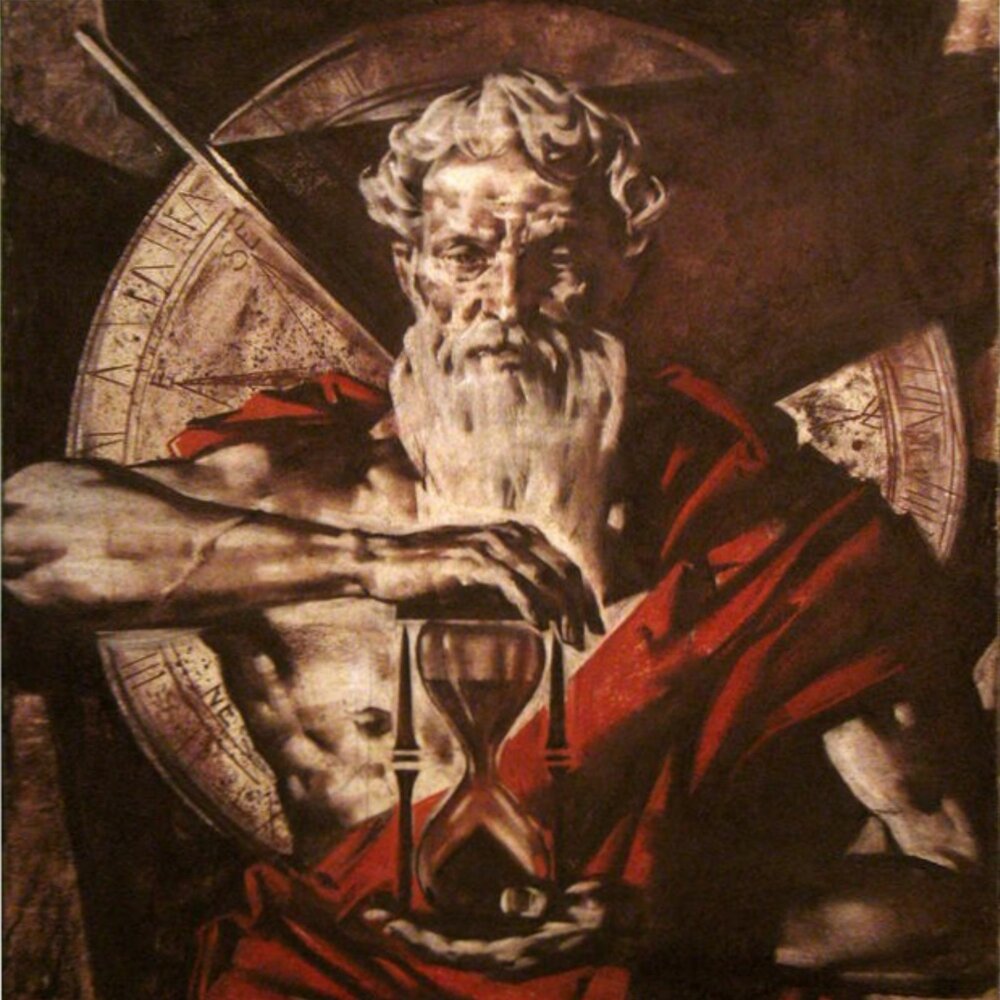
Even modern physics is gradually acknowledging the limitation (and conventionality) of the category of time, and, for example, in the equations of the General Theory of Relativity time is entirely absent. Let us note once again that from the Hermetic point of view time is not an illusion, not a fiction, but only a relative way of describing a system from the point of view of its limited state.
It is precisely such a transition — from the absolute view to the relative one, with the subsequent dominance of the latter — that marks the Gnostic image of the emergence of Ialdabaoth (often depicted as a serpent with a lion’s head) as a “fall,” a limitation of Aeon (or Zurvan, depicted as a man with a lion’s head). In other words, one could say that Ialdabaoth is Zurvan, “mixed” with Ouroboros, eternity that has “lost” itself in processuality. Therefore a number of Gnostic texts also correlate Ialdabaoth with Saturn, considering it precisely as “demonic time,” a jailer within the relative. This is exactly how, as we have already said, the limitation of heimarmene arises: the mind mistakes the relative for the absolute, and proceeds to act as though this relative were the only possible reality. The traditional system of views describes this kind of delusion as the demonic matrix of Agaliarepta — the destructor of “being trapped in time.”
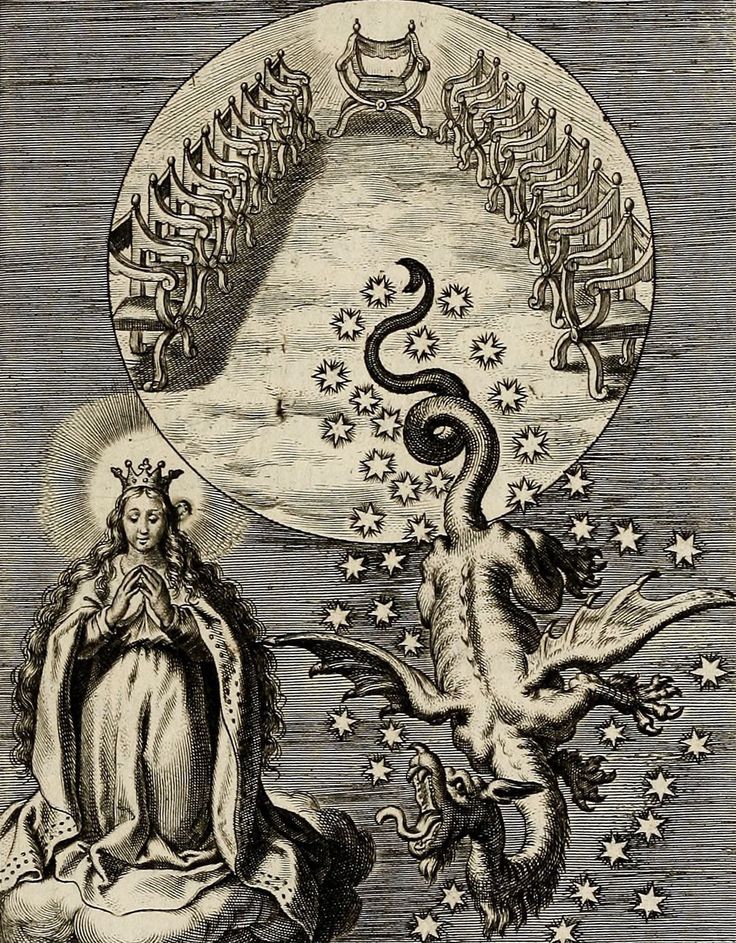
Thus, the study of the Gnostic and Hermetic Myths leads to the obvious conclusion about the relativity of the category of time, which, in turn, helps pave the way to overcoming this limitation: Ialdabaoth can become Aeon again (in one of the traditions — Sabaoth) when he recognizes his limitation, his blindness. The prison of heimarmene rests on faith in its unshakability, upon a sense of hopelessness. And from its point of view, that’s how it is: samsara has no way out; it is impossible simply to “leave” it. However, it is possible to discover that from another point of view it never even began, from the aeonic perspective the mind never limited itself. And by combining these two points of view, neutralizing this binary, one can also discover the actual state of freedom, limited neither by the necessity of existence nor by its denial.

The sacred marriage of the absolute and the relative. The article is fire!
Hello Master! Does the relativity/limitation of description depend on the volume of the stream of information that the observer can pass through themselves?! That is, from personal power, or is it purely a characteristic of the physical body?
Hello. There is no manifested consciousness separate from the body (understood in the broadest sense), so it is correct to talk about a being as a psychophysical complex. Accordingly, the functioning of consciousness is influenced both by the characteristics of the consciousness flow itself and the properties of its conductors.
Understanding the front of time and managing it is a very useful skill. This ability has saved me more than once when traveling, needing to roll back time to neutralize changes.
I had a very strange experience with the flow of time this spring. Time accelerated and reversed around me. I fell out of reality for an hour. I heard the ringing of a bell as it is written in fairy tales. An unusual number of strikes. And finally, it was documented that I came to work at 8 and walked 100 meters for about an hour.