Strivings and Attractions
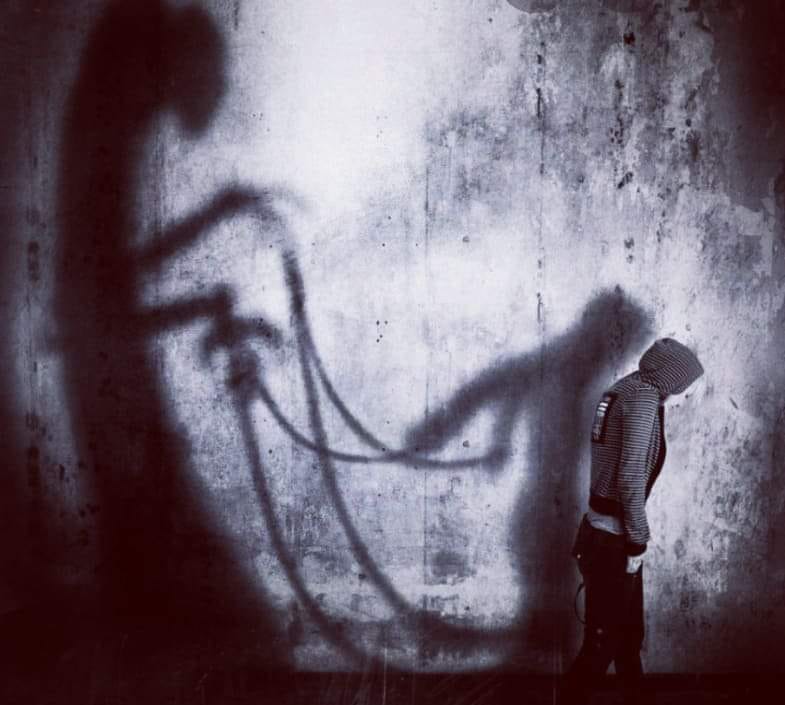
As we have said repeatedly, one of the most significant problems confronting the traveler on the Way of his development lies in the incapacity to directly distinguish the direction of the flows of energy in which he is involved. In other words, the mind perceives equally both energy gain and loss, and often finds it difficult to identify its source, confusing strivings with attractions.
Since Magic is, above all, a Way of development through self-realization, this duality takes on particular significance for it.
Difficulties in understanding this issue stem from describing Power and its active component — energy — as flows. Indeed, if taken literally, this description suggests there is no special difficulty in telling where a flow is going or where its source is.
It is important to see that this description is only one of the technical models, suitable for revealing patterns in certain processes, but not appropriate for others. Indeed, speaking of Power/energy as flows is convenient for describing mental processes in terms of time, movement, and for pointing to the presence of a difference of potentials as the condition of their manifestation. At the same time, one must understand that Power and energy are not substances, and in such ‘flow’ nothing is carried anywhere — neither physically nor metaphysically — but rather the systems’ states change, their activity patterns change. When we say that energy flowed from object A to object B, we merely mean that a decrease in the activity of object A caused an increase in the activity of object B; these changes are connected in time and causally. Moreover, we cannot find anything that ‘moved’ from A to B, disappeared in A and appeared in B, other than the activity itself.
For this reason, to describe such processes, another method — the ‘matrix‘ one — is traditionally used: by considering the ‘activation’ of various ‘worlds‘, changes in objects’ energy qualities, is — to describe the mind’s transition between matrices.
From this point of view, the ‘flow of energy‘ is understood as a situation in which the activity (the tonus) of the pneuma associated with one being rises, while another’s falls: in one ‘vessel’ the pneuma ‘heats up‘, and in the other it ‘cools down‘; by ‘induction of Power‘ means the growth of awareness of one focus of mind in response to contact with another focus, object, or process.
Accordingly, if contact between one being and another being, process, or object causes an increase of the tonus of the pneuma in that being’s ‘vessel’, we speak of energy gain; and if the tonus decreases — of energy loss. At the same time, since the very assignment of the pneuma to a particular vessel is rather conventional, the mind registers only the fact of a ‘change in tension’ and labels it an ‘energy flow’, which it subjectively values. Another reason for the difficulty in distinguishing ‘influx’ from ‘outflow’ of energy is their connection with sexuality and procreation: fertilization, as the beginning of new life, is accompanied by a huge ‘discharge’ of energy, yet is necessary and therefore subjectively ‘pleasant’ for men, just as childbirth has a positive emotional significance for women (even despite the pain).
At the same time, a change in the tonus of the pneuma does not matter in itself but only as a basis for the development of the mind: an increase in the energy level must provide the basis for the induction of Power. As we have already mentioned, the driving impulse for any realization is the difference of potentials that arises between the current state of the mind and another state available to it, and the energy necessary for this transition is expressed as desire, need or whim. If, as a result of realizing that impulse, the mind shifts to a higher level (that is, becomes capable of operating with larger amounts of Power), this is called desire; if the level of the mind falls — of a whim; if it remains approximately the same — of a need. Similarly, if the source of the energy for realization comes from the mind itself, one speaks of a striving, whereas if that source is external — of an attraction. Accordingly, an attraction depends on an external stimulus, while a striving arises independently of it. An attraction requires information about the stimulus that evokes it; a striving, by contrast, is initially undeveloped.

It is clear that following a striving increases Power, while following an attraction weakens it, since an ‘internal’ source of energy implies expansive action, and Power, as is known, grows from use; being drawn into ‘foreign’ flows means that a being’s energetic resources become a support, the ‘environment’ for those ‘external’ realizations, and therefore the being becomes depleted.
Thus, the ‘ideal’ development of the mind should proceed, first, with effective ‘tonization‘ of its pneuma — that is, with maintaining the health and activity of all the conductors of the mind, the bodies; second, with the correct identification and fulfillment of desires; and third, with pursuing one’s strivings.

Leave a Reply