Order and Chaos
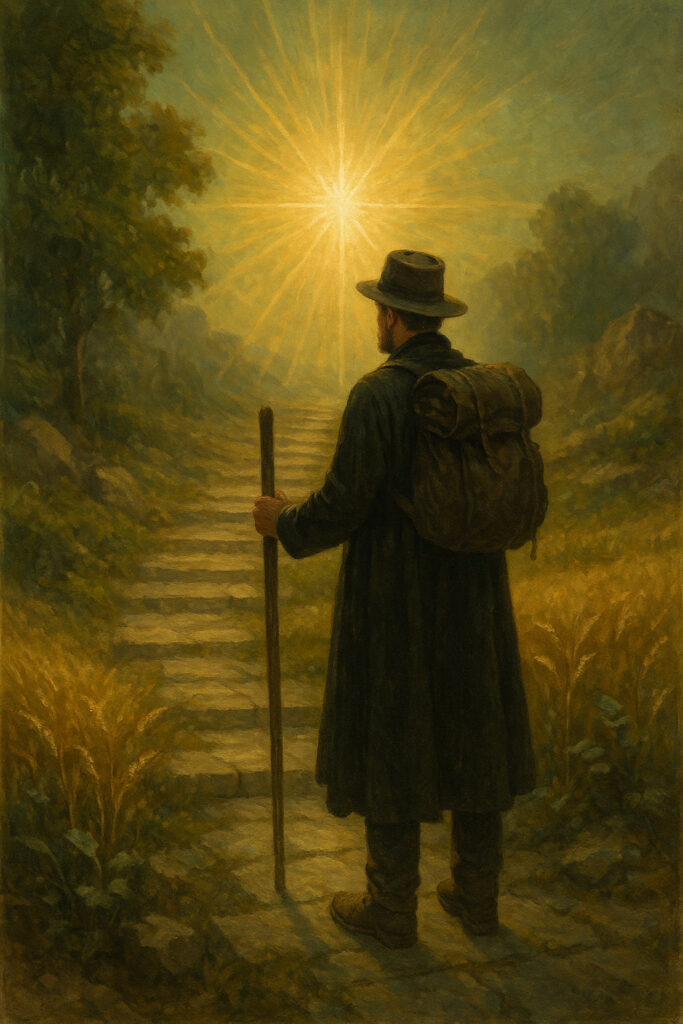
We have already said more than once that the goal and task of manifested existence — the actualization of the potentials of consciousness, its self-reflection and self-knowledge — requires a definite and lawful environment for its manifestation, that is, the emergence of ordered worlds.
In other words, development always means the transition of a system from a less ordered state to a more ordered one, and conversely, degradation is usually synonymous with becoming chaotic.
However, in reality, it is not so simple. As we could already understand from what was discussed earlier, development is impossible either under conditions of chaos or when order ossifies, and there exists only a rather narrow “window of balance” when order is already sufficient, but not yet suffocating for the free movement of mind.
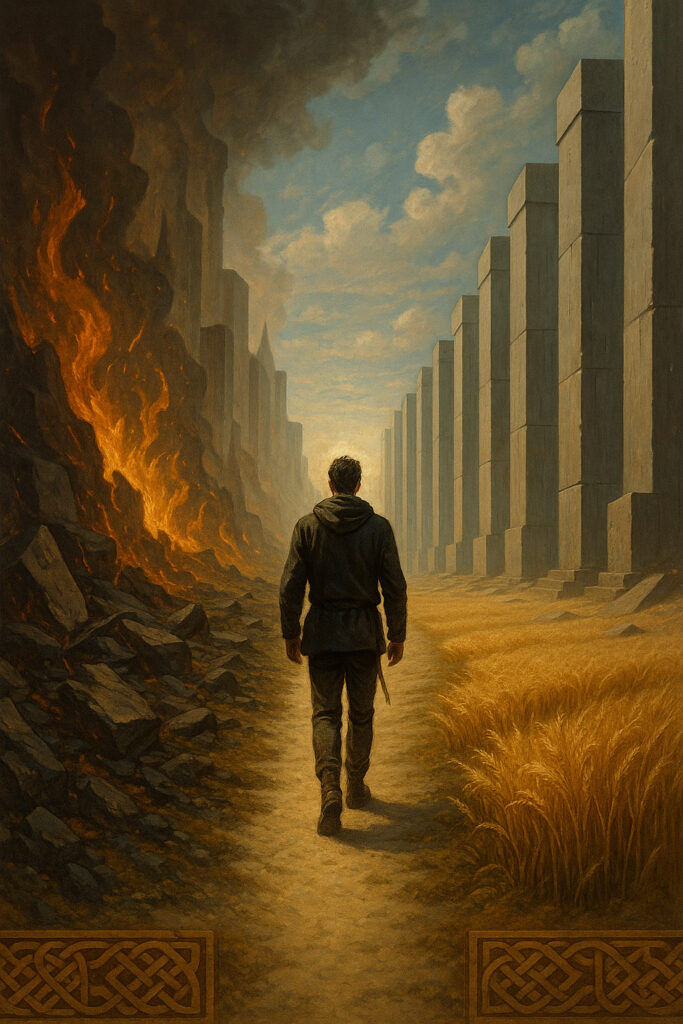
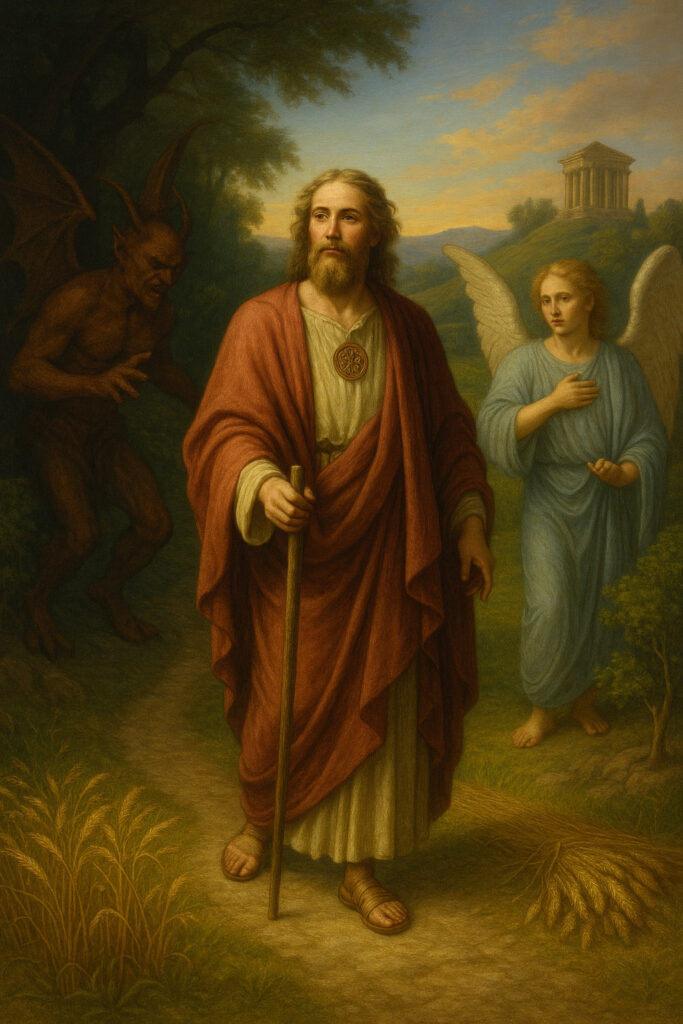
It is precisely these two indicated limits — dissolution into chaos and “freezing” in structure — that correspond to the two main obstacles to development, personified by demonic and archontic forces, respectively.
At the same time, it is easy to notice that sliding into one of these extremes is a far more common scenario than maintaining the balance of the “middle way.”
Among all “spiritual wayfarers,” in different times, either “adepts of free freedom” predominate — which, of course, is only venting energy into the chaotic spaces of qlippoth — or else ascetics and scholastics who merely uphold the walls of heimarmene.
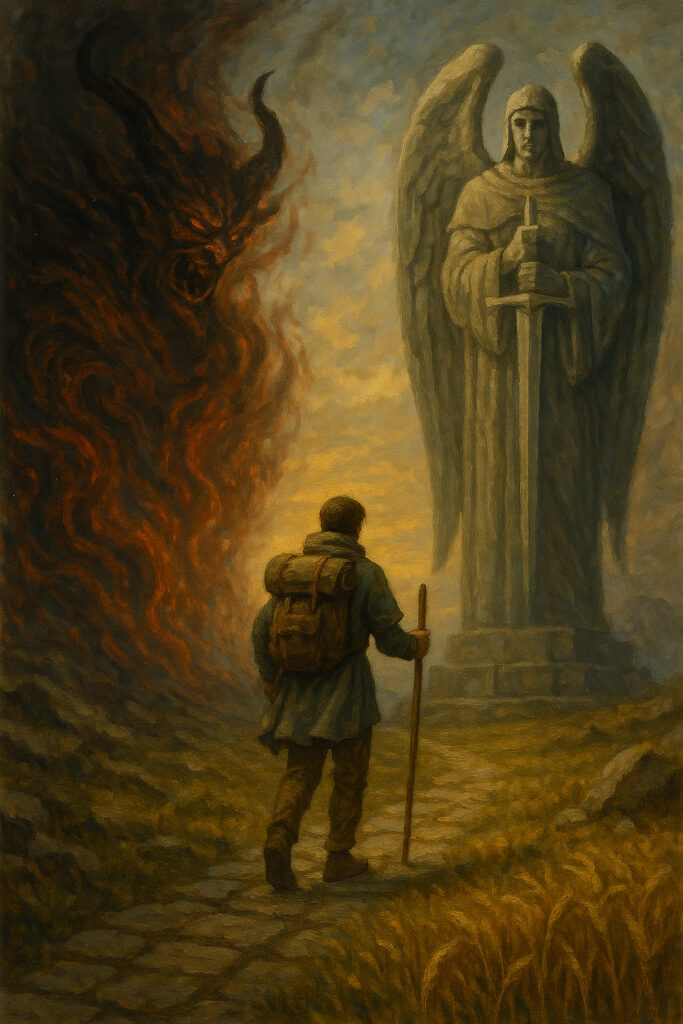
And in exactly the same way, on the social level, it is not hard to see how states and societies tilt either toward bureaucratization and over-regulation that deny compassion and mercy, or toward raw spontaneity and chaos that provide an excellent fertile environment for corruption and exploitation.
Real development, or at least stable existence, is possible only when chaos gives a sufficient number of potentials, while cosmos finds a place for them — wide enough to allow them to manifest all their shades and details, but at the same time limited enough not to let them “exhaust themselves.” Any potential that is given too little freedom fades and pours out into “bare” and “undifferentiated” energy; but that which is not guided by anything burns out, passing into its opposite. That creative state which balances between extremes the Greeks called “theosom,” and the Slavs “prav,” meaning a free yet ordered manifestation of will, joining the depths of feelings with the heights of reason.
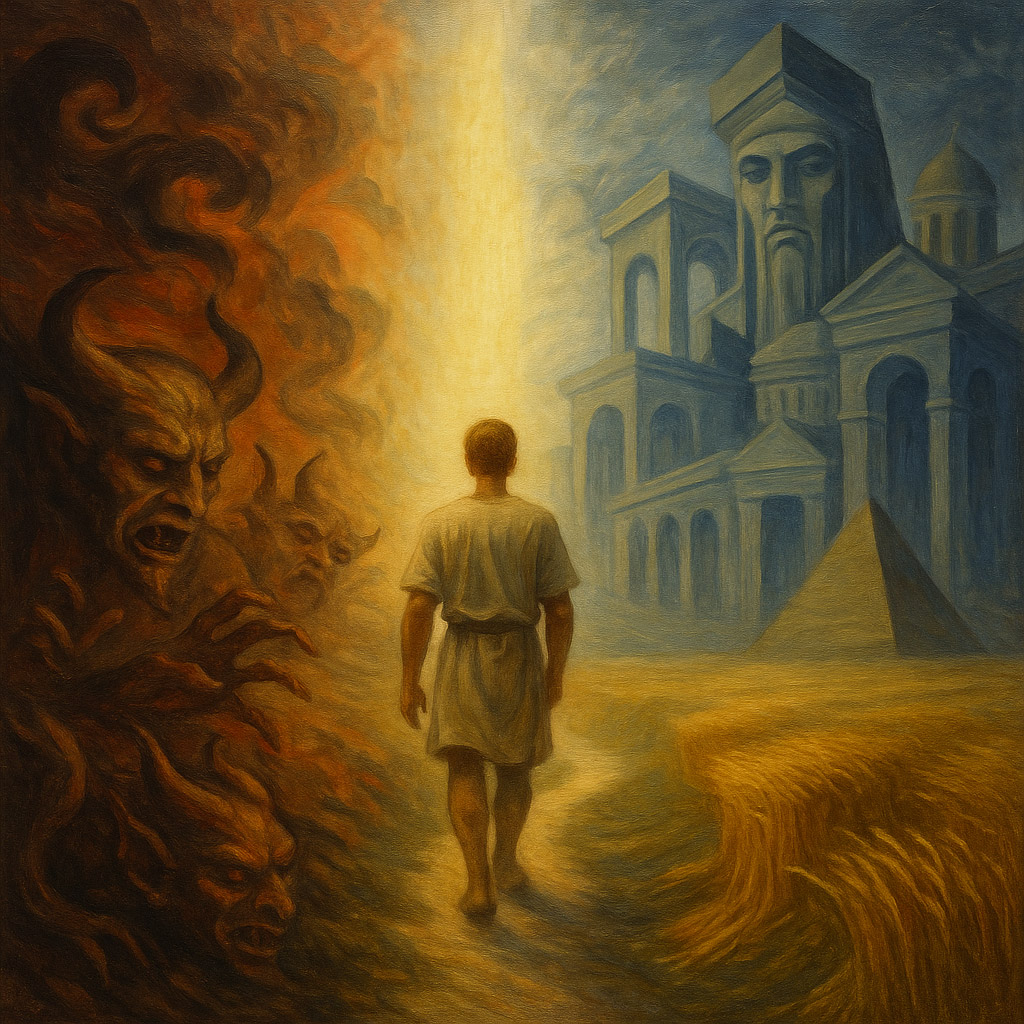
Any effective system strives to maximize its exchange of information with the surrounding world, without increasing its own complexity. A model that is too rigid loses the freedom of receptivity, and one that is too free loses self-identity. Accordingly, the middle way is that minimum description which is sufficient for accuracy (this is known as the principle of “minimal sufficiency”), and at the level of the dense world it is a balanced combination of homeostasis (preservation) and allostasis (re-tuning).
It is precisely this state — almost lost by modern esoteric schools and currents — that was the object of the quest of “classical” esotericism — from the Orphics and the Pythagoreans to Rosicrucian traditions. It is precisely such a balance that Jung called for seeking, and it is precisely along this fine line that Crowley walked — and it is surprising why, for most of their modern followers, the idea of healthy orderliness, discipline, and responsibility is so alien.
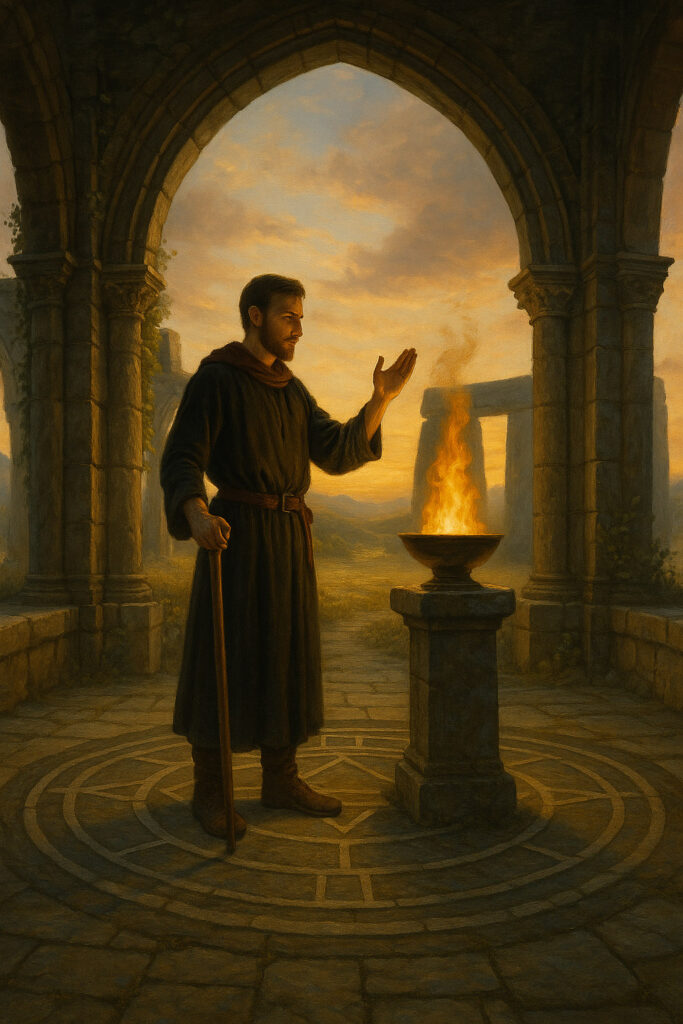
This orderliness of action and perception in traditional terminology is called a ritual. We have already discussed more than once that the Magus’s actions are always ritualized, structured, ordered, and purposeful. In a broad and living sense, a ritual is an action that frees cognitive and energetic resources by fixing what is obligatory and repeatable, so as not to spend energy each time on the basics. At the same time, a good ritual always provides sufficient space for improvisation, spontaneity, and creativity.
Therefore, it is important for the Magus to refrain from two mistakes. The first mistake is to think: “I am creative, no frameworks suit me.” It is necessary to understand that orderliness does not kill creativity; on the contrary, it relieves it of everyday burdens and gives it a springboard for flight. The second illusion: “I am disciplined, I am above spontaneity and play.” However, in reality play is always needed: without infusions of creative, “useless” movements, discipline turns into a dungeon, into armor that leaves no room to breathe. If unexpected solutions disappear, if everything becomes only an algorithm and a rigid set of regulations, if any deviation causes disproportionate stress — there is too much discipline, and development is impossible.
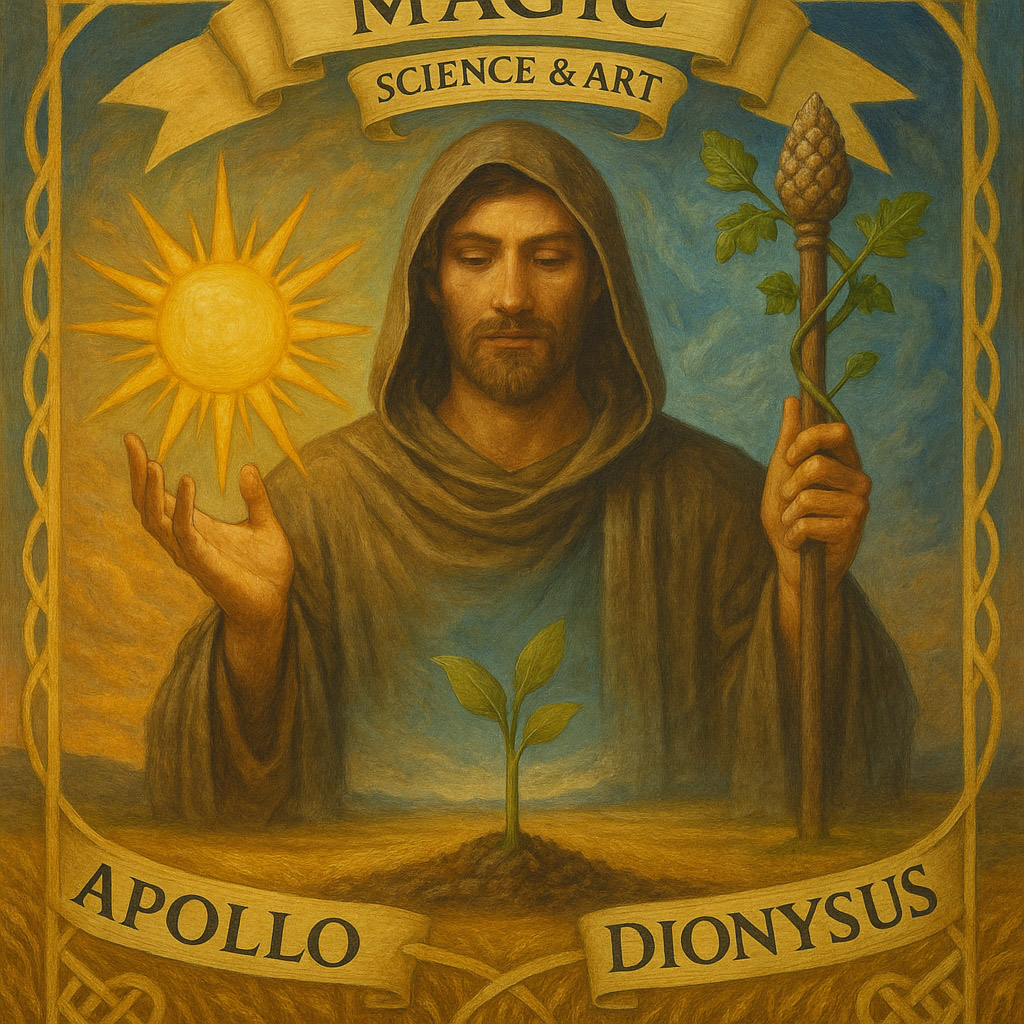
One could say that the true middle way is a technique of limited uncertainty. The Magus does not mute the influences of chaos; he merely regulates them. At the same time, he also does not take order to absurd extremes, leaving space for spontaneity and creativity. In this mode, potentials do not burn out and do not fade — they ripen and sprout. Therefore Magic is, as Crowley said, simultaneously a science and an art, a craft and high-level creativity, Apollo and Dionysus, or Ra and Osiris, joined together and creating a harmonious world.
Thank you.
Thank you, Master Enmerkar.