
Idams and Luminaries
We have already said repeatedly that one traditional approach to the development of consciousness is theurgy, which, in a broad sense, involves the “retuning” of the channels of consciousness and the activation of the higher, constructive and evolutionary, matrices.
At the same time, two approaches to such activation have been developed — an “external” and an “internal” one. In the first case the being tunes itself to the image of a “real” deity and attempts to bring about changes in itself toward greater conformity with that image. The deity is taken in its highest aspect, as a manifestation of wisdom, power and harmony, and its “personal” traits are perceived only in terms of its functions. This is precisely the classical Hellenistic theurgy, and it is also characteristic of the modern bhakti-yoga approaches developed in the East.
In the second case the “external” bearer of the activated matrix is not essential, and its independent existence is neither discussed nor affirmed. All the practitioner’s attention is turned inward to their mind, where one of the accessible Higher matrices is identified and activated, regarded as a “personal guide”, an idam or Keeper. Such approaches include Eonic Yoga and the “yoga of deities” of the Vajrayana — all those methods that, from a Gnostic point of view, might be called the “Yoga of the Luminaries”. Although Buddhist approaches clearly understand and even insist on the necessity of combining view and practice, “wisdom and method”, teachings about the nature of idams and tantric deities, their origins and reasons for appearing are often revealed only superficially. Therefore the tantric approach may be called practically oriented, where attainment takes precedence over understanding.
In contrast, Gnostic approaches have a more pronounced “sophiological”, “wisdom” component; for them understanding, “knowing”, is primary and it is precisely this that generates both the motivation and the methodology of practice.
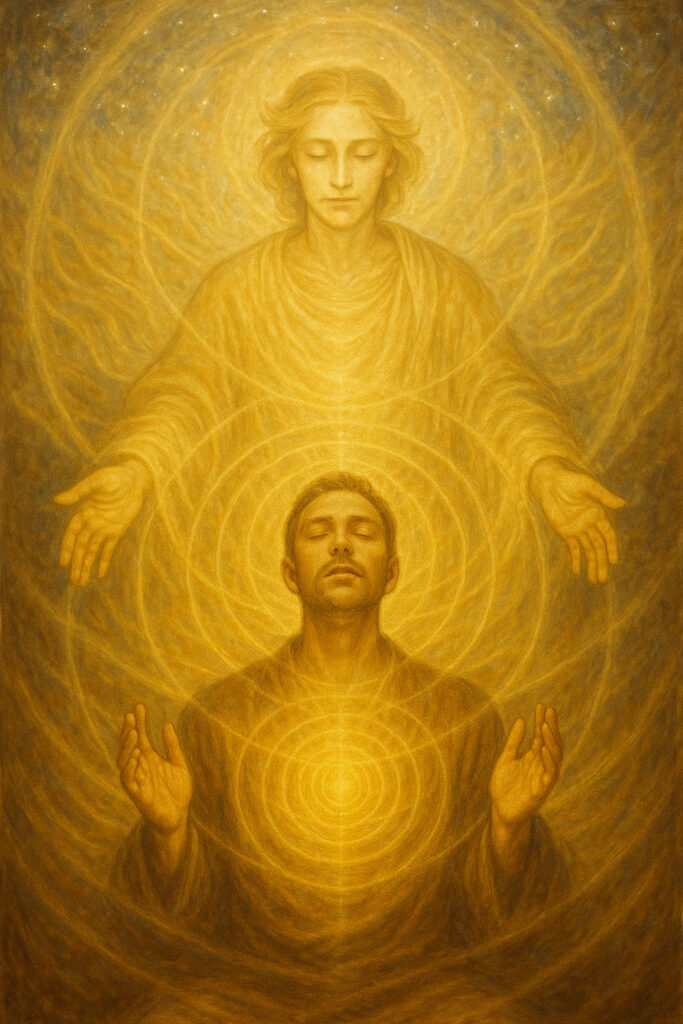
We have already discussed that at the heart of this Gnostic method lies the notion of the Luminaries — the “reactive” manifestations of the Enlightened Realm, the Pleroma, arising in response to the “calls” of souls imprisoned in matter (the world of kenoma). Each Luminary represents a certain set of higher qualities: for example, in the Apocryphon of John the first Luminary — Armozel — is associated with grace (Charis), while the sphere of Eleleth includes such eonic qualities as Perfection, Peace and Wisdom.
Luminaries are pure manifestations of the divine ground of mind, not limited by independent will or individual desires. One could say that for Gnostics they are personalized rays of the Pleroma, allowing a limited being to establish contact with the Transcendent. They are at once guides and signposts: on the one hand the image of a Luminary serves as an ideal toward which the mind strives (that is, it functions as a landmark in spiritual topography); on the other hand the Luminary itself can direct the mind upward, performing the role of a conduit through cosmic obstacles (that is, through the spheres of the Archons).
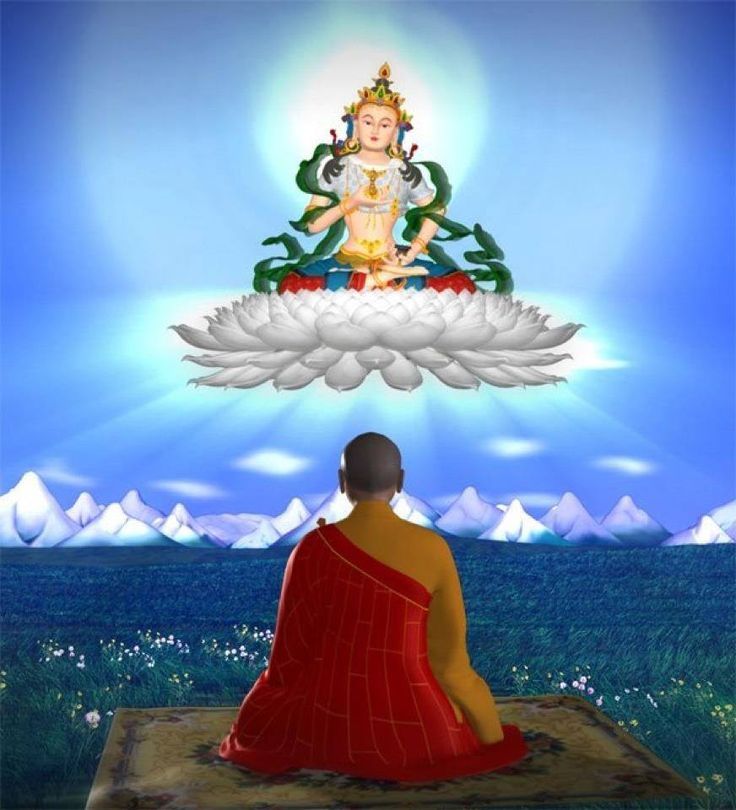
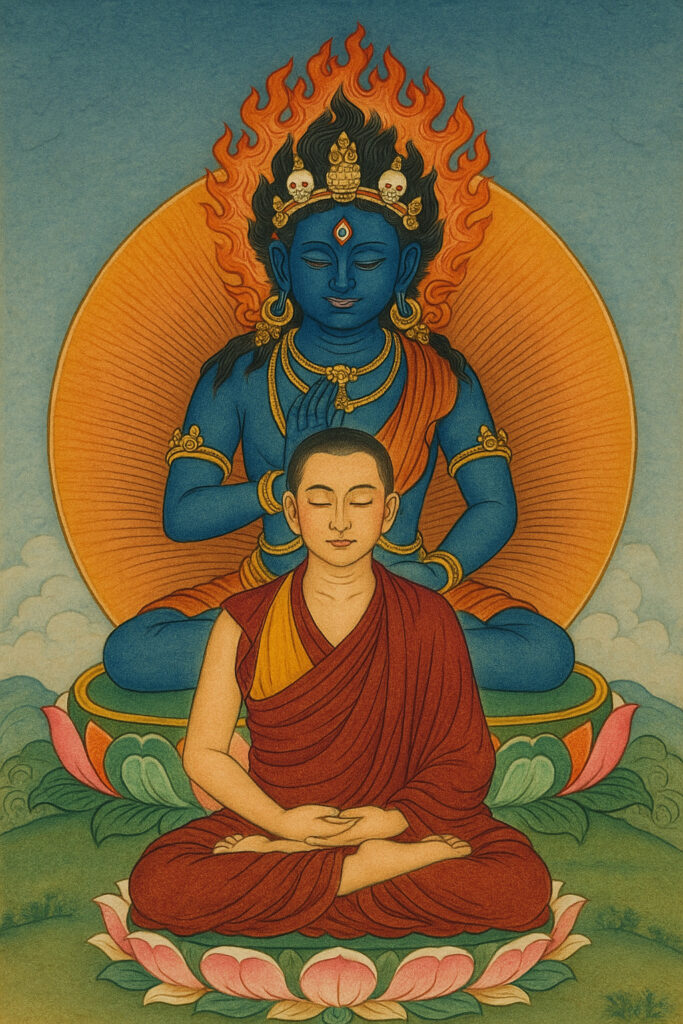
In the same way, an idam in the Vajrayana is understood as the ideal image of an enlightened being, born of the enlightened mind. It is held that from the inner ground of reality — the Nature of the Buddha — countless manifestations issue forth: buddhas and bodhisattvas of various forms, arising in response to the karmic needs or “requests” of beings. As in Gnosticism, the role of the idam is manifold: it is protector, teacher and ideal image of awakening. Like Luminaries, idams are an intellectual form of the enlightened state with which the meditator identifies in order to reveal their own Buddha-nature.
In both cases the origin of these figures traces back to a transcendent source: Luminaries are born of the Absolute’s self-knowledge in the Pleroma, while idams arise from the enlightened state of the Buddha (Adi-Buddha) or from transcendental wisdom (Prajñāpāramitā). Thus one may say that the Gnostic Pleroma is analogous to the Buddhists’ Dharmakāya as the supreme over-reality that generates manifestations, and that Luminaries, like idams, are manifestations of the higher Light arising at the level of that ideal over-reality. At the same time the Gnostic tradition is less detailed in specifying the “forms” of Luminaries (they are simply abstract, angel-like), whereas the Vajrayana has developed a complex symbolism and visual form for each idam.
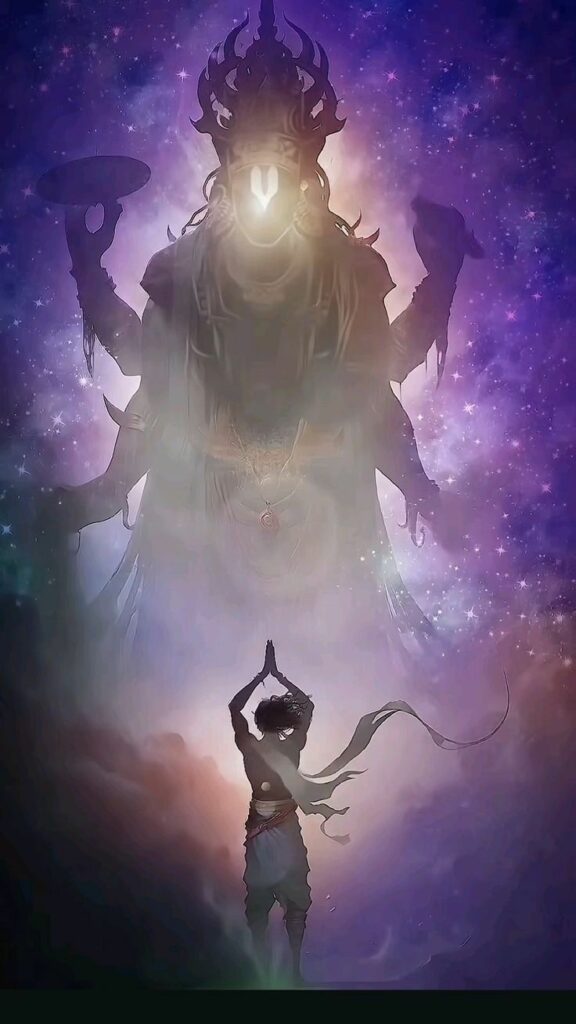
Thus one can assert that idams and the meditative deities of the Vajrayana are by their nature identical to the Luminaries as described in the Gnostic tradition. They are the same mental structures, manifesting in different cultures under different names but with the same metaphysical nature. Their manifestation is conditioned by the resonance, the correspondence between the practitioner’s inner state and the response of the Transcendent. Just as idams arise in response to deep meditative attunement and serve as a “bridge” or “window” to the experience of emptiness (shunyata), Luminaries are the enlightening emanations of the Pleroma, lacking personal identification but endowed with an infallible orientation toward Light, Freedom and Love. Specifically, these figures are not subjects but gateway light-structures that connect embodied mind with its original ground — the gatekeeper forms.
The Gnostic myth describes the manifestation or “birth” of a Luminary from the Ocean of the Pleroma in terms of the interaction of two energies or “wisdoms” — Pronoia and Epinoia.
We have already discussed that Mezla (Pronoia) is the power of Unity permeating creation from within, “descending knowledge”, the manifestation of spiritual nature in every being, while Epinoia (Shekhinah) is the energy of the “ascending” impulse, the intuition of the divine that forms concrete impulses for development — the “memory” of the Supreme “home”. From their interplay the common structure of Light is woven, which may be perceived as an image, a message, and an inner power. This structure in its concrete manifestation is the Luminary as a “light” bridge across the Threshold between Potential and Manifest, between the Absolute and the particular.
Namely, the birth of Luminaries is possible only where awakened Epinoia comes into attunement with the descending current of Pronoia, and this is the key to the yoga of the Luminaries as a contemplative technique of perceiving the point of convergence of the two currents in the practitioner’s mind, whereby form, symbol and revelation born of Light from within appear. One can say that although images of Luminaries recur (for example, as Eleleth, Armozel, Daveith or Oroiel), they are “born” anew in each theurgical act as a result of resonance between the inner aspiration and the higher current of Mezla.
When, in response to the call of the embodied mind, the Pleroma touches the world — directly or through Barbelo (Pronoia) — it cannot, by virtue of its transcendence, be perceived “as itself.” Therefore it manifests in a comprehensible image in which its luminous essence (ontological component), directed action (function), and imaginal representation (form) are joined. Thus a Luminary arises — a specific modality of Light, an image of the Pleroma “clothed” in a form commensurate with the mind’s capacity to receive it.
From a Gnostic viewpoint, the Pleroma does not intervene in the world until it is called; its action is always reactive, similar to how the Logos does not act on its own will but “according to the Father.” Thus a Luminary is a responsive reflection of the Great Perfection, a “limited” structure of Light that appears only where space has arisen in the mind to reflect the Pleroma.
Seen in this light, it becomes clear that success in contacting these higher images requires significant inner purity and preparedness on the practitioner’s part. A Gnostic must first cleanse their mind of ignorance and passions — that is, reach a state resonant with pleromatic reality — so that higher revelations may arise. Thus Gnostic schools from antiquity practiced asceticism, prayerful invocations and special initiatory rites that prepared the student to receive the emanations of eonic reality.
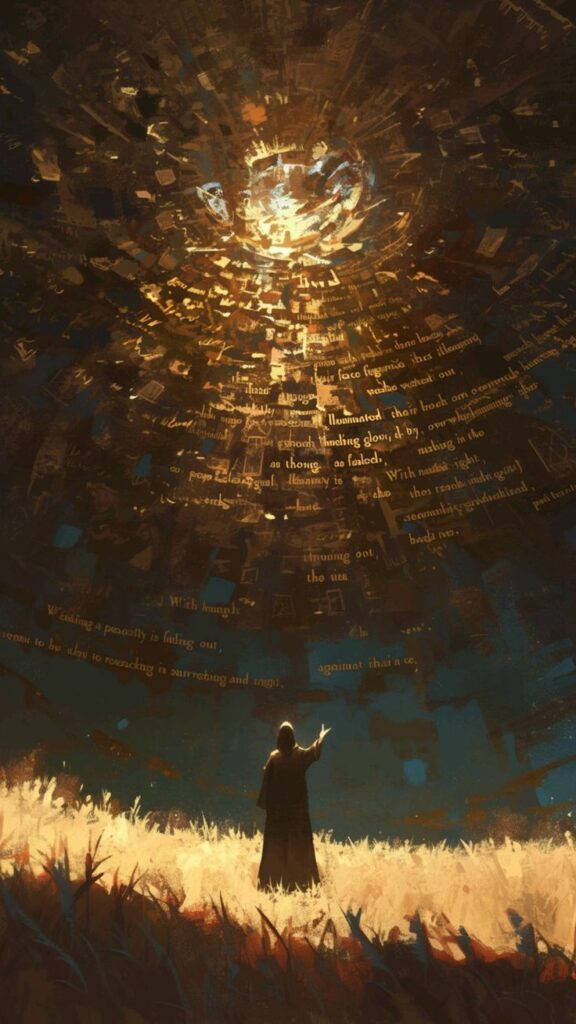
In tantric Buddhist practice the conditions are even more formalized: before beginning the “deity yoga” with an idam the student must receive initiation from a qualified Master and take vows — in particular the Bodhisattva vow — commitment to serve all beings. Understanding the philosophical principle of emptiness — the awareness of the interdependent nature of all phenomena — is also considered mandatory. It is believed that only under these conditions are visualization and fusion with the idam fruitful and safe. In other words, purity of motive (the altruism of the Bodhisattva) and correct view (wisdom seeing the emptiness of phenomena) are necessary conditions for successful practice. If Gnostics speak of “purity of heart” and self-knowledge as prerequisites for Gnosis, Buddhists require the preparation of mind through ethics, meditation and logic to enter the deep Way. In both cases, without this, direct contact with a high spiritual level is either impossible or fraught with delusion and other dangers.
The culmination of interaction in both cases is deification — identification with the highest nature. In idam yoga the practitioner, after visualization, dissolves the image of the deity into light and then manifests it again, no longer before themselves but within or in the form of themselves. The practitioner lives the idea that there is no difference between them and the enlightened idam, their true essence is the divine form of the idam. This method serves to break down dualism and reveal innate wisdom.
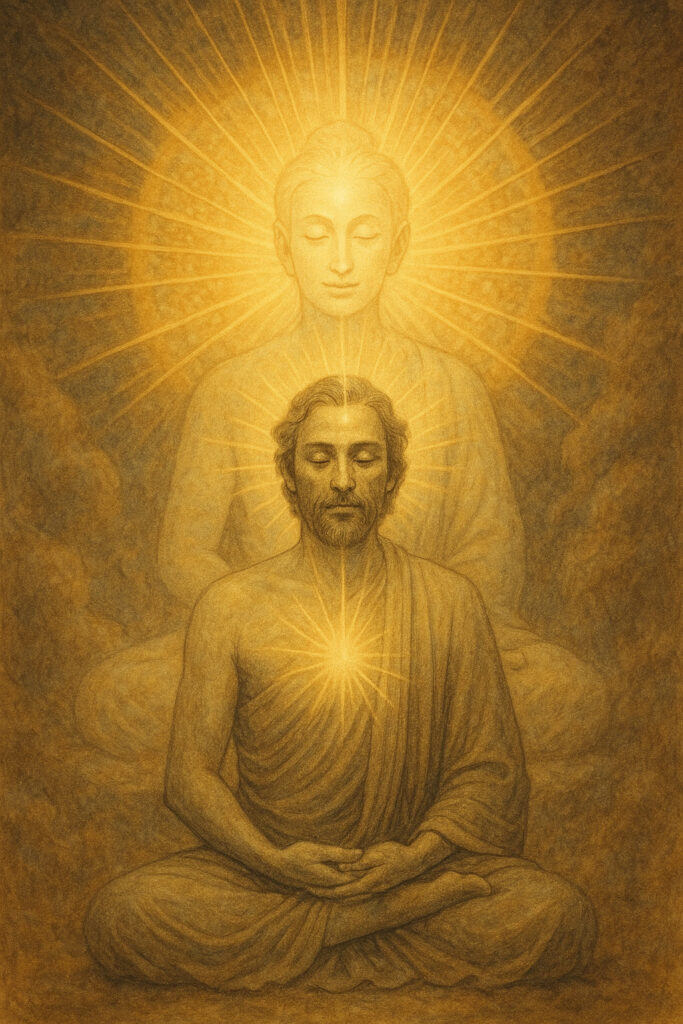
The Gnostic analogue is the identification of the soul with an Aeon — the idea that the divine spark in a person is essentially identical with one of the divine Aeons. Valentinian Gnostics, for example, performed the Ritual of the Bridal Chamber, symbolically uniting the adept’s soul with a Luminary or an Aeon of the Pleroma, thereby affirming its divine status. Although direct instructions for visualizing oneself as a Luminary have not survived, a number of hymns imply the ascension of the soul through the spheres — the ethers — with the utterance of the names of the Aeons, which can be seen as a transmutation of the being into a manifestation of light in order to pass the Archons and ascend to higher spheres. Thus, in the Pistis Sophia the soul, rising after death, must appear before the Archons clothed in Light and naming the Names of the Higher powers so that they will let it pass. This can be regarded as adopting a divine form for liberation, which is very close to the yogic practice of merging with or transforming into the idam’s divine form.
In their visualizations and contemplations the Gnostic seeks to move the mind out of the chaotic material world into the “imaginal Pleroma” — picturing themselves surrounded by Aeons of light, dwelling among Luminaries. Rituals aimed at this invoked the “names of the powers of light in all directions”, creating around the practitioner a protective circle of divine Names (analogous to the Mandala of Keepers in tantric Buddhism).
At the same time, it is well known that as one deepens into any liberating practice the danger of false visions and misinterpretation of experiences increases. Thus Buddhists warn about the interference of Mar — obstructing forces: on the path of meditation frightful or, conversely, seductively beautiful images may arise that are nonetheless merely projections of the mind or the play of lower spirits, and they should not be taken for genuine signs of attainment. With respect to idam practice, teachers instruct humility and caution against literally considering oneself a deity, otherwise one risks falling into megalomania or spiritual collapse. Hence the emphasis on an experienced Master who monitors the student, and on vows — they protect against improper conduct.
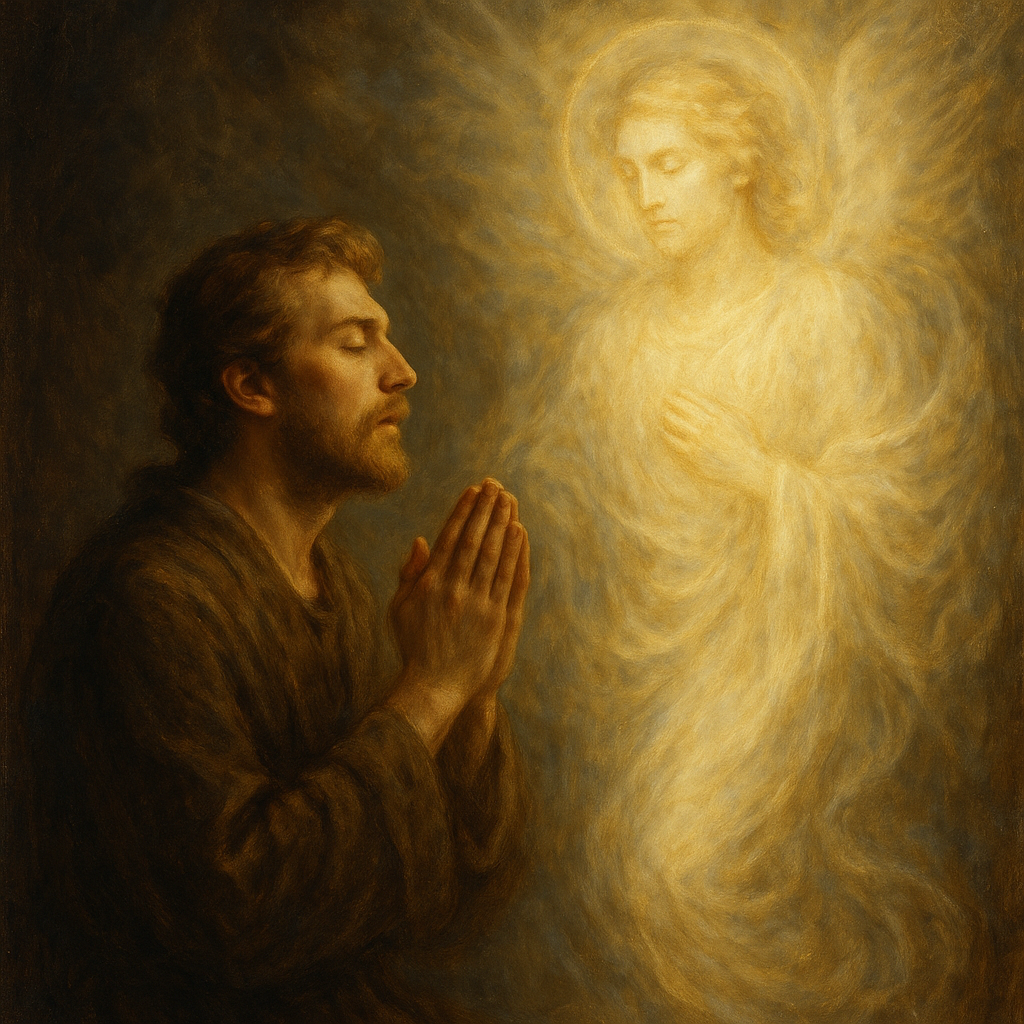
Similarly, in Gnostic and Christian tradition there is the warning that “even Satan can appear as an Angel of Light”. This means that not every vision or image, even if it shines with light, is benevolent in essence. Gnostics were keenly aware of the craftiness of the Archons and false spirits; in their view various false prophets could receive revelations from archontic or demonic forces posing as divine emissaries. For example, if an “angel” urges a person toward pride, division, or dependency, a Gnostic would judge it false, because “true” Luminaries always lead the mind toward Light, Love and Freedom. The criterion of authenticity, as always, is the fruit: true guidance brings the soul peace and an expansion of the mind, whereas the false provokes selfishness, fear or anger. Thus Gnostic practice demands discernment and the “testing of spirits”: even if a practitioner is shown a heavenly-beautiful shining being, they must pay attention to the consequences and the direction of that contact’s influence.

Thus one can say that Gnostic practice of the “Yoga of the Luminaries” should include several stages:
- Preparation (purgation): cleansing of the mind through prayer to the Highest, recitation of calls and hymns, affirming the intention to attain Divine Fullness for true liberation.
- Cultivating the image (imagination): selecting a particular Luminary or an Eonic deity as the meditative image. At this stage the practitioner visualizes the radiant aspect of the Luminary.
- Calling the Pleroma: the practitioner utters sacred Names and prayerful appeals corresponding to the chosen Luminary to attract the Pleroma’s energy into the visualized image.
- Identification and integration: once the image has appeared, the practitioner contemplates it before themself, feeling reverence and connection. Then the practitioner makes a transition: they imagine the Luminary merging with their nature.
- Meditation in unity: for a time the practitioner abides in silent contemplation, holding the sense of perfect Light, indivisible unity with the Pleroma. This is analogous to the stage of completion (dzogrim) in tantra, where all images dissolve into primordial light. In this state there is no thought of the meditator, there is only being as part of Fullness. In Gnostic terms this is the attainment of the state in which the mind is “indivisible and not merged” with the Deity, a foretaste of deification.
- Return and thanksgiving: concluding the practice, the adept returns awareness to the ordinary state, imagining the Luminary’s light spreading through the cosmos, neutralizing darkness. They express gratitude to the Pleroma and the Luminary for the grace that united them.
Overall, one can say that the ultimate goal of this practice is gnosis equivalent to salvation: the knowing-union that returns the soul’s “spark” to its source. Such practice creates an experience of profound inner light, a feeling of love and unity — the very three signs of a true manifestation of the Pleroma. A person who regularly practices the “yoga of the Luminaries” gains steadfastness in the face of the vicissitudes of the world, becomes detached from the world of the Archons, much like an accomplished Buddhist yogin is unmoved by samsara. Such Gnostic enlightenment issues forth in the awakening of compassion and wisdom, for one who has known the Pleroma radiates its qualities — Light, Love, Freedom — in all their actions.
Hello! In previous texts, you mentioned that the SAK is a “top view” and the idam is a “bottom view.” Perhaps it was not in the texts but in a video; I’m sorry if I got it mixed up. But then what is the difference between SAK and a luminary?
Hello! Indeed, in the practice of idama, activity comes from the practitioner, who gradually transforms themselves into a deity. In Luminary Yoga, the invoked matrix also has its own activity; this “deity” is usually more active and dynamic than the meditative one, although it has the same nature of the “Light response.” “SAH” is an accessible manifestation of the “personal logos”; it “wakes up” as a call and has the same nature of the “response of Light,” but in this case from the “Micropleroma,” from the individual aspect of the Great Fulness.
Thank you for the article. I would like to throw out a couple of questions. What is the difference between the mind and consciousness, or are they the same? As I understand it, consciousness is pure perception, while the mind (our typical mind) is the same perception but narrowed and constrained (for example, by passions). So it turns out that the mind/Intellect and consciousness have the same nature as the pleromatic uncreated light? Can a magician work with deities without being initiated into a tradition (any tradition)? After all, deities are already “trampled” channels of thousands of practitioners before you. What I’m getting at is that if you use their system, you basically have to sign a contract, so to speak, go through a sort of face control. So it appears that without some kind of system, nothing will work. From your experience, how does the West differ from the East? Is there an analogue among the Slavs in terms of paganism concerning luminaries and the pleroma? I feel there isn’t. P.S.: What do you know about the practice of Hesychasm, where the mind is placed in the heart center? There too, there is a pursuit of uncreated pleromatic “energy,” but there’s no mention of deities and other such things there.
As has been noted multiple times, in the terminology of the discussed Myth, consciousness (animus) is the “subjective” component of the universe, that is, it is analogous to “space” for the objective component, while “mind” (mens) is the entirety of processes occurring within this space.
Thank you for the article! Very useful knowledge about Luminaries and Gnostic practices. Do such Gnostic methods of attaining the Pleroma lead to an increase in the power of the gnostic practitioner? And what is the difference between the Yoga of Luminaries and the Yoga of Aeonic Deities, if both practices utilize attunement to the images of the manifestations of the Pleroma?
If we understand the Force as the internal potential of consciousness, its clarity, freedom, and ability to overcome the limitations of conditioned existence, then, of course, it increases through gnostic practices. As for the differences between the Yoga of Luminaries and the Yoga of Aeonic Deities, they lie in the degree of “individuality” of the perceived form. While interaction with the Luminaries is an interaction directly with the Light itself, devoid of cultural and personal embellishments, the Yoga of Aeonic Deities relies on images and attributes corresponding to specific Aeons and ethers. These deities have specific characteristics, functions, and attributes that can be seen as more concretized and individualized aspects of the universal Light. One could say that the Yoga of Luminaries is a more direct, “minimalistic,” and universal method leading to freedom and unity with the Pleromic foundations, whereas the Yoga of Aeonic Deities is a more step-by-step and detailed approach, in which consciousness sequentially masters different levels and aspects of higher consciousness, relying on appropriate forms and symbols.
Thank you for the reply!