
Gnosis and Tantra

The comparison of Western and Eastern paths, widespread recently, often leads to confusion both in terminology and concepts. Nevertheless, since there are few continuous lines of succession in both Traditions, only such a cross-study can provide the necessary basis for movement.
We have already noted one of the most important concepts of this kind is the category of “wisdom” in its energetic sense, for which the Eastern tradition developed a description in the form of Shakti (and in the Buddhist context, Prajna), whereas Western schools are inconsistent in understanding the images of Sophia, Shekhinah and a number of others.
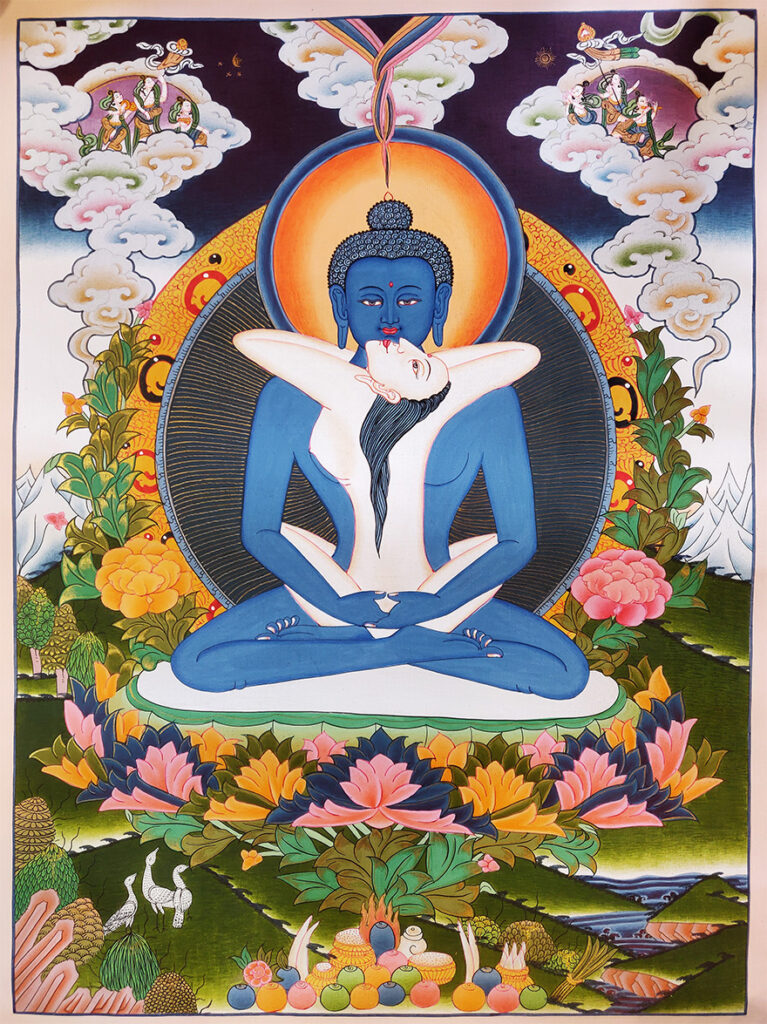
Both traditions agree that any phenomenon can be considered from two positions — noumenal (that is, existence “in itself”) and phenomenal (that is, in interactions), or as the totality of potencies and manifestations. It is precisely this binary that the Eastern Tradition has in mind when speaking of Wisdom and Method, Shakti and Shiva, Prakriti and Purusha, and similar dualities. It can be said that Wisdom in this context is the totality of all possibilities, and Method is the affirmation and manifestation of some of them. In other words, while potencies are not manifested, they are all equally probable and are in a state of “seething singularity,” pure and undirected energy, similar to the totipotency of embryonic cells capable of giving rise to any tissue or organ. It is precisely such “potential omnipotence” and “inseparable interconnectedness” that the Eastern tradition calls Higher wisdom — Prajna (or Shakti). Determining the mode of manifestation, the “ordering” of this stream of boiling potencies — the emergence of the world of objects, mind in its cosmic sense — is method, Shiva, Nous.
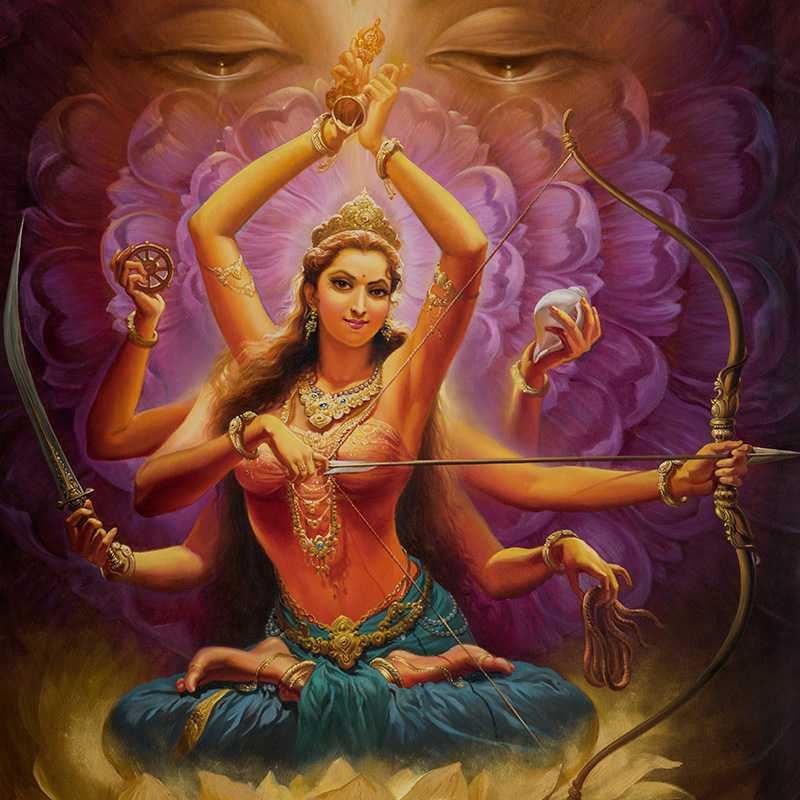
The Western myth, however, considers the category of wisdom in two contexts — Gnostic and Kabbalistic. The first approach centers on “aeonic,” potential reality, and the second — on the sephirotic, considering the levels of “hidden possibilities” and “hidden drivers” of manifestation.
From a Gnostic point of view, wisdom is not only the “last aeon,” Sophia; it is the “female” component of each syzygy. In this sense, all “female” aeons are an analogue of Shakti, just as all “male” ones are a concept close to the image of Shiva. And the first such manifestation is the “second aeon” — Sige (or Ennoea, Charis, Epinoia) — “silence,” implying the possibility of “any speech,” any manifestation.
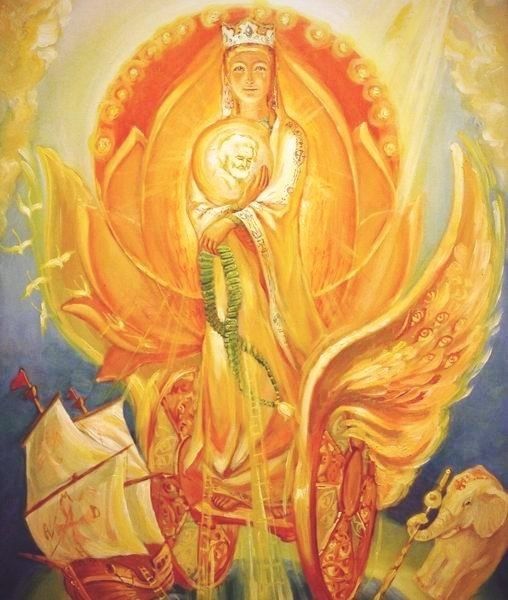
From a Kabbalistic point of view, wisdom is the “Spirit of God,” רוח הקודש, manifesting in the quaternary Chokmah-Binah-Da’at-Malkuth. The “common basis” of this wisdom, manifesting at all these levels or stages, is described as the “Divine Dwelling” — Shekhinah, and the filling energy uniting the Tree into one with the Light of wisdom — as “Divine love” — Mezla. Thus, in this context, the energy of wisdom is as if “poured out” across the whole Tree, and the closest analogue of the concept of Prajna may be the “potential” energy of Da’at, the “Wisdom of the Abyss.”
At the same time, attaining wisdom in all traditions means not simply “contact” with Prajna, but the union of Wisdom and Method, since Shakti alone is destructive to manifestation: its eternal movement, the boiling of possibilities, excludes any definiteness, and therefore concrete, limited existence. In the same way, Spirit alone is barren: without support in energy it is only Bythos (“Abyss”), closed in itself and not seeing itself.
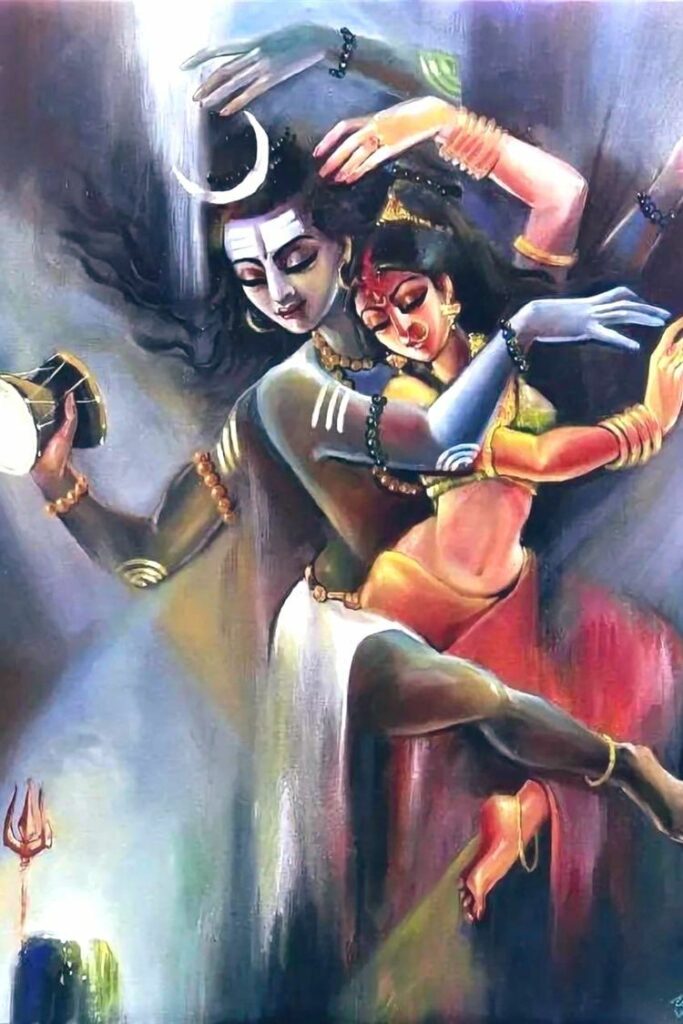
All the most successful paths of development — both gnosis and tantra — are based on the integration of this duality, the mutual complementarity of noumenal and phenomenal realities, which is often expressed in distinctly sexual terms and images. Kabbalistic works about the “marriage” or even “sexual act” (“zivug,” זווג) of Zeir Anpin and Nukva, about the union of Light and Vessel, describe the same process in a broader sense. Indeed, only when the mind finds access to its seething potential depths (Shakti as the “virtual boiling of the vacuum”) and to its determining and shaping forces, and unites them, does it reach great perfection — Pleroma, Enlightenment.
That is precisely why the correct combination of actions and understanding is so important, Practice and View: the former develops the skill of shaping, ordering, and directing the energy of wisdom, while the latter provides access to this energy itself. Neglect of either component can allow only relative success, and without the “tantric union” of Method and Wisdom, the Path of development will drag on for many lifetimes.
Well written. I would like to clarify whether Shakti – Prajna – Daat is a dynamic aspect of consciousness (wind, spirit, pneuma)? If we follow the general logic (about the duality of creation) and the reasoning from this article http://скрытыйсмысл.рф/book/soznanie-veter. Nevertheless, it seems to me that these are different things.
As mentioned in the essay, Wisdom is the ‘space’ of Da’at, and Presence (Shekhinah) is its energy. In this sense, they are indeed different concepts: Da’at indicates the ‘place’ where Wisdom (as jnana) can manifest from Space (prajna), and the energy of that manifestation is Presence (shakti).