
Sefirot as Spheres of Activity
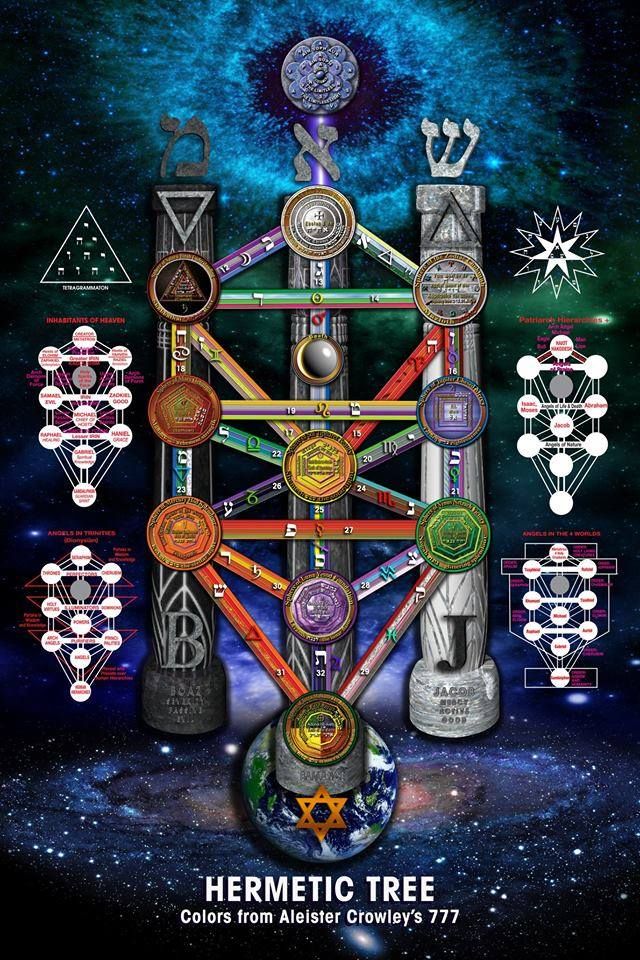
We have already discussed that, from the standpoint of the Tradition, any manifestation, any object or process can be viewed as a successive unfolding of the initial impulse, idea, or principle underlying it through ten stages that overlap and together form the “skeleton” of the manifestation, schematically represented by the Tree of Sefirot.
Although the overt action — the explicit manifestation of activity — always occurs through Yesod and in Malchut, it always includes, to varying degrees, all sephirotic qualities. In general, the Tree of Life is characterized by the principle of mutual inclusion of the Sefirot: each Sefira contains an “inner Tree”; being itself a parzuf, an object, and therefore follows the same general laws.
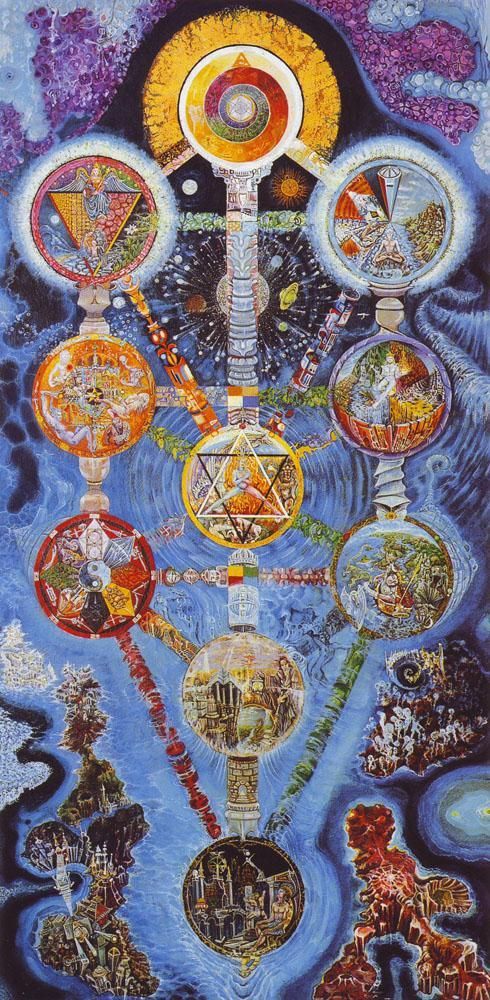
Because all objects are organized according to the sephirotic scheme, the name of each Sefira describes the particular role it plays in the final formation of reality. These “external” properties of the Sefirot describe their functions in transmitting the creative Light to all levels of the Tree. At the same time, the Sefirot are considered both as “lights” and as “vessels.” Accordingly, the role of each within the overall structure corresponds to the characteristic features of that particular “vessel.” Simultaneously, aside from this systemic-functional role, each Sefira has its own internal activity that drives it to act in ways corresponding to the qualities of the inner “light” filling that Sefira’s “vessel.” This intrinsic activity is described as “sparks,” “nitzot,” remaining from the original system that existed before the shattering of the vessels.
Each Sefira manifests expansive, “masculine” properties toward the one below and attractive, “feminine” properties toward the one above it (the Pillar of Mercy is generally considered somewhat higher than the Pillar of Severity). However, this does not mean that the Sefirot on the Right pillar are masculine and those on the Left feminine. In medieval Kabbalah, only Binah and Malchut were considered properly “female,” while all the other Sefirot were “male.” In some systems, the grammatical gender of Sefirot names is also considered (for example, Geburah is considered a female Sefira, while Chesed is male). The relationship between two Sefirot is called a “zivug” (copulation). The lowest Sefira — Malchut — has exclusively “female” properties (it only receives). It is held that Malchut has no intrinsic radiance and can only shine with reflected light.
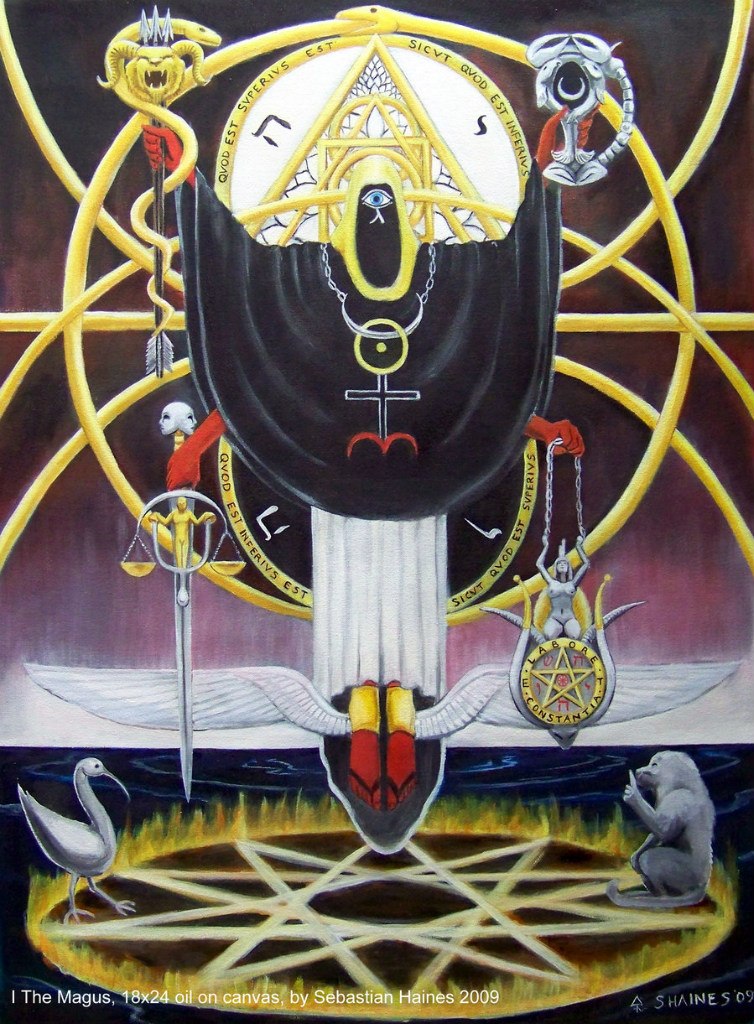
It is important that each Sefira therefore has two “faces” — it is both a “filter,” a conduit for Light and for the system’s elements and an independent active unit with its own qualities, contributing to manifestations through the Tree’s overall activity.
This process can be imagined as the flow of “sparks,” nitzot, into Yesod and their subsequent discharge into Malchut, which is the field of the Tree’s manifest activity. For example, if the integral activity of the Tree is significantly shaped by the Sefira Netzach, the manifestation takes on centripetal, “Venusian” hues, whereas if a spark absorbs the properties of the Path of Tzade, the manifestation is tinged with “outpouring,” “Aquarian” tones.
The sexual connotations of the whole process are not accidental, since in this symbolism the ultimate task of each manifestation of the Tree is to engender a new object — “the birth of Keter from Malchut.”
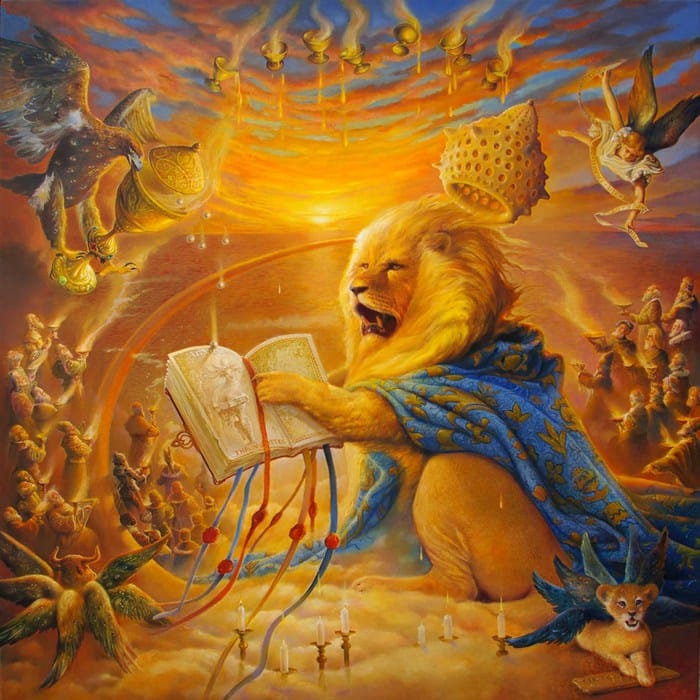
Accordingly, the symbolic fields of each Sefira (and of each Channel) of the Tree are important not only as intellectual exercises but as concrete, practical tools that allow one to “calculate” the final manifestation — to determine what kind of “child” a given object will produce.
Many such chains and correspondence tables have accumulated over the course of the Tree’s study, and many disagreements and inconsistencies have arisen among them. Even the list of Sefirot differs in various systems: for example, Moshe Cordovero (16th century) begins his list with Keter, while in Isaac Luria’s system, Keter is absent, replaced instead by Da’at, which is understood as the conscious manifestation of the superconscious Keter. Luria regards Keter as the source of the Sefirot’s inner light but does not include it among the list of attributes (vessels), considering it too exalted.
The structure of the Tree also varies: for the era of the “institution” (“primordial creation,” which existed before shvirat ha-kelim) one usually uses the circular, concentric scheme of igulim, tracing back to the ideas of the Zohar, whereas for the era of “restoration” (or correction, “tikkun,” that is — after the shattering of the vessels) the vertical, “arboreal” scheme of yosher — first introduced by Isaac Luria — is used.
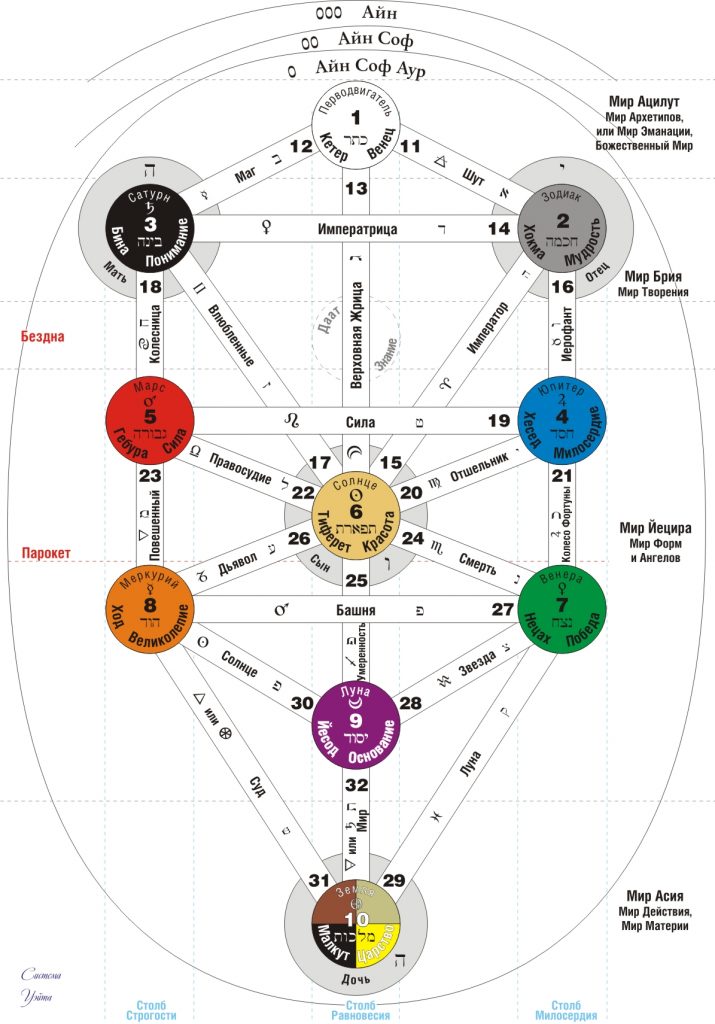
Different systems incorporate astrological, alchemical, and magical symbols into the Tree’s symbolism. The seven lower Sefirot of the Tree are usually associated with the seven planetary signs (Malchut — Moon, Yesod — Mercury, Hod — Venus, Netzach — Jupiter, Tiferet — Sun, Geburah — Mars, Chesed — Saturn, or alternately Malchut — Moon, Yesod — Mercury, Hod — Venus, Netzach — Mars, Tiferet — Sun, Geburah — Saturn, Chesed — Jupiter). In Robert Fludd’s (1574–1637) Rosicrucian scheme, the Tree of Life’s side pillars are swapped and most of the paths are absent. Ilia ben Solomon (1720–1797) places Tiferet at the level of the Abyss and puts Yesod in Tiferet’s place. Thus, in that system, Tiferet has no connection with Netzach and Hod, while Yesod connects with Chesed and Geburah. Athanasius Kircher’s (1602–1680) scheme lists the Divine names of the Sefirot, their corresponding astrological planets and signs; the 22 paths correspond to the letters of the Hebrew alphabet, and so on. Prior to Kircher, Jewish Kabbalists associated the three mother letters with the horizontal channels of the Tree of Life, the seven double letters with the verticals, and the twelve simple letters with the diagonals; Kircher proposed a different order: on his diagram, the letters run down the Tree in alphabetical sequence. It was this diagram, later expanded and refined, that formed the basis of numerous depictions used in various magical schools, orders, and fraternities.
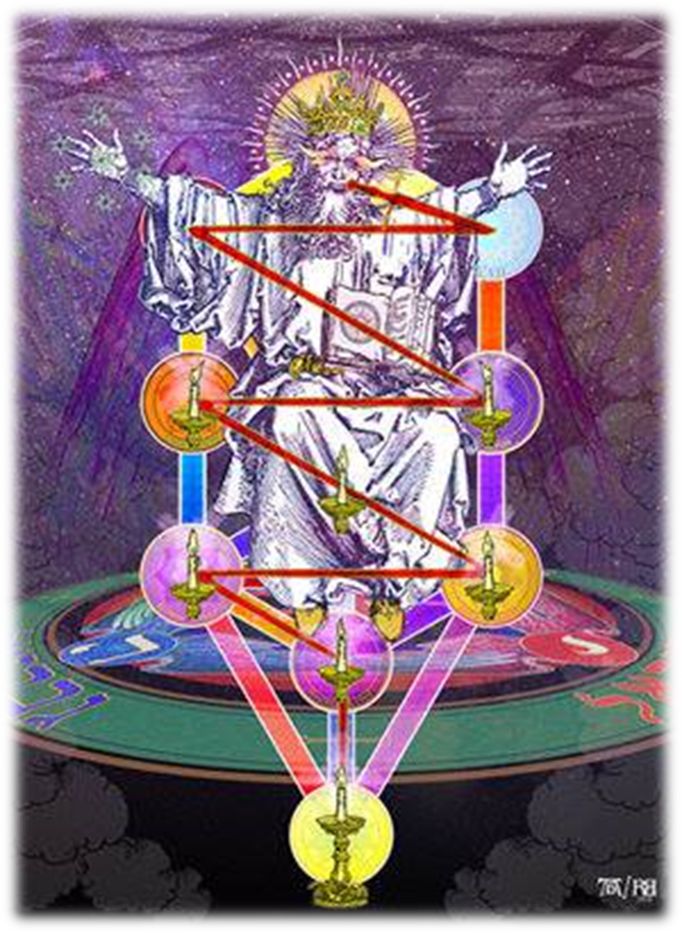
Because the Way of Western Magic is always a path of personal search and achievement, and the Tradition provides only the ground for that search, this diversity of associative fields is even useful — it allows each practitioner to develop their own system, their own approach, and thus to use their own “system of notation” to describe their experience. Nevertheless, it is clear that the accumulated collective experience can both shorten the time spent searching and optimize its methodology.
In any case, the Tree of Life scheme has repeatedly demonstrated its effectiveness in practical Magic, astrology, and alchemy.
Leave a Reply