
Focalor and the Teachers of Esotericism
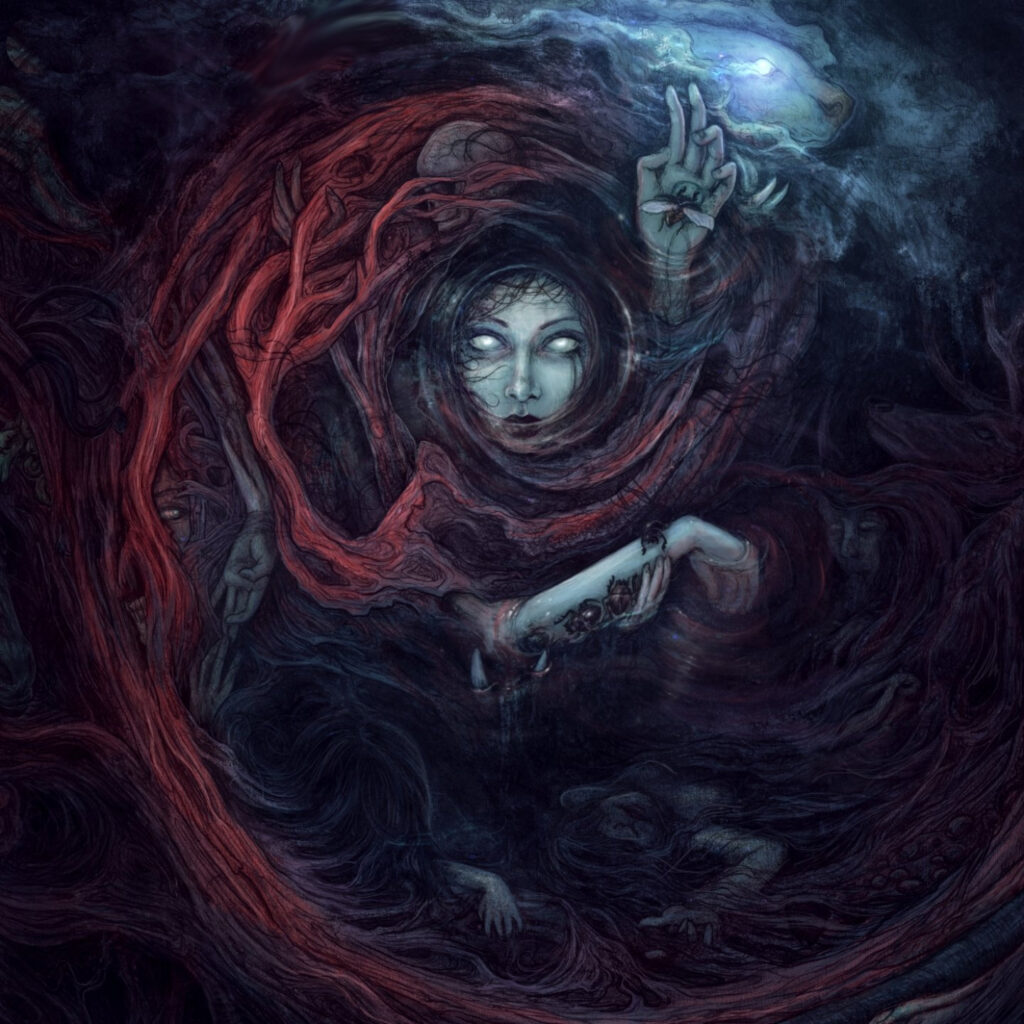
Among destructive matrices, especially active in the modern world, are those that distort the sense of all-unity, the feeling of connection born of the energies of the sephira Binah, and distorted by various manifestations of the Demon of the Abyss.
All such matrices are characterized by the “cutting off of the wings” of the mind, suppression of free thought and inspiration. For example, Leviathan is an aspect of inertia, “counter-rationality,” arising from gemarmena — the archontic nature of the Abyss, while Lucifuge is its demonic aspect, a destructor of “active avoidance” of light and development.
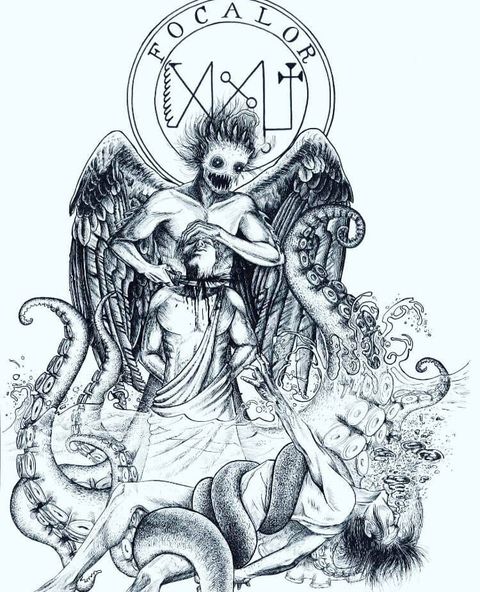
Clearly, such tendencies can be found in various areas and aspects of human life; however, their intense activity is particularly troubling in the so-called “paths of spiritual development,” where a destructive matrix is very widespread, embodied in the figure of Duke Focalor — a demonic Gatekeeper from the retinue of the “King of Jealousy,” Balam.
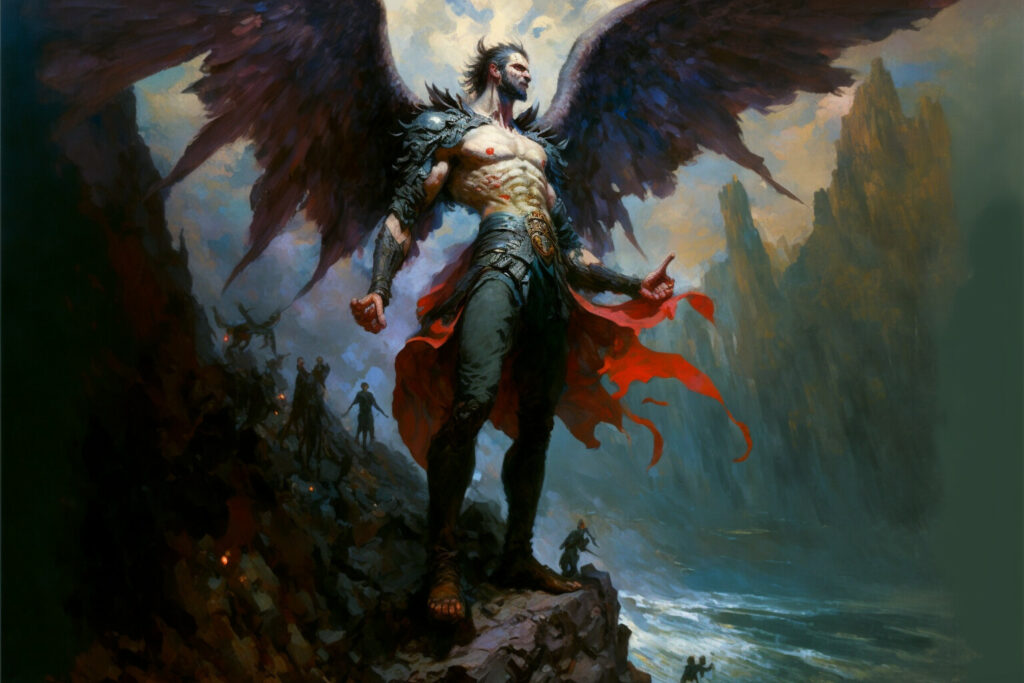
Focalor — “the Strict Duke” — is a demon of spiritual jealousy, guarding his boundaries so recklessly as if the very existence of his world depended on it. He sits on a throne carved from the heavy stone of knowledge, with majestic griffin wings spread behind his back, which seem ready to take flight, yet never take flight. His eyes, deep as an abyss, see nothing but his own view of the world. And Focalor’s world is, of course, a perfect structure, where every phenomenon is subject to strict order, every word bound by approved doctrine. Yet this entire structure rests on fear: fear of losing control, fear of chaos and unpredictability brought by freedom.
Focalor is a matrix opposed to inspiration. For him, any new knowledge is not an inspiring challenge but a destructive blow to the foundations. Those who fall under Focalor’s influence become servants of his jealous order. They often become “Masters of esotericism” who, instead of leading students toward the expansion of the mind, impose their rigid rules on them. They use knowledge as a tool of self-assertion, and their jealousy toward other teachings and Ways manifests as harsh criticism, labeling other approaches ‘false’ and followers ‘misguided’. Under the influence of Focalor’s matrix they seek to suppress dissent, destroy any alternatives, so that their world remains comfortable and predictable.
At the same time, Focalor dominates both the intellectual and emotional spheres, which is described as his ability to “sink ships.” Under his influence a person becomes emotionally cold, incapable of empathy and reciprocity. He destroys images of perceived threats, those who go beyond his ideals, “sinking the ships” of their inner world, turning others into slaves of his system. This is a “strict boss” who suppresses his followers’ individuality for the sake of the enterprise’s success, or a spiritual “inquisitor” fighting “heretics.”
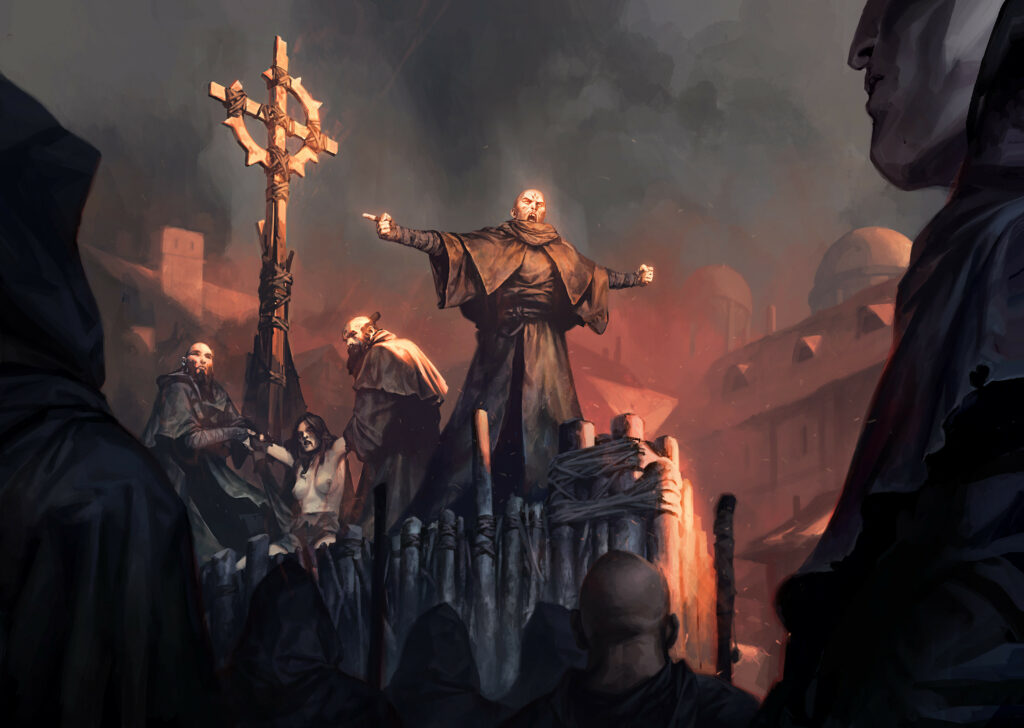
Apparently, it was precisely Focalor’s energy that once inspired the creation of the institution of the Inquisition, turning the fear of losing control into an instrument of suppression. Any spontaneity, any innovation, any deviation from the canon was perceived as a threat. Thus bonfires flared where they burned all deemed undesirable, and the halls where guilty verdicts were handed down to those who dared to think differently. Focalor whispers to his victims that their actions are justified, defending order and truth, though in reality it is only a struggle with their own fears and lack of self-confidence.
Modern “spiritual Masters” likewise often become hostages to jealousy toward other teachings, seeing them as competitors threatening their ‘exclusive truth’. This is how the activity of Focalor’s matrix manifests — fear of losing control over one’s followers, a jealous desire to preserve dominance over the realm of knowledge and perception.

At the same time, many such Masters build their systems as closed worlds in which everything is subordinate to their interpretation. Such systems do not allow alternative viewpoints, and any other teachings are branded as “erroneous,” “dangerous,” or even “false.” They use rhetoric of exclusivity: only their Way leads to truth, while all others lead to delusions and errors. Moreover, such Masters not only deny the value of other teachings, but also jealously oppose them. Competition for attention and recognition turns into a struggle for power over people’s minds and hearts. Any dissent is perceived as a challenge to their authority. The effort to keep followers within their system turns into manipulation through fear: fear of losing spiritual progress, fear of “spiritual downfall,” fear of condemnation. Masters under the influence of the matrix of jealousy actively maintain this fear to consolidate their power.
It is clear that such jealousy is usually rooted in a feeling of their own vulnerability. Deep inside, these Masters may be aware that their teaching is not so perfect; it is only one of many Ways, but the fear of losing control spurs them to claim the opposite. In their jealous struggle with other teachings, this reveals not firm confidence in their rightness, which would not require confrontation with others, but the fear of being seen as inferior.
At the same time, we are by no means saying that the concepts proclaimed by such jealous Masters cannot be valuable or useful — on the contrary, Focalor is not a demon of “false teachings,” but a destroyer of jealous masters, which most often afflicts precisely those schools or lines that have evolutionary potential.
However, jealousy toward others’ teachings often turns out to be only a mere waste of time and effort. Instead of seeing valuable opportunities in diverse approaches to truth, Focalor provokes the dissipation of energy into defending the rigid boundaries of one system, making it closed and immobile. Thus even the best and wisest teaching can turn from a Way of development into a prison. This deprives both them and their followers of the chance to expand their minds and attain true knowledge.
As a result, the modern world often gets uninspiring guides to spiritual freedom, either scammer “infogypsies,” or “spiritual overseers” who, instead of promoting liberation, impose new restrictions. Their jealousy becomes a barrier to open exploration and the exchange of knowledge, turning spiritual seeking into a narrow corridor of dogma.
Opposing Focalor requires the courage to go beyond the familiar. It means acknowledging that truth is multifaceted; every being has a Way, inspiration is not a threat but a blessing. A person who is able to let go of jealousy toward someone else’s Way opens the door to real spiritual development. It is important to remember that no one can claim a “monopoly on truth.” It is broader than any boundaries, deeper than any knowledge, and brighter than any fear. Masters and followers of spiritual Ways can loosen the grip of Focalor’s matrix only by recognizing the value of different practices and teachings, which should enrich each other, engage in dialogue rather than confrontation. In the end, it is possible to overcome the trap of the “only truth” only by truly moving toward union — that pleromic “merging without mixing” which is implied by the sephira Binah, and denied by the qlippah Satariel. Only by seeing the importance of the diversity of Ways is it possible to avoid the traps of jealousy and fear that so often turn Masters into inquisitors and suppress the spark of true inspiration. And only through the freedom of inspiration can a person emerge from the shadow of the Duke of Jealousy and gain the guiding light of their own soul.

Hello! If the influence of the matrix of Focalor leads to transforming teachers of esotericism into guardians of dogmas that suppress inspiration and alternative paths, can we assume that the very structure of knowledge transmission in esoteric traditions predisposes to such distortion? Can the very mechanism of such mentorship create elements of hierarchy and power that eventually necessitate the defense of the ‘true path’ from competing concepts?
Hello. Such distortion does indeed stem from the very structure of knowledge transmission in esoteric traditions, as traditional apprenticeship is built on hierarchy, the transmission of authority, and the necessity of following the path endorsed by the mentor. In esoteric schools, the teacher possesses not only knowledge but also experience unavailable to the student, and thus the student must trust and follow the instructions. In the initial stages of training, this is necessary, as it protects the student from mistakes and chaotic wanderings. However, over time, if the system does not allow for a moment of ‘liberation’ of the student, this rigid hierarchical structure solidifies, and the mentor begins to view their method as the only correct one, seeing students as extensions of their tradition rather than as independent explorers. This leads to competing schools provoking jealousy and defensive reactions, as alternative views threaten the mentor’s monopoly on truth. The matrix of Focalor is activated when the teacher substitutes the process of seeking truth with a desire to maintain authority and the stability of their system. Thus, even if the mentor started with a sincere desire to share knowledge, over time, the fear of losing control can turn into protective suppression of alternative paths. Therefore, Focalor becomes rooted where mentorship turns into authoritarian leadership. However, this process can be recognized and changed if apprenticeship is turned into a genuine path of development and inner transformation that is not afraid of freedom of thought.
Then how can a system of transmitting esoteric knowledge be structured such that it is resilient to the influence of the matrix of Focalor, ensuring a balance between the structure of teaching and the freedom to seek?
To build a system for transmitting esoteric knowledge that is resilient to the influence of the matrix of Focalor, it is important to consider the psychological, magical, and methodological principles that allow a balance to be maintained between structure and freedom, between depth of tradition and the ability to inspire. The most vulnerable to the influence of Focalor are rigid, closed systems where the student is tied to a specific path and is required to strictly adhere to prescribed principles without the possibility of deviation. To avoid this, the learning system must be flexible, providing students with not pre-packaged answers, but methods of inquiry, so they learn to understand reality rather than memorize dogmas. At the same time, consciousness always needs a support, especially at the beginning of the journey. Therefore, excessive freedom can lead to chaotic wandering, although an overly strict system leads to dogmatism. For this reason, the process of learning within Traditions is usually multistage; initially, it involves studying accumulated knowledge, and then it begins to compare traditions, seek one’s path, and integrate knowledge into personal experience. Instead of a hierarchical model of teacher-student, where one imparts some truth that the other assimilates, it is more appropriate to apply a model of mentorship-guidance, where the teacher is a guide helping the student find their own path. At the same time, the student must be an active explorer, working with their consciousness. Such relationships are built on dialogue: the teacher teaches but also learns from the student. The more the learning system supports dialogue and exchange, the less likely it is to close in and turn into dogma. This approach was practiced by the philosophical schools of antiquity (Pythagoreans, Platonic Academy) and Sufi brotherhoods, where wisdom was transmitted through questions, reflections, and mystical experiences. It is also important to incorporate personal experience into the learning process. The student must practice rituals, meditations, spiritual searches that reinforce and develop their understanding. This helps to see the breadth of the world and the variability of its interpretations.