
Sealing the Intention
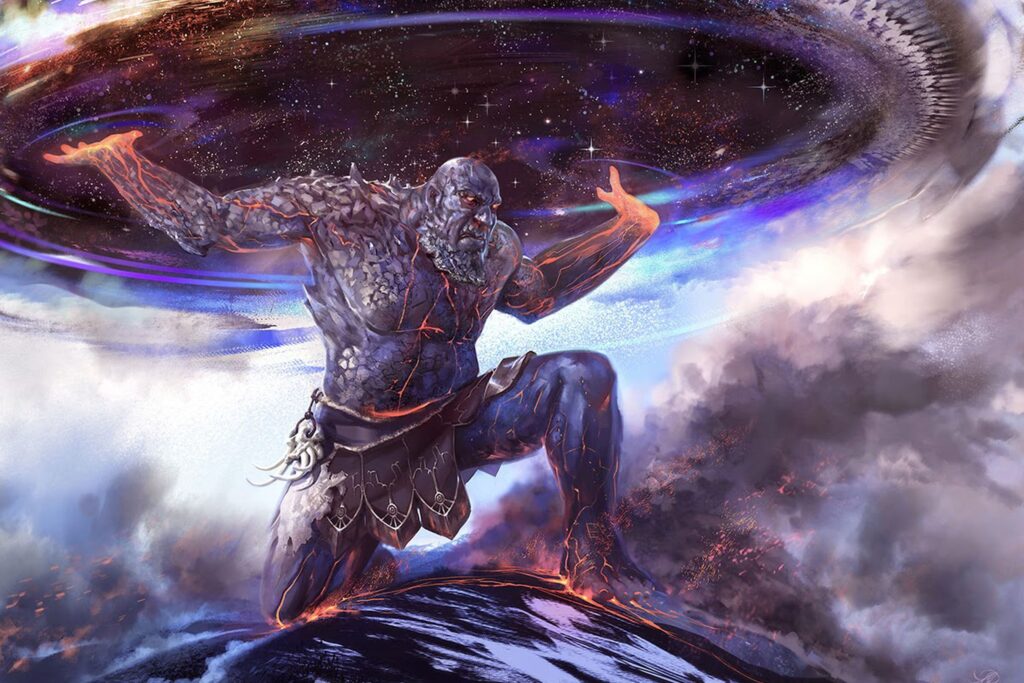
It is not hard to notice that any realization, any phenomenon arises as the result of the union of two components: resource and energy, and is accompanied by changes in a third component – information. Magic, like other “spiritual” world-descriptions, introduces one more necessary component – will, a doer, who carries out the union of energy with resource. From this point of view, even those processes which materialist views consider “natural” – regular or “accidental” – still always have, beneath the surface, an unseen agent – a deity, a spirit, or some other being or entity.
Accepting such a notion as a fact, Magic develops its system of views and methods how the doer can perform realizations, unify matter, energy, and information.
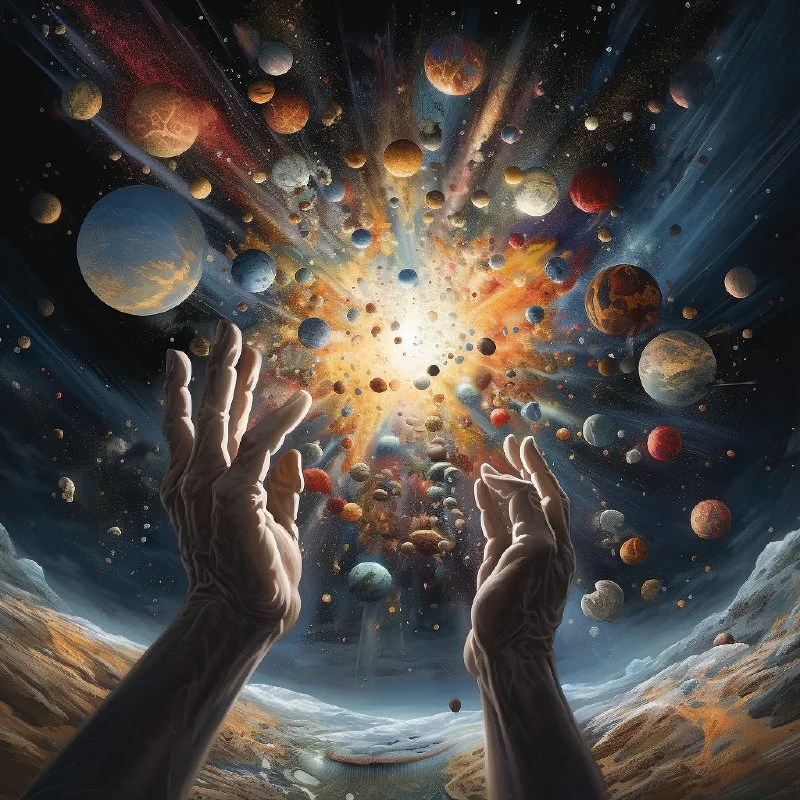
We have already said that this process begins with the formation of intention or aspiration, which correspond to two basic ways of creating a foundation for realization – respectively, the vortical or the vector one. We also discussed that such formation requires the presence of an operator who relies on an environment, where the operator is the source of will and guiding energy, and the environment provides resource and operative energy.
In other words, the function of the doer is to introduce the Logos into the environment and set it in motion, i.e., energy.
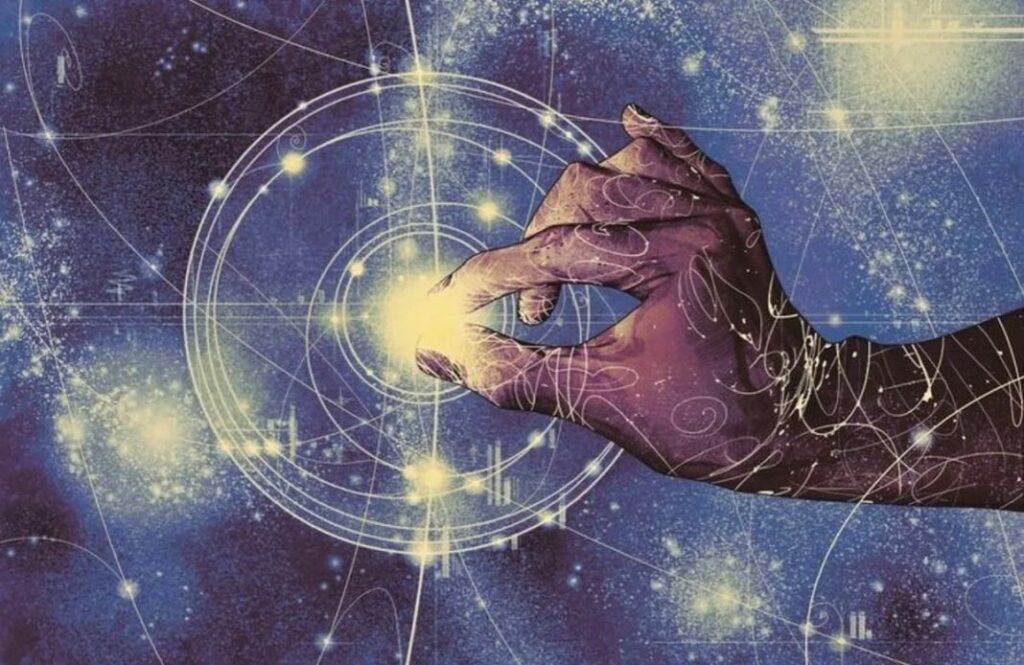
And this means that creation, realization is not merely a product of intention/aspiration, but a product of intention grounded in the environment.
Therefore, from the traditional point of view, for a realization to occur it is not enough simply to “want,” but it is necessary to create a creative impulse, a desire grounded in the environment.
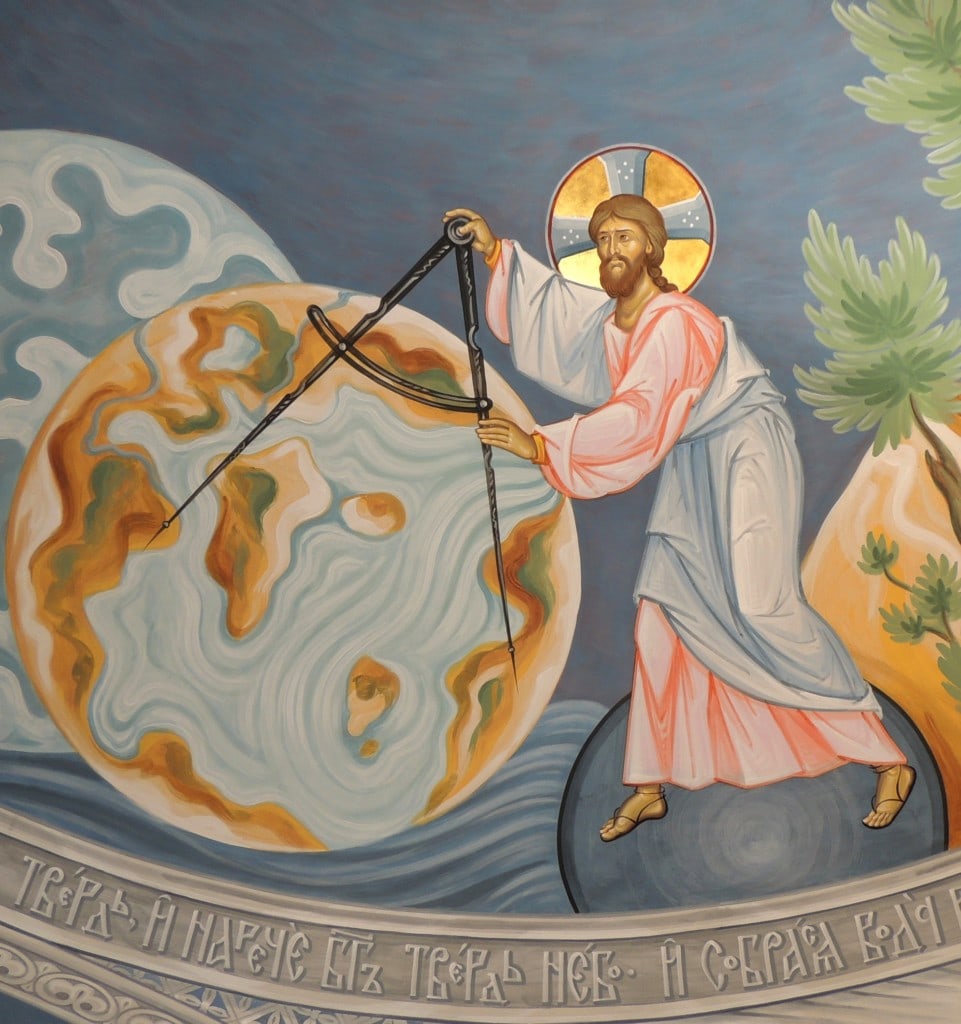
We already mentioned that such support can be achieved in different ways in a sequential process:
First, the operator must formulate and speak the intention, i.e., establish a connection between the Logos and the environment.
Second, the word, the Logos, must enter the environment. For this, it is necessary to use elements external to the operator – vibrations or fields. Usually this is achieved by writing or chanting words, which, in fact, immerses or implants them into the environment, with the involvement of, respectively, a ‘dense’ or ‘vibrational’ medium – that is, musical.
Note that music itself (without words) can also be an instrument and support of realization, since it is already a manifestation of the union of the Logos, the environment, and energy. The so-called “sound” spells, in which sound itself is not a carrier of information but a generator of energy, have the same effect. Indeed, people often instinctively feel that sound can provide additional energy, and therefore they shout, growl, or grunt in the process of activity.
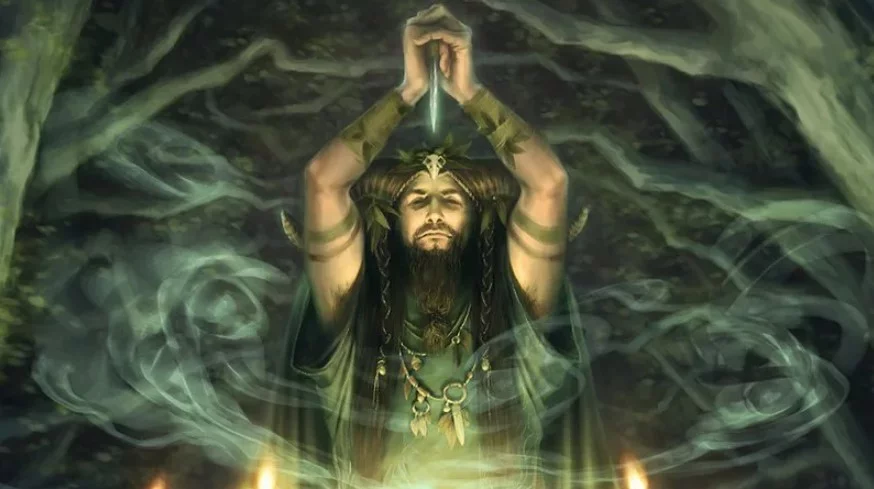
Third, the intention must unite with energy, become one with it. For this, the Logos must pass from a “mental,” semantic, informational form – into an active, practical form. For this, two kinds of transformation are also used: gestures and images. If gestures join with music, then a dance arises, which, as we have already mentioned, is in general regarded by a number of traditions as an expression and description of the very “mechanics” of creation. Images, like sounds, can be semantic or energetic, and from the point of view of their form – flat or three-dimensional (for example, architecture).
Fourth, having produced the coupling of the Logos, matter, and energy, the operator must leave the space of realization. This is a very important stage that is often forgotten. It is very important to “cut the umbilical cord” of the realization, to let it go; otherwise, it will remain connected to its author, feeding on their energy. Actually, the gods, as we said, are unfree precisely because they are inseparable from their creations, and are forced to constantly tend to and nourish them.
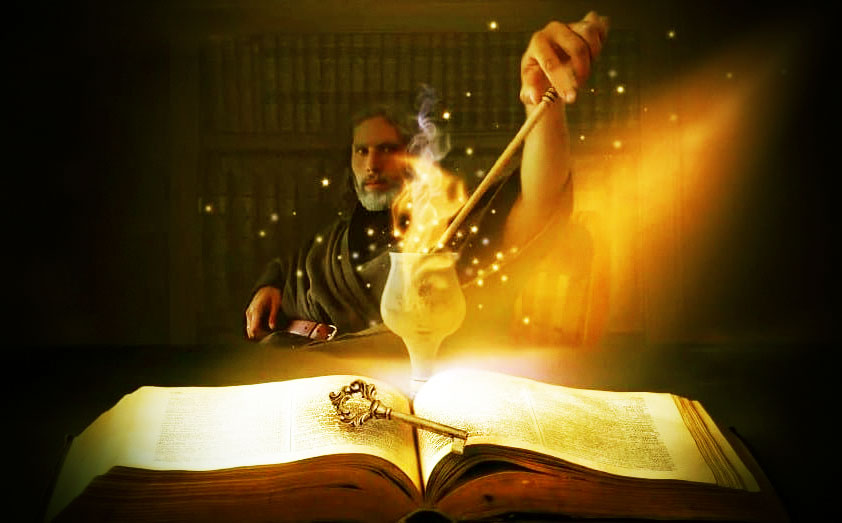
Thus, regardless of whether we know about the structure of the Ritual and what kind of realizations we want to achieve, we still must invariably go through all implementation stages, since we must act as the doer who identifies and couples the three main components of reality. At the same time, we can more or less consciously formulate the intention, achieve its support in matter, and couple it with energy, but to “skip” any of the stages means to work in vain, to fail to achieve results. Therefore, of course, if we aspire to an effective life, we will be able to act much more successfully by understanding what, how, and why we do. And the choice of appropriate supports for the Logos of realization in this key is a very important stage, largely determining both the possibility and the effectiveness of any accomplishment.
Thank you very much.