The Creative Word
“In the beginning was the Word, and the Word was with God, and the Word was God. He was in the beginning with God. All things were made through him, and without him was not anything made that was made.”
«Ἐν ἀρχῇ ἦν ὁ Λόγος, καὶ ὁ Λόγος ἦν πρὸς τὸν Θεόν, καὶ Θεὸς ἦν ὁ Λόγος.»(Gospel of John 1:1-3)
The notion of the creative power of the word underlies the lion’s share of practical magical concepts and beliefs.
Yet despite the obvious importance of this fact, its nature often goes unnoticed, and the Magi merely state it.
At the same time, knowledge of the System — Adeptship — demands a clear understanding of the mechanisms of any effect; without it the Magus risks becoming a dabbler, blindly copying other people’s schemes and methods.
The notion of the creative power of the word is a simple consequence of the magical description of the world. We have already said many times that, according to this description, at the foundation of “reality” lies an assemblage of differential Energies — “dharma” — which constitute the field of self-knowledge of the Great Spirit in the totality of its aspects.
Individual Energies may interact with one another due to an intrinsic affinity stemming from their nature as parts of One. These interactions form discrete blocks of energy, and the forces that sustain the unity of these blocks are called Logoi. As mentioned, every block of energy is supported by its own logos — from the smallest interactions to the macrocosm as a whole. The levels, the “cross-sections” of differential logoi accessible to a given level of mind are called ideas, eidoses, or Me.
Cosmic creation is the process of restoring the unity of Being and Mind of the Great Spirit, which occurs across differential aspects — the filling with Mind, that is, the actualization of all interactions of individual energies.
Accordingly, the task of any individual mind is to recognize as many Logoi as possible and to align the energies in that mind’s field with them.
Any Logos can be described by a mind of the corresponding level and represented as its “representative” within the Psychocosm, as well as expressed in symbolic form. Since ancient times, the symbolic expression of logoi has underpinned human language as a means of correlating macrocosmic and psychocosmic reality.
At the basis of this correspondence lies the Law of Analogies, which notes the “cross-sections” of each logos present in every plane of reality.
Practically all languages, with greater or lesser precision, have striven to reflect logoi in their elements — letters, sounds, and words.
Each letter was considered a symbol of a distinct energy or a logos of lesser order, while a word functioned as an expression of a logos of greater synthetic degree.
It is clear, then, that the inscription of a word was regarded as the objectification of the Me of that object, and the pronunciation of that word as its actualization.
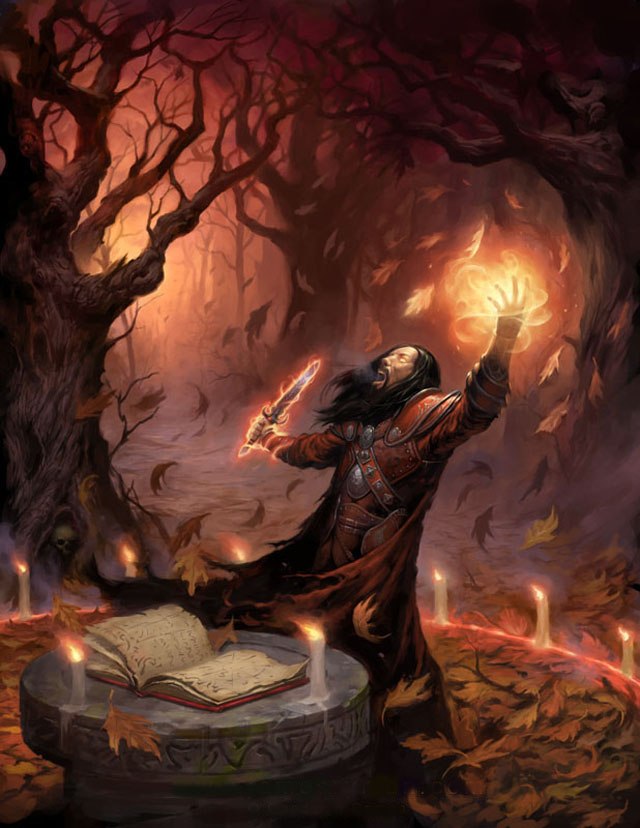
Uttering a full phrase composed of correctly chosen and pronounced words signifies the emergence of a whole process — magical creation. Thus the idea of the Spell arises.
Any effective spell must include logos of two levels — Names, that is, the objectification of active agents (gods, spirits, angels, or demons) of the process being initiated, and the field (nukvot) — the expression of those aspects of the process toward which activity is directed.
The more precisely names and fields are matched, the more fully the composite Logos of the spell is expressed, and therefore the more effective the spell. It is unsurprising, then, magic places great emphasis on establishing correspondences between symbols and their properties (in the Golden Dawn system, for example, establishing the correct correspondences represented the core of the entire teaching), for the wider the field mapped to the agent, the broader the scope of actualization. When the Lemegeton says, for example, Flauros “will speak of the Creation of the World, and of the Divine, and of his own fall and of other Spirits, … will slay and burn the conjurer’s enemies… will not allow temptation… commands 36 legions,” it is not only indicating that this Spirit should be summoned to learn about the “fall of the Spirits,” but above all delineating the field of that spirit — establishing its authority.
Thus, the creation of a Spell is an attempt to actualize the corresponding logos.
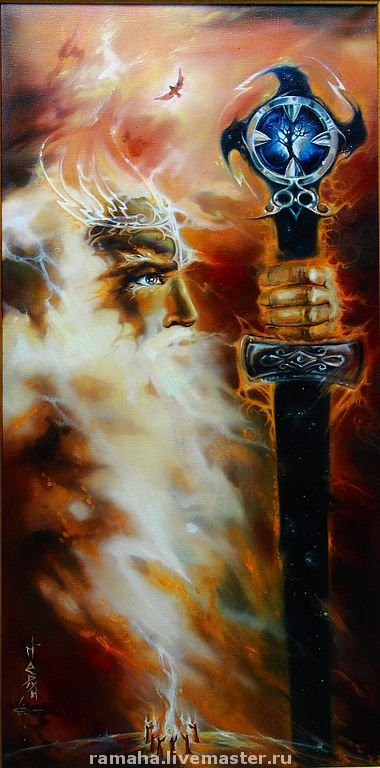
The correct pronunciation of a spell brings it into the manifest world.
In the act of uttering, the formative power of the voice, reinforced by mind, intelligence, and feeling, tears articulated words and phrases from the homogeneous “white noise,” and this action is what the will relies on when it actualizes, from the homogeneous energy field, of energies the Telesmi corresponding to the logoi. Any magical act occurs simultaneously on the level of the psychocosm and the macrocosm, of Being and Mind, and the efficacy of that synchrony largely determines the success of the realization itself.
In fact, life itself, considered as magical realization (and it is such), is effective insofar as “internal” and “external” processes are synchronized, and magic — including nominative magic — is a powerful aid in increasing the effectiveness of that realization. By clearly understanding how “narrow” spells work, the Adept learns how realization in general occurs, and this gives him the chance to move to a new qualitative level, to transform from an object into a subject of world-creation.
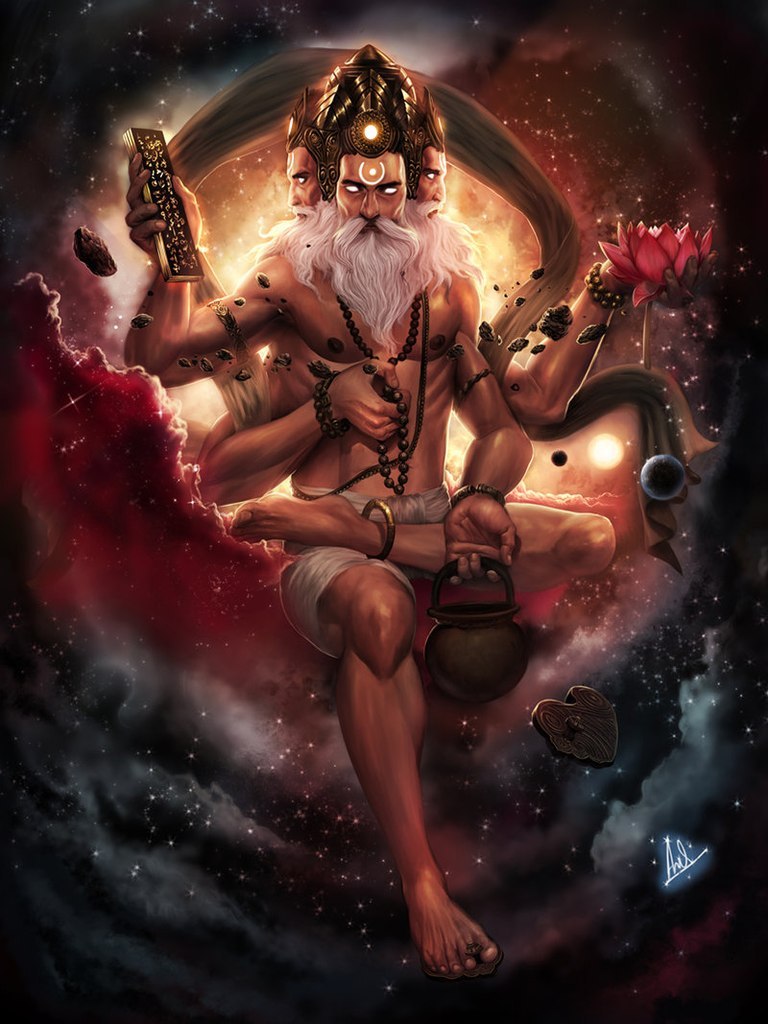
Essentially, as I understand it, the 22 Letters are indeed these energies. Rather, the Letters are glyphs of these energies. Or vessels for accommodating them. In terms of correct pronunciation – this is why in Tantra it is considered that for a Mantra to have an effect, it must be phonetically pronounced correctly, and correct phonetic pronunciation can only be obtained from the Guru. At the same time, Western authors such as Crowley, Regardie, and others do not attach particular importance to phonetic pronunciation. This is precisely because Eastern Mantras pertain to phonetic spells, while Western ones are primarily semantic. Although, the Great Name IHVH, according to Tradition, has the nature of a phonetic Word. The other thing is that nobody knows how this Word is correctly pronounced phonetically. But, in general, Western authors almost do not speak about how to correctly read Divine Names, where to place the stresses, etc. At the same time, great importance is attached to understanding meaning and knowledge of correspondences. Phonetic Eastern mantras may not have meaning at all. At least, Crowley believed that there was no meaning in them (in Book 4, he wrote that attempts to translate mantras are nonsense).
Now it is clear why ‘your dry bread is better than someone else’s pie.’ When a person, to the extent of his understanding of the Universe, properly composes a spell, this is HIS authority. When he uses someone else’s ready-made spell with understanding, his authority is present, but at the same time, he partially rides on the authority of Crowley, Regardie, the unknown author of the Chaldean Oracles attributed to Zoroaster, etc. And if he applies someone else’s spell without understanding, it turns out that he is trying to rely entirely on someone else’s authority, and his own authority is inflated. In general, it seems that Authority is also one of the Elementary Tools. Namely – the Pentacle (accordingly, the Wand is Will, the Cup is the Force of Awareness, and the Dagger (Sword) is the differentiating ability of the Mind). It is in the Pentacle that the vision and understanding of the Magician of his Universe is expressed as a symbol (again, this is probably why Crowley in the ‘Book of Tools’ suggests that the student does not draw any specific symbol (pentagram, hexagram, etc.) but create his own). Secondly, the Pentacle is Karma. And such concepts as Karma and Merits are directly related to Authority.
For mantras, a correct rhythm of repetition is required.
Reading beautiful paragraphs, Osho for example, a person synchronizes for a time with the harmony of the idea expressed in words, is illuminated,… and then… fades and returns to the starting point. As it is said (not by me) – it all depends on personal power. If it’s enough, then a timely heard phrase can give impetus to changes in a person’s life, but if personal power is insufficient, then even the storehouse of the world’s wisdom opened before a person will be completely useless to them. If the author of harmonious lines receives a response to them during his lifetime, for example, in the form of likes on social networks, he risks falling into the trap of the brain’s biochemistry)) After all, if this erratic fugitive has not yet learned to get his dose of endorphins from contemplating nature and from within himself, then learning to express himself coherently will lead him to do this publicly again and again to get a new dose of neurotransmitters through responses from the world of people.
For example, (if you allow) “The Word resounding from Silence, the Voice, the Sound by which worlds are called into Being” – (Annie Besant)…….I read and reread the phrase… and something inside seems to open up and seems to be understood, but what exactly… is unclear…
I could never reconcile myself with the Word in the sense of Expression. No matter how beautiful and structured it may be, it is always not quite right… but perhaps the essence lies not in the Word itself, but in its Source… The Word that comes from the Heart may not be beautiful or structured, but it is Alive, Life-Creating… whereas the Word that comes from the Mind… is merely piles of dusty pages that fill the shelves of consciousness… and all of this – are Energetic Processes that cannot be expressed in words.
..hmm..
arvianna settlement
..they can be expressed in words..
I am not a Buddhologist)) But I heard the phrase that the teaching of Buddha is the teaching of Dharma. Can Dharma in Buddhism be interpreted in the context of a magical myth; as some differential blocks of energies? And SPEECH as such – is their intertwining, and hence the process of cosmogony?
The words of Buddha are indeed THE Buddha in terms of speech, in terms of interactions.
In this sense, magic as a worldview is also THE magician.