
“Trifles” on the Magus’s Way
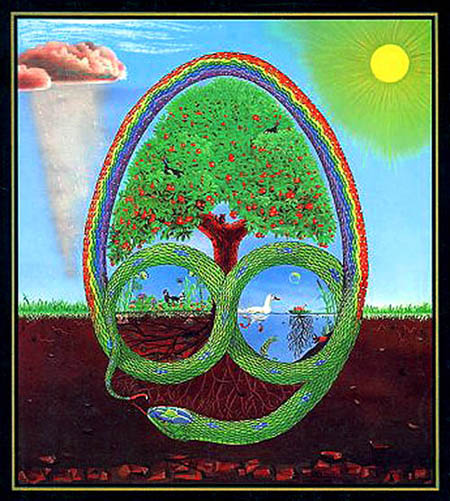
“The Chaldeans, likening earthly things to heavenly things and heaven to the lower world, perceived in this mutual sympathy of the parts of the universe — divided by their position, but not by their essence — a harmony that unites them like a musical chord.”
(Philo of Alexandria)
Although the world of Magic is a world of freedom, in which any rules are set by the Magus, this world is also governed by a number of general laws of manifestation, which derive from the system’s internal logic by which it is described.
It is precisely the discovery of this logic, identifying these laws and following them that forms the core of the discipline of the Magus, largely determining his effectiveness.
One of the cornerstones of manifestation is the Law of Analogies, summed up by the famous Emerald Tablet, yet it attracts attention mainly for its “magical” aspect and often is overlooked in other aspects. Let us briefly consider this great Law.
This Law states that despite the infinite variety of external forms of Manifestation and the properties of its individual particulars, there is in their essence something that, under different conditions, is experienced and manifests differently. Everything in the world is connected to everything else in one way or another; no action ever remains isolated on a single, limited plane — it affects many levels of reality in various aspects of the cosmos. Even when examining a single particular plane, a single cross-section of the cosmos, one can always see that the whole mass of factors at work within it, seemingly autonomous and independent at first glance, is in fact connected to one another in the strictest and most determinate way. It would be a profound mistake to assume that analogy is identity. The Law of Analogies is at once a law of unity and of multiplicity; the One permeates everything, yet its differentiations are infinitely varied, and thus the world is whole and manifold at the same time.

The axes of Analogies that establish such links are key to shaping the structure of reality, both potential and actual as shaped by the mind. The ability to trace Analogies is one of the most important skills of the Magi.
Many Magi speak of this law and build rituals upon it — yet they misunderstand it. A simple example is proper spelling and speech. Very often one encounters Magi who write very poorly, and yet one who cannot master their native language is unlikely to achieve significant success in learning the languages of other worlds.
Another similar point is the Magus’s surroundings. Like all creative people, Magi often neglect to tidy their surroundings, and the dwelling of a practicing Magus is often untidy. Yet inner order and outer order are analogous. Those who neglect external order are unlikely to master their powers.
The same applies to other “external trifles” — personal hygiene and grooming, and the like — which are often ignored by practitioners.
I have seen many examples where precisely such neglect of “trifles” greatly reduces a Magus’s effectiveness, sometimes with regrettable consequences. Practitioners must be warned against such neglect, to remind them that there are no trivial matters: in the battle where a Magus’s soul and freedom are at stake, any of these “trifles” can prove decisive.
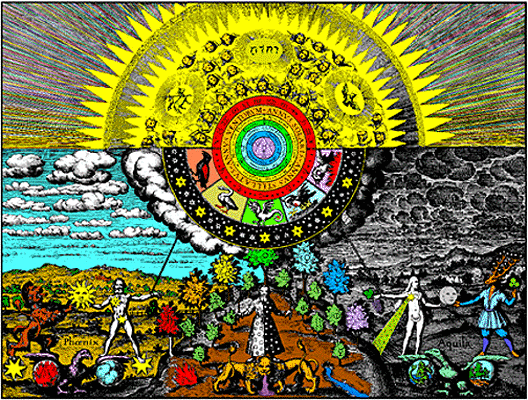
Does this mean that all science revolves around the law of Analogies? All models and laws try to find a connection between past events and future ones.
Cool article, I was impressed. Thank you.
About order, that’s for sure :). I constantly catch myself on this. Once in life when some confusion begins, it means it’s time to clear the piles, no matter how their artistic clutter might warm your soul.
An interesting aspect is contained in this statement. I think the Law of Analogies also allows for the reverse effect to be used. Thus, in moments of internal imbalance, a sure way to restore the organization of consciousness is to impose order (even if merely through mechanical actions) in the external environment. By changing and bringing order to the nearby world, whether it be a workplace, an apartment, a car, or any other living space (if lucky, then everything at once), you gradually begin to feel the harmonization of internal processes. By removing old, “overfamiliar” items from everyday life, you open up space for the inclusion of new elements into consciousness.
In my view, this is a type of ‘training’ for Discipline. The skill honed in the manifested world then allows you to achieve the necessary results in the psycho-cosmos.
Is there an example of how “neglecting the ‘details’ has cost the magician huge losses in efficiency of realizations, up to the saddest outcomes?”.