Demons and Destructors
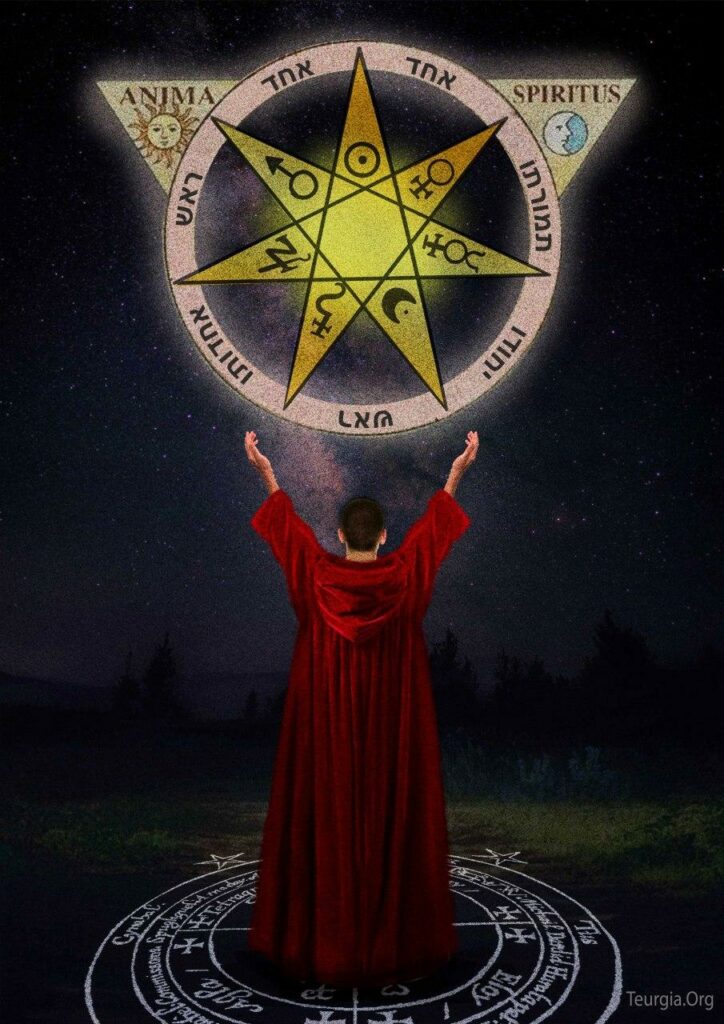
We have already discussed that Goetia, as the corpus of magical concepts about “demons” and methods of resisting them — its study, description and classification — is not a mere exercise of intellect or imagination, not merely a mythological device and not even simply a psychotherapeutic tool, but an autonomous, coherent and fully fledged system for the comprehensive purification, healing and development of consciousness.
This system uses its own descriptive apparatus and terminology, and contains a number of methods devised to achieve its declared ends effectively — namely the evolution of the mind and its carriers.
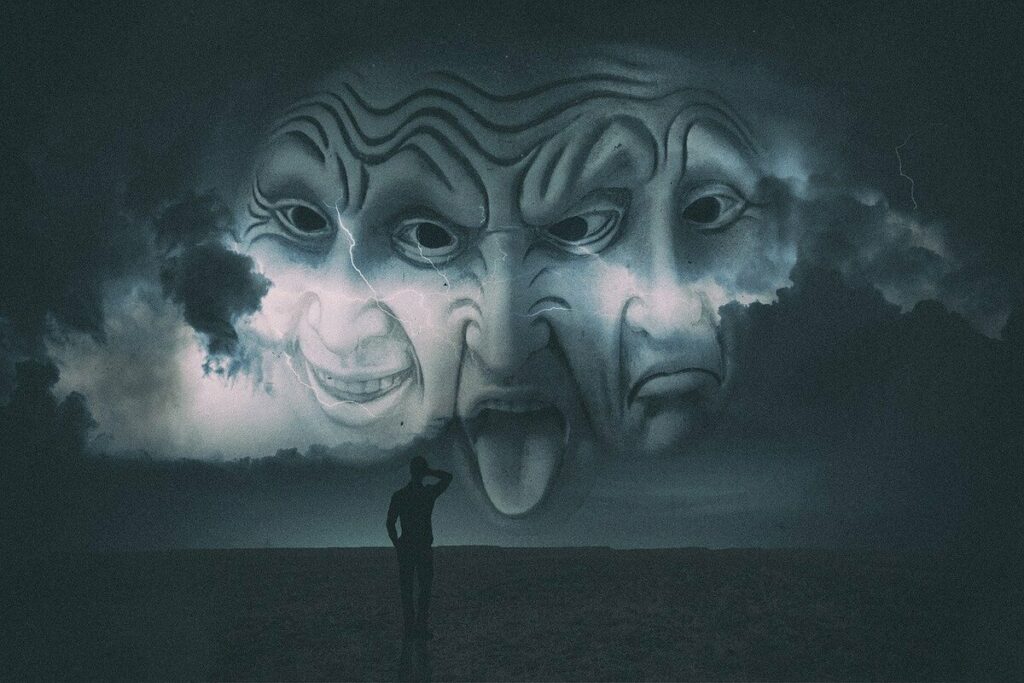
Thus, mind as a foundation (the “Psychocosmos”) is regarded within it as a field of activity for various ‘elements’ or ‘forces’ — psychic processes of differing degrees of localization and embodiment — grouped into distinct individualized streams that, in manifesting themselves through contact with the environment, establish a foothold in special “vessels,” “bodies.”
Each flow of mind can exist in states of varying orderliness and constructiveness; ordered, “stationary” states of an entire flow or of its parts are called “matrices.” These matrices can either promote further ordering, harmonization and actualization of the whole flow, or — on the contrary — promote its chaotization and energetic impoverishment. It is this latter kind of matrix that is traditionally named “demonic,” and the elements of their influence on a flow — the “points of application” — are called destructive points of consciousness.
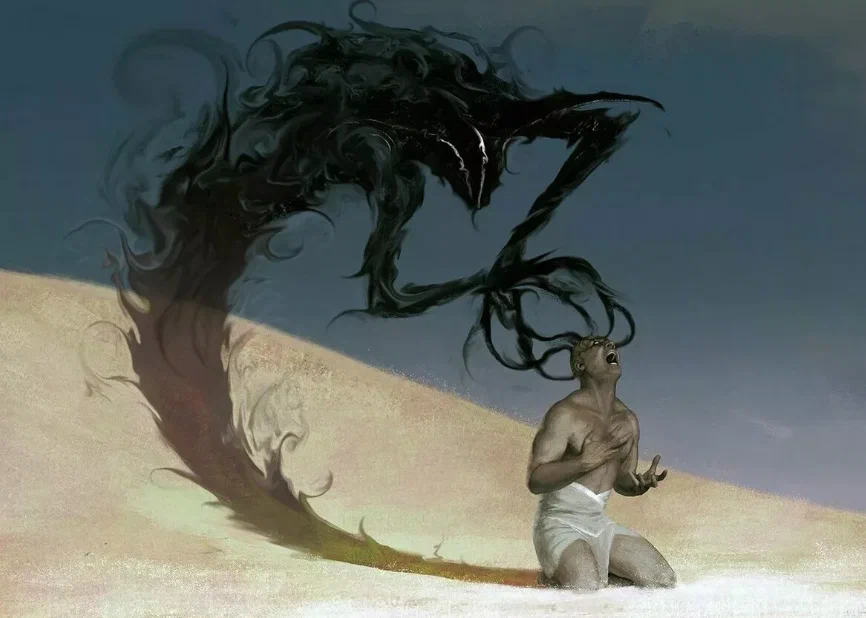
In other words, destructors are elements of a flow of mind distorted by a demonic matrix which, in turn, lead to further degradation of that flow.
From this perspective, pathological manifestations of mind — its “deficiencies,” “obscurations” — are merely symptoms, signs of the activity of a destructive matrix within it; they have diagnostic value but cannot themselves be the therapeutic target. That is why the goetic approach to healing the mind does not combat symptoms but addresses cause, identifies the destructive matrix behind them, and deactivates it. Both “diagnosis” and “therapy” in the goetic system include original methods such as evocations, manipulations of Names, the activation of constructive matrices that “oppose” the demonic — Genii, angels, gods — as well as various “search” and “competitive” Rituals.
All these approaches rest on two propositions:
first, all pathological manifestations of mind are only distortions, products of destruction, of its essential, native drives and impulses, and they use the energy of the flow itself;
second, the cause of such distortions is the activation within the mind of a particular destructive matrix resting on erroneous ideas, “obscurations” or “shadings” that develop in the mind as a result of its inefficient functioning, the dissipation of energy or the “under-realization” of desires and aspirations.
Accordingly, the Goetic system presents a compendium of information on destructive matrices and a set of technologies for their deactivation.
When a particular goetic text states that the cause of an illness, vice or other pathology of body or mind is the activity of a certain demon, it means that the corresponding destructive matrix is active in that flow of mind — not that some horned monster has nested somewhere nearby or inside the person.
It is precisely the matrix that is the therapeutic target; it is in the matrix that the energetic cause of pathology is concentrated, while destructors, obscurations and diseases are consequences and anchoring “holds.”
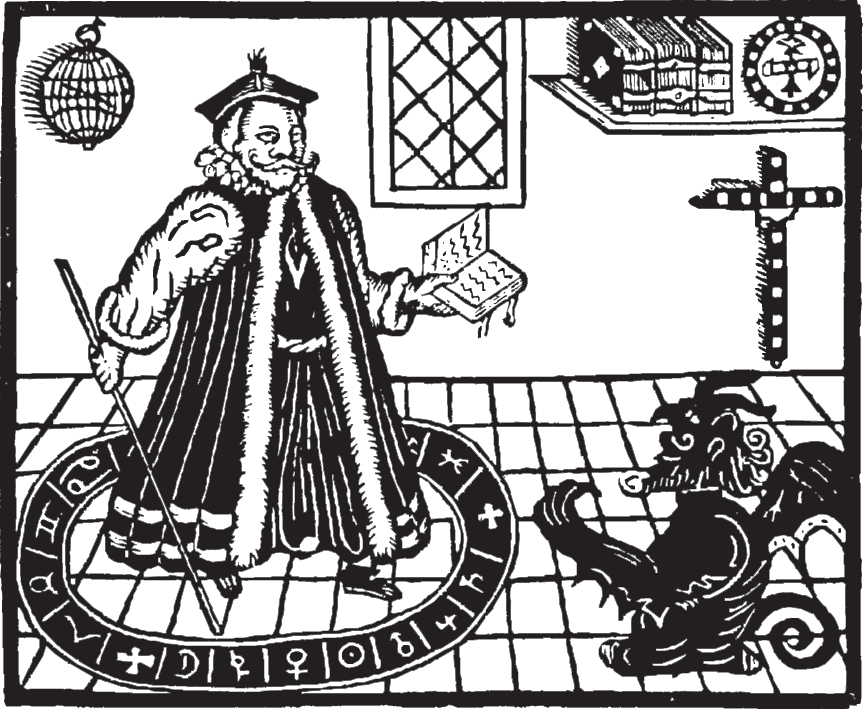
When a magus performs a ritual evocation of a demon, he uses goetic tools to create a temporary “body” for the destructive matrix, a channel of communication with it; the matrix itself, once isolated and crystallized in “pure form,” proves indistinguishable from its “prototype” — the actual “demon” as a being.
When a magus visualizes himself as a deity in a ritual of “taking on divine forms,” he activates the corresponding matrix within himself, reinforcing constructive currents of psychic energy in the mind; the nature of this energy is identical to the nature of the “ideal prototype” of that matrix — the deity itself as a being.
When a magus carries out kabbalistic manipulations with Names, Squares or words of Power, he likewise activates energies indistinguishable from the influences of the corresponding “ideal prototypes.”
In none of these instances is there talk of an original “external” influence: a Demon is always initially an “internal” demon, which only upon analysis is found to be connected with some “external” being; the descent of a “Deity” is, at root, the “awakening” of the corresponding matrix in the mind itself, and only afterward the correlation with an “external” Power. Kabbalistic Lights (Orot) are, above all, energies of the mind itself, identifiable with corresponding macroflows only upon analysis.
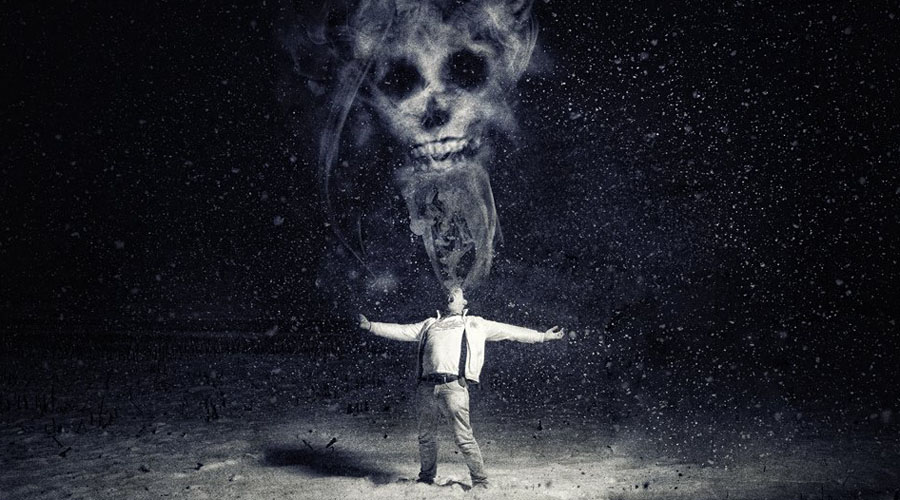
In other words, both content and possession are activations in the mind of a matrix linked by analogy to some “demon,” not the “entry” of a demon into the mind; nevertheless, the recipient of the dissipated energy as a result of this pathology is indeed the macroflow of the “external” demon. Thus, although the “external” demon as such does not, strictly speaking, “implant” itself into the victim’s mind, it is nevertheless interested in the destruction of that mind. Still, at the vortical level there occurs an interaction between the person’s desire-body and the demon’s vortex, which can reach the point of complete absorption of the person’s vortex — becoming infernal at the stage of integration.
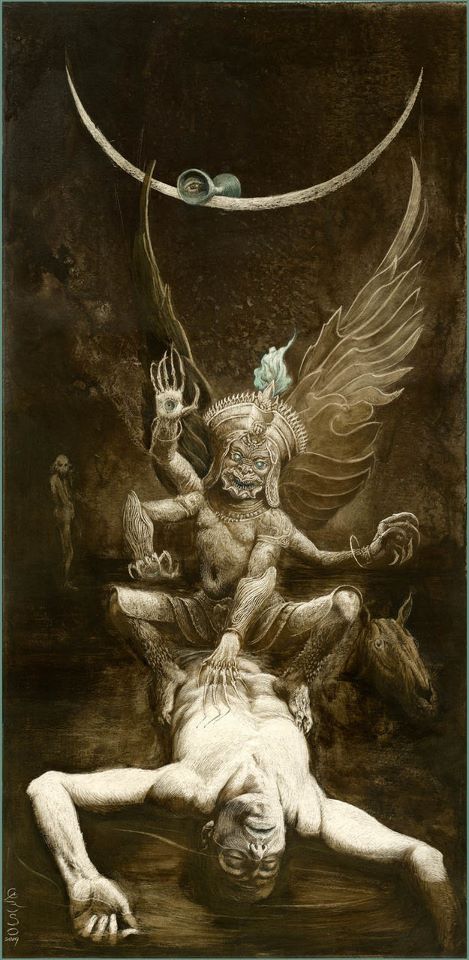
Thus, any pathology of mind includes:
1) a precondition — the “obscuration” that serves as the ground for distortion of the flow;
2) the energetic basis — a desire distorted by a destructor;
3) the destructor — a distorted form of desire;
4) the “demonic matrix” — the structural substrate, an involutive state of mind that promotes its prolonged residence in the “obscured” condition and impedes its exit from the nadir.
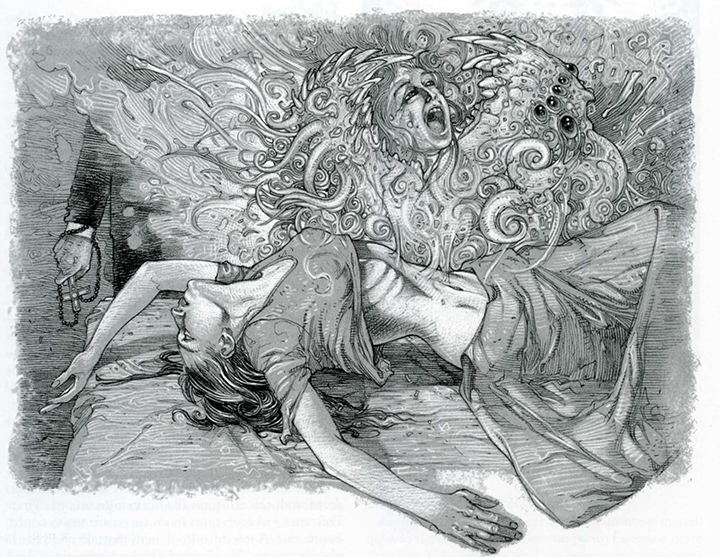
Accordingly, therapy must also include:
1) Restricting shading actions;
2) Identification of the source of the pathology’s energy;
3) Discovery of the destructors that have developed in the mind;
4) Diagnosis of the matrix that “stabilizes” the pathological state, and its deactivation.
Only once the destructive matrix is deactivated can efforts aimed at eradicating the destructors and “reintegrating” them back into the original desires and aspirations be effective. If psychotherapeutic work includes only the identification and attempts to “correct” the destructors themselves but does not touch the matrix that supports them, its results cannot be stable or long-lasting.
Therefore, Goetia is one of the effective therapeutic approaches; it requires careful study and comprehensive application, and remains quite relevant today despite its somewhat archaic language and whimsical imagery. Whoever can master this language and understand these images will discover behind them a sophisticated approach to the healing and evolution of consciousness — meticulously elaborated, honed and tested over hundreds of years.
Hello! How can one notice ‘non-obvious pathologies’? Can we independently notice all the distortions we allow as possibilities while in a ‘dense’ and ‘dynamic’ state of consciousness flow?
Everything is formulated very well! Thank you!
Question: Angels serve the Kingdom of Light, Demons are considered free, striving for free will. People have a desire not to be dependent and also to develop will. So to whom are people closer, to angels or demons?
Both Angels and demons have one nature – service-born vortex beings. They do not have their own will but realize the general trends of the cosmos: https://enmerkar.com/en/myth/what-are-ministering-spirits-for