Experience and Authority
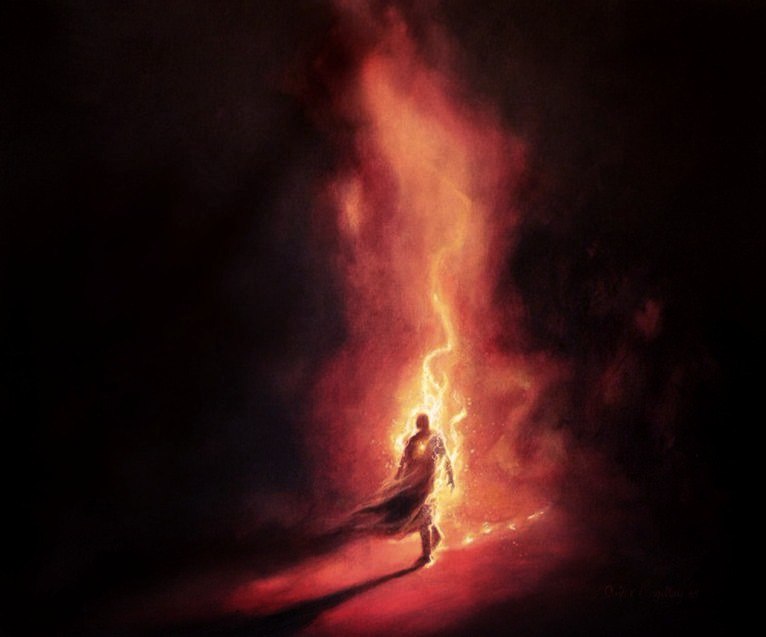
The magical myth regards manifested existence as an instrument of self-knowledge of the unified reality, the Great Spirit. Therefore the most important task of any embodied being is the accumulation of experience — the product of interaction between the mind and Being, their mutual interpenetration and integration.
From this point of view, it may seem that experience is the very measure of the success of existence, its effectiveness, by which one can assess how evolutionarily advanced the mind has become in a given embodiment.
Nevertheless, the Tradition’s view on this question is not so straightforward.
On the one hand, for the Magus the striving for the maximum available (and, where possible, constructive) interactions is the chief priority. However, on the other hand, a mere striving to accumulate experience, absolutizing it, often proves to be a distraction, turning life into a race for impressions.
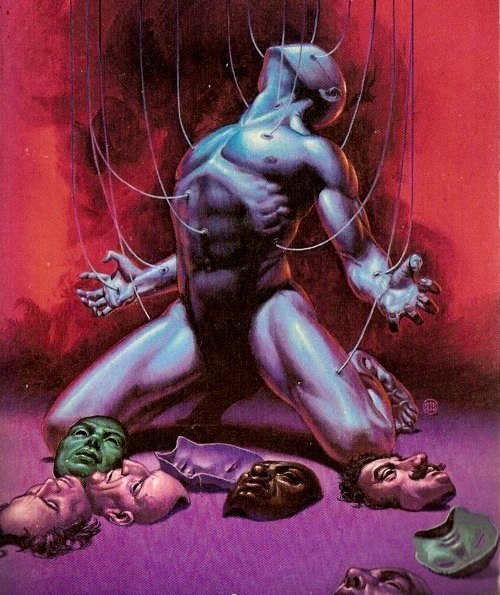
To resolve this contradiction, the magical myth introduces the notion of the Magus’s Authority, complementing the concept of maximal interactions with this idea. As we have said more than once before, a Magus’s Authority is traditionally the mind’s ability to effectively navigate the Flow of Power, its ability to solve problems, find a way out of situations, and make effective decisions.
At the same time, Authority is not simply a skill, not merely the result of experience. Authority is an energetic quality of the mind capable of acting effectively. Authority is not simply knowledge; it is the ability to combine knowledge and inspiration, in which each task is resolved not by running through known templates and approaches, but by penetrating its very essence — by finding its logos, its “ideal solution,” and realizing it in a way that approximates that logos as closely as possible.
In other words, one could say that Authority is the ability to find logos, or, in simpler terms, the “ability to see the truth.”
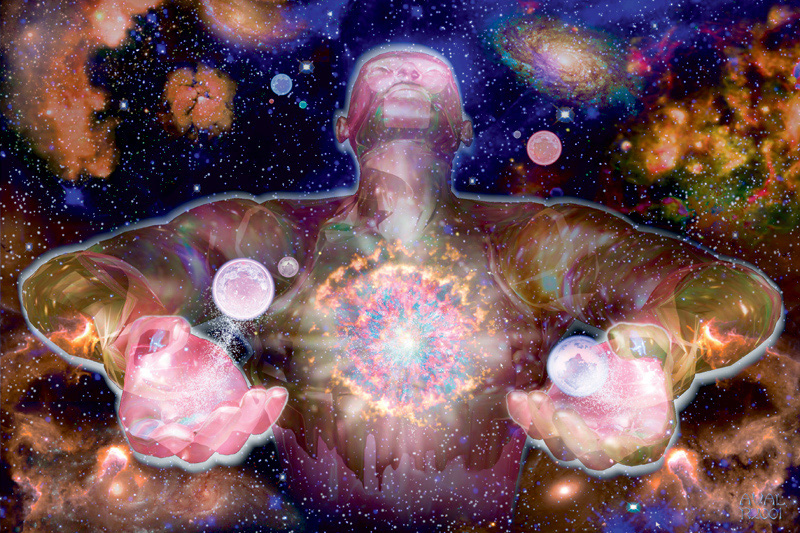
It is clear that in order to see the logos of processes and phenomena, the mind must first discover its own logos, its own nature, and that means that Authority is a product of effective self-knowledge.
Accordingly, the more effective a Magus’s self-identification has been, the greater his Authority — the closer he has come to awareness of his nature, his individuality, his Orlög.
Thus Authority is not simply the result of experience. Moreover, often experience not only fails to contribute but, on the contrary, obstructs the acquisition of Authority, because it leads the mind into a rigid state of false confidence in its “knowledge,” which nevertheless is not necessarily correct. Experience often “clips the wings” of the mind, either bringing it to the feeling “it’s all in vain” (if the experience is negative), or to inflated self-assessment and self-admiration (if the experience is positive).

For the Magus, life is not a “repetition” of situations; it is a living, changing flow in which nothing is reproduced without alteration, nothing is rigid, nothing is absolutely determined. Therefore the Magus understands that a “knowledge of solutions” is not an effective method of development, since the algorithm that worked in one situation, and even in several similar ones, may fail in a subsequent process if a new, unaccounted-for factor appears (even when it is difficult to detect and identify that factor).
Relying on experience trains the mind to see nothing in the world but “eternal repetition”; relying on Authority, however, frees the mind in a changing world.
Thus, although Authority includes experience — that is, an authoritative Magus is necessarily an experienced Magus — experience does not necessarily lead to Authority, and an experienced Magus is not necessarily authoritative.
Understanding this distinction will help the mind avoid not only the traps of empty experience; it will help preserve vitality and agility regardless of how many ups and downs an embodied being has undergone, how many victories and defeats it has had. The striving not to “know the truth,” but to “see the truth” is a very important quality of the Magus’s mind, giving it the chief vector — the vector of striving for freedom.
What do you think, is the “ability to see the truth” dependent on the number of external energy flows involved, is the relative heat of the Path important for the development of Authority or is there some kind of “response from the universe” or something like that?
It is impossible to separate the “internal” and “external.” Proper interaction is always mutual, and the vision of the logos “outside” occurs simultaneously and inseparably with the vision of the logos “inside,” so that the “response” certainly occurs when there is a proper “request.”
Hmm. But various myths and traditions often describe figures of supernal observers. In one way or another and with varying degrees of involvement in the flow of life. Apollo, Shiva, higher Alvae, and so on.
Correct me if I’m wrong, but it seemed to me that these figures (to varying degrees) see the truth, but are largely outside the flow(s).
Is there no contradiction with your thesis that to know the logos one must see from both inside and out?
In this conversation, we are not talking about “flows” as such. We are discussing the perceiving and acting consciousness. It concerns the fact that to see the hierarchy of logos, one must find their place in this hierarchy, that is, adequately identify the logo of their flow of consciousness. Of course, it is not necessary to be inside the flow to see the logo of that flow. But to do this, it is essential to see one’s own logo.
Dear EnMerkar, could it be that there is a flow inside Consciousness as well – only the flow is not of force, but of awareness (force is perceived as something external, while awareness as internal)? The flow is broken when there are many sub-personalities, shadow areas, etc. within consciousness that create numerous disconnected flows. For the sake of increasing Authority, Consciousness strives for the integration of internal elements, which increases the flow of awareness, makes it unified (and thus, the hierarchy disappears) and allows connection with the Logos (which is perceived as something external, as well as internal, something inexplicable). While worldly Gods, if they are not considered a flow of power, i.e. as something external, they are just the same disconnected sub-personalities 🙂 They will still not become a flow of awareness if they are not integrated within consciousness itself, i.e. Worldly Gods will not be able to see the truth if this truth is not found by the questioner himself, and the purity of this “truth” depends on the degree of unity of the flow of awareness within Consciousness. It seems I am trying to reason according to the Myth, but it seems like I am not 🙂
“Let the poems we Miss rest in the grave.
Let it be Affirmed, whose Destiny by the roadside Survived,
They carry the Fallen, but stand up again.”
–
I am at home – this is happiness:
I stand in a beautiful dress.
And the Lilies shine, they are so pleasant too,
To hold me on thin, skinny stems,
They were broken and in the fireplace, they were drowned in the skies,
They predicted by divination that there is no way back,
If you have passed the point – of farewell, renunciation in deep snowfall.
–
I returned with pollen,
To my dear Lilies,
That gave us strength,
To extend knowledge for a day,
Recognizing each other in eternity,
We walk endlessly on silver stems
Colliding – pushing away;
To keep in Harmony;
Whether the world, whether the home, solidity and law,
Whether the sea, spirit, whether souls and bodies,
Whether children, the elderly, money,
Whether asking, and whether praying,
Bewitch, curse, forgive, love,
–
But the Lilies must bloom.
–
Such is the Decree and Agreement,
In humans – Unicame.
With a tired smile – try to Surprise,
That Morning, At the threshold –
Alas – there is no Prophet.
–
By bumps, Success, Squeezes, Enjoyments,
To calm down, hardly, we will be able to Universe.
–
Only a Grin remains; –
“See you again.”
Cool! Thank you.