The Wind of Freedom
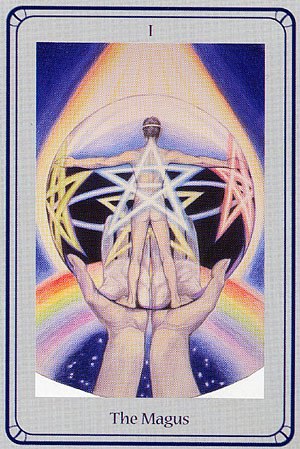
The Magus always and unconditionally strives for freedom as the highest value. For the Magus, freedom is not “freedom from something”; at the level where this freedom exists — there is nothing else, or, to put it another way, absolutely everything exists.
In other words, freedom is that infinite and transcendent goal which can be reached only by becoming the goal itself.
The Way of Magic begins precisely with the feeling of one’s lack of freedom — limitation: limitation by laws and orders, limitation by life and death, self-limitation, limitation by gods and spirits, and finally, limitation by the very striving for the absence of limitation.
Having discovered this all-pervading limitation, the Magus can also understand that its nature lies in the presence of something outside himself. Whatever can be said to be “not me” always functions as a limitation — if there is a “not-I”, then I am not present there, and therefore I am limited in my existence. Embodied life is confined by the boundaries of the body and personality, and death is marked by their absence.
And it appears that there are two fundamental ways to overcome this limitation — to become nothing, in which case nothing can be limited, for one cannot divide by zero; or to become everything, in which case nothing can be “not me.” But any infinity we can imagine is limited by the presence of individual unfree “finitudes” within it, and any zero is limited by “non-zero elements”… It is clear that, broadly speaking, the ultimate result may, perhaps, be the same, but the practical ways of attaining it and the stages of the journey differ.
One can speak of “life in Christ”, “identity with Brahman”, or attaining parinirvana, and one can smile and say that it is all the same — yet both the methods of attainment and the ultimate result will be different. As long as we reason about the absolute from the standpoint of relative mind, we are bound by the unfreedom of that relativity. Nowadays people claim that a Buddhist who attains Enlightenment and a Rosicrucian who attains Full Realization reach essentially the same state. And to some extent this is true. It is true in the sense that both attain a certain degree of freedom. There is a legend about the disciples of the Buddha: one reached the sphere of complete absence of any forms and took it for nirvana — and was mistaken; the second reached a sphere in which there were neither forms nor their absence — and took it for nirvana — and was mistaken as well. Ultimate reality so far exceeds the capacities of limited mind that even hints, even apophatic pointers to it, limit it, and therefore deprive it of freedom.
But did the first disciple of the Buddha become freer? — Undoubtedly. Did the second become freer? — Certainly. But were their states of mind essentially identical? — No, they were not.
And is the state of the Hindu mystic who has attained unity with Brahman identical to theirs? And is that, in turn, identical to the mind of a Shaivite who has dissolved into Shiva-tattva?
Does a reintegrated Brother of the Rose and Cross, who has passed the Tree of Life and entered the Infinite Light above it, attain essentially one of the aforementioned states of mind? Or is his state yet another variant among infinite diversity…
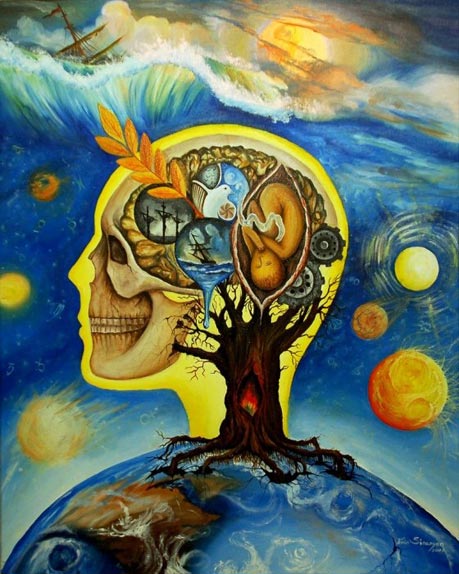
The pull toward universal descriptions is an understandable weakness of the developed mind, which imagines itself omnipotent and all-pervading, imagining itself capable of looking not merely beyond its limits, but beyond the absence of any limits. But this is simply pride — a common trap for Wayfarers who have gone so far that the whole world seems to them no more than a grain upon their palm.
So do we know where we are striving? Do we know where we will arrive? Even when personality has long been dissolved, have we reached the goal? Will the Absolute that has a goal achieve it? Can the original Mind of the Buddha be dimmed?
All known descriptions of the Spirit, and the absence of its descriptions, and even the absence of descriptions — are only an echo, a weak wind unable to carry to us anything except our own longing — the longing for Freedom. But by following this wind, becoming Brahman, Buddha, Paramashiva or the Ipsissimus — we merely take a step toward that about which it is irrelevant whether to speak or remain silent, or to be silent while speaking, or to speak silently. And only by understanding that even in the widest absence of limits there is a limitation inherent in that absence can we “go where we do not know where, in order to find what we do not know.”
In my fires, spirits dance,
In my fires, bridges burn,
In them, words and rumors melt,
And dreams are reborn.
A voice resonates, harmonizing with the song of the forest
And the drum beats in time with the fire,
In the rhythm of movements, veils fall
And a different world lays bare before the eye.
Illusions lose strength,
The wild freedom intoxicates in simplicity…
And once more, I light the fires in the night,
To learn about myself in the forest’s tales.
Hello! It seems to me that such an aspect as pleasure is also important here. After all, our consciousness is limited by instincts and reflexes which automate us, depriving us of freedom on one hand but relieving tension, giving a peculiar comfort and allowing us to escape into ourselves. This ultimately leads to dissatisfaction – for a harsh mismatch arises between inner magnificence and outer neglect. Taking the reins into our hands, overcoming and breaking down walls gives us the opportunity to change something, meaning the external is brought into balance with the internal, hence the pleasure I speak of. We are all Creators locked inside ourselves, seeking the key outside. People differ; for someone, the fire of Svarog is closer, for someone, the calmness of Nereus, and correspondingly their results will be different. If we compare it with nature, it resembles an ancient flower and a periwinkle grown beside each other—the former will strive with all its might toward the light, while the latter will crawl on the ground searching for shade; with overall freedom, their paths diverge, and the sad fate of the ancient flower in the shade is as tragic as that of the periwinkle in the sun 🙂 That’s why I think that pleasure in development is the first bell toward freedom, to know where to go. Respectfully.
Greetings. Does it not seem to you, Eiol, that the aspiration for consumption, freedom, and ‘satisfaction’ of consciousness resembles a magical formula?
A person, in order to feel more or less confident, must have just above average. This Average is somehow determined by a consumer basket tied to the desires of our consciousness.
Regarding freedom. To be honest, I haven’t fully realized what Freedom means in the magical understanding of the word. Perhaps this definition fits better with the word ‘creativity’.
By increasing power, responsibility, and creating, a magician increases their realizational power and Unfreedom. Indeed, in order to gain freedom, it must be given up.
Numen: Regarding consumption. You know, there’s this thought: we can only support what we like and resist the opposite. It seems like such a simple idea that even a child would understand it, yet in reality, people often cannot clearly connect these A and B, getting accustomed to thinking in a chaotic, fragmented way. By making decisions “automatically,” a person replaces their guiding poles with simple external stimuli, like a bright advertisement or a convincing political speaker. You mentioned the thirst for consumption and the consumer basket of our consciousness – in this case, it seems that we must know in advance what we should want and how to realize it, how and with what to fill the basket. And this, it seems to me, is the problem – between the internal (often unconscious) rejection of the “buy in bulk without looking!” approach and the persuasive pressure from the “sellers,” who create the illusion of “a happy million buyers,” who are slightly above some “average.” The issue isn’t so much the troubles of consumption (which is ultimately a natural and necessary process), but rather the manipulations of those enticing us, who try by any means to push a bunch of useless junk onto us, instead of one cherished golden ball. 🙂 As for freedom – to gain it, one must give up something; this is debatable, of course. The very instruction and the word “necessary” next to the word “freedom” look strange… What if the instruction no longer works? 🙂 After all, what is visible is changeable. What if your freedom or mine is found in not giving it up and in such a joyful, hamster-like accumulation? What if…? 🙂
Everything sounds beautifully romantic and somewhat unclear. In reality, it’s not so romantic and it’s simpler. Have you ever felt like you’re living in an artificially created world? And that all concepts are created only to be constantly challenged? Every vision has hundreds of points of view; all subjective-objective-multiple-inversion transformations have an unresolved nuance.
Or perhaps someone intentionally wanted to create such an insoluble knot of cause-and-effect concepts? In fact, everything is clearly divided. We follow what we ourselves have created and the meaning we embed in our thoughts and desires.
We consume because that is what those who drive technology want, and without this, there will be no progress. We are born and we die because our energies are important to other worlds. Because death, as understood by humans, is just that—death. In reality, we are immortal in the sense that our energies transform and serve life.
Hello.
In my opinion, we consume when we are unable to create on our own. We follow existing technologies when we lack our own, as they seem more effective. And we also want to be part of events, even if just in thought. There may be an element of consumption in that as well.
As for dying for other worlds… it certainly sounds beautiful. But in this world, I see that people die not because they are drawn to other worlds, but because they are not accepted in this one. They die because they do not see opportunities for their realization here. Are their energies important to other worlds? Perhaps. Are they important to this one? From what I see, no. That is sad. But at the same time, each of us is a world. Are our energies important to each other? That’s the question…
For me, it’s not a question: your energies are needed and important, very much so.
Freedom is akin to a horizon that limits the field of vision; and limitations, to some extent, serve as a stimulus for movement. Stepping out of one circle leads you into another, which also has its own limitations or boundaries.
Freedom and Limitations are the components of the binary of Potentials. The Great Nothing (the Nothing that is Not) and the Great All (the All embodied in the All) are the components of the binary of Embodiment.
A shift in balance towards Embodiment (the Great All) creates Limitations of form, but Freedom for further embodiment (having built a foundation, one can erect walls, but the shape of the house is already determined). In fact, this shift in balance is the formation of Support Points for Realization (band-runes, galdra-staves, sigils, etc.).
A shift in balance towards Disembodiment (the Great Nothing) creates Freedom of form, but Limitations of possibilities for further embodiment (having torn apart the built foundation, one can choose any shape for the house, but there is nothing upon which to place the walls). This shift in balance involves the formation of Points of Emptiness for Depotentialization (the disembodiment of natural Support Points of an object in this world).
Thus, neither the Great Nothing nor the Great All possesses the complete set of Potentials (and therefore absolute Freedom) when considered separately. Only in the union of the Great Nothing with the Great All, where the Great Nothing is contained within the Great All, and the Great All is contained within the Great Nothing, is there Absolute Freedom (the sum of the Freedom of Potentials and the Freedom of Realizations).
For the Mage, the binary of Freedom and Limitations has another dimension: the inner and outer frameworks of Freedom and Restrictions. Being externally limited by the Body, as a Support Point in this world, the Mage has internal limitations related to their level of Development and the level of Purity of the Personality.
The development of the body as a Support Point has its potentials and its limitations, and paradoxically, it develops (or degrades—disembodies) in close connection with the development (or degradation) of the Personality.
The Personality of the MAGE possesses a unique opportunity to integrate with the Great Nothing and the Great All. This integration is possible with their parts, which the MAGE makes an extension of themselves (we can feel the surface of the earth with a stick and clearly distinguish pebbles from sand).
This same integration of the Personality is possible with the Great All and the Great Nothing as a whole (the Mage, as a microcosm, feels the Macrocosm through the paths of universal interconnections in an integrated form, as One, having raised the Runes).
The Limitations of the Body here represent only a field of potentials for improving it as a Support Point, and not only for the Mage’s personality but for the Great Spirit, of which the Personality of the Mage gradually becomes a reflection, while still preserving self-identification.
The only thing I understood from this article (I admit, I read the second half “under the table”) is that it leads further and further away from the state of freedom. Will reading this article help get closer to freedom? For me – no. Maybe simply because I KNOW (besides what I feel) freedom. The only truth is that explaining this is indeed pointless. This is my impression. Thank you!
Here is the English translation of the text:
—
Freedom of spirit is the highest ideal. I do not argue. I aspired to it. I found it. And now it’s somewhat like this:
We are all on a train.
A few in a compartment,
Hundreds of thousands in the carriage,
And seven billion on the train.
There is so much that can be done here.
You can run back and forth,
And sleep the whole day.
Talk about nothing,
And play cards until sunset.
You can stage a raid on the buffet,
And play hide and seek with the kids.
But I chose the roof.
The wind is blowing there.
Everyone will stay here until their stop.
One thing I don’t understand:
Are we even on the same path?
Cool. And sometimes, a conversation with a random fellow traveler, who will “leave” your life forever at the next station, can be priceless…
Yes, freedom marks one of the paths. But theoretically, at least three more can be distinguished. The first is the desire to avoid suffering — the Path of Pleasure. The second is the Path of Benefit or Utility. The third path is the Path of Law or Duty. And the fourth, which is discussed in the article, is the Path of Freedom. In essence, they all, theoretically, lead to the same destination.
Each of the Paths has its own obstacles and traps. For example, the search for Pleasure can lead one into the abyss of self-satisfaction. The pursuit of Benefit fosters relentless greed and attachment to material things. Following Duty can lead to pride and total hatred of others. And striving for Freedom can make one fall victim to ambition and lose oneself.
Maybe Freedom is a combination of everything. Or maybe there is no freedom in a static state. Is freedom the infinite, blazing fire and passionate movement toward freedom? 🙂 Is freedom to say ‘I am free’, I have achieved it?
Moreover, it seems to me that the main enemy of freedom is all forms of the illusion of freedom. And certain unfreedoms are also necessary. A worm has more degrees of freedom of movement than a bird, but it crawls, while the bird flies…
It’s an interesting example. And in your opinion – is the freedom of the worm to become a bird? And a bird-worm, is that by chance not a binary statement implying that being a worm is bad?)