
A Lie for Salvation?

One of the best-known works of the Thelemic corpus is called the “Book of Lies.” For Crowley, lying was a special magical instrument; he maintained that “a thought once uttered is a lie,” and that only a thought not yet clothed in words can be true. Hence his idea that a deliberately distorted word may, paradoxically, be closer to Truth…
Be that as it may, distortions and lies have always provoked a highly ambivalent response from magi. Crowley lied constantly. And whatever is said about his “sacred” lie and its higher meaning, the fact that he lied remains.
The romanticization of lying has been fueled by a misreading of trickster figures, especially Loki in modern culture.

Let us try to get to the heart of the matter.
By “lie” we mean a more or less conscious distortion of the character of interactions within the perceived reality.
That is, a lie is present when perception is presented with a false picture of interactions instead of the one it would form on its own through correct analysis.
Clearly, a lie can be “external” or “internal” — that is, one can either present a deliberately false interpretation to other minds, thus distorting their perception and affecting how they interact, or one can replace the images in one’s own mind, inserting a distorted perception instead of an accurate perception.
The being that deceives others is responsible for changes in their progress and development. The being that deceives itself bears responsibility for violating its own Way.
“External” deceits are usually deliberate, and their consequences depend, above all, on the foresight and self-interest of the liar.
Self-deception, however, is a very serious problem, because the substitution of concepts often goes unnoticed, and the betrayal of the Way can be profound.
Naturally, a Magus striving for the maximum purity of the Way must avoid lying in any form.
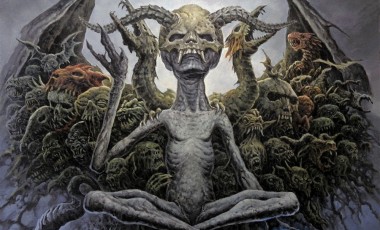
And while lies told to others are more dangerous the more selfish they are, because they lead to the demonization and Qliphothization of the mind, self-deception is unacceptable in any form.
In fact, the only way to avoid the Fall and the accretion of shadow arising from a lie is to change reality so that the lie ceases to be a lie. And for that, of course, one needs not only considerable power to realize but also a high degree of awareness of the lie itself and its consequences. It is in this way that Loki’s lie drives the Universe’s development — the reaction to his actions forces the world to change.
And, again, the most difficult situation concerns self-deception, because the very nature of hypocrisy consists of believing oneself right, in the refusal to see a lie as a lie.
It is no accident that self-deception is the chief cause of ineffectiveness, of every defeat and fall of the mind.
By listening to the whispers of the many voices of predators and parasites, the mind enters into an agreement with them — that is, it replaces its values and thus commits self-deception.
It is precisely because of this danger that the problem of trust in oneself becomes especially critical.
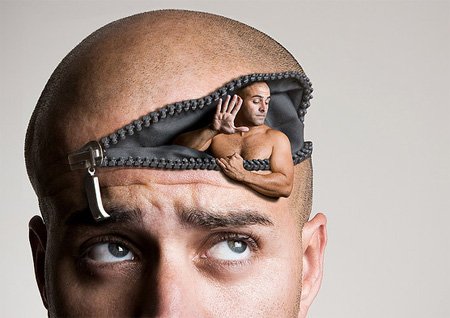
To avoid self-deception, it is vital to learn to distinguish the voice of one’s heart from the voices of predators and parasites that masquerade as the heart. Actually, there is nothing especially difficult about this. However convincing intruders may seem, the core of the mind remains separate from them. And, of course, with sufficient resolve the mind can always distinguish its true tendencies from destructive influences, no matter how attractive their masks.
The question of inner honesty is one of the most important for a Magus. Without this honesty, development is impossible, for a Qliphothized mind is enslaved by infernal powers, even if it stubbornly denies being enslaved. And the first step on the Way of Power is a thorough reassessment of the Psychocosmos, the searching for and removing of its destructors, and the complete eradication of self-deception.
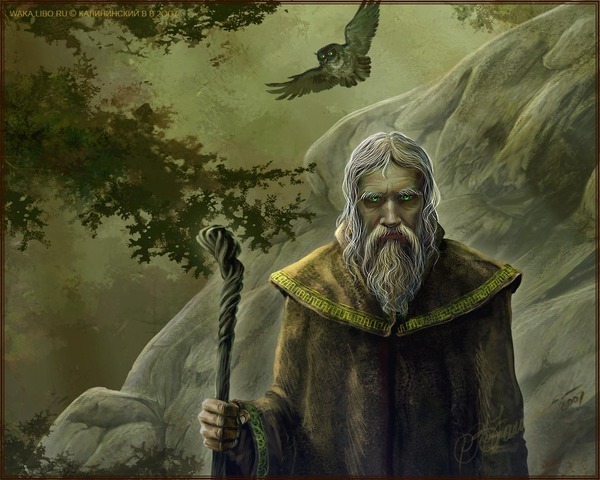
…and if this search is truly sincere, then the first question that arises is: WHO IS SEARCHING? 🙂
External lies can be a means of profit and a means of protection. Lies for the sake of profit are certainly unjustified. Lies for the sake of protection are justified in certain situations. For example, if a person studying magic and the occult pretends to be an Orthodox Christian in front of parents who are convinced and impermeable Orthodox Christians to conceal that, because he knows that if his parents find out what he is actually doing, they will start a pedagogical itch, and the person will have to spend energy on arguing with them, proving something, etc., then such a lie is quite permissible. The less they know, the better they sleep.
When I began to awaken, it was at this moment that the Force poked me the most. Refusing to lie is painful and difficult, but it leads to the expansion of awareness and the development of abilities. At a minimum, you start to feel quite sharply when others lie. In my opinion, lying to oneself is the most terrible (because it is simple and easy, almost unnoticed) mistake that gives the predator a huge chance. Lying to others is also harmful, as it reduces inner purity. Thank you, Enmerkar. Very timely.
Lies are a relative concept. Lies are an incomplete correspondence to the reality that we are trying to describe with words. One of the sources that generates lies is the level of a person’s consciousness. A person’s consciousness corresponds to the awareness of the part of reality that he represents. The closer the individual’s worldview is to reality, the less lies this individual projects into the external world. Reality cannot be described in words, as it can only be felt (to the extent of one’s development). By sharing information, we try to convey in words what we feel in relation to the conveyed image. But this can only become possible in a state of unconditional, mutual love between the interlocutors. Practically, communication should take place telepathically, which can be possible on a collective level upon reaching Christ consciousness. The spoken word is a lie because it is inherently doomed to reflect only a portion (mental) of the information we are trying to convey. And what I wanted to convey in words will be understood differently, even in the mental part, and according to the level of consciousness of each individual, and even based on their emotional state at that moment. What cannot be described mentally (clothed in a concrete form) is conveyed by a person in music, poetry…
They say that if you have a ‘bad’ dream, it means everything will be fine. In connection with this expression, the thought arose:
The paradox of truth is that truth must be reflected by lies, fear by courage, and negativity by positivity. So, the dream takes on the role of one (negative side) of the dream, allowing the manifested world to carry out good.
The role of sleep and dreams is much broader. Sometimes they work as a ‘cleansing system.’ This is why after such ‘bad’ dreams it becomes easier and better.
Lies are a dualistic concept of the mind. And in our dualistic world, it has its place. But as soon as you enter a state of non-duality, it becomes clear that there is no such thing as lies-truth there, just as there is no good-evil, and other dualities. The task is to twist all these pairs around a single non-dual axis of Spirit. Then all moral, ethical, and, most importantly, energetic and evolutionary problems will be resolved.
How simple it is – will all problems be solved automatically?
After solving such tasks, it is unknown what will happen. Our assumptions are not yet reality, and therefore lies?
Let’s not confuse warm with soft)))) Relativity is wonderful, but there is black and white. Lying to oneself – I do this because it will be better, and I won’t harm anyone (I do this because I am lazy and it’s more convenient) – is self-deception and self-justification, lying to others – ‘Vasya, did you eat these apples?’ – ‘No, mommy, it wasn’t me.’ (Yes, mom, but I don’t want to be responsible for this) has no relation to blurred concepts of correspondence/non-correspondence to reality. Perhaps my statements may seem primitive to someone, but in my opinion, self-deception includes the unwillingness to take responsibility for one’s words, actions, and thoughts, and a refusal of self-criticism. As one of the sides of the topic under consideration, no more.
Accepting responsibility is just taking the position of Spirit. And this position is beyond the pairs of truth-lie, good-evil, right-wrong, and so on. Accepting responsibility means embracing this CURRENT MOMENT with its UNIQUE INSTANT TRUTH, independent of any dualities, categories, and concepts.
You wrote strongly. I was recently thinking about accepting conscious responsibility ‘here and now,’ the moment of choice, as the most suitable description of the manifestations of personal conscience, as I encountered the denial of such a concept once again. Because it is ‘imposed from the outside and guilt.’ About immediate truth, in my opinion, it is indeed close to self-deception, but this is purely dependent on the point of view, I think.
Wordiness, ‘truth expressed in words’? )))))
How should one relate to lying for the benefit of another person? Do we have the right to decide for another person what is good for them and what is not? We may think that we protect them, but in reality, it turns out that we are pushing them towards self-deception? In this case, the responsibility doubles. This topic is quite sharp and complex. I may be wrong, but I think the threads of lies ensnare us in reality much more often than we would like. Half-truth also relates to lying, or let’s say, withholding, hiding?
Yes! Yes! Yes! Such articles are always necessary, for reminding oneself for self-analysis. Thank you.
For every level of consciousness, there is its own support – knowledge and experience. What is true for us is false for the consciousness on a different level. Benevolent lies can only exist if they guide the consciousness, whether one’s own or someone else’s, in the direction of evolution. Right now, this is my benevolent lie.