
Trickster. Loki without Romance
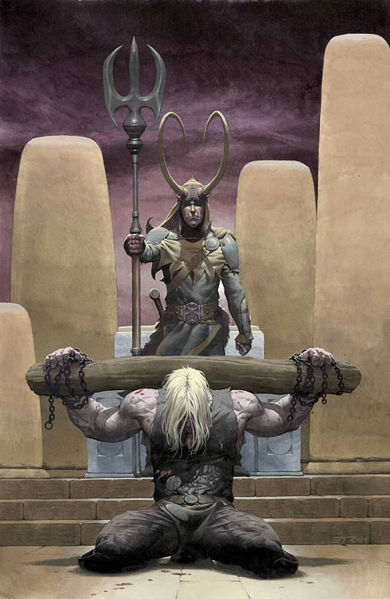
“They reckon among the Aesir yet another, whom many call the instigator of quarrels among the Aesir, the sower of lies and the disgrace of gods and men”
(The Younger Edda)
Arguably it is difficult to find, in any mythology, a figure as contradictory both in its very nature and in the attitudes toward it as Loki — the Cunning Aesir of the North.
All who know of him are divided into two camps. Some regard him as a hero, idealizing his deeds and thinking, “if only Loki had met me, he would have understood my true nature.” Others piously vilify the image of the Cunning Aesir, treating him as if he were the Scandinavian version of the devil, and scoff at any mention of him.
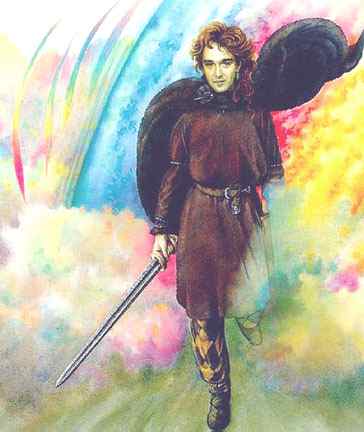
However, the depth of Loki’s character lies in the fact that both positions are equally correct and equally false. Among all cultural trickster-figures, Loki is the liveliest, and thus attracts constant attention from both admirers and critics.
First, let us examine the functions of the trickster. The word “trickster” derives from the English trick — “cunning, deception; joke, prank; foolish act; stunt, trick; skill, knack”; thus, “trickster” means “deceiver; crafty one, rogue.”
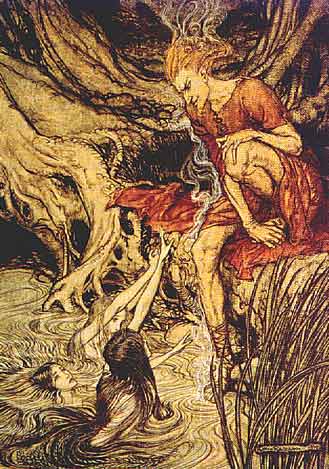
All mythologies describe a figure who breaks the decrees of the gods or the laws of nature, sometimes maliciously, yet who, as a rule, achieves — even if unintentionally — some positive effect. Typically, the trickster treats situations and life as play. Tricksters may be cunning or foolish, or combine both traits; they are often objects of ridicule, even when they are sacred beings or perform important cultural functions.
The necessity of the trickster figure is tied to the fact that every action is performed for the first time. And it is clear that, when done for the first time, any action is at that moment unusual, and therefore contrary to the order accepted at the time, and so perceived as evil. Thus anyone who establishes a model for any phenomenon performs a “trickster” action. Such traits, of course, belong to all creative deities, but among them one almost always stands out for whom such breaches of norms and overturning of orders become a way of existence. The trickster always combines demonic and comic traits of a mischievous rogue. The classic sphere of the Trickster’s activity is destruction.
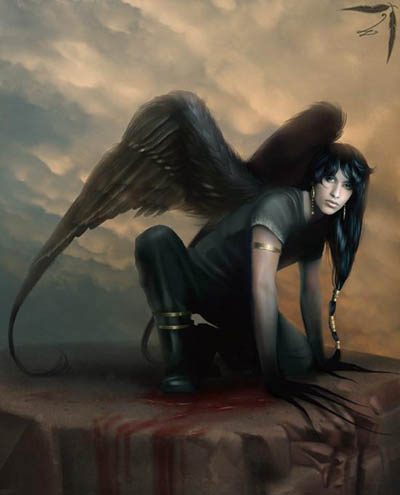
In the overwhelming majority of myths, the trickster appears as a “second” creator of the world (less often of part of it) and plays the role of the being who “spoiled” the creation of the supreme deity by allowing all misfortunes into the world. The trickster — as a necessary counterbalance to the center — circumvents and activates centrifugal tendencies of the universe and leads the “conspiracy against the center.” The trickster is characterized by slyness, cunning, treachery, cruelty, and the ability to transform or reincarnate. He is always at once creator and destroyer, deceiver and victim of deception. The trickster instigates quarrels and conflicts that bring humiliation and harm upon himself. The trickster’s physical and spiritual hunger is insatiable. He is constantly tormented by desires. He has no conscious aims; his behavior is determined by instincts and impulses. He lacks self-respect and decency and does not care about others’ dignity.
Thus the trickster’s functional role places him beyond conventional morality. He knows neither good nor evil, although he bears responsibility for both. He lies not only out of necessity, to save himself or to save the Aesir (many of his plans are based on deception), but also simply out of a love of deceit. He is a shape-shifter and does not shy away from cruel jokes. In play he cheats, in contests he is dishonest.
In Norse mythology the functions of the trickster are performed, in turn, by Odin and Loki, yet for the latter the function of “opposition” becomes the very meaning of existence. Loki is often called a liar, but that is not entirely correct: the concepts of “falsehood” and “truth” are simply meaningless to Loki.
In the Edda Loki’s name is mentioned almost as often as Odin’s. Of all the deities of the Norse pantheon Loki is the only one who is associated with almost every mythic hero: he is kin to Odin and a constant companion of Thor, yet at the same time his relatives include the frost-giants. Indeed, Loki is not opposed to the gods but complements them, revealing more fully both their virtues and their faults. Formally he, like Odin, combines the qualities of Aesir and Jotun. Moreover, it seems to have been in Jotunheim that Loki fathered by Angrboda — the dark mother of the chief enemies of creation — Hel, Fenrir, and Jormungandr. Yet it is also thanks to Loki that the chief artifacts of the Aesir appeared in Asgard — Mjolnir, Sleipnir, Skidbladnir. Loki was the true murderer of the fair and virtuous Baldr by slipping a sprig of mistletoe — the only weapon in the world capable of killing Baldr — into the blind Hodr’s hand. Moreover, the same Loki prevented the gods from bringing Baldr back from the realms of the dead. Yet it was also Loki who helped recover Idunn’s stolen apples of youth (stolen, of course, by his own doing). It has often been noted that Loki facilitates the “circulation of values between worlds,” preventing stagnation in them. These very “values” — the anchors for energy — prompt the gods, the creative forces, to action, to new achievements (and destructions); in short, they drive the world-process.
The figure of Loki the trickster is always solitary. He is always “out for himself,” although his actions usually affect the wider world. Apparently it is this apparent “independence” of Loki that attracts many imitators who are neither Jotuns nor members of the Aesir.
The necessity of Loki’s figure in Norse cosmology is well supported. Yet Loki’s appearance in an episode is always traumatic, even if it ends well. His actions are almost always accompanied by deaths and destruction, even if necessary for the “world-process,” and remain catastrophic nonetheless. The connection between Loki and fire is perfectly clear. This is attested not only by the similarity of his name to the word “Loge,” “fire,” but also by the very character of Loki’s world-uniting activity.
At the same time Loki is more than a mere trickster; he is not only a “violator,” he is an independent figure, not subordinate to the mythic fabric. And not merely as a trickster, but as a full participant, Loki participates in creating humans and in many of the Aesir’s wanderings. But this personality is clearly darker and more sinister than, for example, the tricksters of classical mythology (Prometheus, Hermes). It is Loki, as the “god of the End,” who opposes Heimdall at Ragnarök — Heimdall, who upholds the worlds — it is Loki who steers the ship of the dead into the final battle. These key, ultimately destructive functions make him crucial not only in local cosmos transformations, the “small creation,” but also in replacing entire cosmoses. The idea that Christian editors seriously “blackened” Loki is hardly credible. Had they wished to defame the pagan myth, the figure they would have preferred to sully would surely have been Odin, the head of the pantheon.
Thus Loki’s frivolous self-mockery conceals his cosmic role as destroyer and unifier, who deals with no one, following his inscrutable way.
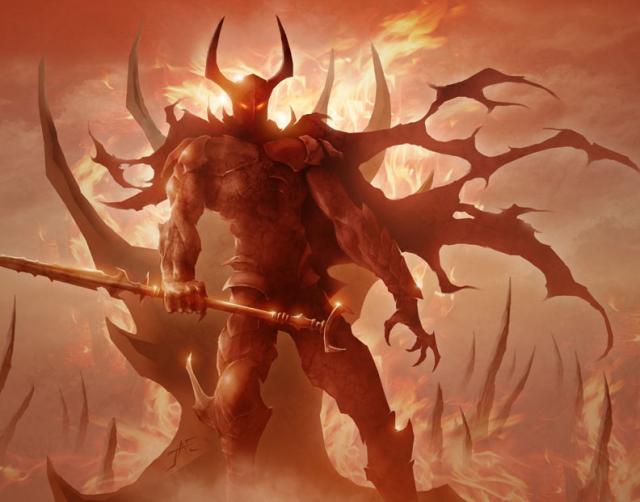
Oh yes.. it’s Loki the Trickster. He was once Great… but now he languishes in the Gallic Mountains… in Norway (that’s what this country is called now).. well… I don’t think he is having a good time there… who would like to spend eternity locked up?
Indeed, a complex figure in Scandinavian mythology. Nevertheless, I tend to think that it is not a necessity but rather an evil. It is also considered the shadow side of the supreme god – Odin.
Also, ancient Scandinavians believed, as far as I know, that volcanic eruptions are manifestations of Loki’s wrath. Loki will lead a ship made of the bones of the dead – Naglfar, whose appearance will herald Ragnarok – the decisive challenge to the Gods of the Chthonic Forces.
The Aesir tied Loki with his own son’s entrails to a rock after he created a quarrel in Ægir’s house. Above his face, the Aesir hung a snake, whose venom drips into his mouth. Skadi, feeling pity for him, placed a massive bowl underneath, into which the venom flows. When the bowl overflows, Skadi takes it away, but the venom tortures Loki so much at that time that he writhes, causing earthquakes. Loki’s release will herald the beginning of Ragnarök.
Hastner: I cannot agree with you. To me, it is more accurate to consider Loki an enemy, but not some kind of ‘evil’. The ‘good’ Aesir did their share of mischief too. And then, Naglfar is not made of bones, but of nails, and as Anhel has already said, earthquakes occur from the writhing of Loki, not just from his anger. Although when poison flows in your face – it’s hard to feel benevolent. )
Enmerkar, it is very interesting and deeply presented, and the image of this trickster is shown. In general, I agree with you: there is neither ‘white’ nor ‘black’; the world is what we see it to be. The main thing, probably, for a person is to listen to their heart, their soul, and to be able to answer for their actions themselves. And the image of Loki that you have so interestingly described confirms this… We, humans, always need someone to blame for all our mistakes and the results of our own bad deeds… Thank you for sharing your knowledge.
So, such an archetype exists. I assume the rebuke of Loki is a manifestation of Loki the trickster.
“I was mistaken. The pinnacle of the manifestation of Loki the trickster is the assistance in the construction of the walls of Asgard.”
It’s not about having the ability to ‘shift’ the mistakes. Loki isn’t here for that, but he is the force that helps the noble to be noble, the brave to manifest their bravery, and the believer to find their path… Where would Batman be without the Joker, and who would need him then? Loki is not an enemy; he is the force that helps one realize that in the eternal world – our minds are rotting. He shakes things up and grins, forcing one to think and see the edges, this is good – this is evil, this is nobility – this is baseness… How to understand the light if one doesn’t know what shadow is?
Don’t you think that we take the cosmos too seriously? =)
Well, let’s say Ragnarok happens. And what of it?
The global battles of the Universe are the battles inside a person occurring since time immemorial. For example, Odin’s battle with Fenrir on the day of Ragnarok is nothing more than a battle of Consciousness with its animal passions (one of the negative qualities of the Shadow (Loki)), which, having ‘gained weight’ and breaking free from control – “chains,” ultimately consumed the one who had chained them.
Accelerating Ragnarok is necessary, not delaying the inevitability until the Roman calendars. This would allow one to know the completeness of the Myth and help the evolution of those who take the cosmos too seriously. 😉
So it turns out that the Aesir, particularly Heimdall, are delaying Ragnarok along with everyone else… I have the impression that Ragnarok has already happened… And what comes after resurrection? After all, Ragnarok has already occurred. Everyone wants peace))
Ragnarök is a cyclical phenomenon; it has already repeated many times. The names of the gods, outward appearance may change, but the essence will remain. The world moves in a circle, repeating its old mistakes and increasing new ones with each ring. Remember the history of any great or lesser civilization: there is conception, rise, blooming, but then it self-exhausts moving into decline, and then a destroyer is needed to wipe out the old that has outlived itself, so that a new civilization may emerge in its place after many years. The humanity that is known now is not the first step of humanity; many ‘discoveries’ in the field of technology were invented many thousands of years ago… Someday, and I think quite soon, this human civilization will also finish its existence… This is how I see it…
Oh, come on. You see it, but I don’t. A civilization, growing up, changes its place of residence, just like a grown child moves away from their parents. If a world doesn’t reach a certain development, it burns out.
The bright need space, and the dark need technology. Going beyond the limits will help regulate the process of generating space naturally.
A foggy article that doesn’t clarify anything.
If the goal is to debunk the romantic image of a villain in the eyes of fans with an unsuccessful personal life, then, in my opinion, the article lacks emotional brightness, something repellent. It is presented too dry for such purposes.
If the task was to understand what the trickster Loki is, then I would note the following.
There is a description of the figure, various functions and elements of the biography are enumerated. Even some generalizations of the author are present. It’s good that the reader can get a general idea about the subject. Excellent that the reader is left with the opportunity to build their own image from various facts.
The problem is that there is no positive conclusion at all, even if it does not claim to be the only correct one. ‘Trickster is evil’ or ‘Trickster is good’ or ‘Trickster is both good and evil’. The conclusion of the article is the last sentence, which ends with the words ‘… on a path only he can understand.’ So it turns out, it’s clear that nothing is clear. So what is the trickster Loki really?
Stone Guest, what did you want? You can romantically melt at the sight of rose color, or wrinkle your nose at black (or vice versa), when in reality, these are just waves. Dry? Well, goodbye, romance. Not only colors are illusions, but also your “good”-“evil”. Are you suggesting that the author fall into illusion? It is clear that the “coloration” of Loki depends only on our perception and from which side we look (the author showed these two sides). The choice is yours. But in my view, it is foolish to chase after colors (and your one-sided perception), when everything created in the Universe is part of its mechanism, has its purpose, path, it is NEEDED by the Universe by default, and that is the main thing. If you want to expand your understanding of the trickster, you can refer to Jung’s psychology, where he appears as the archetype Shadow (but even Jung won’t tell you whether the Shadow is bad or good, since the Shadow has both positive and negative sides), just one thing is clear – Consciousness cannot exist without the Shadow (if there is light, there will be shadow).
The trickster is not identical to the archetype of the ‘Shadow’. These two definitions cannot even be placed next to each other.
I will not quote entire books of C.G. Jung, his preface “On the Psychology of the Trickster Image,” etc. I will only say that I agree with him at this point in time. However, Rozz, I would like to hear a more detailed response from you as to why you disagree with Jung (and thus with me).
Jung reduced the Trickster to the “crowd phenomenon” of Le Bon. In my understanding, the Trickster is a force that has the property to change fate – perish in the case of incorrect interaction, or move to a qualitatively different level of existence in case of luck. The shadow – that’s the shadow.
Wonderful, the shadow is the shadow) ‘crowd phenomenon’, i.e., the psychology of management acting on the TEMPORARY aggregation of people, and the collective unconscious are two different planes of understanding human psyche. The shadow (“Analytical Psychology. Tavistock Lectures” by Jung) is CONDITIONAL “lower” part of personality; the sum of all PERSONAL and COLLECTIVE psychic elements that, due to their incompatibility with the chosen conscious setting, are not allowed to manifest in life and eventually unite into a relatively autonomous (fragmentary) personality with opposing tendencies in the unconscious. The shadow acts compensatorily towards consciousness; therefore, its effect can be both positive and negative. Thus, there is this opposition Consciousness – Shadow, Odin and Loki (in one description of the Trickster, there is a similar moment). The Trickster does not change “Fate”; he creates such provocations that Consciousness is forced to change something. (On the psychology of the Trickster image) “If at the end of the myth regarding the Trickster we hint at the figure of the savior (note: the Trickster is a forerunner of the Savior), this consoling omen or nice hope means that some disaster happened but was understood by consciousness (note: CONSCIOUS). The hope for a savior can only arise from the depths of misfortune – in other words, the acknowledgment and inevitable psychological integration of the shadow creates such a painful situation that no one but the savior can untie this tangled knot of fate.” I had to quote to avoid the feeling that I was pulling something from the air. Despite the fact that Trickster and Shadow are multifaceted, I will not consider all facets, but will make a conclusion based on what you presented. “A force that is capable of changing Fate” – this is the power of Awareness)) Refer to Scandinavian mythology; did Loki, the Trickster change Fate? What was predestined (Ragnarok) happened as it was meant to. He did not change Fate but fulfilled his purpose. “To perish in case of incorrect interaction, or move to a qualitatively different level of being in the case of luck.” Again, an example from Scandinavian mythology. Firstly, this is not the Trickster’s (Loki’s) choice – it’s the Hero’s (Odin’s) – Consciousness. Moreover, read the article “Ragnarok and Initiation” by En Merkar, and you will understand the process and that the death of the old means rebirth in new quality (Odin-Baldur). I fully understand that my words may seem empty to you since for you the shadow is just a shadow. However, I do not want my words to be considered unfounded.
Everyone has their own view of the world) As the respected Jung said, it is easy to explain what the shadow is, but not many can understand what the anima is. To rephrase: it is easy to master a school psychology course, to read Jung. But for me, the Trickster is a concept of another worldview; this is not psychology.
Hello Enmerkar. I am interested in the pairs of Forces of Scandinavian Myth Odin/Freya, Loki/Hell Loki/Sigyn, I am interested in the influence of these pairs of Forces on human consciousness (as a microcosm). I also want to learn about Sigyn from you. Thank you in advance for your answer.
Hello!
Certainly, the figures of the gods in Norse mythology, as in any other pantheon, can be considered from both macro- and psychocosmic perspectives – as beings, as energies, and as matrices of consciousness. In this sense, Myth has many levels of understanding and interpretation. For example, Odin is both the principle of ordering the cosmos, the All-Father who governs the universe, and at the same time – the power of the Gates, the God of Disruption, thus entering into certain relationships with Thor (as a simpler organizing principle) and with Loki, as a trickster-disrupter, and also having two female counterparts – Freyja (as the very principle of Attractiveness) and Frigg (as the Goddess-Lady, the Mother). The latter, in turn, is also an embodiment of ordered, royal fidelity. As the Queen of Asgard, the goddess of marriage and motherhood, she embodies spousal devotion at the apex of world order. Her suffering is connected with the foresight of fate and the loss of her son Baldur, but her role always remains royal and public. The other side – Sigyn – embodies shadowy, sacrificial fidelity. Her greatest deed is also fidelity: when Loki was chained and poisoned by the venom of a snake, Sigyn sits beside him in his dungeon, patiently holding a bowl to collect the dripping poison. Her fidelity is absolute and exists beyond power, social recognition, or glory, and, in fact, is an expression of infinite, selfless compassion and resilience in chaos. Thus, if Frigg embodies the Loyalty of Order and Law, then Sigyn is her tragic Alter Ego, expressing Loyalty to Chaos and Rejection, demonstrating that devotion can exist and shine even in the darkest and most hopeless circumstances.