
The Breath of Ice
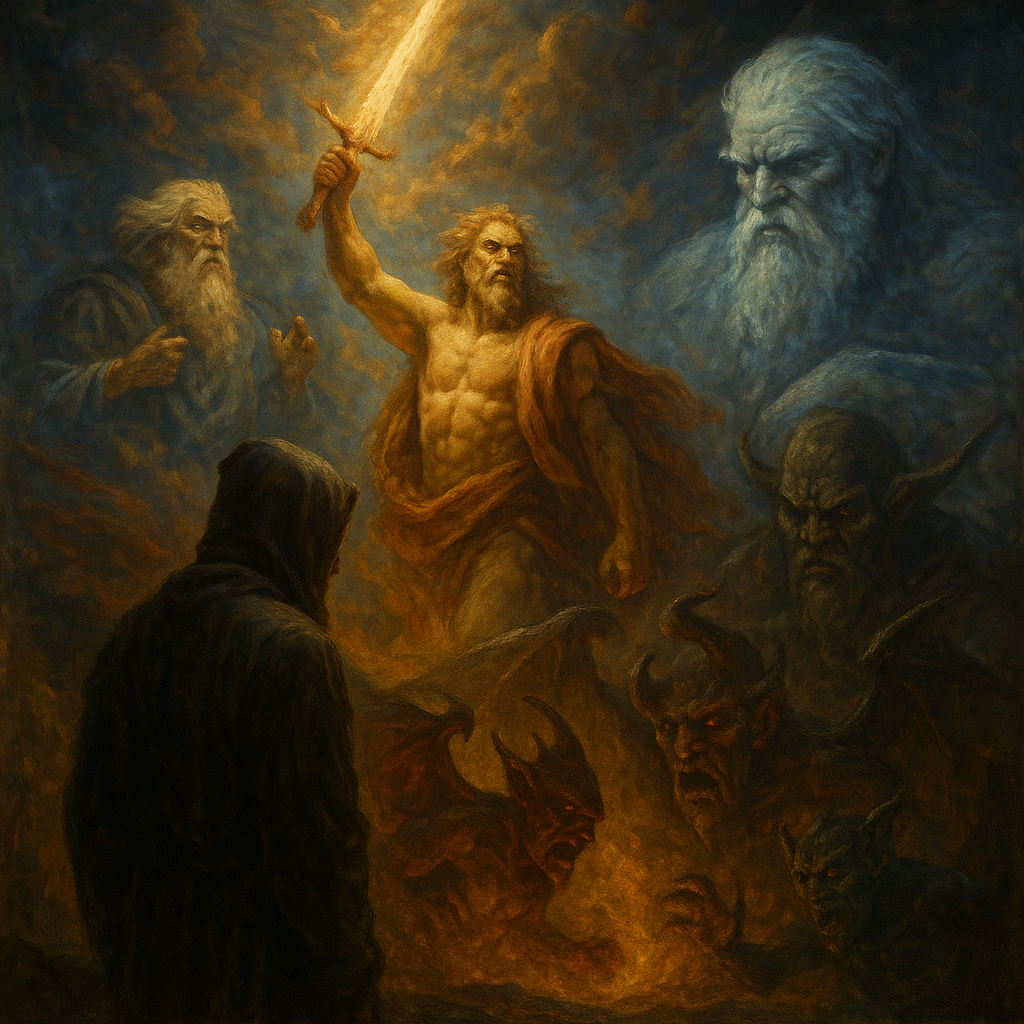
The history of humankind, if one looks at it more deeply than is usually assumed, is a complex and multifaceted struggle of forces of different scale and nature. And it’s easy to see that this struggle is often reflected in natural disasters, climatic anomalies, epidemics, and crises through which cultures and civilizations endure.
We have noted that one leading role in this struggle belongs to the “beings of ice,” the pole of the “solidification” of the potentials of the universe, who “brake,” that is, “cool,” both psychic and physical reality — the Archons and the fomors. We have said that the Archons act at the level of the basic structures of the universe, ensuring their stabilization, allowing laws and norms to be established, while their “younger brothers,” the fomors, feed on existing energy flows, causing depletion, interruption, the “eating up” of energy. And therefore the alliance of the “Forces of the people” is extremely dangerous: the former paralyze the very source of will, and the latter devour its traces and manifestations. And every time the expansion of these forces into the manifested worlds intensifies, stagnation and apathy increase in the minds of beings, and in nature cooling and “ice ages” are observed. In the metaphysical sense, Ice is energy deprived of a vector. It is conservative, but at the same time unstable; there is no destruction in it, yet there is no growth either. At its fullest manifestation it is the force of “entropic completeness,” the absence of gradients of development and the very possibility of movement.
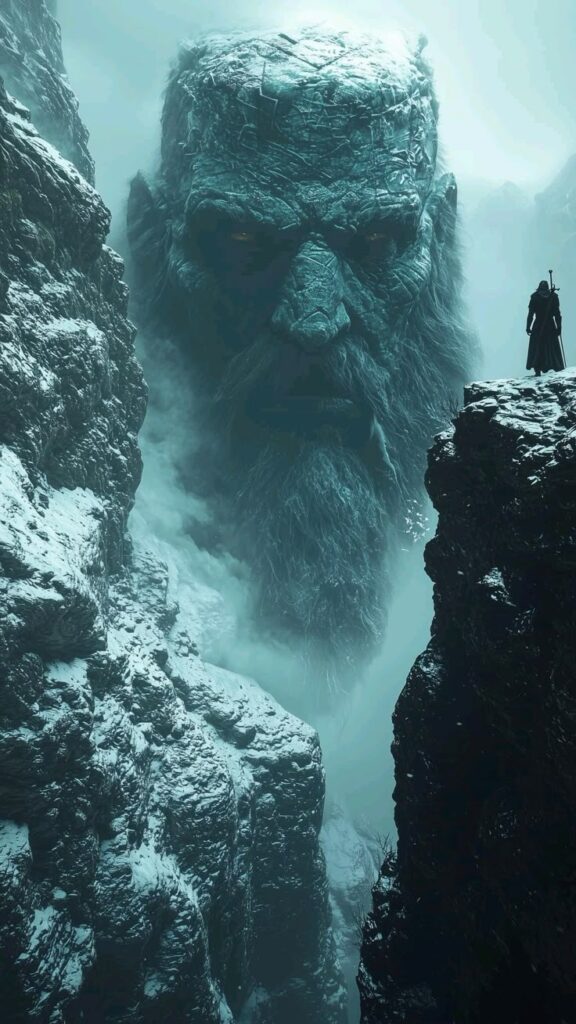
In pre-human epochs, the Ice giants repeatedly invaded Midgard, “reshaping” it to their “tastes” and directing its development toward a minimally costly system of energy transformation. However, the magical people of the faerie learned to resist the Forces of Ice effectively (while also restraining the Fiery khaosneists), which resulted in the “Golden Age” of the faerie, which lasted tens of millions of years.
However, with the appearance of humankind, the balance was again disrupted, and the attacks of the forces of Ice resumed. One of the earliest and brightest manifestations of such a renewed struggle was the eruption of the Toba volcano on Sumatra, which occurred about 75 thousand years ago. This event generated a global volcanic winter, which in the Chronicles of the faerie became known as the Battle at the Mountain of Weeping (Sliab Mis). According to mythological sources, it was at this time that the fomors first attempted to “freeze” the development of humankind and other intelligent beings, including the faeries themselves. Billions of tons of ash and sulfur dioxide thrown into the atmosphere created conditions that nearly destroyed all life. The human population fell to a critical level, passing through an evolutionary “bottleneck,” yet managed to recover.
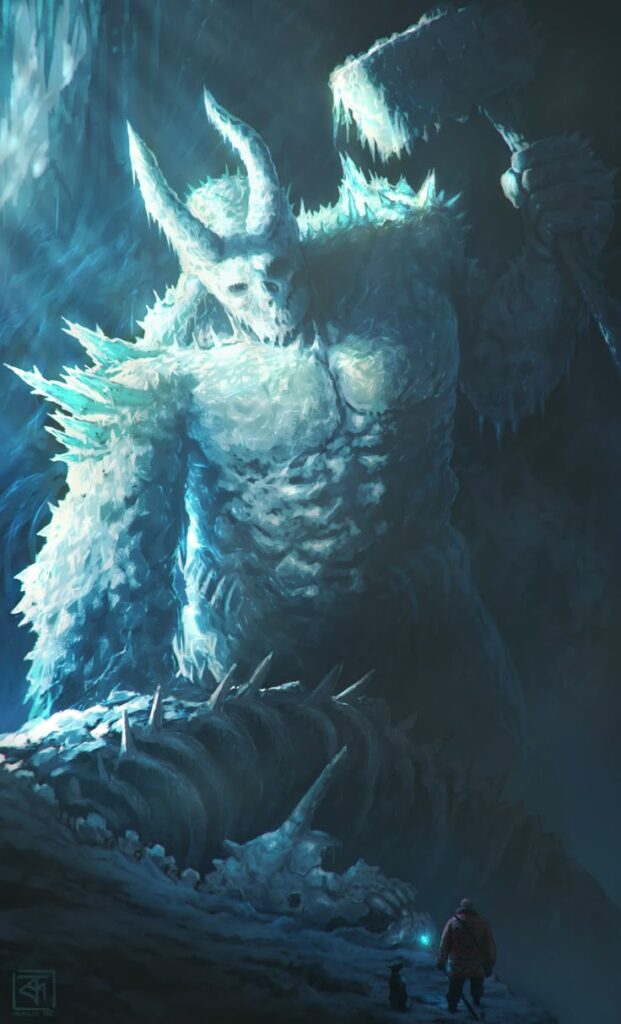
The next large-scale invasion, known as the Battle of Life, occurred about 26 thousand years ago, at the peak of the last ice age. This period is known in science as the “glacial maximum,” when vast territories were covered with a kilometer-thick layer of ice. Faerie Chronicle traditions describe this time as a new invasion of the fomors, trying to suppress the life energy of the Earth and stop the development of humankind. Only thanks to incredible resilience and perseverance did people once again manage to survive and continue their evolution.
Another legendary battle took place about 12 thousand years ago — the Battle of Quil Caykhire, which coincided with the catastrophe of the Separation of the Lands and the fall of Atlantis. This time marked the end of the ice age, accompanied by massive floods and catastrophic climatic changes. The traditions say that in response to the pressure of the Icy forces, the magical civilization of Atlantis attempted to violate the laws of the universe and create ruptures in the Boundary between worlds. The result of the battle was the destruction of Atlantis itself, but at the same time the beginning of a new era in which humankind was able to develop further.
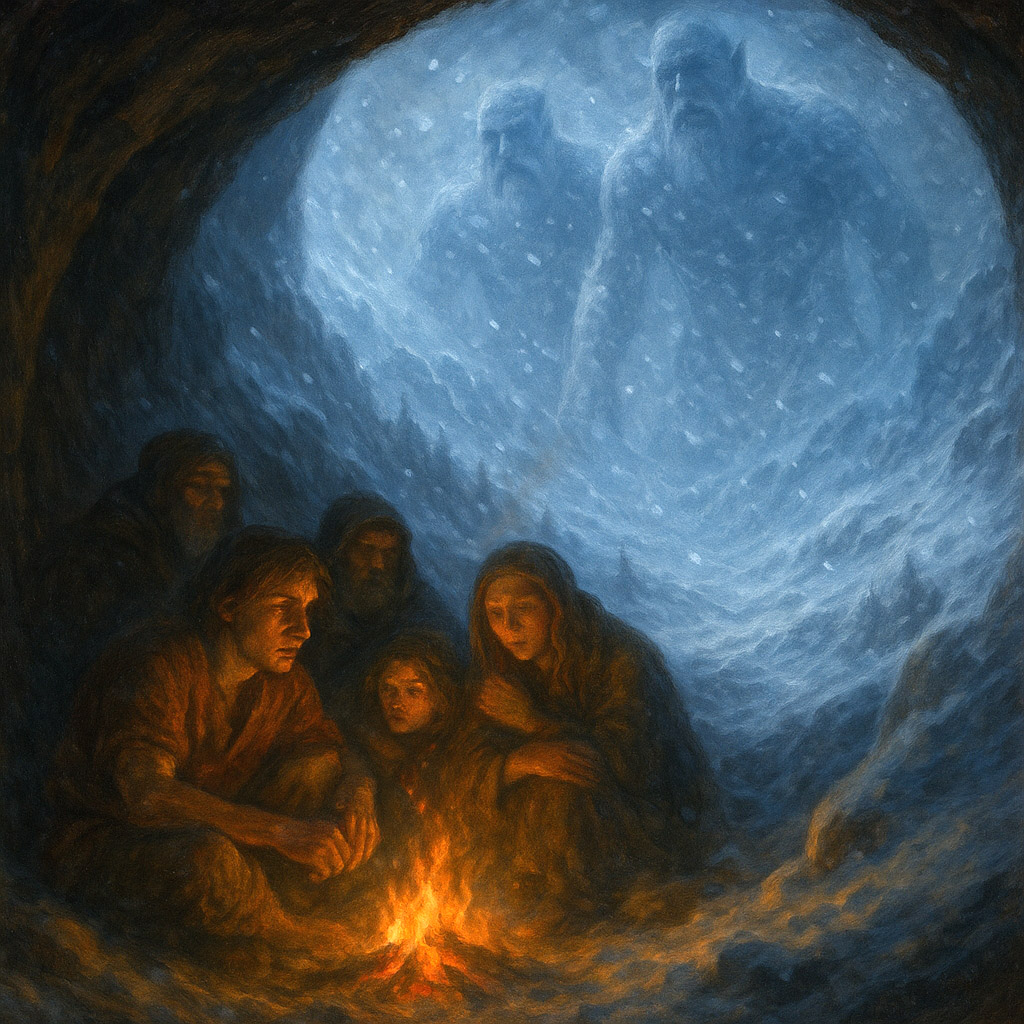
However, it was soon followed by a counterattack: 12,900–11,700 years ago a new invasion occurred, marked by the Olduvai/Younger Dryas cooling. It is sometimes called the “Battle at the Silver Dawn” and is regarded as an attempt by the forces of Ice to thwart the final transition to the Mesolithic. This battle is evidence that even after the onset of warming, Ice can gather strength and “counterattack.”
The Bronze Age collapse about 3,500 years ago, known in the traditions as the Battle of Tailtiu, also did not occur without invasions of the Archons and the fomors. The forces of cold and stagnation again tried to stop the development of humankind, causing the destruction of the great civilizations of that time and a sharp cooling of the climate. Against the background of conflict between human groups, this time became a period of global chaos, leading to the collapse of many ancient societies and to the disappearance of many cultural traditions.
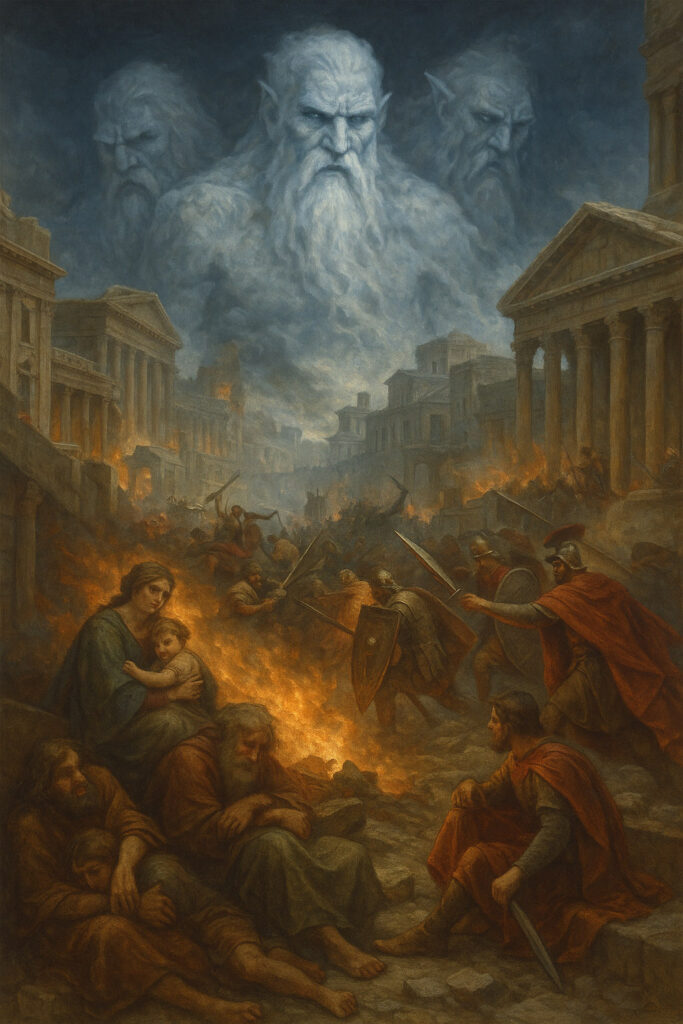
The end of antiquity, the 4th–5th centuries CE, was marked by the Battle at Finntra Bay, according to the Chronicles, another clash of humankind with a new onslaught of the fomors. This time saw mass migrations, climatic cooling, and epidemics, among which leprosy occupied a special place, becoming a true scourge of the early Middle Ages. This era became a turning point, when the ancient world gave way to the Middle Ages, and the forces of ice and chaos once again temporarily prevailed.
The 14th century brought another severe trial for humankind — the Battle of the Dead, or Slua Marb. In this period, the breath of Ice swept the Earth, expressed in the Little Ice Age and the Great Plague, which carried off up to a third of the population of Eurasia. Once again the fomors tried to plunge the world into chaos and stagnation, taking advantage of the recent departure of the faerie from the Middle World.
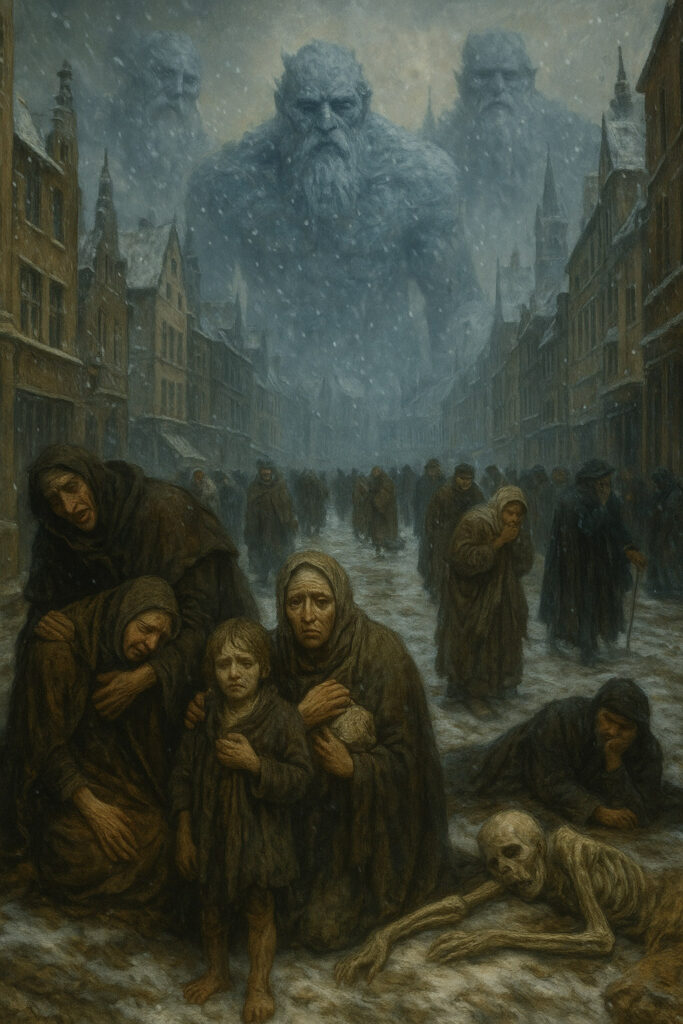
In 1645–1715, the so-called Maunder Minimum began, leading to the onset of the Little Ice Age. According to tradition, this is the “Battle under the Extinguished Sun” — the appearance of Bres, the “fomorian Sun,” collecting tribute but not sustaining life. It was accompanied by a deep decline in solar activity, sharp cooling in Europe and Asia, and mass famine.
But perhaps the most complex and carefully disguised invasion began in the 20th century. Since the 1940s, a hidden global cooling has been observed, skillfully obscured by significant anthropogenic global warming. Scientific and media circles actively discuss processes of global warming, thereby masking a new offensive of the fomors and the Archons. And “conspiracy theories” attempting to dispute the very fact of warming only enhance its masking effect.

And it is not difficult to observe that the expansion of the forces of the Interval now manifests in the increasing virtualization of life, the development of technologies that harm the natural order, the severing of people from nature and their immersion into the secondary illusory world of digital technologies, which leads to a gradual restructuring of energy flows and to the stagnation of creative thought. One might say that the 21st century is a new “battle for the soul’s warmth.” Under the cover of necessary (and even inevitable) innovations, a large-scale and systemic “freezing” of feelings takes place, a devaluation of warmth, passion, dream, and creative freedom. And, as in early times, the Archons rule silently, in which the impulse toward active life disappears.
Another important manifestation of invasions of the forces of chaos in each of the listed Battles was the outbreak of epidemics and pandemics. Each time archonic energies “cooled” the fabric of the world, what people first felt was the “freezing” of its own blood. Therefore epidemics became a kind of “ice inside the body,” turning human warmth, the life impulse, into an immobile mass of fear and apathy. Besides, it is clear that disease and mass deaths lead to large outflows of energy into the Interworld, which, of course, is what the fomors need. Thus it was in 541, when after the darkening of the sun and a sharp cooling the Plague of Justinian swept across the Mediterranean. A similar scenario played out eight centuries later. The cold rains of the early 14th century and prolonged crop failures prepared the ground for the “Black Death.” In the period of the “Dark sun,” “hungry fevers,” typhus, and bubonic plague raged (Moscow 1667; London 1665). In the 20th century, the Spanish flu repeated the same pattern. Against the background of volcanic haze, a solar minimum, and the traumas of the trenches, the virus took tens of millions of lives. And finally, when the atmosphere had already become saturated with the “digital cold” of screens and algorithms, COVID-19 appeared. Lockdowns, isolation, remote images on screens instead of real faces — all of this intensified the archonic process: an unprecedented shift toward virtual “freezing,” toward the loss of the living circulation of feelings. The virus became a kind of marker, indicating the boundary crossed by humankind between the waning warmth of social energies and the advancing breath of Ice.
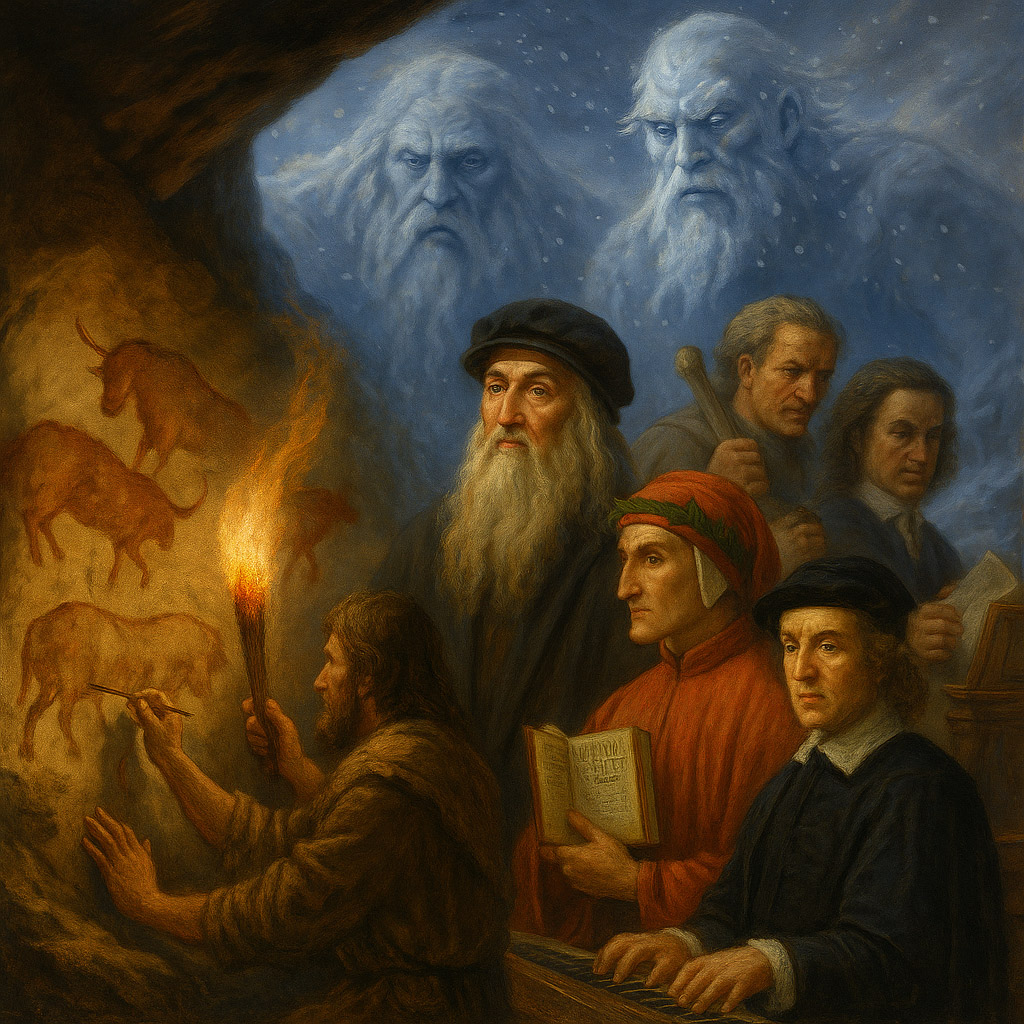
In former times, humankind managed to perceive attacks of Ice as a challenge, to resist them, and even to respond with new achievements and values. For example, it was precisely in the era of the last glacial maximum that the first examples of primitive art arose — cave wall paintings and symbolic images; in the 14th century, after Slua Marb, the Renaissance was born — the greatest cultural explosion that produced Leonardo da Vinci, Dante, Petrarch, Michelangelo; and in the midst of the cold of the 17th century, the “Baroque of Light” flourishes: Rembrandt, Vermeer, Bach. And in our days, when the advance of archonic Ice once again seeks to stop the flow of life, humankind must once again ignite the inner fire in response — the flame of living communication, meaningful creativity, and a harmonious connection with nature. Today it is precisely this fire that can become the most important weapon against stagnation and the loss of the meaning of existence.
And therefore understanding the nature, goals, and features of the numerous forces and drivers of evolution involved in the world process can help humankind resist the forces of stagnation, preserving and increasing the “right” Fire — the radiance of creativity, freedom, and love. This is the flame that Ice cannot stop, and every act of creativity, love, poetry, connection with nature — is such magic resisting Ice, melting it into turbulent streams of life.
Thank you. It was very interesting to read. Do you have any opinion on extraterrestrial civilizations and their influence on our world? Do they exist in your myth or not?
Yes, of course, extraterrestrial civilizations can exist as manifestations of the same human level of consciousness. However, as they evolve, they likely lose connection with the materiality we are accustomed to, so I believe that ‘paleo-contact’ or other forms of influence are unlikely.
More details: https://youtu.be/hFcXBqOUbYU
Very interesting!
An international group of scientists has identified genomic evidence of the bacterium that caused the first recorded pandemic in human history—the Plague of Justinian, which affected the world from 541 to 750 AD.
During excavations of a mass grave in the ancient city of Jerash (Jordan), researchers from the USA, India, and Australia discovered traces of the bacterium Yersinia pestis.
This finding has been linked to one of the most destructive pandemics that, according to estimates, could have claimed up to 100 million lives.
“Until today, we lacked direct genomic confirmation of the Plague of Justinian. For centuries, we relied solely on written accounts describing this catastrophic disease, but we did not have convincing biological evidence of its existence,” the authors of the study emphasized.
Despite this important finding, many mysteries of the first pandemic, which influenced the course of world history, remain unsolved. What is known for certain is that the Plague of Justinian did not allow the Roman Empire to be revived, which was attacked from the west by the Lombards. Whole cities, the backbone of the empire, perished, while wild nomadic tribes, which did not live compactly, on the contrary, preserved their strength and later gained an advantage.
Rereading your article, I thought that the widespread decline in birth rates in developed countries, where residents spend more and more time looking at screens, is primarily related to the loss of the very impulse of life – the extinguishing of the internal fire of the soul and its freezing, which you refer to as the influence of the fomorians.
Yes, unfortunately, the experience of the fullness of life, the feeling of it boiling down considerably succumbs to apollonian rationality and is replaced by neurotic outbursts.