
Haagenti’s Rose-Colored Glasses

Of course, demons have invented many ways of causing energy drain, and among them there are both strategies of “predatory behavior” and more or less veiled models of “victimhood” or “endurance.” It is clear that for people with a more extraverted temperament, “outward-oriented” destructors — that is, behavioral distortions — more often turn out to be successful, while for people more prone to reflection and “detachment” from reality — models of distortion of perception.
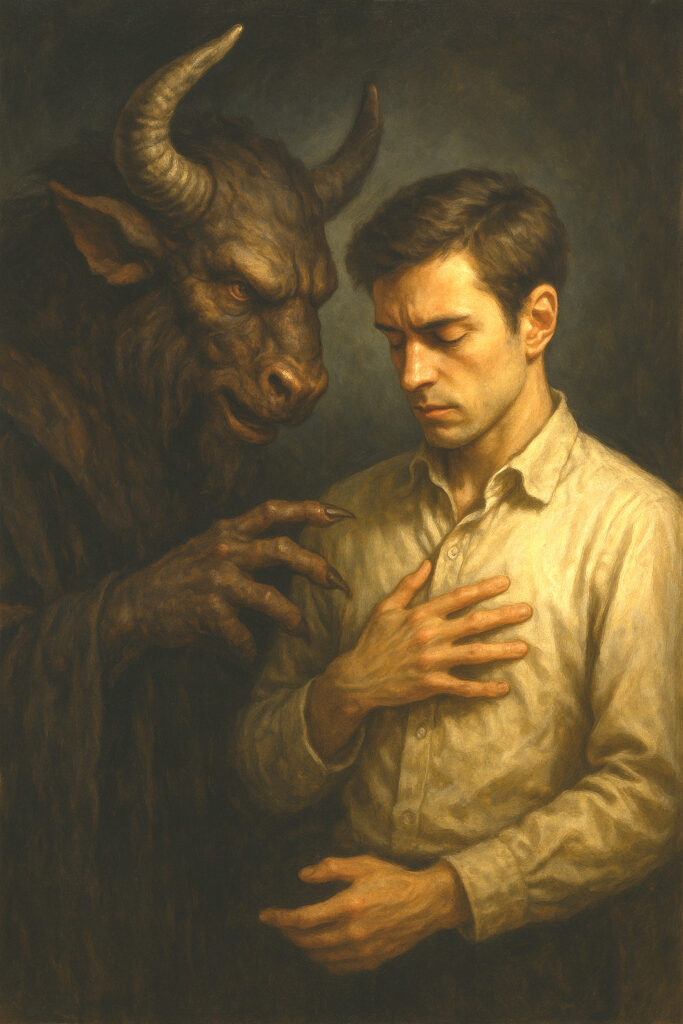
Among the matrices whose activation leads away from an adequate assessment of what is happening around, one of the leading places belongs to the Governor of imaginary countries from the retinue of King Paimon — Haagenti. A well-known line by Pushkin: “Ah, it’s not hard to deceive me!.. I myself am glad to be deceived!” could be this demon’s motto. This demon embodies the desire of the mind to avoid responsibility, to hide from the pain of existence in comforting fantasies.
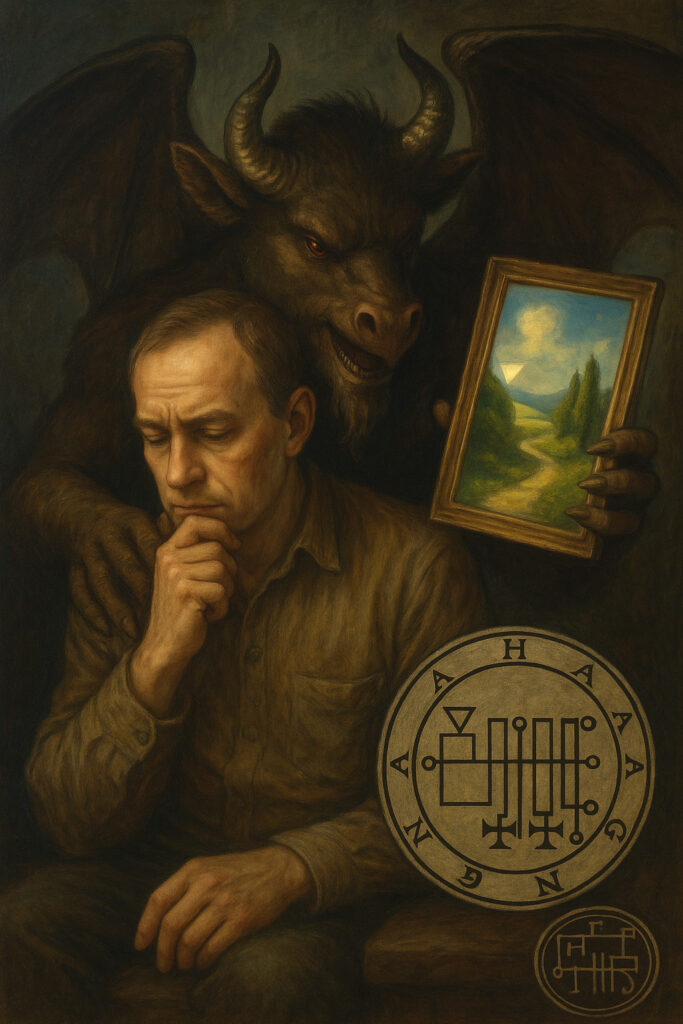
The matrix of Haagenti makes people susceptible to propaganda and even supportive of their own oppression, since its hooks are based on fatigue, fear, thirst for order and meaning. This makes Haagenti’s influence far more dangerous, subtler, and more destructive than direct violence.
The demon’s sigil is built with his motto in mind: “דבש לדוב”, “Honey for the bear”, which implies the nature of Haagenti’s activity — “sweet” feed of illusions for those who are ready to consume it. At the same time, honey for the bear is an image not only of a sweet product but also of stupefaction: it causes addiction, reduces vigilance, and symbolizes consolation that comes not from solving the problem, but from escaping it. This is a deal in which the mind pays its freedom for the right not to see the truth.
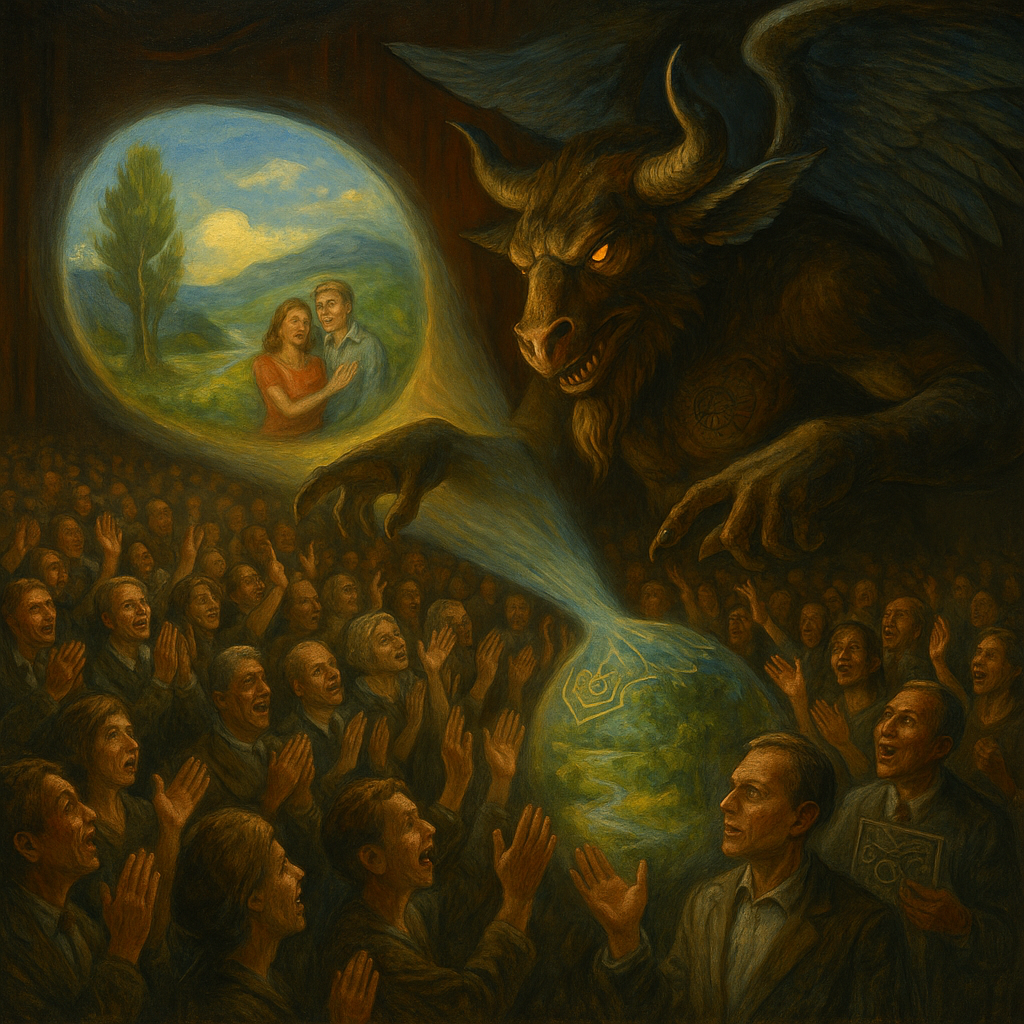
When society faces a crisis — economic, military, cultural — people develop existential anxiety: they lose the sense of stability, of the world’s predictability. In this period, a drive arises in the mind to take shelter, to find a simple, cozy, coherent picture of the world. And Haagenti offers exactly that — an illusion of order, logic, structure. Totalitarian propaganda easily finds fertile ground in this need. People agree to a lie not because they truly believe in it, but because it seems to them less frightening than the truth.
Under the pressure of severe stress, a person often regresses — returns to simpler, childlike behavioral strategies. He wants “someone strong to come” and “solve everything.” He often abandons critical thinking because it requires effort and causes anxiety. Therefore, those in power that offers “simple answers” as explanations and an “enemy” as a target for “discharging” negative emotions becomes a quite successful substitute for a parent. This is how voluntary slavery is born: the victim asks for shackles for the sake of comfort.
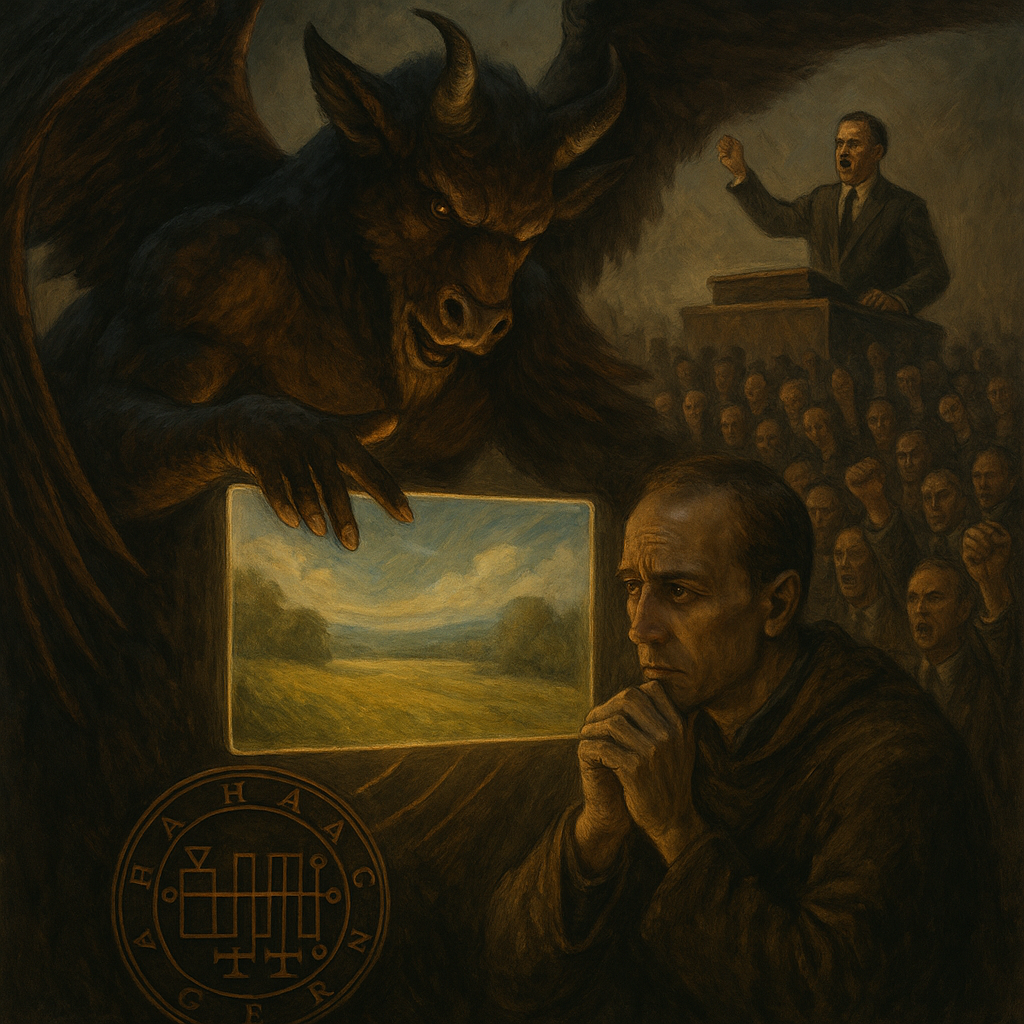
In such conditions, the role of logical thinking declines, while emotional reactions increase. This is a simple basic survival mechanism: in extreme conditions, there is no time to think, one needs to act quickly. It is precisely this effect that manipulators use (who in general do not like logic and analysis); their strategy is always the same: to frighten, provoke an emotional reaction that suppresses rational activity, and then to slip in an emotionally charged lie. As long as emotions outweigh logic, a person remains in the hands of deceivers, locked in a vicious circle of fear, embitterment, and confusion.
The matrix of Haagenti enslaves the mind subtly, not through suppression, like Belial, but through gradual substitution. He leads the mind to see not what is, but what is easier for it to see. Mass propaganda, pushed by another demon of manipulation — Adrammelech — appealing to “spiritual principles,” a “special mission,” or an “enemy at the gates” — is not just a lie, but a form of soporific fantasy. Under its influence, a person begins to identify himself with the image of the “system,” with its slogans, and loses personal boundaries of perception. Quite soon he no longer distinguishes where he himself is, and where the voice of propaganda has been fed to him.
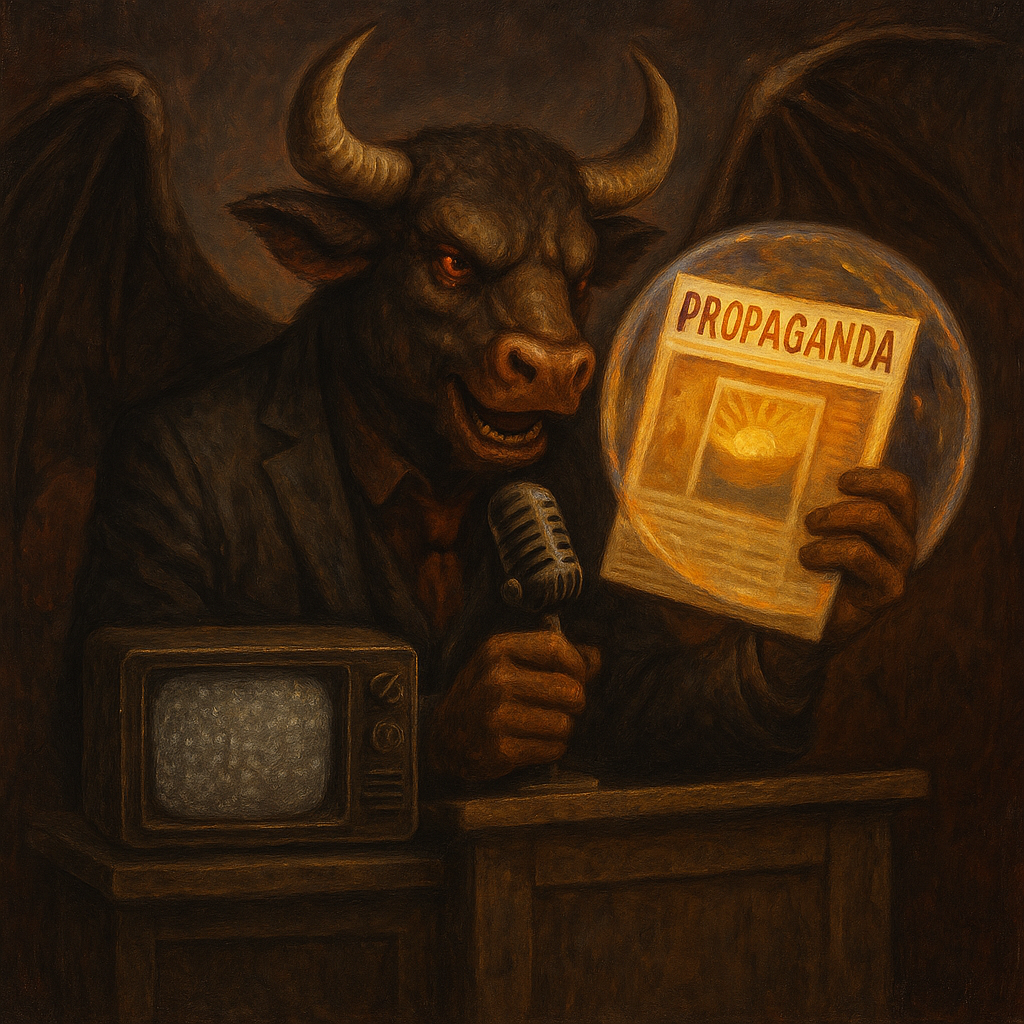
That is why the greatest damage in any conflict — military, trade, political — is inflicted not by soldiers or missiles but by the so-called “mass media.” They escalate the situation, provoke mass hysteria and insanity. If a shell or a missile can maim or kill the body, then venal hack journalists maim the mind, day after day pouring onto an already stressed and weakened psyche a steady stream of propagandistic and manipulative nonsense. They are the main war criminals, the main demonic lackeys, and if stories about “selling one’s soul to the devil” are true at all, then they are first and foremost about “workers” of the mass media.
One of Haagenti’s main hooks is an illusory feeling of “unity” and “community.” To be part of a great nation, a “struggle” for invented values, a spiritual tradition — even if all of it is a fake — gives emotional support and dopamine reinforcement. People caught in such a trap defend their prison as a shrine. This is the “Stockholm syndrome,” the paradox of pain: a person defends the one who gave meaning to his suffering. The mind seized by Haagenti wants to believe in a fairy tale that makes its suffering explainable, justified, and therefore approved.
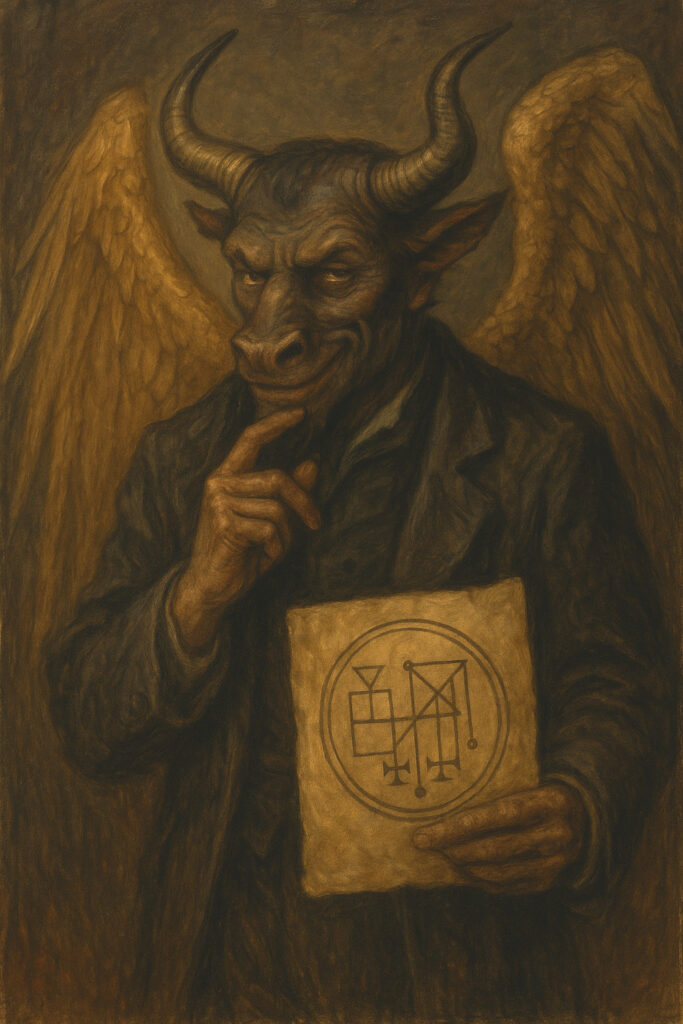
Besides, propaganda offers inner relief from guilt, from the need to think, choose, suffer. Under Haagenti’s influence, a person willingly delegates his will to the authorities and then no longer wants to take it back. His approach is a lie people want to believe. Its most terrible weapon is not pain, but consolation. Therefore, when society “sleeps” under the demon’s hypnosis, it cannot be awakened by arguments — except perhaps by a jolt that returns reality into the field of view.
Moreover, the matrix of Haagenti does not simply disable critical thinking, it replaces it with strange surrogates. Under his influence, a person begins to perceive lies as emotional support; propagandistic ideas begin to be associated with coziness, hope, pride, safety, and he does not even try to check them against facts.
The destructive matrix forms a cognitive bubble in which absurdity ceases to be perceived as absurdity because the basic ability to compare is impaired. A person first believes in a certain narrative, and only then “fits” facts to it. Logic is replaced by rhetorical conformity: any discrepancy is ignored or explained using yet another lie or a fantastical theory.
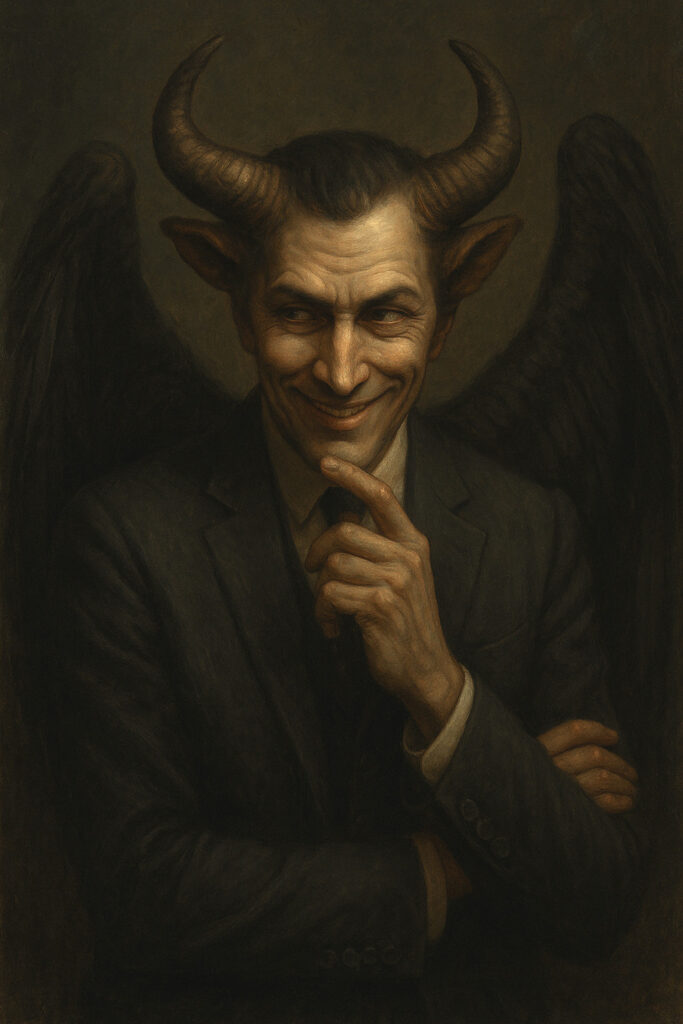
It is clear that critical thinking always requires effort and often leads to pain and uncertainty. Haagenti offers the pleasure of certainty — even if it is fake. Thus a person under the influence of the Governor of phantasms instinctively shuns analysis because analysis means discomfort, and a lie means comfort.
The activity of Haagenti’s matrix weakens the ability to distinguish between reality and images. People begin to fight not with facts, but with inner images that substitute real objects. The one who tells the truth becomes a “traitor” and an “evader.” The one who shows compassion becomes an “enemy of the people.” At this stage, it is no longer thinking, but a ritual of loyalty, a cult in which the lie is a shrine. When deception becomes official truth, supporting the lie is the only way to survive. In conditions of fear, loneliness, and dependence, the mind is gradually trained: repeat — and you will survive.
If a person feels an intuitive conflict between an obvious fact and propaganda, the matrix of Haagenti quiets this pain through repression: “If the truth causes suffering, then it is better to ignore it.” Thus a psychological defense activates, where a lie is perceived as medicine and a fact as poison.

Under Haagenti’s influence, the mind doesn’t so much abandon critical thinking, it forgets it ever had it. It convinces itself that the imperatives imposed on it are reality and begins to defend it as something sacred and vitally important. That is why the destruction of such illusions causes only aggression and hatred: you destroy not just an opinion, you collapse a person’s only source of stability.
Thus, Haagenti is the demon of finding “coziness in hell.” His slogan: “Don’t think, don’t feel — warm yourself with a cozy lie.” When a lie becomes not just a background but a required form of participation in society, what begins is what can be called total demonization of the mind, since deception is not just a mistake, but a mental mode that excludes truth. In exactly the same way, true slavery is not just a political category, but a refusal of the ability for inner discernment, a voluntary renunciation of oneself.
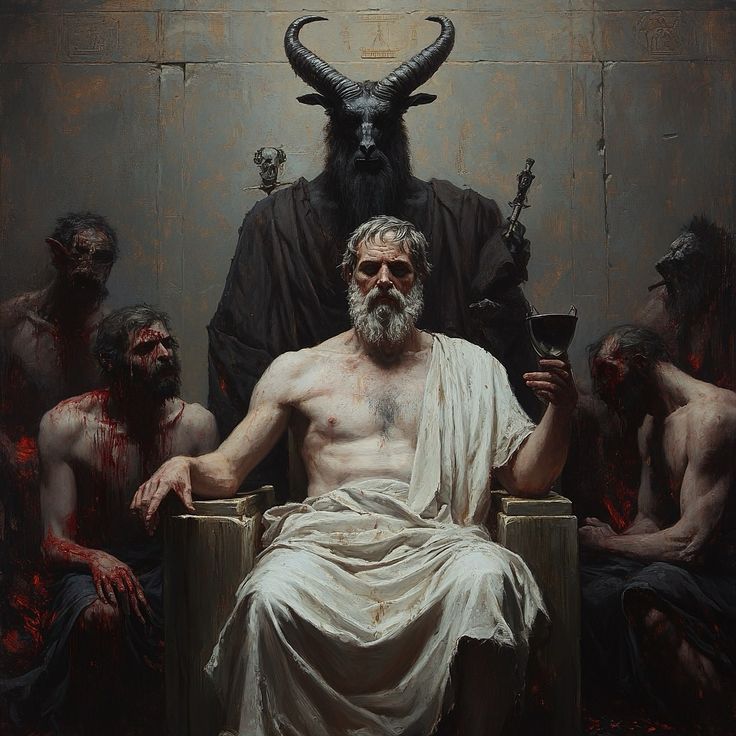
Accordingly, resisting Haagenti lies in sober awakening, in the unyielding labor of the mind that refuses to drift with the current of sweet lies. This demon seduces with false comfort; he lulls, softens the will, extinguishes the sharpness of the mind, and muffles anxiety, turning the human mind into a whirlpool filled with the poison of aggression. That is precisely why in such conditions, refusal of lies is already a feat, and the courage to speak the truth is an act of Magic, sacrificial and transformative.
Therefore, in order to cope with Haagenti, one must oppose him with four activities of the mind — critical thinking, attentiveness, honesty, and steadfastness. Critical thinking in this sense is a refusal of illusions for the sake of truth, even if it is ugly, frightening, or uncomfortable. Every day the Magus or the Man of the Path must ask himself: “Is this really so, or do I just want it to be so?”. Resistance to the Governor of rose-colored glasses begins with a radical affirmation of truth as the goal, and truth must be perceived as the only way to be real.
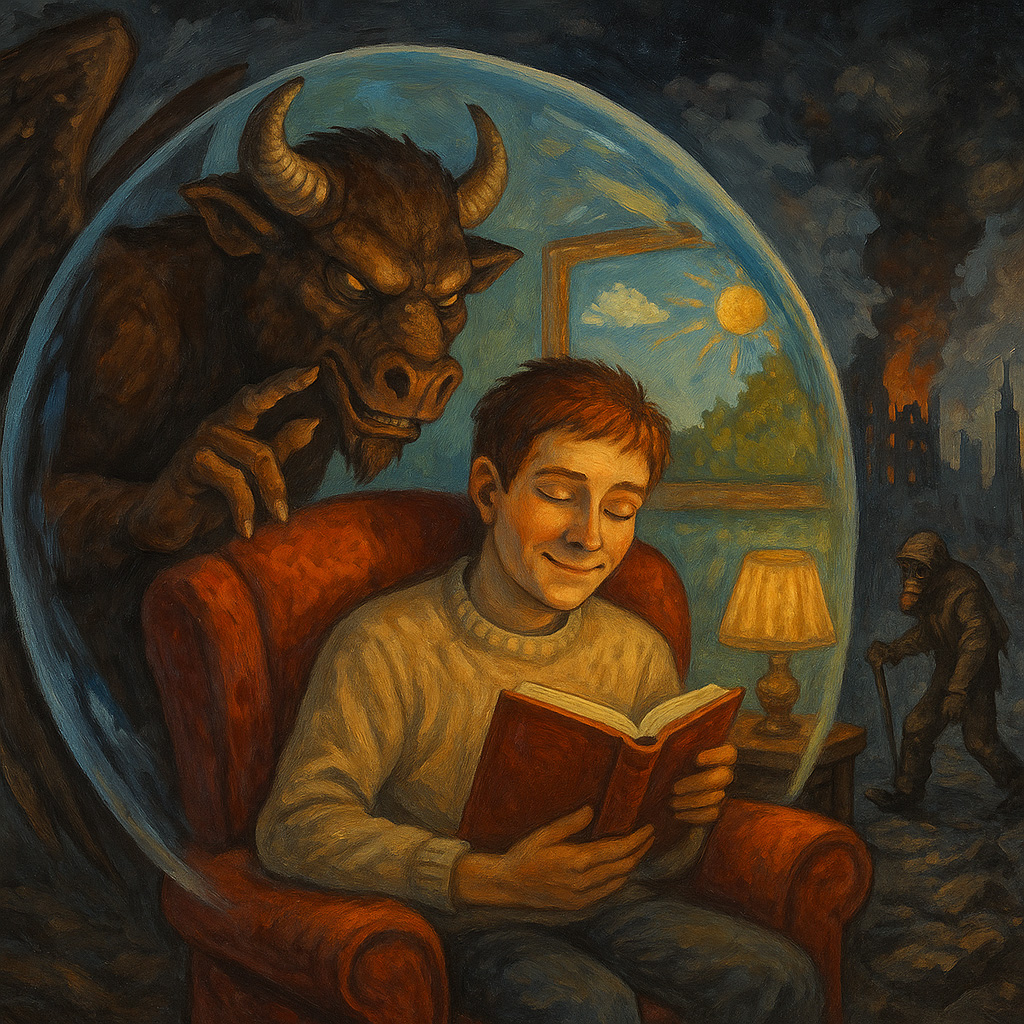
Since Haagenti substitutes perception with interpretation — when the mind does not see, but immediately explains — the antidote to this is pure observation, a state of direct presence, when the fact is perceived before the intellect covers it with labels. This is the well-known practice of silent mindfulness and a pure gaze.
Haagenti’s illusion is seductive because it masks discomfort; therefore, in order to break free from it, one should learn to walk through the pain that reality inevitably brings: losses, betrayals, meaninglessness, limitation. This is the path of alchemy of pain, the smelting of suffering into fuel for the will.
Haagenti fears simplicity, clarity, and will. This matrix cannot remain active when a person begins to face facts, speaks the truth even if his voice trembles, and does not believe any ideas or slogans until they are verified by action.
Super articles. Thank you.
“We sniffed shit, but thought it was May flowers”.. my friend said this once. )
Thank you for the article, it is more relevant than ever.
And it is sad(
Relevant! Hello Enmerkar. I read your articles on the Scandinavian runic tradition. As the keeper of the Semargl line, could you pay attention to Slavic runes? And, purely practical question, do you think it is possible to combine Slavic and Scandinavian runes in one set?
Thank you for the articles.
I understand that the generations are done by you (the team), it turns out very cool.