
A Gaze from the Opposite Shore

We have already discussed that Gnosticism, as a technology for enlightening consciousness, implies the maximum revelation of forces and actors in the universe with the aim of “distancing” from them.
Indeed, the Gnostic approach is the identification and “extraction” from the bosom of matter and the “lower,” false spirituality of the “sparks of the Absolute” — those glimmers of the primordial, unclouded, “pre-creational” mind which is still alien to any specific manifestation, divisions, qualities, and properties.

For a Gnostic, everything that is manifested is already spoiled; everything created is alien to the “true nature” of the universe.
Such radical dualism proceeds from a deep feeling of the spirit’s bondage — by matter; and even the “early” stages of the entry of mind into existence are viewed as stages of the enslavement, darkening, and pollution of the Absolute Spirit.
At the same time, unlike less radical approaches to the liberation of mind, which regard the spirit’s bondage by matter as a necessary and natural stage of its self-knowledge, Gnostics consider this limitation the result of an error, ignorance, agnosis, and in this sense they agree with Eastern sages, who also declared ignorance (avidya) to be the root of obscuration and the cause of suffering.

Therefore, as with Theravadins, for the Gnostic the world is something that must be left, something from which one should distance oneself as much as possible.
However, unlike other techniques of resistance, the search for gnosis is a “view from the opposite shore,” since the Gnostic first detaches himself from the world, inwardly leaves it, and only then finds and rescues from it the “sparks of the Absolute Spirit.” If, for example, the goetic approach is the purification of mind from within, and the theurgic approach brings into it already “purified” energies, then the Gnostic’s technology consists of maximally identifying all creative and actualizing forces active in the mind with the aim of distancing from them (or even opposing them). In other words, the Gnostic constantly looks within for what else he can abandon, what else he can detach from, what else he could cast off, in order to liberate that primordial light of a attribute-free, indivisible mind which he considers his true nature.
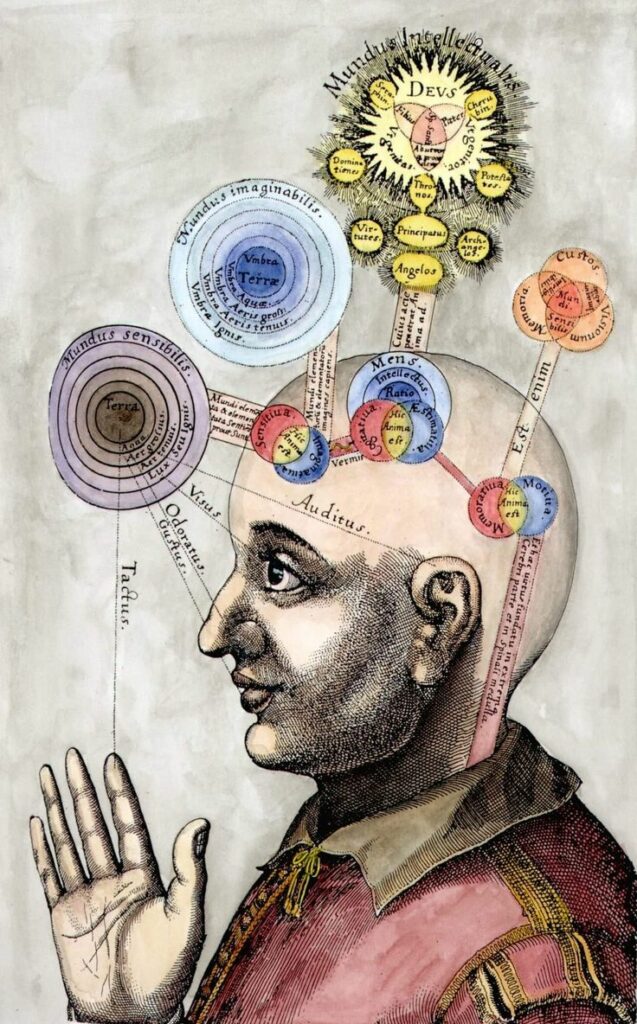
Precisely because of this striving to derealize himself and the world, the attention of Gnostics was in many ways directed toward the virtual spaces of the Intermediate, whose agents they reasonably held responsible for the “fallen,” “distorted” state of the world. That is, if for the goetic practitioner it is important to correct the already established situation of unfreedom and obscuration of mind, then for the Gnostic it is preferable to find and “tear out” the roots, the causes of the very emergence of this situation. Moreover, the Gnostic, moving through the Veils and Abysses, encounters inhabitants far more often of the Interworld than an ordinary Punik does. Therefore the Gnostic’s enemies are not so much the demons who keep his mind in a prison, as the archons who drove him into that prison.
The complex cosmogonic concepts of Gnosticism, their extensive and detailed enumerations of hierarchies of energies, forces, ideas, and movers of creation are, above all, a list of “enemies,” a list of “flaws” from which one should keep away.
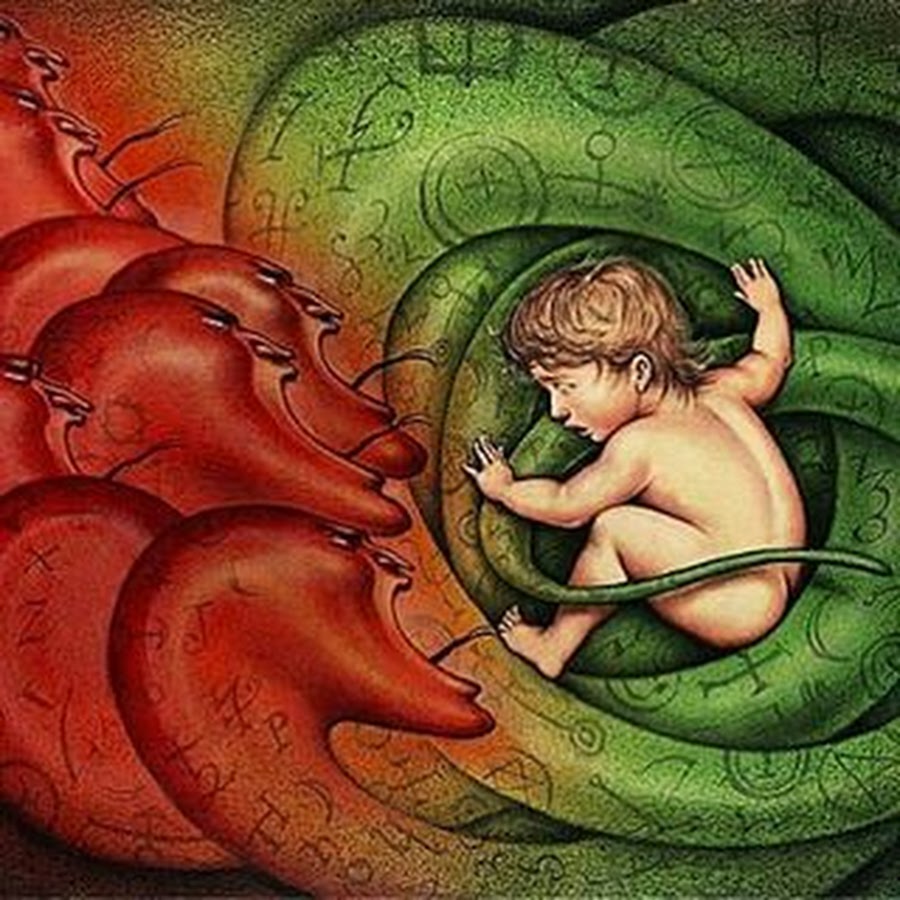
The Gnostic scrupulously studies himself and the world by all available means — speculatively, contemplatively, ecstatically — casting off layer after layer, energy after energy, and grain by grain gathering the Light “hidden” within it.
Note that, despite such radical views, Gnosticism as a technology for liberating mind turned out to be extraordinarily effective. Over a couple of centuries of its rapid development, a huge number of adepts were able to realize that “complete purification” which was their goal. Just as in medieval Tibet whole monasteries would become empty, attaining the Rainbow state, in the first centuries of the Christian era whole communities of Gnostics dissolved into the Clear Light. And even centuries later, “echoes” of Gnosticism in the form of the teachings of the Cathars, Bogomils, and Mandaeans continue to bear fruits of Absolute Light.
I have been reading you for probably ten years. Your thoughts largely coincide with my searches. And in many ways, they already guide me. But what a chasm of knowledge. I can now more or less represent it by analogy. But I find it difficult to imagine the conditions in which one can comprehend so much in one life.