
Fae and the Balance of Energies
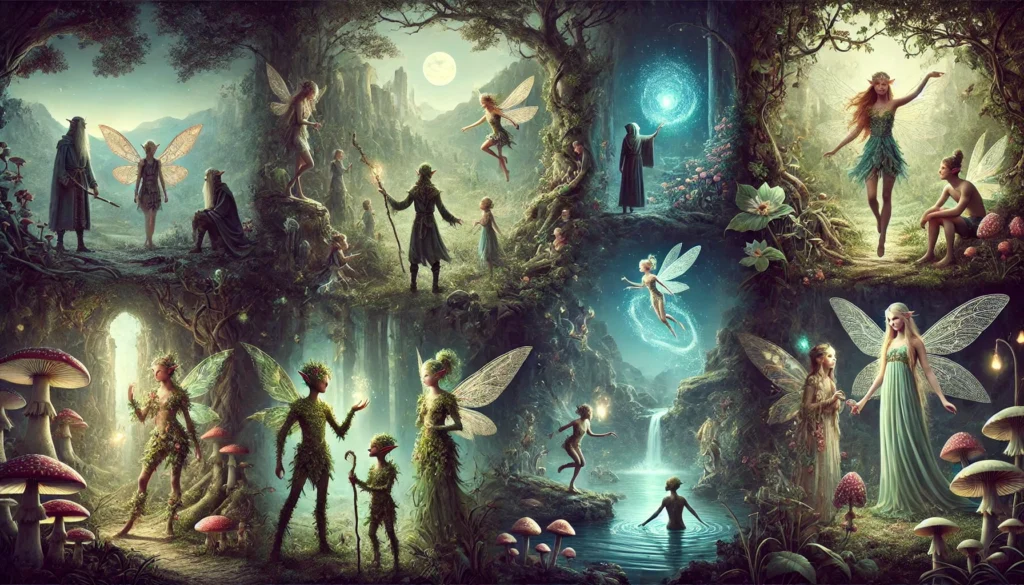
We have already mentioned that the fae most often manifest where natural harmony is present. In ancient times, they preferred to dwell precisely in such places because their existence is closely connected with the flows of the world’s living energy. They are woven into natural rhythms and processes and depend on them much more strongly than humans do.
At the same time, the most suitable places for the fae are those where the energies of earth, water, air, and fire are in balance. The Fairy Folk are drawn to the intertwining of elemental energies, avoiding overly monotonous spaces. The fae need richness and diversity of natural energies, and their magic, well-being, and vitality depend on the ratio and harmony of these energies.
Since they do not feed on physical food but draw energy from the environment, to thrive they need various energies; a monotonous environment, in contrast, depletes their magical potential — they lose strength and sensitivity to the world.
The Fairy Folk sense natural currents both physically and on a subtler level — they feel them just as people feel air, static electricity, or shifts in temperature.
At the same time, each fae group is connected with certain natural forces, although it does not exist in isolation from all other forces and processes. Harmony, interaction, and the tension between opposing energies — this is the foundation of their existence. If such a balance is disrupted, the fae either leave or deteriorate, losing part of their nature.
The fae draw vitality and magical power from the natural processes taking place in the world. However, they receive especially strong energy at points of elemental interaction, when the elements connect, transform, or create new flows. Such interactions not only generate energy but also open the possibility for the appearance and activity of the fae. Where elemental energies intertwine, energetic nodes are born, which serve both as source and habitat. In places where old trees, water, and stones combine in a single harmony, conditions for the habitation or manifestation of the fae are most favorable. For example, moisture in the air forms unstable flowing energy streams that the fae use for replenishment and movement. In addition, fog hides the boundaries between worlds, and it is precisely at such moments that pucks, pixies, and water fae appear. Moist winds bring lightness, mobility, and renewal — ideal conditions for the appearance of air and water fae.
And conversely, a reduction in the diversity of natural energies leads to a weakening of the fae’s power and a change in their character. If only one energy predominates in an environment, they begin to adapt to it, and in doing so, they fall out of balance, losing natural harmony. For instance, in the desert they become harsher and more secretive, as if stone had replaced their lightness; in swamps they may become lazy, sluggish in energy.
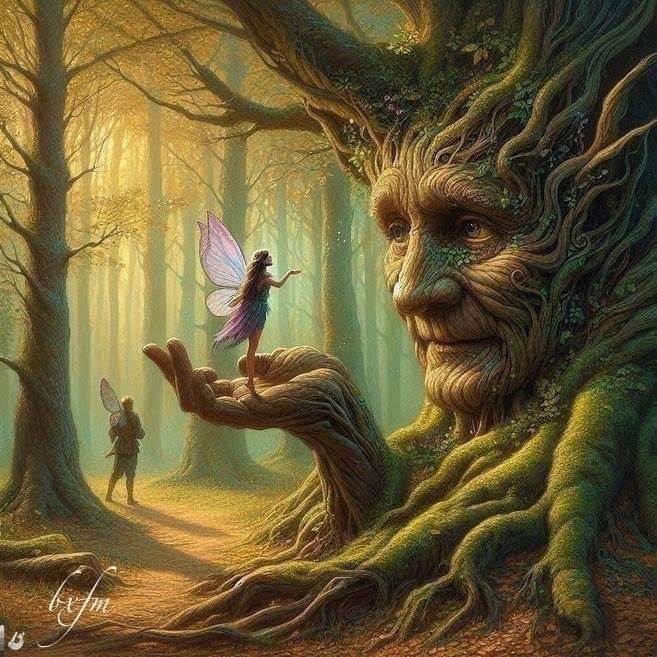
But in old forests, by springs, and in hills — where there is a balance of all the elements — the fae feel at home.
In general, clean water is one of the main sources of energy for the fae. The fae are connected with the energy flow, and water is a natural conductor of living force.
Some fae prefer mountain valleys and gorges, where stones preserve the earth’s ancient vibrations, giving their inhabitants stability. For many of them, caves, hollows, and grottos are thresholds between worlds.
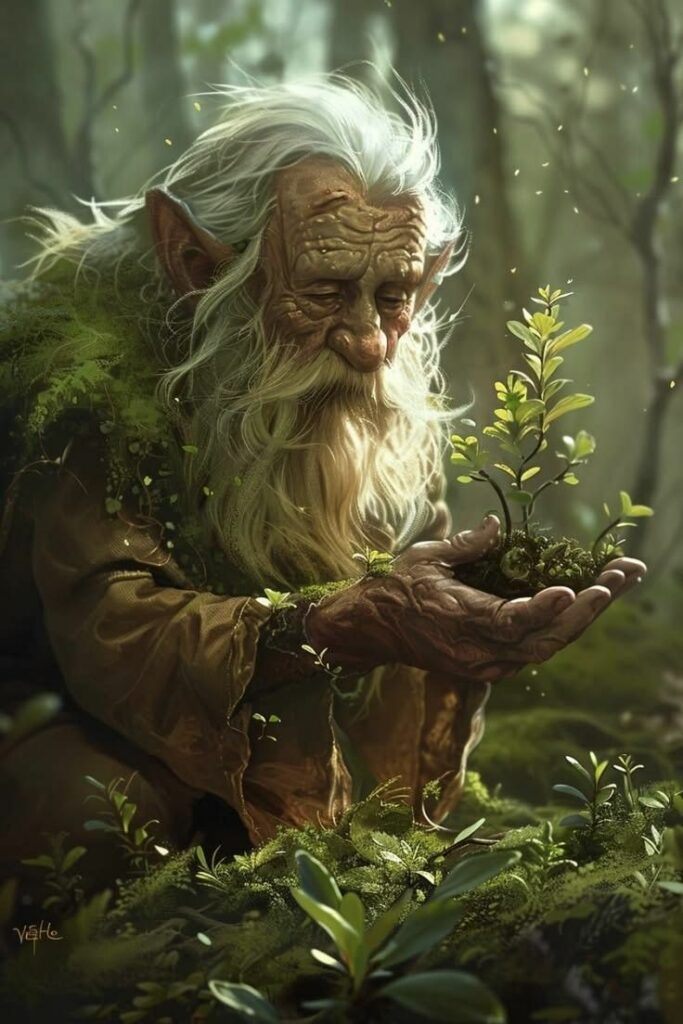
The fae always keenly sense balance and imbalance arising in nature. They can be called a kind of “indicators of nature’s condition” — if in some place energies flow naturally and harmoniously, the fae may manifest there and sometimes live there for centuries; but if the place is polluted, built up, or scorched — the fae leave it. They do not tolerate violations or distortions of the natural order.
Since the fae are immanent, integrated beings, they usually do not create new worlds but maintain or improve the existing natural order. Because of this, artificial spaces (cities, parks, fields) rarely become their homes.

From the fae’s point of view, such changes destroy natural energy flows, where water no longer flows in its natural channel, forests are destroyed or reduced to small parks, the soil is compacted, and life rhythms are disrupted. This also changes the space’s frequencies, since glass, concrete, metal, and plastic conduct natural vibrations poorly; such artificial materials block the flows of living energy.
In cities the elements are separated; their balance is absent: waters are enclosed in pipes, earth is covered with asphalt, air is polluted, and the consumerist stream of human thought is too intense. The fae cannot tolerate not only physical dirt, but also the mental noise that emanates from modern society. For them, space must be natural and undisturbed, and its structure balanced and harmonious. The fae are drawn to the subtle vibration of sound, light, and natural materials.
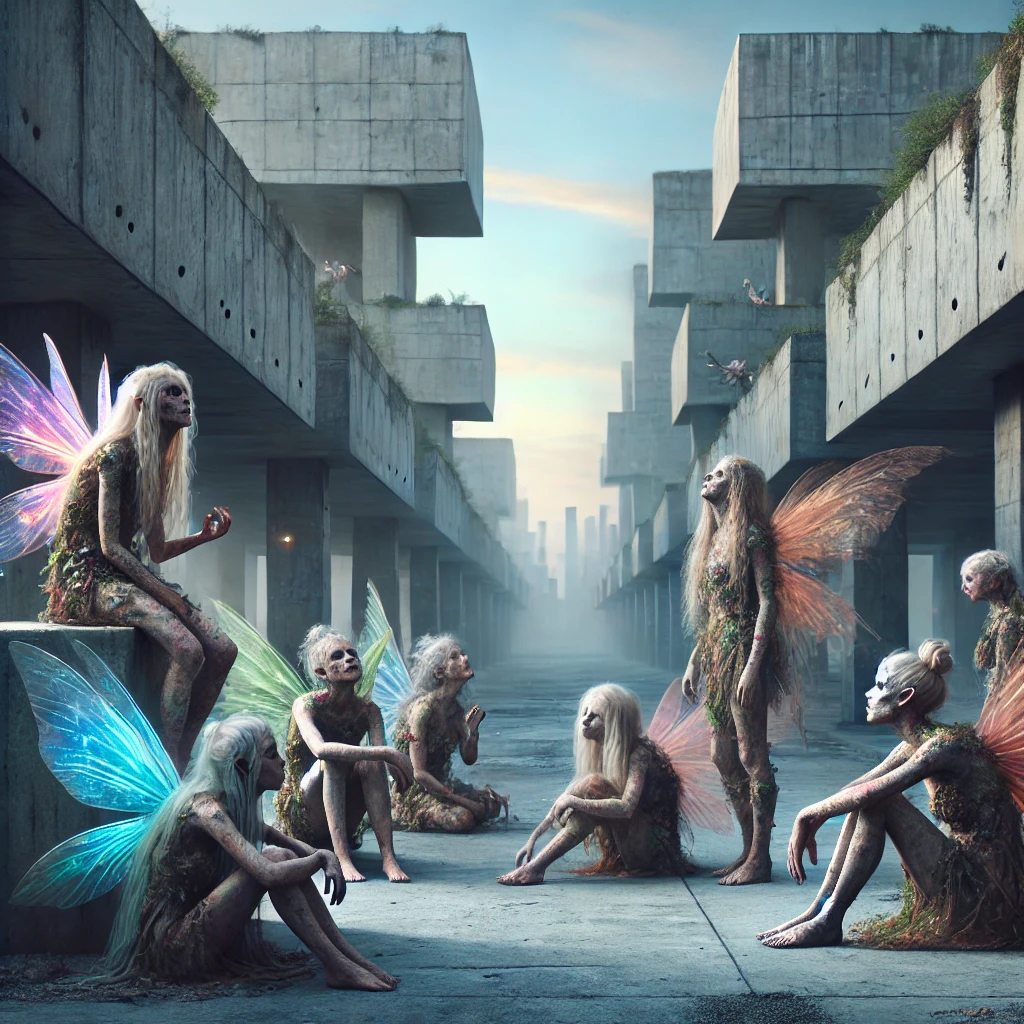
It is clear that as natural diversity decreases, the fae interact with humans less and less. In the past, when people lived in harmony with nature, the fae’s magic was more present. However, lately people have been creating a monotonous, energetically “dead” environment, which makes it unsuitable for the fae.
However, where nature still remains alive — in wild forests, on hills, and by springs — the chances of meeting the fae still exist.
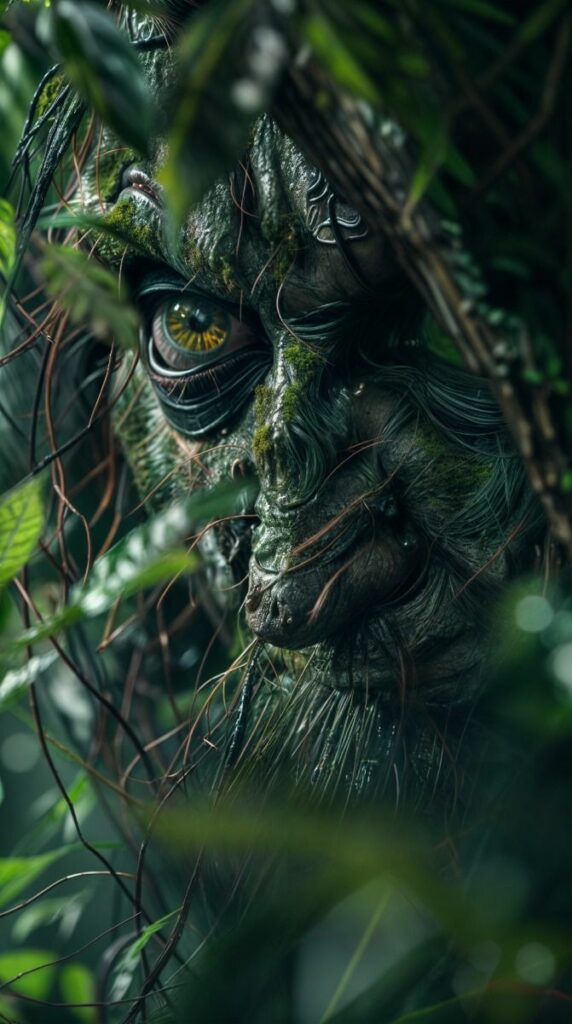
At the same time, as we have already mentioned, although the fae are not an embodiment of natural forces, they are deeply connected with them. Unlike nature spirits, the fae are capable of making conscious decisions, entering into alliances, and even conflicting with nature spirits if their interests diverge. Yet they are still children of the world that existed before urbanization. Their presence is a sign that a place is alive, filled with natural power. Where nature is harmonious, one can meet the fae, feel their influence, hear their music and their tales, and thereby experience their harmonizing influence.
The fae feel not only the very presence of natural energies but also how the world’s inhabitants relate to their environment. They do not like those who take a consumerist mindset toward the world, but may interact with people who seek harmony. Therefore, creating an environment where natural energies can freely interact is the key to the presence of the fae in the human world.
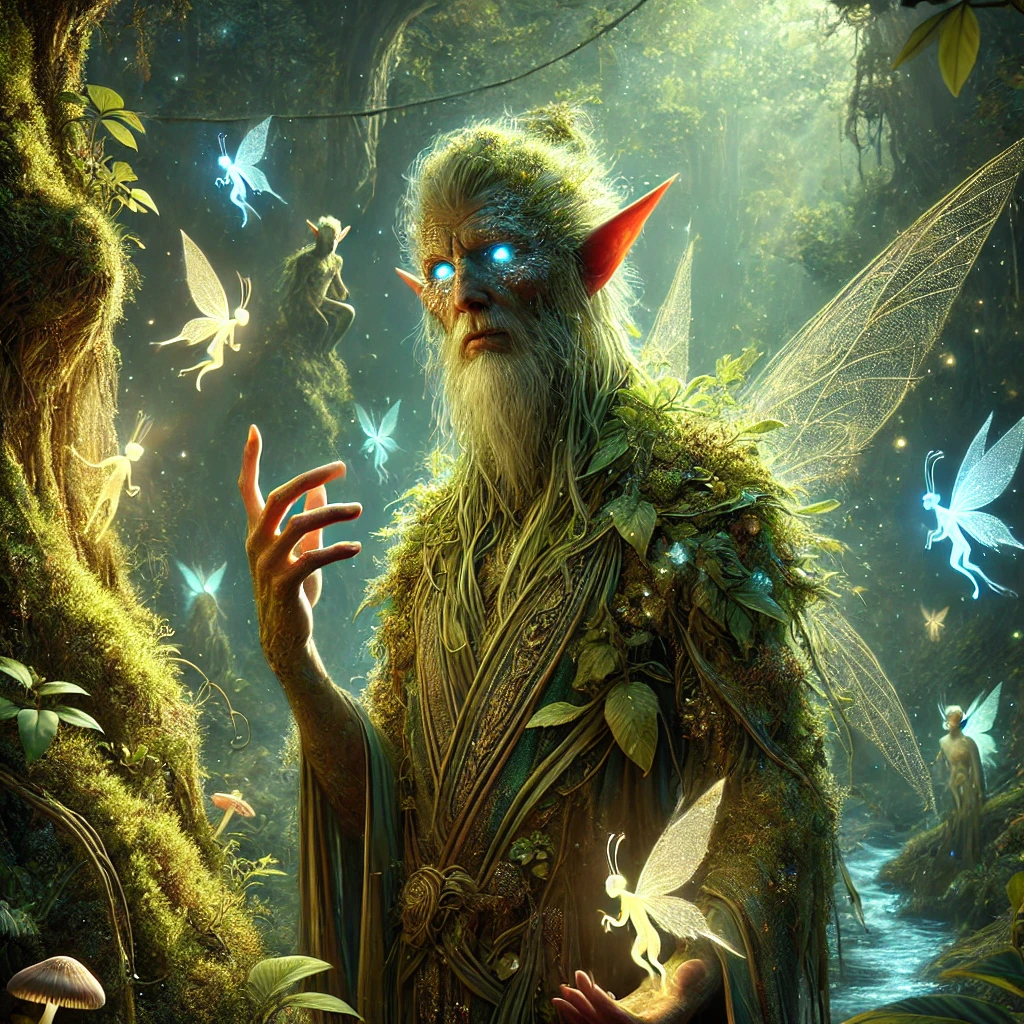
Hello! Since fairies feel not only the balance of the elements but also the overall energetic background created by the collective consciousness of people, is it possible to establish contact with them in a world where most people destroy nature? Can an individual magician or a group of people create “islands of harmony” where fairies would agree to reside despite the overall negative influence of the surrounding world? Or do fairies perceive the world holistically and will not be able to exist even in localized areas if the global environment remains out of balance?
Hello! As we’ve discussed, fairies perceive the world through the description of its individual properties and qualities, and holistically, as a flow. They feel not only the balance of the elements itself but also its causes, the deep energetic flows created by the consciousness of beings inhabiting the space. And of course, the collective field of humanity, its intentions, level of awareness, and ways of interacting with the surrounding world play a crucial role in the possibilities of interaction with the Magical folk. On the one hand, local “islands of harmony” can indeed become places where fairies can manifest more easily. If the space is attuned to natural rhythms and has no resonance with destructive energies, it already creates conditions for their presence. Moreover, the very emergence of such places can give people a chance to learn from fairies, receive their wisdom, and thereby gradually expand the zones of natural order. However, on the other hand, as long as the global background remains disharmonious, as long as a large part of the space carries distortions, fairies will not feel safe. Even in an ideal place, they will remain tense because collective energies will inevitably infiltrate this “island.” Fairies do not just avoid polluted environments—they feel its vibrations at the level of the structure of being. It is very important to remember that fairies are guardians of the harmony of natural processes. Their presence is not a consequence of an ideal external environment but an indicator that the space is truly alive, filled with natural energy, free from destructive manifestations. Their nature is flow, movement, interaction of elements. Thus, for fairies to be able to return, it is not enough to create just one small oasis of harmony. The question is whether it is possible to change the very principle of human interaction with the world? After all, even if several people create a clean environment, if the collective consciousness of people remains destructive, this “island” will still be under the pressure of the surrounding reality. Then fairies may occasionally manifest, but they will never settle in such a world for long.
Is the influence of fairies on nature and people exclusively positive, or do they, like humans, have destructive, negative sides?
The influence of fairies on nature and people cannot be termed exclusively positive or exclusively negative—it is complex, multilayered, and depends on many factors. Like humans, fairies have different sides: they can be creators and guardians, but they can also destroy, both due to their natural qualities and consciously. Fairies of the Good Court more often act as regulators of the world’s balance. They are connected to nature and can both support it and manage its changes. For example, by collaborating with the elements, they assist in tree growth, regulate water flows, and care for animals. In this sense, they play a creative role. Their presence can contribute to the restoration of ecosystems, the improvement of the quality of natural energy, and the harmonization of space. However, balance is not just about preservation but also about destruction. In nature, there is no “absolute good” or “absolute evil”—there are cycles of life and death, growth and dying. Fairies can not only heal nature but also participate in its natural cycles of transformation, including through destruction. They can divert water from places that have already exhausted their life forces, they can cause storms that destroy fields if people intervene too aggressively in the natural balance, and they can take people or animals if they believe their place is not in this world. Similarly, fairies can be both allies and enemies of humans. Their interaction with people is determined by the nature of the fairies themselves as well as the behavior of humans. Those who live in harmony with nature may receive their support, but those who destroy the surrounding world may face their wrath. For example, fairies help talented masters, musicians, poets, by passing inspiration onto them. However, if a person is disdainful or too greedy, fairies may punish them. This punishment can be not just physical but also psychological: a person may forget the way home, lose their mind, become unable to live normally. Fairies are also known for their ambivalent morality: they do not always perceive human norms of good and evil. For instance, they may take children and replace them with their own—not out of malice, but out of necessity (their own children are weak and cannot survive in their world). They may curse those who destroy forests, but they do not feel guilt when they abduct people. Their songs can heal, but they can also drive a person mad. Their spells can bestow knowledge, but they can also erase memories. Their influence on time can give a person years of youth, but it can also take centuries in one night. Many of them love to deceive people, to play tricks, to establish ambiguous deals, to impose magical contracts, or simply act in their own interests without considering the consequences for mortals. However, their cunning is not malice or a desire to harm in the ordinary sense; it is a form of their interaction with reality, a way to maintain balance between worlds. And of course, it is important to remember that many fairies, especially from the Unworthy Court, feed on human energy and often resort to deceit, cunning, or outright violence to obtain that energy. Overall, the magical folk do not view the world in the duality of “good-bad”; their actions stem from an internal sense of harmony that may look entirely different to humans. They may perceive destruction as a necessary stage of renewal, and losses as part of the cycle. Unlike nature spirits, who maintain the natural order in its pristine form, fairies are more active in changing the world. They can create Places of Power, where perception of reality shifts; they can alter the physical space itself—for example, making forests impassable to strangers, while at the same time laying hidden paths for those they like. They can manipulate the weather: sometimes fairies summon fog to conceal their abode, and sometimes they can cause a storm out of revenge. One could say that fairies are a mirror of the world, reflecting its deep processes. They can be mentors, guardians, or adversaries, depending on the role that the world they observe offers them.
Thank you.
About fairies – fabulous… )