Fairies and the First People
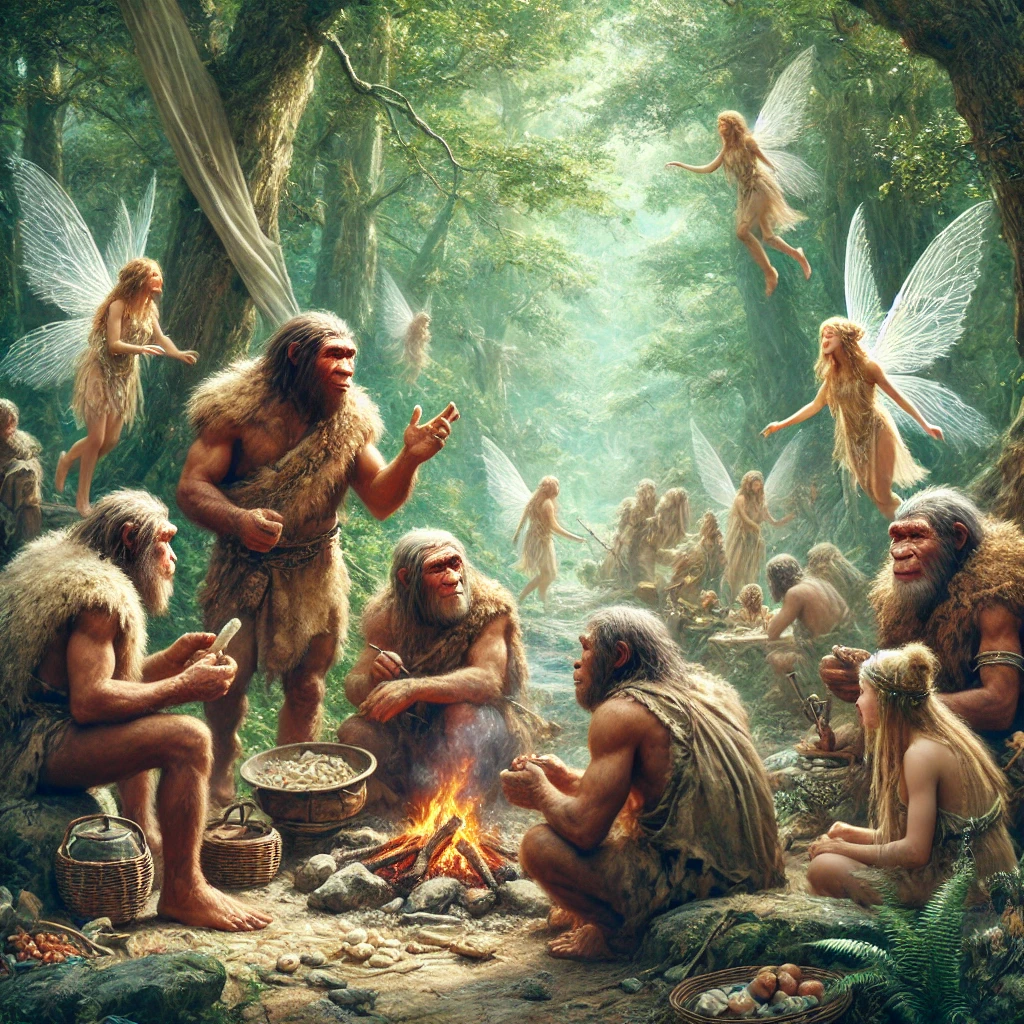
If we consider the legends about the Fair Folk (Aos Sí) in historical terms, it becomes clear that Neanderthals and Denisovans (Hyperboreans and Lemurians) lived in peaceful coexistence with these beings, whereas Cro-Magnons brought a conflict that ultimately led to the displacement of the Fair Folk into the Interworld.
Europe’s original inhabitants, the Neanderthals, lived in harmony with the environment, without striving to change it radically. Their way of life was painstaking, sustainable, and deeply rooted in natural processes and rhythms. In this respect, they were far closer to the Fair Folk than Cro-Magnons, with their constant urge to transform reality.
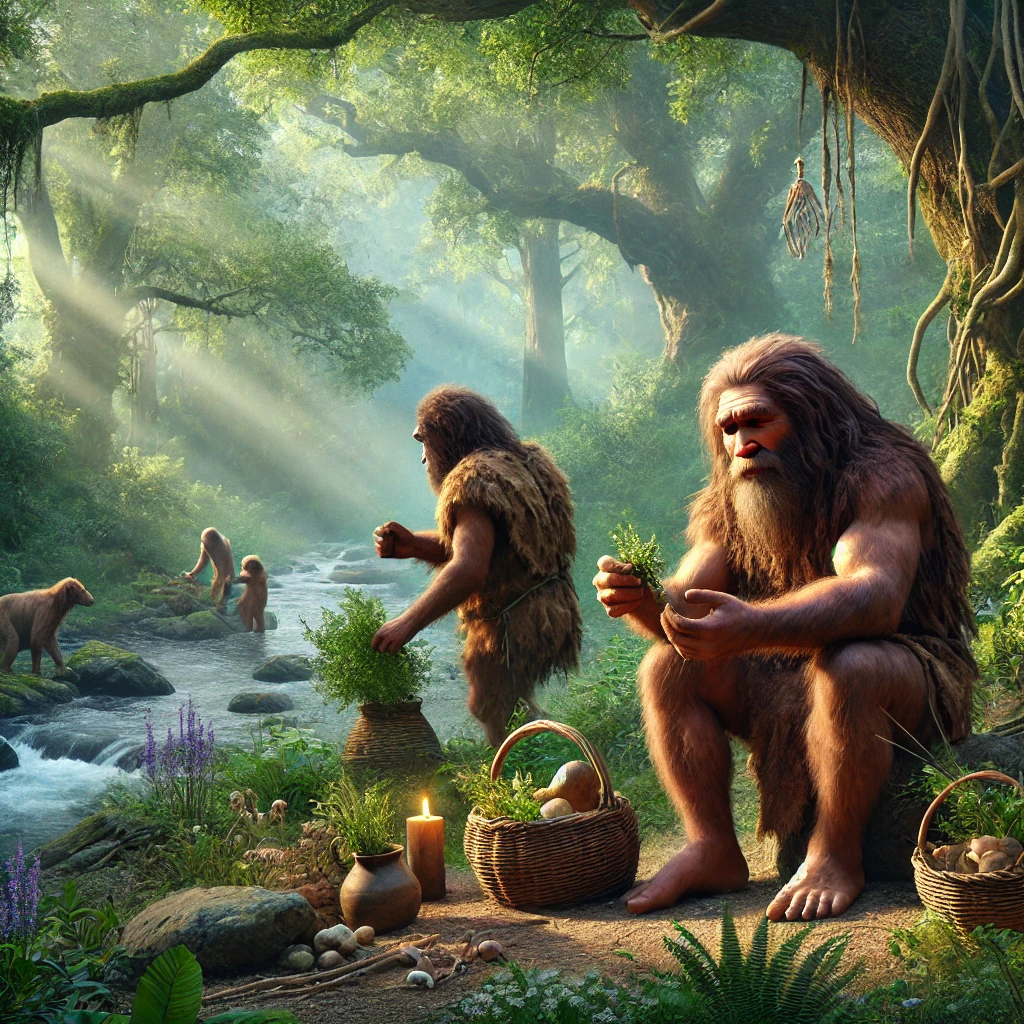
Neanderthals did not try to alter nature; they faithfully followed its rhythms. Their technologies, though simple and inefficient, did not change for millennia. Unlike Cro-Magnons, who quickly adapted to new conditions, Neanderthals accepted the world as ‘given,’ regarding it as unchanging. They did not cut down forests, did not build large settlements, and did not engage in mass extermination of animals. Their hunting was thoughtful and responsible — they did not kill more than was necessary for survival. And it was precisely these traits — minimal impact on the environment — that made them “harmless” and non-aggressive toward the Fair Folk.
Neanderthals did not create large settlements; they lived in small, close-knit clans. This corresponded to the model of the “invisible people,” who live in forests, mountains, and caves, without disrupting the natural order. They rarely met outsiders, which fostered deep respect for boundaries and avoidance of conflicts.
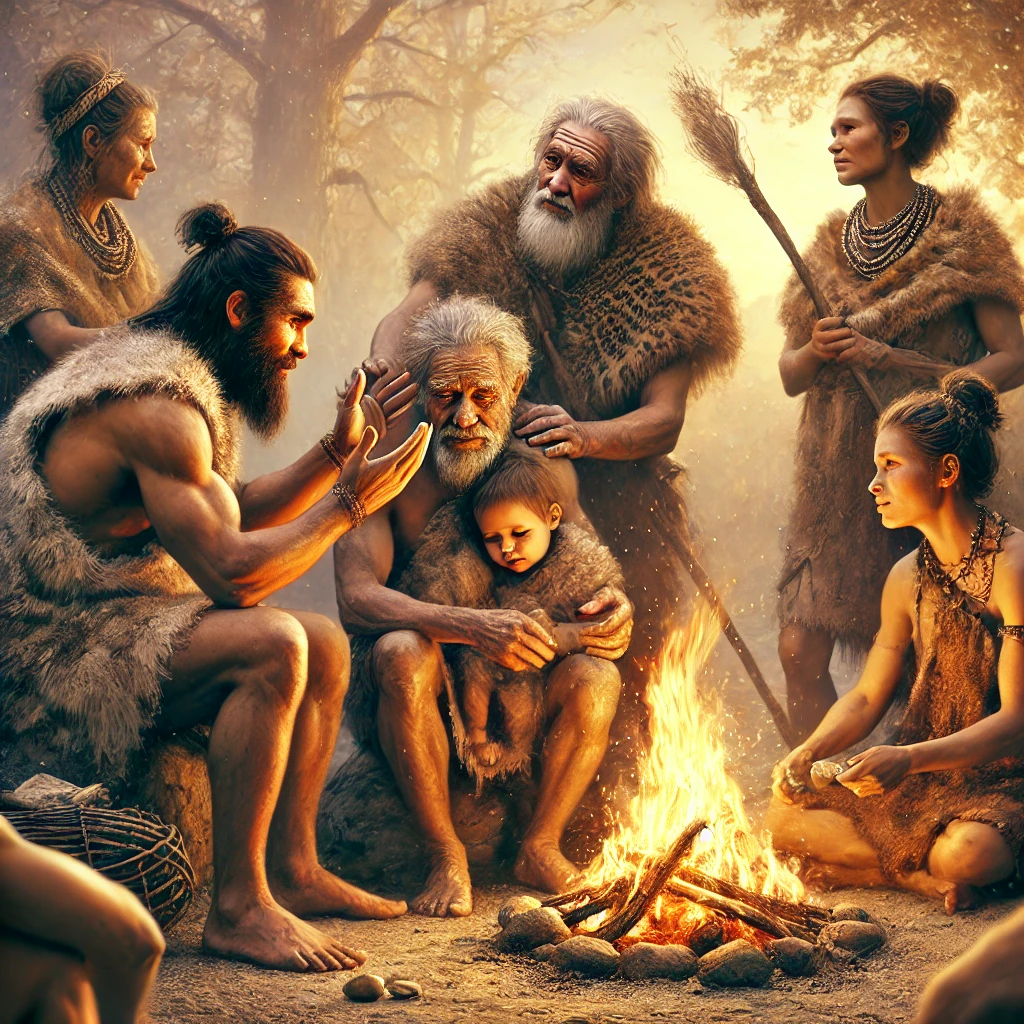
At the same time, Neanderthals were distinguished by deep social bonds within their group and did not seek aggressive territorial expansion. Their behavior was fairly calm and predictable, which reduced the likelihood of clashes with the Fair Folk. They did not seek to seize new territories and lived in the same places they had traditionally occupied for centuries. This also matches traits of the fairies’ character as a people who “do not tolerate outsiders,” but respect those who follow established rules.
Neanderthals had certain simple religious and spiritual ideas, but they were quiet and contemplative, without the desire to impose their religion or power on the surrounding world.
Cro-Magnons, with their developed abstract thinking, perceived the Fair Folk as a threat and tried to subjugate or at least drive them away.
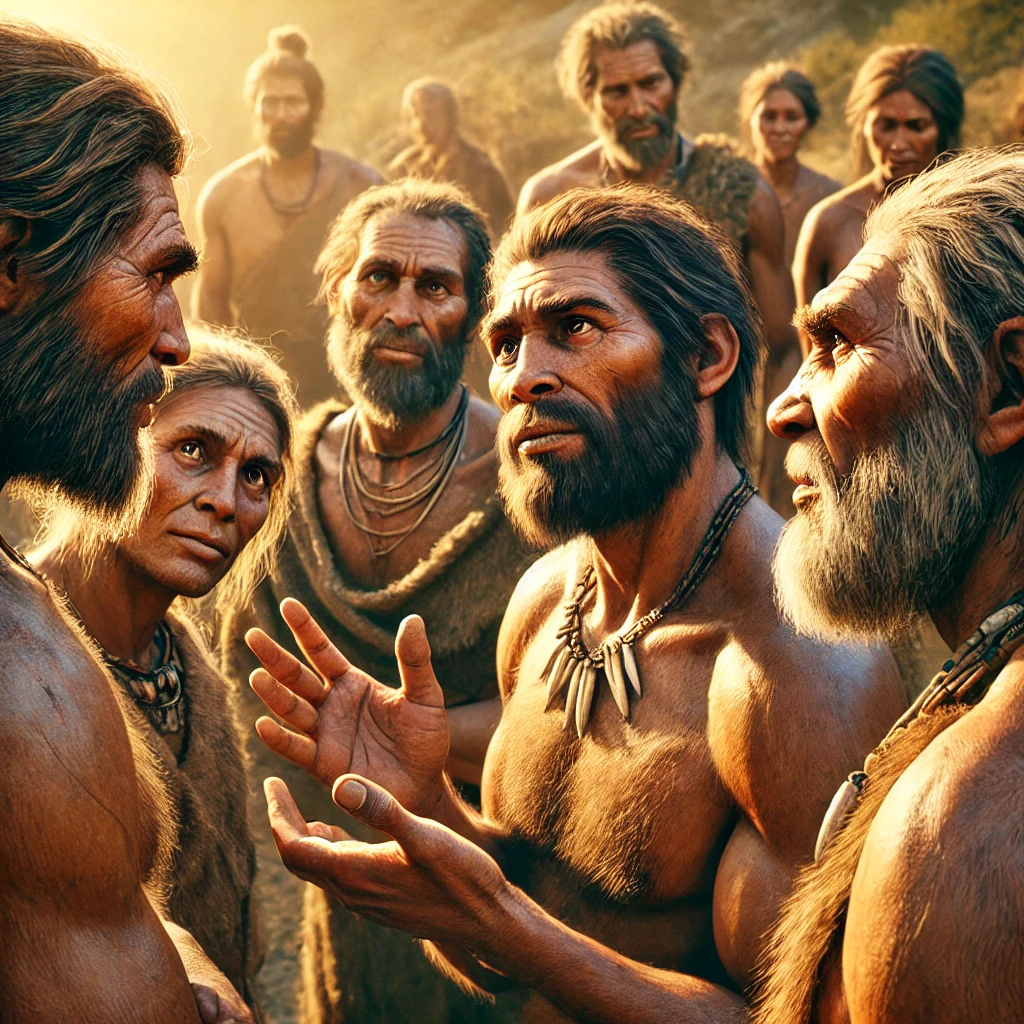
Neanderthals carefully cared for the sick and wounded, which indicates their deep empathy. It was precisely this trait that made them more inclined to peaceful contact with the Fair Folk than to conflicts and confrontations.
Stories about the Fair Folk often emphasize that they do not like lies and cunning, but value honesty. Neanderthals were straightforward and honest, unlike Cro-Magnons, who displayed cunning, were prone to manipulation, and were characterized by strategic thinking.
We have already said that the arrival of Cro-Magnons was perceived by the Fair Folk as a threat because they changed the environment, expanded their ranges and spheres of influence, and were more aggressive in their methods. Cro-Magnons brought the fire of civilization, which at once illuminated the world and burned the old, deeply rooted orders.
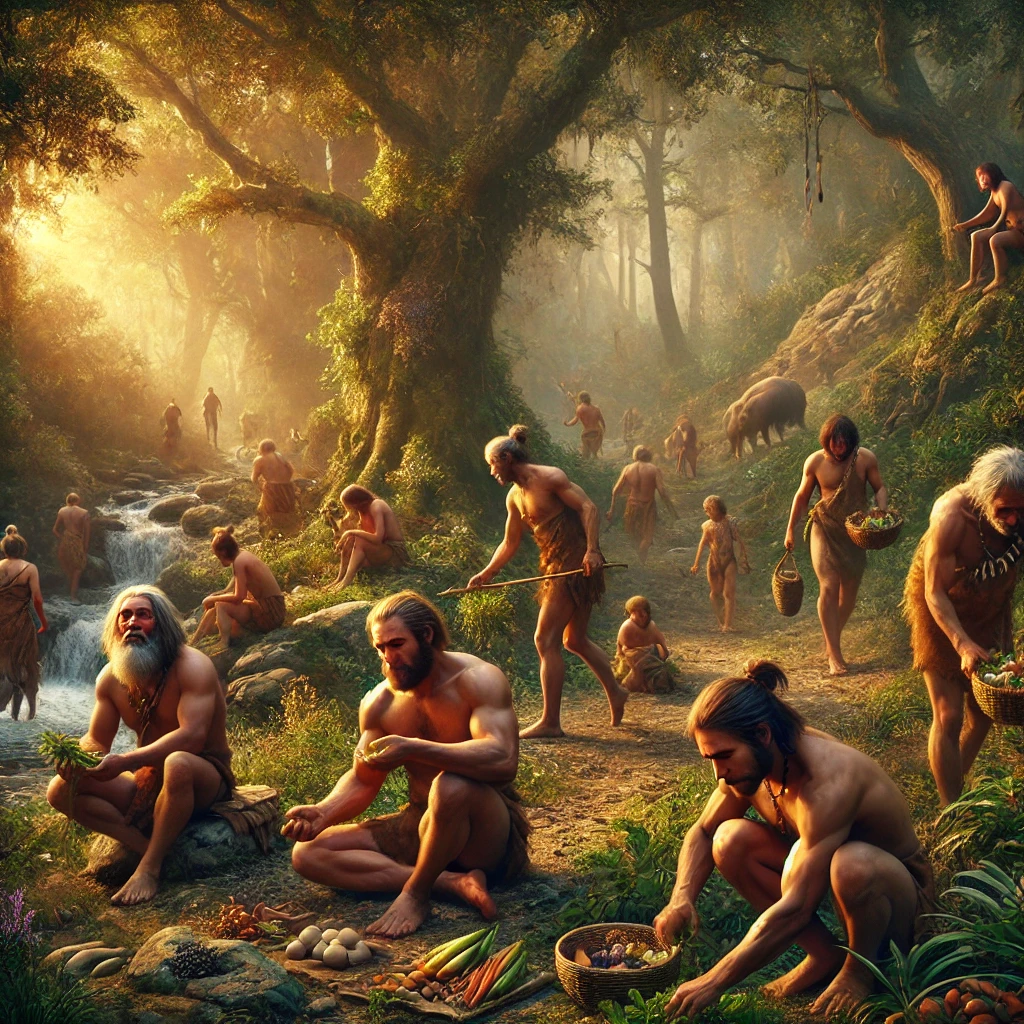
We discussed that the mind of the fairies can be represented as the art of non-interference and interaction with preexisting flows, and the mind of Neanderthals can be seen as a natural continuation of this principle in the world of physical existence. Unlike Cro-Magnons, who created new structures and technologies and changed the environment, Neanderthals lived within the natural order, following its laws. This brings their perception of the world closer to the Taoist principles of Wu wei (无为, “non-action”), according to which harmony is achieved by intuitively following the natural course of things.
Neanderthals, unlike Cro-Magnons, did not try to remake the world to suit themselves. They did not form new centers or directions, as Cro-Magnons did, but painstakingly strengthened existing flows — both in nature and in their culture.
While fairies feel energy and flow with it, Neanderthals intuitively followed these flows at the level of survival and everyday life, not changing them, but only fitting into the rhythms of nature. They perceived the world as something unchanging, in which the human is not the center but a part of the overall system.
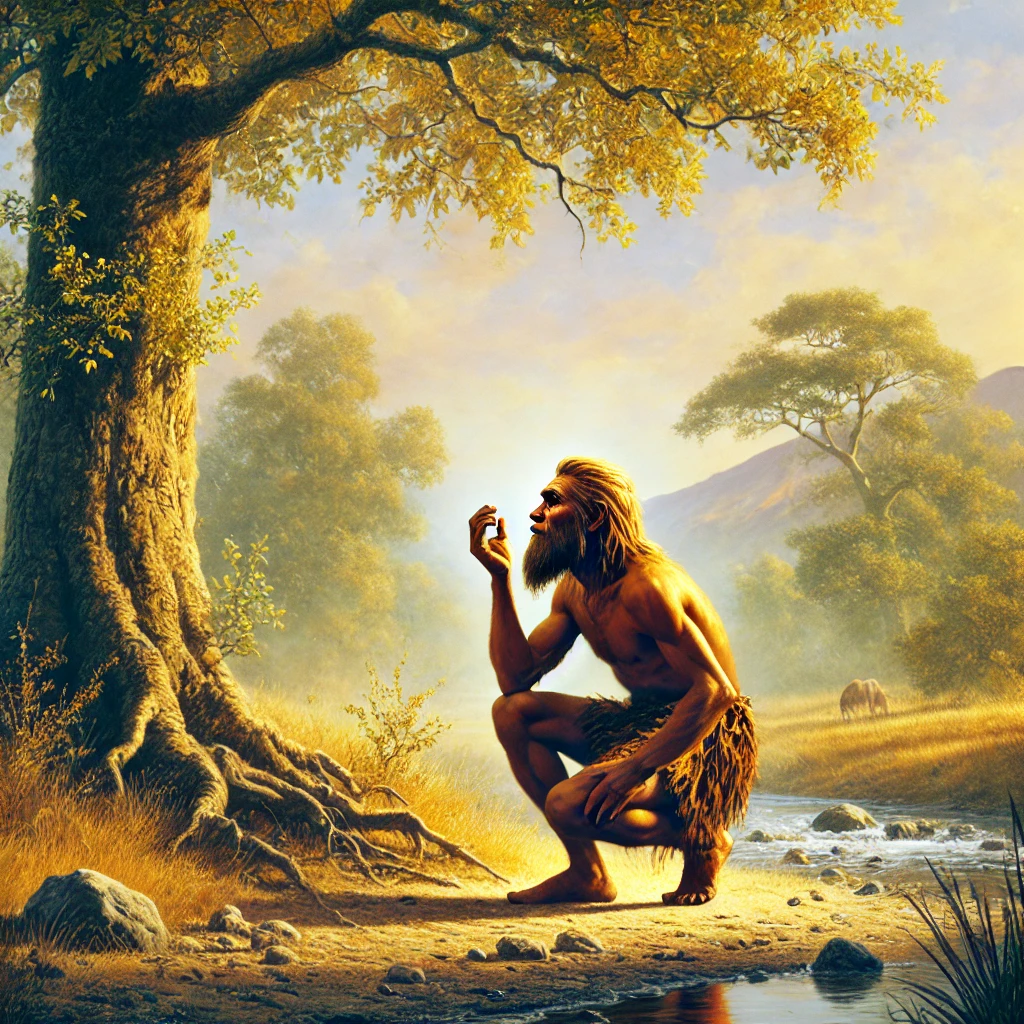
Unlike Cro-Magnons, whose magic and art created new forms and symbols, Neanderthals felt the flows of the environment far more deeply and adapted to them. Their connection with the world was more tactile and physical than symbolic — not through abstract symbols and rituals, but through the direct sensation of warmth, cold, the rhythms of water, earth, and the movement of the beast.
In other words, if Cro-Magnons used abstract thinking to understand and conquer nature, Neanderthals felt it physically. They were very sensitive to changes in weather, vibrations of the ground, movements of animals — just as fairies feel the flows in the world. In this sense, they were good trackers, hunters, gatherers, who feel and use energy while not entering into struggle or confrontation with it.
This explains why their interaction with the Aos Sí was peaceful — they did not break the world, but were part of it, like animals, trees, and stones.
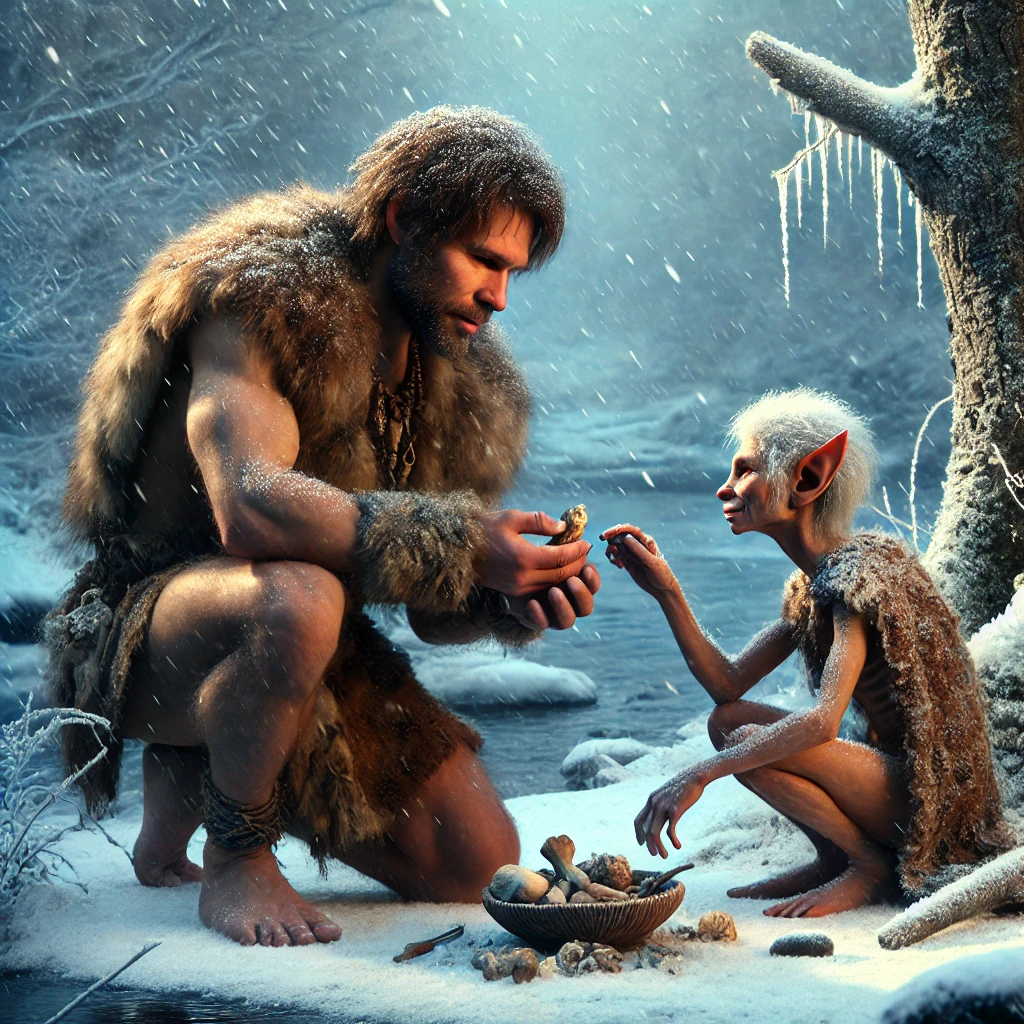
If fairies “manage flows,” then Neanderthals “follow flows,” and Cro-Magnons “create new flows.” This is precisely what explains the peaceful coexistence of the first two and the conflict of the third both with Neanderthals and with fairies.
Another Homo group that also coexisted relatively peacefully with fairies was the Lemurians/Denisovans. If Neanderthals (Hyperboreans) were those who naturally fit into the flows of nature, and Cro-Magnons (Atlanteans) were those who rebuilt the world to suit themselves, then Denisovans (Lemurians) occupied an intermediate position between these extremes. Their psychology did not have a clear separation between wakefulness and sleep, encompassing both virtual and real worlds.
Therefore one can call the Lemurians a “people of dreaming”: they lived in a world where the boundary between the visible and the invisible had not yet become rigid. Their mind was more imagistic, closer to the shamanic state of mind than to structured rational thinking.
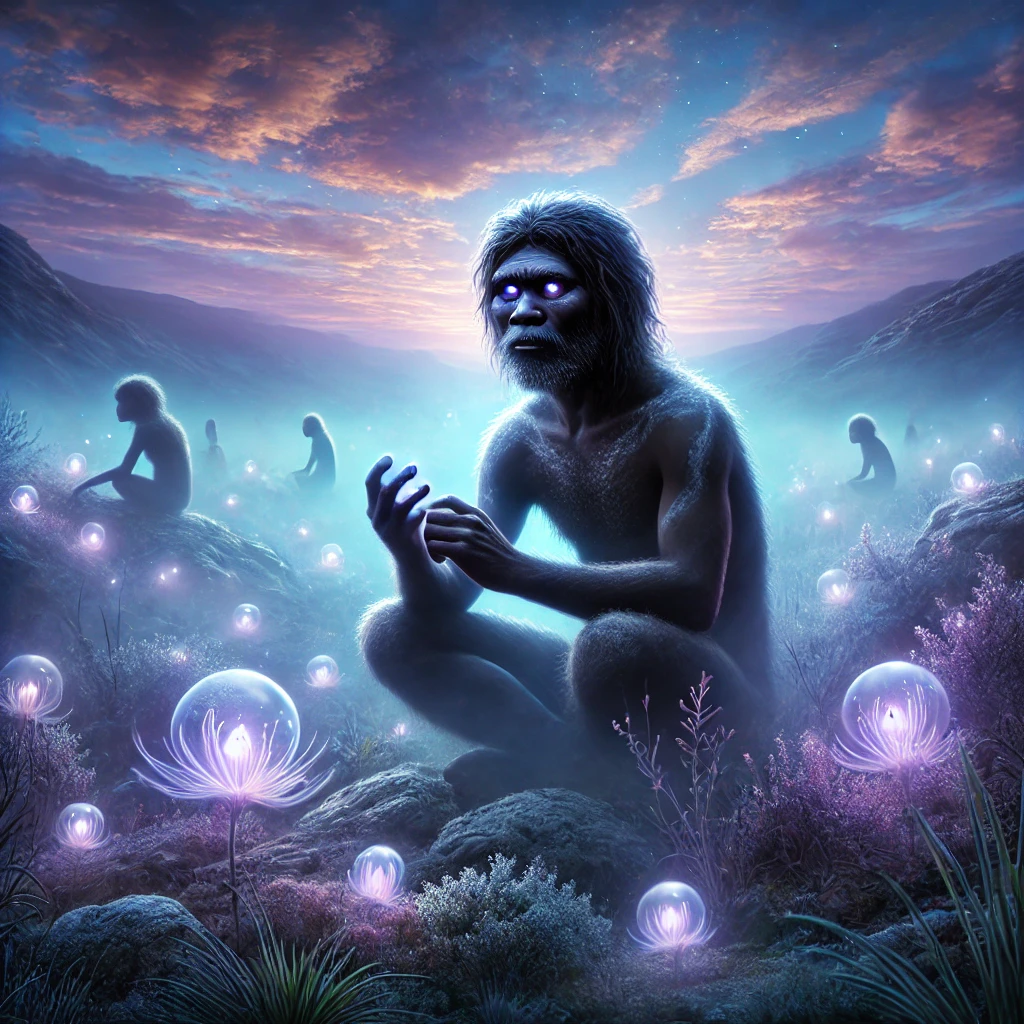
According to legend, Lemurians possessed high sensory receptivity, which made them capable of perceiving subtle layers of reality that Cro-Magnons simply ignored. This type of mind is known to the traditions of Australian Aborigines, who speak of “Dreamtime” as a real state of the world, not mere fiction.
Since Denisovans did not divide the world into “physical” and “spiritual,” and existed on the boundary of these two spheres, in their minds, spirits, natural beings, dreams, and the energy of the surrounding world — everything merged into one, which is described as the world of Lemuria, where “the Gods walked among people.”
If Neanderthals perceived the Aos Sí as natural neighbors, then for Denisovans they were their ‘own shadow,’ a part of themselves that is simultaneously inside and outside. Unlike Cro-Magnons, who displaced the Fair Folk, and Neanderthals, who coexisted with them, Denisovans simply did not see a boundary between themselves and the Aos Sí.
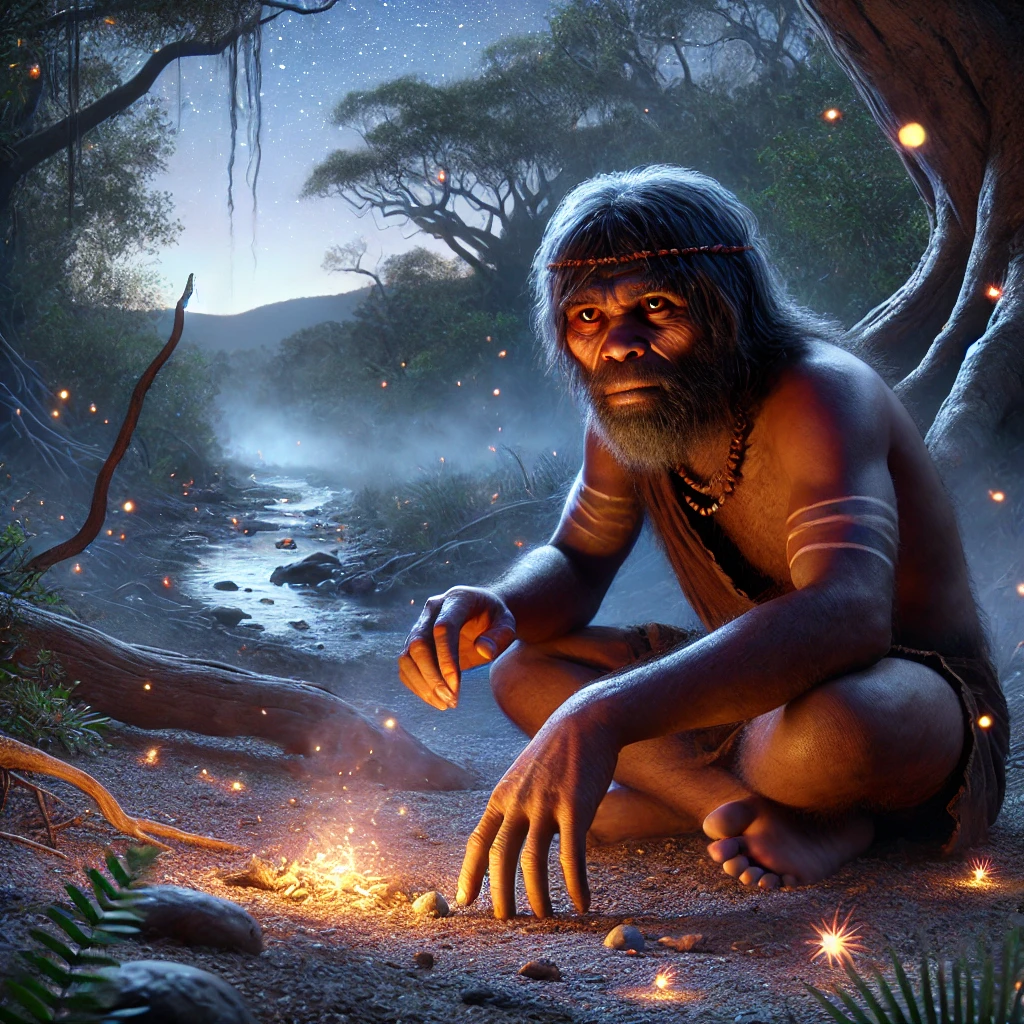
One could say that their shamans, their elders “were fairies” in a certain sense, since the difference between human and non-human nature was not fundamental for them. They perceived the subtle world as equal to the physical one and interacted with it naturally, without fear or aggression.
In this sense, the gradual disappearance of Denisovans can be described as “the departure of the Lemurians into the world of sleep,” similar to how the Fair Folk went into the Interworld. Myths about lost worlds and the “Golden Age” contain memories of their ability to see the world in its wholeness, without divisions.
Denisovans were the most mystical people among the three Homo species. Their mind did not distinguish worlds as sharply as Cro-Magnons did, and they lived on the boundary between dreams and reality, which brought them closer to the Fair Folk.
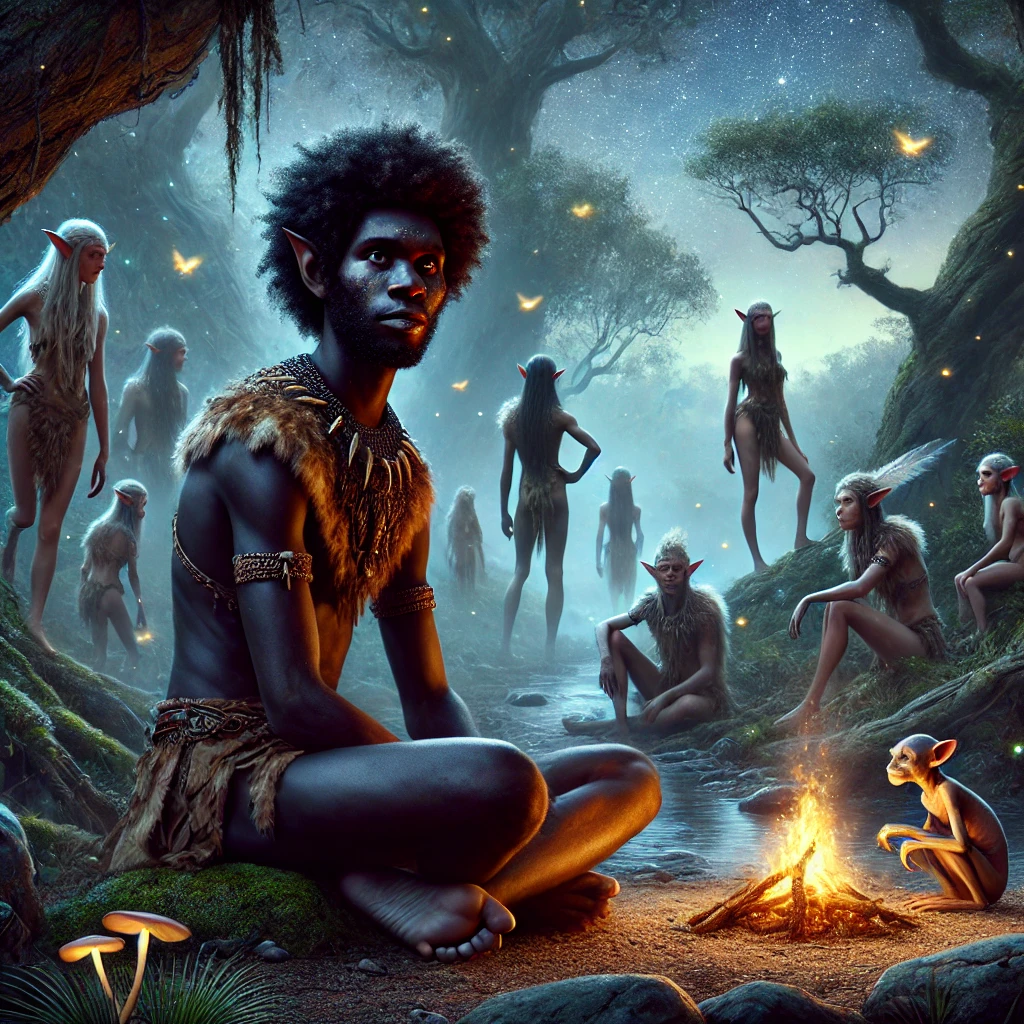
Thus, if Neanderthals saw the Aos Sí as neighbors, Cro-Magnons perceived them as enemies or competitors, then Denisovans saw them as part of themselves.
In this sense, their “departure” from the world was not so much a physical disappearance as a dissipation into another layer of reality, just as the Fair Folk went into the Interworld. From this point of view, one can say that the Lemurians did not disappear — they simply moved into a world that Cro-Magnons could no longer see.
Thus, Neanderthals followed the flows, Denisovans merged with them, and Cro-Magnons created new ones, destroying the old. These differences in relation to the world determined both their own fate and the attitude of the Fair Folk toward them.

Very informative. Thank you.
If before the Great Exodus faeries and the first humans lived side by side, were there moments when there existed not just confrontation but also cooperation between them? Were there periods when faeries and humans found ways to interact without fear and conflict? Perhaps there were chosen people who became intermediaries between these worlds?
The history of faeries and the first humans was not just a continuous series of conflicts and expulsions. Yes, over time, a confrontation erupted between them, leading to the Exodus, but there were also other times – times of exchange, teaching, and a certain cooperation. Faeries for a long time perceived the first humans as something alien yet not threatening. This especially applied to Neanderthals and Denisovans, who did not strive for expansion, did not disrupt the natural balance, and did not attempt to impose their will on the surrounding world. Faeries saw them as ordinary beings integrated into the natural order, but possessing their will. They observed, experienced, but did not intervene directly, believing that the first humans were too young to understand their world. Neanderthals, in a certain sense, could see faeries better than Cro-Magnons because their consciousness was closer to the natural flow, rather than to rational analysis. They did not doubt the reality of the Magical People, and therefore could interact with them. Denisovans (Lemurians) lived on the threshold of worlds. Their perception of reality was unified, and for them, faeries were part of a single picture of existence. They did not see a principled boundary between themselves and the faeries. There were also individuals who became bridges between their world and the human race. Such individuals became shamans, herbalists, keepers of knowledge. In tradition, there remain memories of ‘sacred lineages’ that supposedly descended from unions between humans and faeries, as those who lived long among faeries could indeed change their nature. Faeries taught these individuals; they showed how to feel the world, how to be in its flow, guiding them toward balance and nature and its forces. But this cooperation proved unstable, as faeries did not want changes, while humans could not help but change. The first humans did not yet carry desires for expansion, but gradually their consciousness began to change, and they sought dominance rather than coexistence. When Cro-Magnons arrived, they viewed the faeries merely as obstacles. When humanity began to extend its influence, even the descendants of those who once learned from faeries started losing their connection with the Magical People. Faerie knowledge was passed down with increasing weakness, turning into legends, tales of ‘magical teachers’ and ‘gods who walked among men’. Faeries, however, did not attempt to fight back, for their nature did not imply destruction. They retreated, preferring to first leave to the Places of Power, then to the interworld. And today, although they certainly remember humans, they see them as a completely different people, not the ones they once lived alongside. The path of humanity has gone in a completely different direction, and the alliance of the two peoples has become impossible.
Greetings. Can you explain how it is physically possible for faeries and for any being in a physical body to go into the interworld (most likely through a portal) and survive, in the sense that in the interworld energy is not generated at all, and the most probable fate is extinction?
Hello. Regarding leaving the body – it is possible if one knows the structure of this body well, because when crossing the Border, it needs to be recreated anew. This is why the Exodus of the faeries was long prepared and took over a millennium. Regarding energy – high faeries, descendants of the Alvs, are connected to Alvheim and receive energy from there, distributing some of it among their subjects. Another portion of faeries has settled in Elemental cities and uses their energy; the third lives by stealing and extracting energy from the inhabitants of worlds.
Dear author, do you really believe that the bodies of faeries are material like the earthly bodies of humans?
Abstract thinking is only possible with a matrix of language. The question then is, where did it actually come from? It is a supernatural phenomenon. With the emergence of language, a central position was actualized in its embryonic state. Well, the very process of naming is a violence against being (as I read in one of the comments). I assume that with the emergence of Adam, language was introduced, and Cro-Magnons distinguished themselves.