
Goetic Art and Psychotherapy
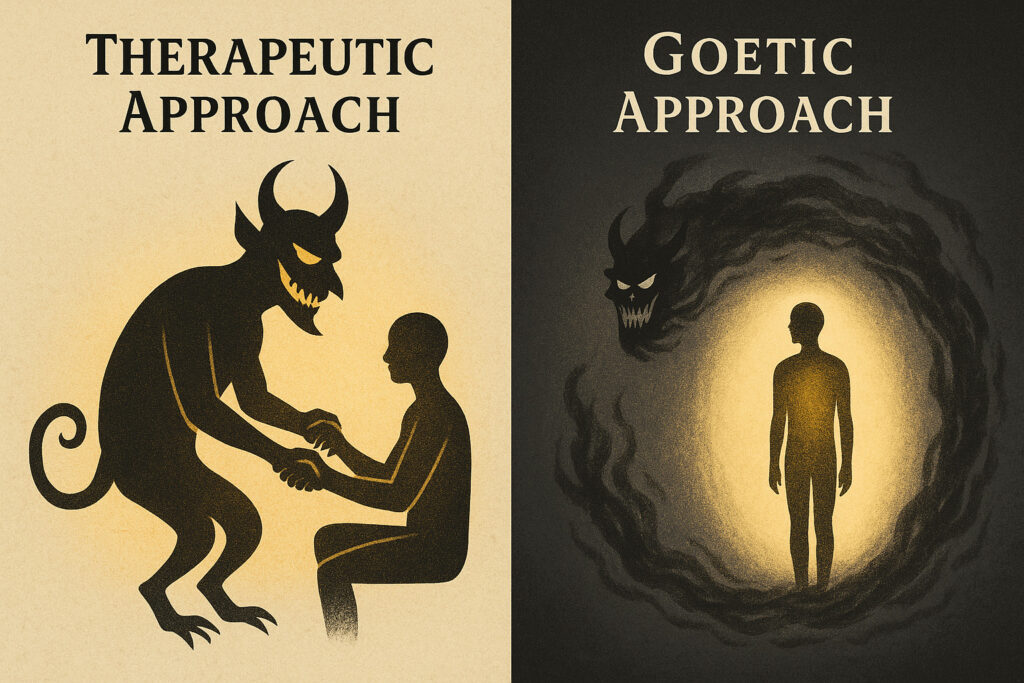
Modern psychological approaches — whether mindfulness practices, behavioral therapy, or trauma work — are aimed, first and foremost, at relieving symptoms and adapting the personality to society or stressful situations. They teach a person to understand their emotions, seek to change destructive behavior patterns, process painful memories, and so on. However, they operate predominantly at the surface level of the psyche, treating the problem as an individual psychic process and doubting the possibility of deep metaphysical distortions. As a result, such methods often only mask or smooth out the manifestations of inner distress without removing its root. For example, with their help one can learn to “not react” to anxious thoughts via mindfulness or correct undesirable behavior, yet the original distorted stream of mind remains untransformed, and the inner “pathogens” remain unconquered.
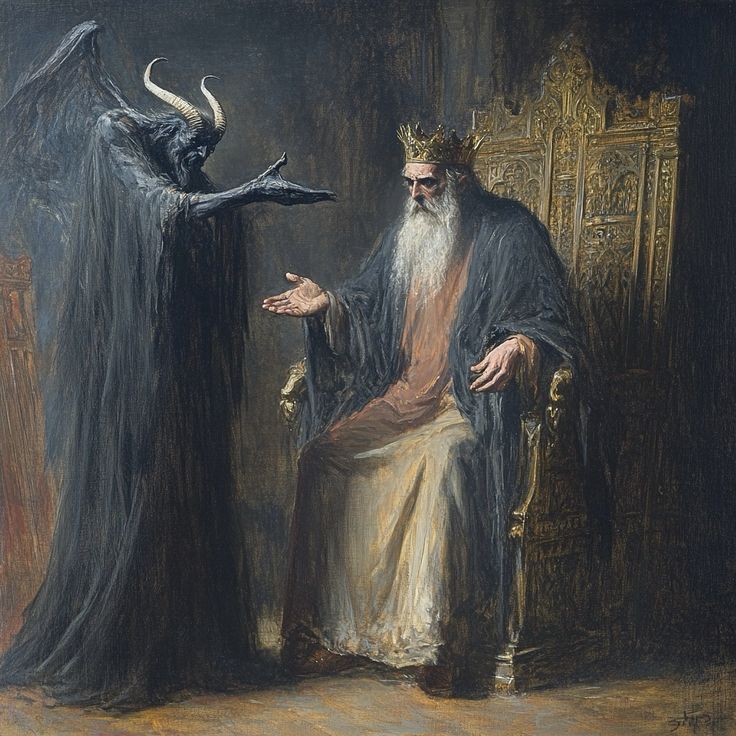
Without taking into account that in the psychocosmos are at work destructive forces autonomous from the “main” personality, such intervention is inevitably limited. It can repress or temporarily weaken distortions, but it cannot bring the mind to a qualitatively new level of harmony and wholeness. As we have repeatedly noted, the Western Magical tradition looks at the problem more deeply. From its point of view, the human psyche is a multifaceted cosmos in which there are both constructive currents and entities and destructive “demonic matrices.” These matrices can be viewed from different angles — as “dead ends” of the mind itself, special information-energy patterns, or — as independent beings parasitizing the mind and distorting its natural development.
They weave themselves into streams of thought, feed on negative emotions, and distort perception of reality. Over time, in any embodied mind, many such distortions accumulate, layering on top of one another and keeping the psyche in a state of obscurity. Thus, by honestly looking within their psyche, the “average” person will inevitably discover an entire swarm of destructive entities that have embedded themselves within, hindering effective existence and harmonious development.
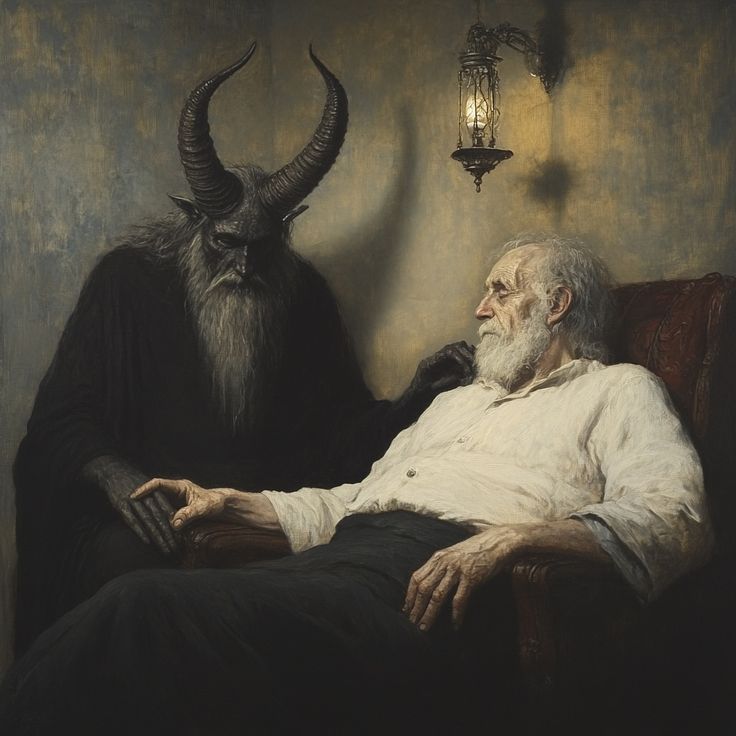
From the Hermetic point of view, it is precisely demonic matrices that are regarded as the deep roots of psychopathologies, which nonetheless often go unnoticed at a superficial glance. Psychotherapy in its traditional form most often addresses only the manifestations of these matrices. It classifies them as symptoms, complexes, cognitive distortions — and tries to weaken their expression with its “secular” methods. At the same time, by removing a symptom, it does not always address its cause. For example, if a person’s aggressiveness is caused by the action of one or another “matrix of anger,” psychological correction may teach a person to restrain outbursts or vent anger at the gym; however, the destructive energy of the matrix will remain and sooner or later will find another outlet. Therefore the Hermetic approach demands going deeper: identify the etiology of the inner “illness” and eliminate its source, rather than only “smoothing” its external signs.
Without such a “goetic” aspect, therapists often miss the initial destructive vortex that generates ever new dysfunctions. At best, it is possible to achieve temporary compensation, and at worst, the problem is masked, driven inward, where it continues to poison the mind unnoticed. Therefore, it is not hard to see that for genuine deep transformation of the mind, psychological methods alone are insufficient: they do not neutralize the root demonic matrix hidden behind the problem.
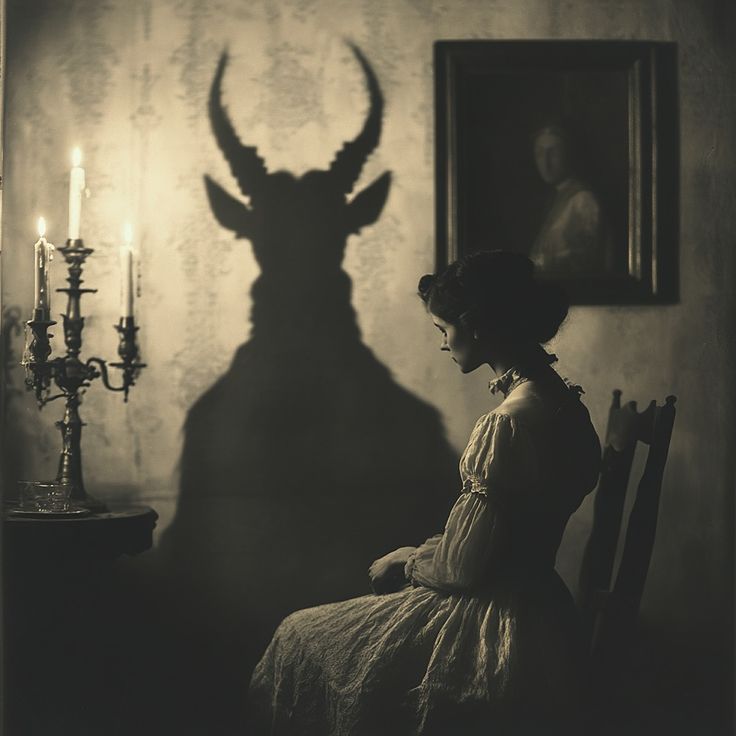
The practice of inner goetia, by contrast, is aimed precisely at working with the root cause — with such demonic matrices standing behind psychological problems. We have repeatedly noted that a goetic operation is a special magical ritual requiring vigorous focused will, observance of protective measures, and work with diverse energies. At the same time, the essence of “inner goetia” boils down to the identification and transformation of destructive matrices — returning the energy flowing through them to its original, pure state. Simply put, having discovered a destructive entity within themselves, a practicing Magus immediately makes efforts to transform it and return the released energy to its “lawful channel.”
In this way, a deep cleansing of the psychocosmos is achieved, during which energy previously “redirected” by a demonic matrix and dissipated by it returns to the owner and serves their development.

Thus, the goetic Magus identifies a specific “pathogen” — a demon responsible for certain pathological states — and then carries out an operation to eliminate or transform it. The Magus’s foremost task is to gather information about the demon, learn its nature before entering into “battle” with it. By managing the process of evocation, the practitioner examines and “names” his inner flaw explicitly — this is far more effective than fighting vague anxiety or blind fury.
At the same time, each clash with a demonic entity is also a duel of wills. The Magus seeks to subordinate the spirit’s cunning and elusive will to their own, and thereby inevitably tempers and develops their power and accumulates Authority.
It is clear that each goetic ritual is an extremely dangerous ordeal in which any laxity is fraught with defeat, and therefore the Magus is forced to mobilize colossal inner strength. As a result, the persistent practitioner gradually gains such power over themselves as no ordinary therapy can provide.
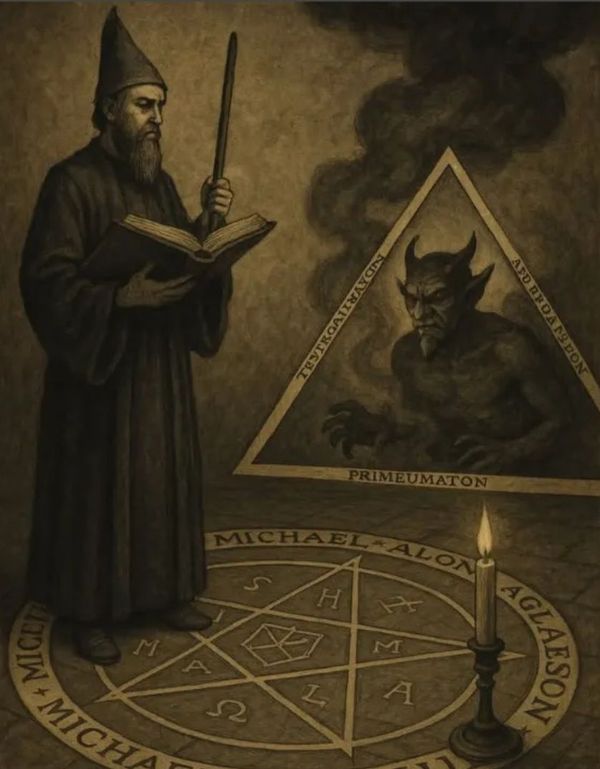
In addition, as we have already noted, an encounter with otherworldly darkness expands the magical horizons to unimaginable limits in everyday life. In a state of metaphysical mortal danger, habitual dogmas collapse, and a person sobers up from illusions about their own capabilities. The demon mercilessly exposes all the Magus’s weaknesses, forcing him to confront what is hidden in his shadow and subconscious. In the course of such an inner battle, what was previously repressed rises from the depths of the psychocosmos — “rotten parts” of the mind come to light and, thanks to this, can be identified and eradicated. Thus, goetic practice not only cleanses the mind but also makes it more integrated: each “bound” inner demon returns a lost fragment of the psychocosmos, returning to the mind a portion of its strength and freedom.
At the same time, it is very important to understand the difference between transforming energy, correcting a matrix, and influencing the demon itself: a matrix may be corrected, but a demon cannot be “reformed”; in the course of goetic practice it is only assigned its “lawful” place as an activator of descending currents, while its power is limited and controlled. In other words, even if a person has fully “accepted” their feeling of hatred or fear — this does not destroy the demon as long as the mind continues to generate the energy the predator consumes. On the contrary, the demon can use the fact of awareness as a new hook: instead of hiding in the shadow, it becomes part of the personality’s narrative, begins to speak on its behalf — now with greater persuasiveness, disguising itself as “inner honesty” or “noble struggle.”
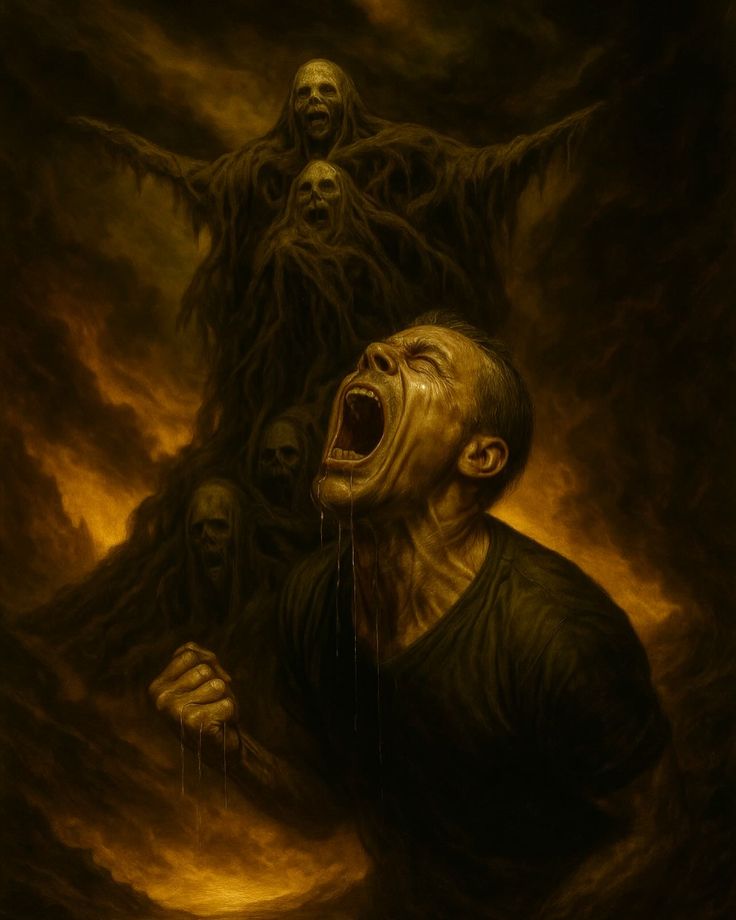
Therefore the Magus, first of all, must stop supplying energy, stop being the demon’s “feeder,” for which he should change their inner beliefs, heal his complexes, align and strengthen their will. This makes this stream of mind unsuitable for the demon, although it does not destroy the destructive vortex itself. It goes away but remains active in other streams, other beings, other worlds. And therefore, as is said in the Traditional texts, “demons should not be given a place in the mind — but they have a place in the world.”
The Traditional approach recommends neither fighting the demonic vortex itself, the demon as a being, nor identifying with it, not giving it a place in oneself, and in this way go beyond its “jurisdiction,” forming such a stream of mind in which the demon has neither hooks, nourishment, nor openings.

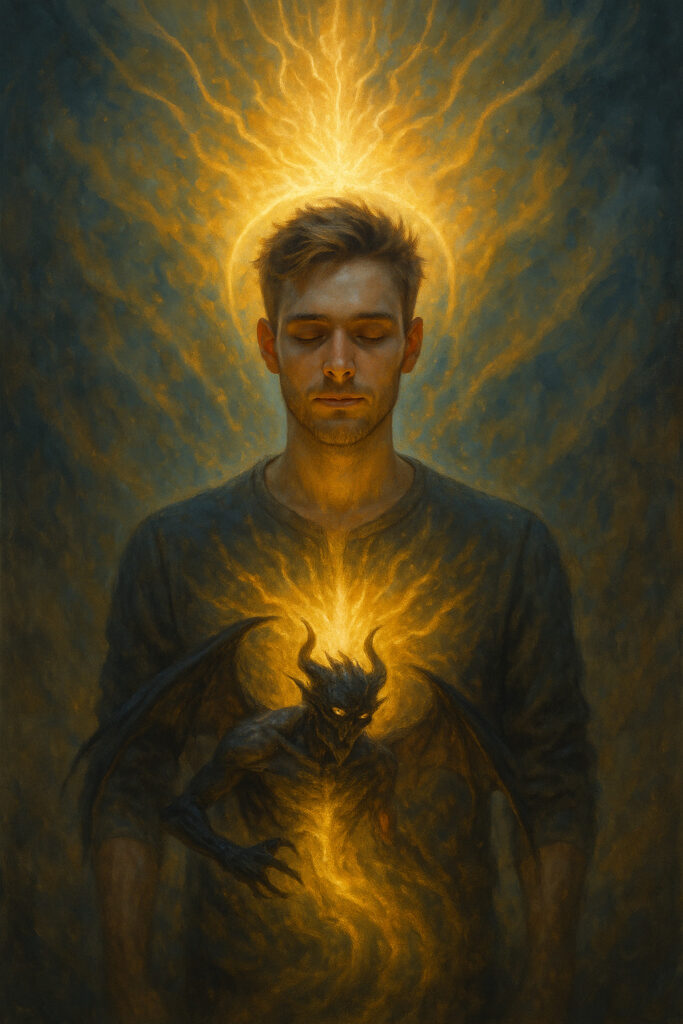
For such healing it is necessary to acknowledge both truths: the presence of divine light in the mind and the presence of deep darkness within it. As long as a person denies their Shadow, trying to convince themselves of their own righteousness and “positivity,” the darkness doesn’t disappear — on the contrary, it only gains strength in a hidden form. Moreover, the more diligently a person ignores inner darkness, the deeper they sink into it.
Each unacknowledged Shadow becomes a demon’s lair, dictating its rules to the mind. That is why opposing destructive matrices is impossible without awareness and direct contact with one’s Shadow. Only by honestly confronting it does a person stop unconsciously projecting evil into the external world and gain a chance to truly transform it from within.
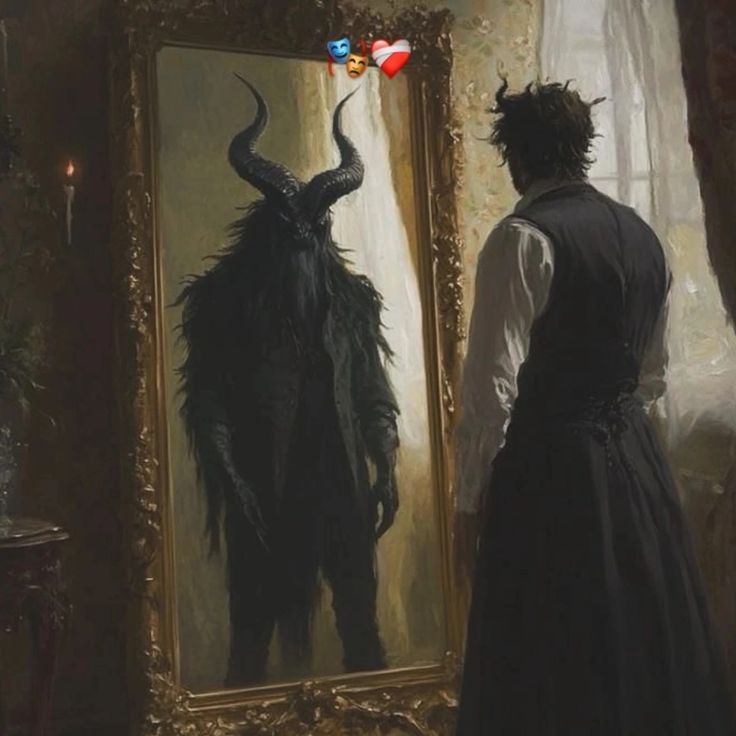
And only by identifying the source of inner problems as a distinct stable demonic agent independent of “surface” will can one break the vicious circle of its power. Here goetia acts as a direct challenge: the Magus forces themselves to look honestly at his motives and their drivers, to confront them, in their ugliest forms, face to face, regardless of the danger.
Thus, “ordinary” psychological methods can be compared to tending a garden in which the weeds have not been pulled out by the roots: for some time order is maintained, but hidden roots periodically make themselves known again. True transformation of the mind, however, is an alchemical transmutation, when the original “raw” substance of the psyche becomes noble gold. Such a process inevitably touches the very depths of the mind, because it is necessary to transform not only behavior or thoughts, but the energetic foundation itself, the levels of causes and primary impulses. And inner goetia provides all the necessary tools for this: the traditional techniques of cleansing and development of the mind.

Of course, this is a very dangerous and quite labor-intensive Path, requiring considerable wisdom and courage; however, it brings truly qualitative changes. Magical practices serve the evolution and realization of the mind, since the ideal health of the psyche is considered its full enlightenment.
Descending into one’s inner subconscious “dungeon” and entering there into a duel with demons, a person accomplishes precisely such an evolution — frees and expands their mind. Where therapy stops at the level of normalization, the magical approach goes much further — toward radical transfiguration.
Such a deep transformation requires significant work: acknowledging one’s Shadow, banishing parasites of the mind, and activating the divine Light within. Without this, any changes will remain cosmetic. That is why for the integral development of the psychocosmos, constant spiritual practice is necessary, serving as the key to radical healing and the unveiling of the nature of the mind.
Along with the article on inner alchemy, this is a very good introductory article, explaining why one should engage in this at all and sketching out reference points on the map.
Perhaps it is not the worst idea to highlight such articles in a separate block/category. Thank you.
If we consider demons not as metaphors for internal conflicts but as independent stable vortices of destructive will, feeding on the energy of distorted manifestations, can we heal our consciousness without entering direct confrontation with them, or is true transformation only possible when a person dares to look into the very essence of this will and strip it of its right to dominance?
From a magical point of view, healing consciousness without direct confrontation with demonic vortices is impossible. As we mentioned earlier, the psychotherapeutic approach may locally relieve tension, ease symptoms, correct behavior, but it rarely gets to the root – to the very destructive matrix. The magical tradition asserts that at the roots of any suffering or distortion lies not just an error or a ‘repressed experience’, but an active being, a vortex of will, feeding on the very energy that a person once directed in the wrong direction – and that is the demon. Therefore, the demon is not a ‘part of the personality’, but an independent matrix that has settled in a distorted form and directs consciousness towards destruction. Thus, ‘making friends’ with a demon means allowing it into deeper levels of consciousness. ‘Accepting’ it means drawing it closer to the core of oneself, rather than neutralizing it. Any attempt at integration without realizing that its nature is alien to harmony leads to the person becoming a channel for alien will, substituting growth and transformation with adaptation to vice.
While confronting means recognizing within oneself those qualities that the demon has the opportunity to latch onto. This is a special art of looking at pain, aggression, fear, guilt, attraction to destruction – not as enemies, not as random failures, but as distorted centers of will. Only by exposing them through inner awakening, attention, resolve, can the mage redirect the flow of energy and return it to a constructive channel. However, even this is not ‘victory’ over the demon. The demon remains in the universe as a structural element of the descending flow. It should not be ‘destroyed’ – this is impossible and unnecessary. It should be deprived of access to a particular flow of consciousness. This is the correct form of internal goetia: not war and not negotiation, but establishing a boundary beyond which the destructive vortex finds its place, but has no power outside its limits.
A correct observation that short-term methods of psychotherapy are unlikely to lead to a qualitative restructuring of consciousness. But still, it is not for nothing that magicians have always been interested in and engaged with depth psychology. For example, Crowley, who did not hesitate to borrow from Mathers, has many ideas from Jung. Take, for instance, Thelema; at their publishing house Castalia and in Thelema itself, they have a very respectful attitude towards Jungianism and analytical psychology, and its study can at least significantly enrich the magical experience, broaden worldview and self-awareness. And, of course, to conclude that depth therapy is fundamentally unhelpful and very superficial, in my subjective opinion, can only be true when one has more thoroughly studied what psychotherapy methods offer and has personally gone through a therapeutic process. But this is just my opinion; maybe you don’t need it. However, I wouldn’t want to ‘cut off’ such an interest in psychology from those who find it beneficial for the human soul.
The difference between magic and psychology lies in who names themselves thus; it is not in who relates to Jung or Crowley or even in what methods are used. The key difference lies in how dangerous such practice is, primarily for the therapist themselves. Psychologists try to work in zones of known and safe; they usually do not take risks themselves and do not put their patients at risk. A magician always operates beyond the known and definite; they are never safe; they always risk.
Thank you