Fairies — the Bright Children of the Dark Mother
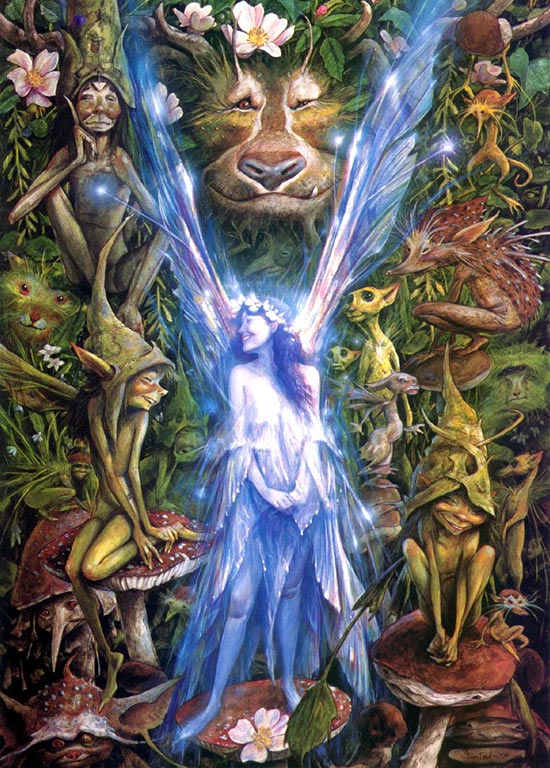
Two Mothers of the worlds produce not only gods and demons, they also give birth to two human races. Humans (like the gods) are children of the Light Mother, while the relatively benign children of the Dark Mother are, by British habit, called Fairies.
The “official” name of the fairies is Tilvit Teg, the Wonderful People or the Wonderful Kin. Sometimes they are given longer names: Tilvit Teg in-i-Coed, “the Wonderful Kin of the Woods“, or Tilvit Teg i-Mun, “the Wonderful People of the Mounds“.
At the same time the name “Tilvit Teg” is often used only for those fairies who are tall, dressed in white and live on an “invisible island”, or sometimes for those who wear yellow-green clothing, who are cunning and mischievous — that is, for the Higher or “Heroic” members of this folk, who nevertheless steal milk and abduct children. In any case, all these fairies share one trait: they have golden curls, and they appear only to people who are fair-haired and green-eyed.
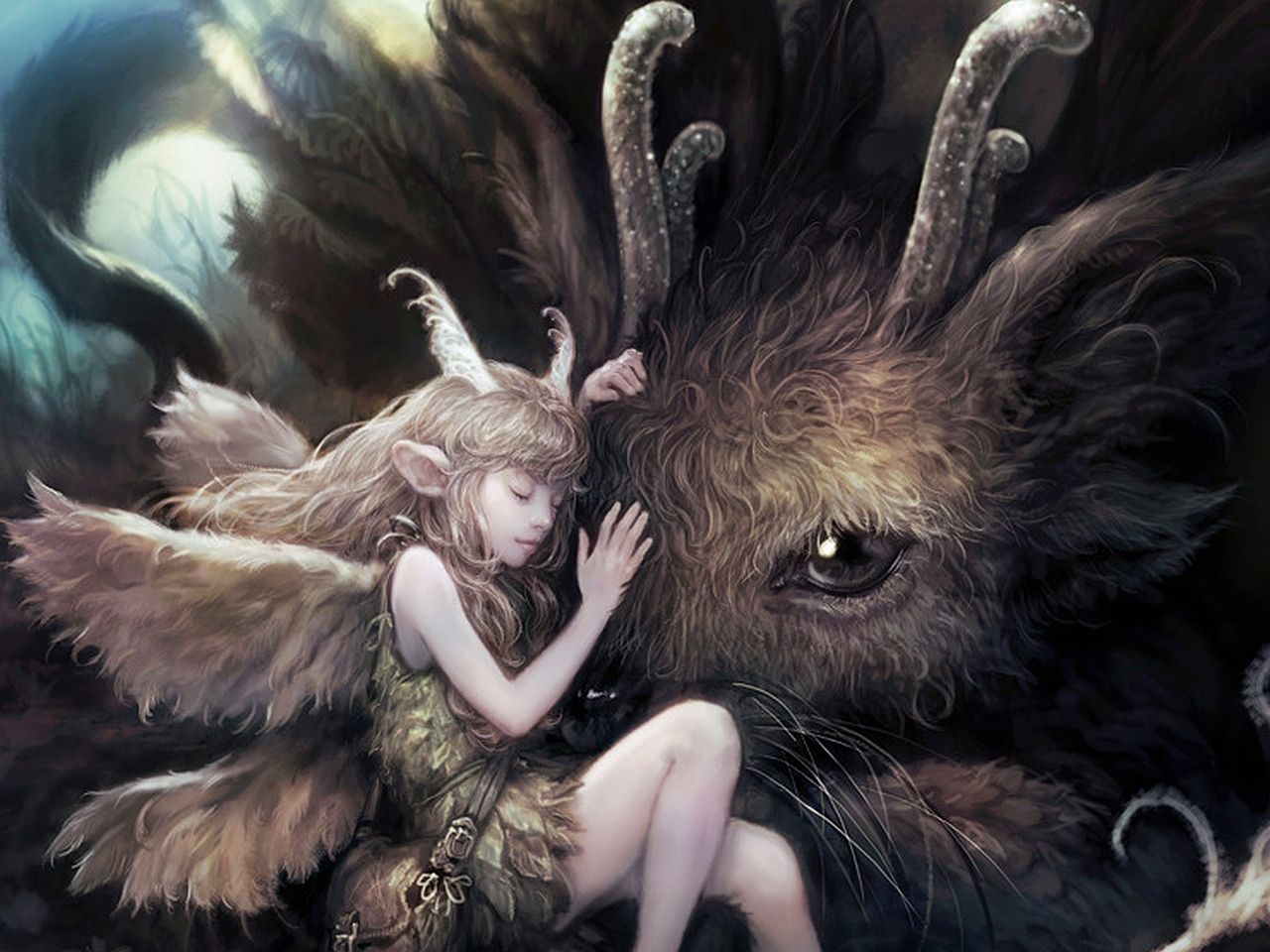
Strictly speaking, Fairies are a people originating from two different sources. One branch of them are the “descendants” or the result of the degeneration of the Light and Dark Alvs. We have seen that as beings grow distant from the Source, from the moment of the creation of worlds and their inhabitants, they decay (that is, lose the wisdom and radiance of the primordial Light) if they do not actively struggle against that decline.
Primordial beings undergo involution and degradation — the Progenitors, the Jotuns, become Turs (or Fomors, and later — trolls). The same process affects the Alvs. These two peoples — Jotuns and Alvs — do not take part in the formation of worlds; they regard gods (and humans) as violators of order, and differentiating consciousness as the murderer of the world’s Unity.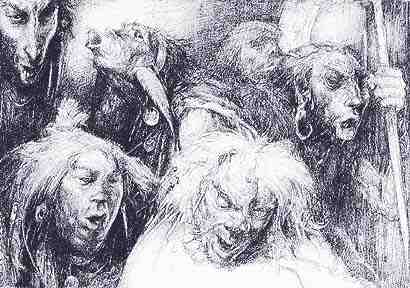
Hence the degeneration of Jotuns and Alvs, for, as is well known, even “to stand still one must run with all one’s might.” By not taking an active part in transforming the world, they do not sustain their own manifested condition, losing the formative light. Yet within them remains the primordial, elemental wisdom proper to the abyssal depths of the world.
To this group also belong the descendants of the Fomors — the giant Turs who abandoned their destructive temper and joined the Enchanted folk.
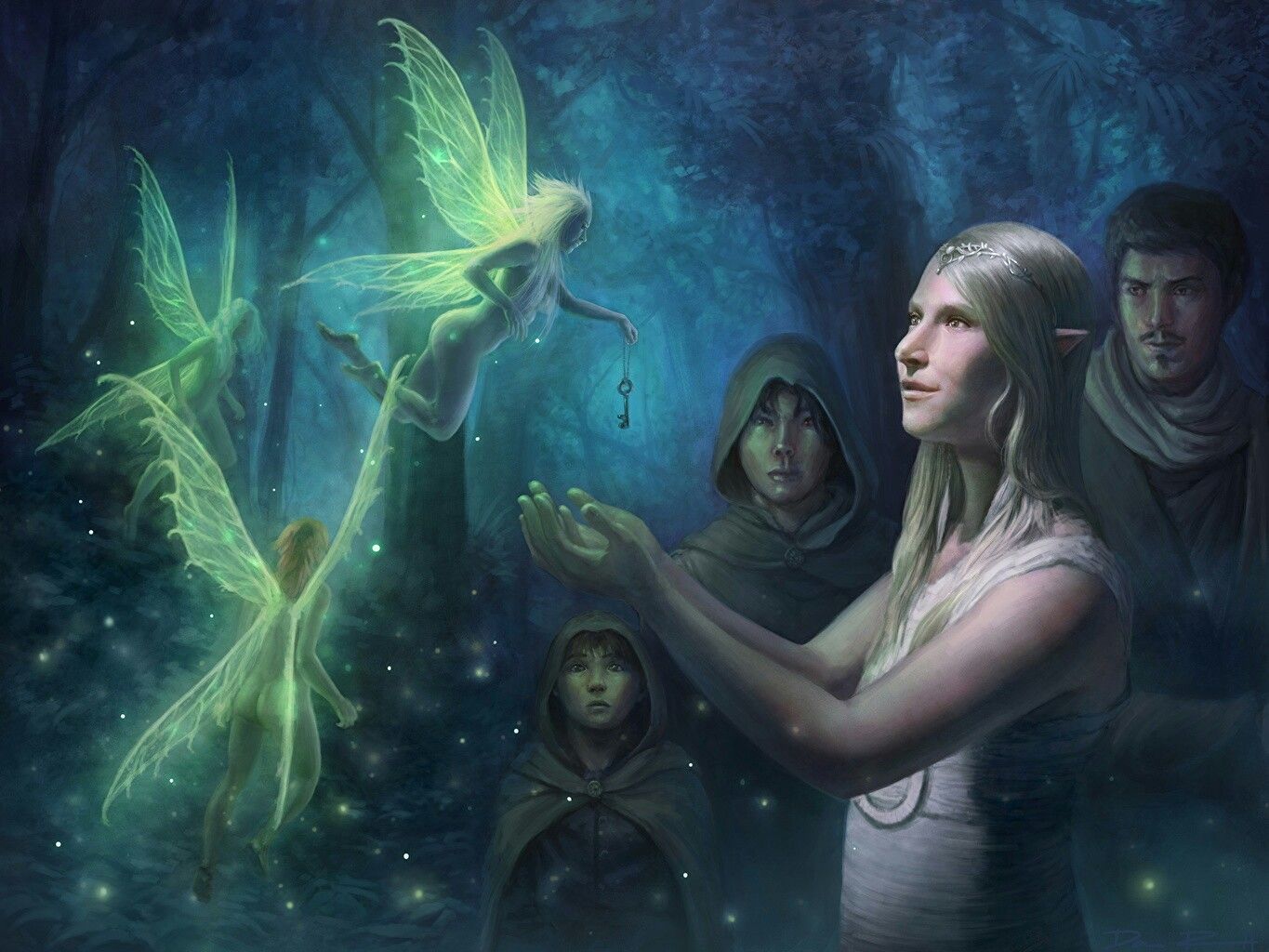
A quite different group, also long ago incorporated into the common tribe of fairies, are the descendants of “angels”, more precisely — the Watchers, the Grigori, who acquired free will and gave rise to several peoples, one of which — the so-called eliud — became part of the Enchanted folk.
Thus one can distinguish two “sources” of the fairies’ origin: some of them, above all the sídhe and elves, are descendants of the Alvs — the cold gods of space — while the other branch traces its beginning to the Grigori, who acquired physical bodies.
At the same time tradition considers all Fairies the children of the Dark Mother of the worlds — it is in this aspect that the Great Goddess returns worlds to the unmanifest, primordial state, which for them is death.
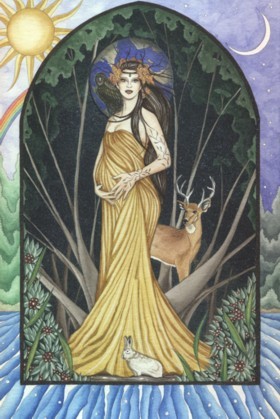
In truth, however, arising both from Light and Dark beings, giants and Alvs, Fairies, in terms of energy, descend from two different Mothers; more precisely, the Dark Aspect of the Great Goddess manifests differently for the two Tribes — as Danu for the Light Alvs and as Domnu for the Fomors and the slua.
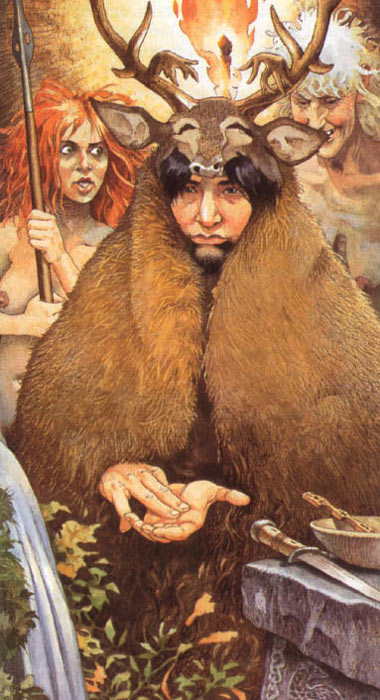
According to this differing origin, the Fairies are divided into two great peoples, or, as it is said, two “courts” — the Benign Court and the Malign Court.
The words “Benign” and “Malign” are not identical to the concepts “good” and “evil”, just as the terms “Light” and “Dark” Alvs are not identical to those moral categories.
The Benign Fairies, children of Danu, hold that although humans are petty and unworthy violators of primordial order, they nevertheless have a right to exist, as do any other beings. Therefore the fairies of the Benign Court treat humans, if not warmly, then at least tolerantly. 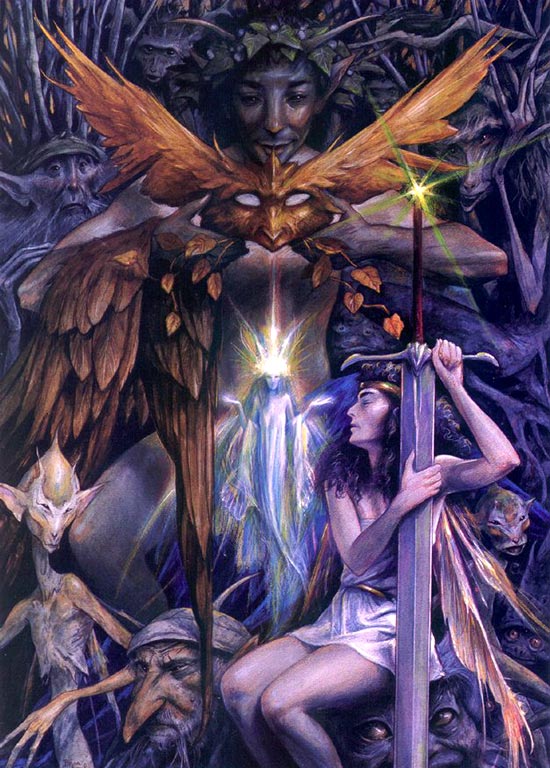
The Malign Court of the Fairies, like, for example, the Fomors, considers that humans bring nothing to the cosmos but harm, and therefore their very existence is an evil; consequently, humans should be driven out or, better yet, destroyed.
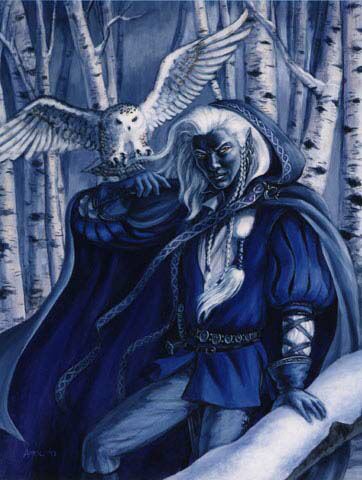
At the same time, since the Middle World is arranged by gods, protected from other worlds by the Force of the Boundary and populated by humans who transform it, the Fairies — who are older and hierarchically above humans — cannot defeat humanity, which relies on the power of solid matter.
Therefore, when humans became too numerous and their technocentric mindset too noisy, the Fairies, after a few formal battles with people, moved into the Interworld, founding there their Fairyland (Sid, Shi). The British Isles apparently abound in entrances (“portals”) to Shi, since practically any moderately conspicuous hill is there regarded as a dwelling of the Fairies.
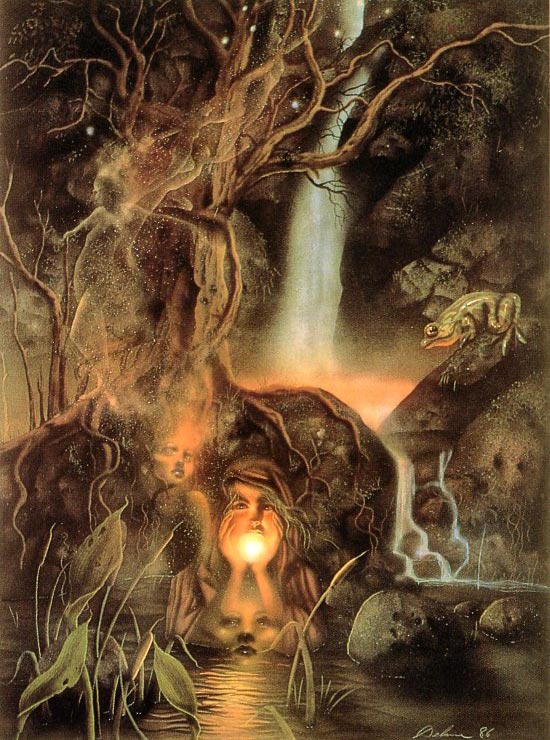
Often wandering dead (elementers of the “slua” or Draugar) who roam the earth and snatch mortals are unjustly assigned to the Malign Fairies. They force their abductees to kill livestock and to brand people with “elf-marks”, turning them into energy sources for the Interworld to “feed” the energy-starved Interworld.
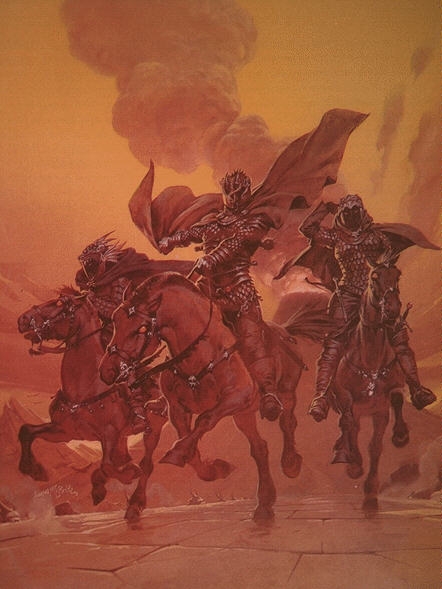
Besides the division into Benign and Malign Courts, Fairies of each court may be Solitary, Wandering or Tamed, and each Court includes Higher (“Heroic“) and Lower Fairies.
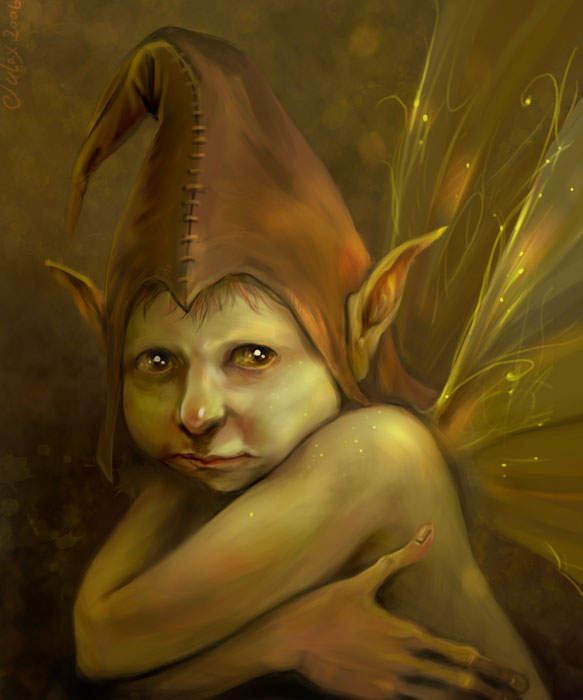
Solitary Fairies prefer solitude, cannot bear noise, dislike humans, and wear red clothing.
Wandering Fairies are more neutral, have no fixed dwelling and wear green jackets.
Tamed Fairies (not too friendly) tolerate humans whose homes are built on places important to these Fairies, and in order to guard those places they may even help people (though always reluctantly and with a certain degree of disdain).
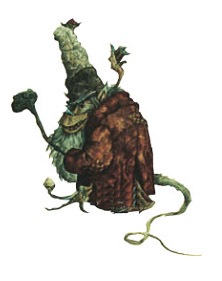 Another common trait of the Fairies, inherited from the Alvs, is a relaxed relationship with time. Since time is a characteristic of the created world, at the Fairies’ will it can change both its speed and its direction.
Fairies encountered in the “Middle” worlds usually dress in green (that is, are wandering), which helped them remain unnoticed. They apparently allowed their children, who might reveal the locations of their dwellings, to come to the surface only at night and dance in the moonlight. These dances, reminiscent of round-dances around a “maypole”, were usually held beneath a tree on a rise, chiefly on barrows under which perhaps their dwellings or entrances lay.
Higher fairies could, it seems, show themselves in the world of humans by day as well; if they were recognized, their safety was ensured by their Magic, and by belief in the inevitable vengeance for revealing their secret.
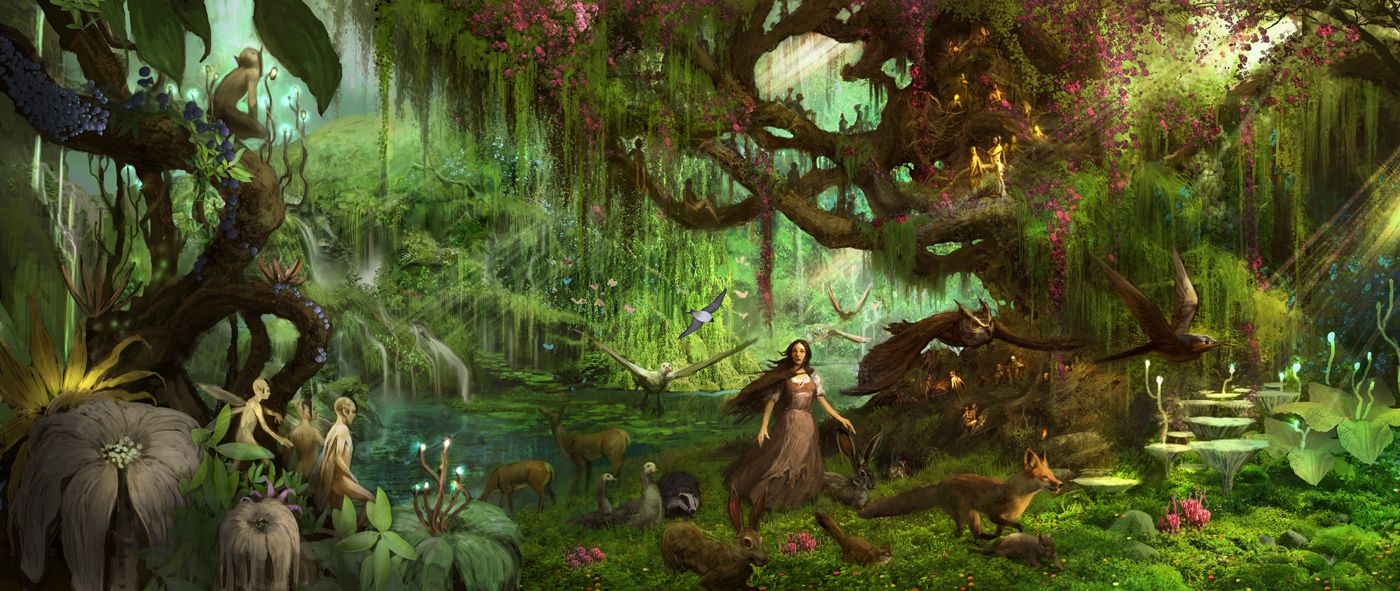
Welsh traditions describe fairies in such detail as to include costume colors, which testifies to the breadth of contact with them in Wales in the early centuries after the Exodus. For example, in the “Legend of the Quarrelsome House” the Tilvit Teg are described as old elves in blue garments.
The idea of blue garments for fairies was more common in northern parts of Wales. In Cardiganshire, in tales of the hill Moiddin where fairies often appeared, they are always seen in green clothing and exclusively in the green month of May.
Fairies in Pembrokeshire, by contrast, dress in bright scarlet garments and red caps whose plumes quiver in the breeze during dances. Yet fairies dressed in white were also encountered, and in modern stories white seems to have become a favorite color for fairies, especially when the Tilvit Teg don their finery for a festival.
This diversity of colors stems from the vivid imagination of the Welsh and reflects more modern ideas of “appropriate costume colors” than the most ancient traditions.
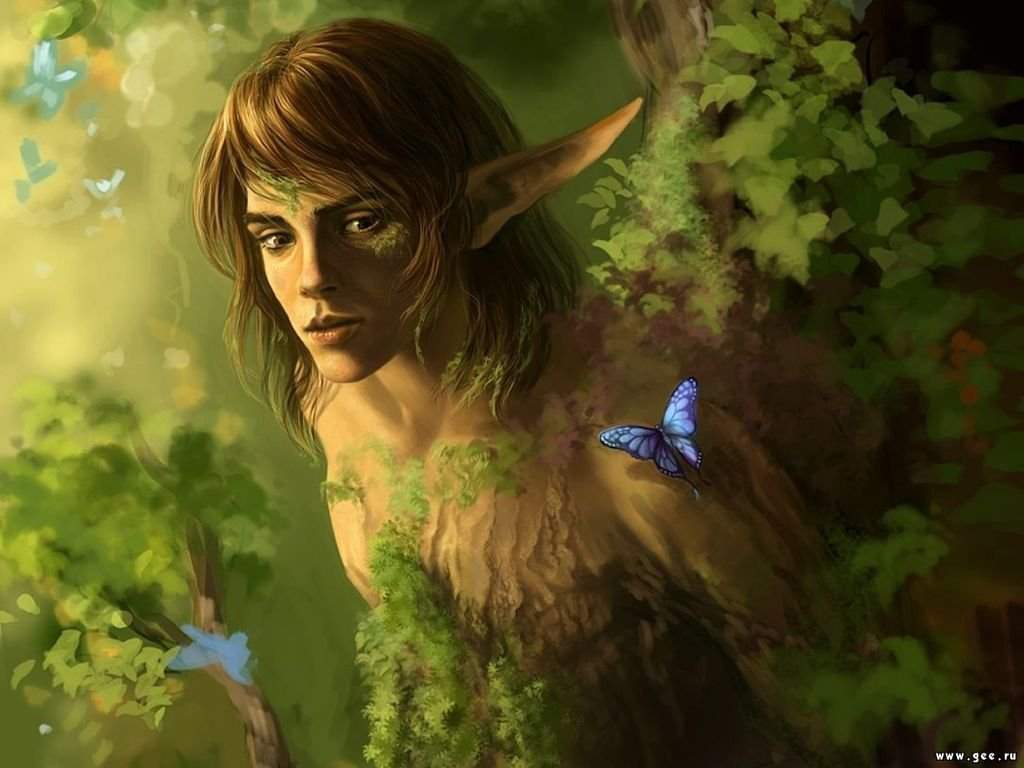
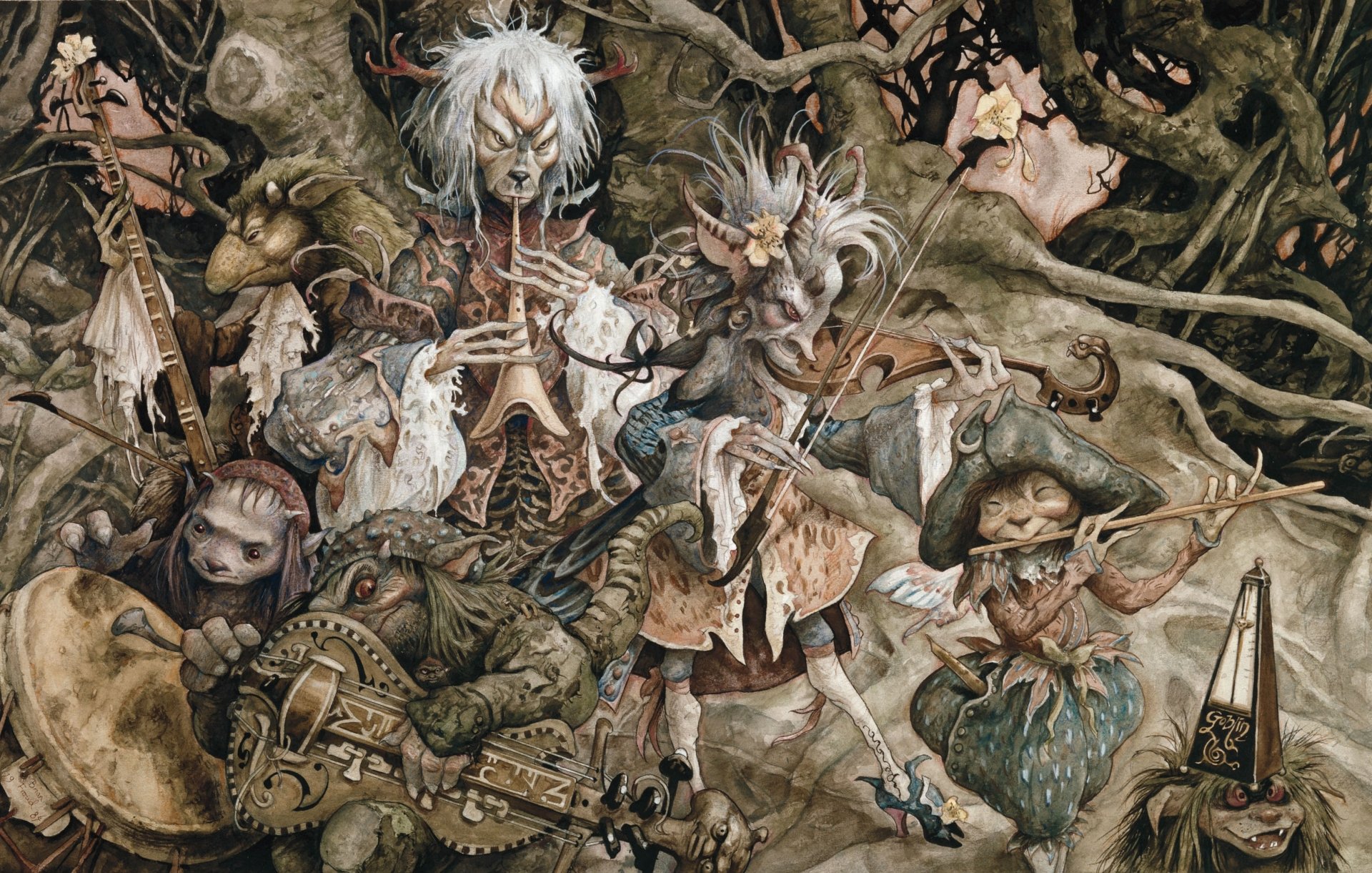
According to legend, Fairies are remarkable musicians. Some of them pass their gift to mortals. In particular, the famous Scottish pipers the MacCrimmons learned their craft precisely from the fairies. The sweetest, most delightful and most dangerous melody for mortals is the song of the elven king. Under that strain stones and trees dance. If a human learns that melody, he is lost: the charm of the music is so great that nothing can break it, unless the piper plays the tune backwards or some hand severs the violinist’s strings.
The most numerous group among the Fairies are the Elves, closest to their progenitors — the Alvs (even inheriting their name) — and their direct descendants, the Tuatha de Danann (Sídhe), who before withdrawing into Shi mostly inhabited forests. Like the Alvs, Elves divide into light (relatively friendly, merry and mischievous) and dark — stern and even cruel. Light elves have golden hair, wonderful melodious voices, and often play on magical harps. In general, music is the most important part of life for all fairies. They believe that music returns them to the state of primordial harmony disrupted by gods and humans. Thus elves play many instruments superbly, and the songs of the elven king are considered the most magical sounds in the world. They are not at all afraid of sunlight, but only a child born on a Sunday and with one foot inside a witch’s ring can see them. Dark elves include, for example, the Scottish, who abduct people, cast curses on cattle and take cruel vengeance for offenses.
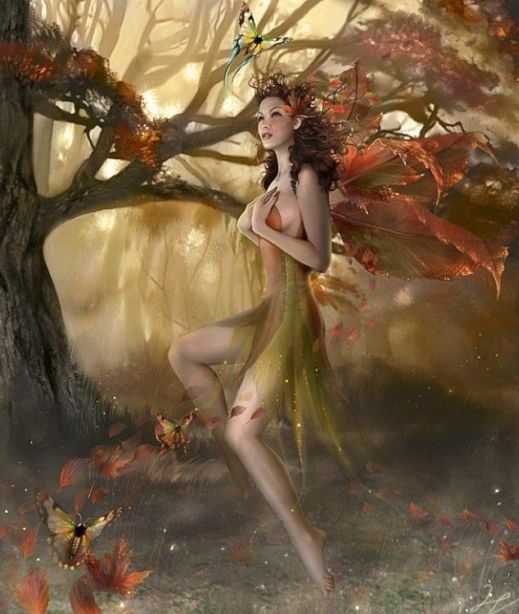
Certain fairy peoples have been known to humans since ancient times. Besides Elves, there are, of course, Leprechauns, Brownies, Tilvit Tegg, Pixies, Kobolds, Glaistigs, Goblins, Ogres and others.
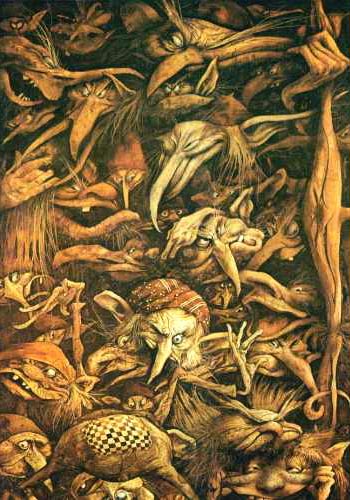
As a rule, fairies are neutral or relatively friendly toward humans. But if insulted, even inadvertently, they take revenge. Most often their revenge consists of inflicting illness.
The best-known illness of this kind is paralysis, a stroke or a hypertensive crisis. Fairies also induce less deadly paralysis when they wish to abduct a person, leaving in exchange a changeling or a wooden log bewitched to be accepted as the corpse.
This paralysis is also called an “elf-stroke” or “elf-shot”.
Among other diseases inflicted by fairies one can mention rheumatism, pinched vertebrae and all other ailments that disfigure the flesh. Those who greatly offended fairies suffer from these maladies.
For lesser offenses fairies “reward” people with goosebumps, a rash or bruises over the body. It is believed that tuberculosis is blamed on malign fairies, they are also blamed for exhaustion, vomiting, diarrhea.
If a woman is sterile or a person is infested with lice, then surely fairies (or, at worst, a witch acting at their instigation) were involved.
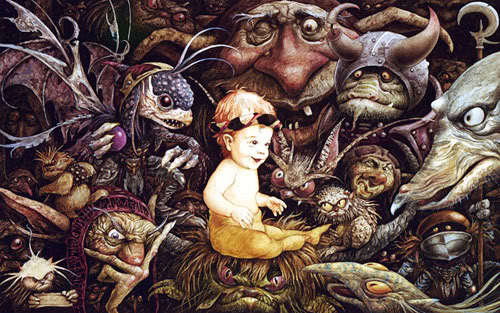
Not only humans but also domestic livestock suffer from fairies. Loss in a herd begins because fairies steal animals, kill them and eat them — though more often they consume not the flesh but the life-energy of the beasts, and people remain unaware, for the bodily shells — so-called foison — remain in the stable.
Regardless of the people to which a Fairy belongs, they all possess magical power, as well as some sort of external defect, a kind of deformity. Even the beautiful higher Fairies have flaws such as goat-like legs or a hollow head. This defect is precisely the consequence of the Fairies’ arrogant attitude toward the world-forming process, and, as is known, once destructive forces awaken in a being, the first thing those forces destroy is the being itself.
True, Fairies, for their part, consider human appearance defective and unattractive (they particularly mocked that distinctive human trait — toes), which nevertheless does not prevent many of them from falling in love with and even marrying humans.
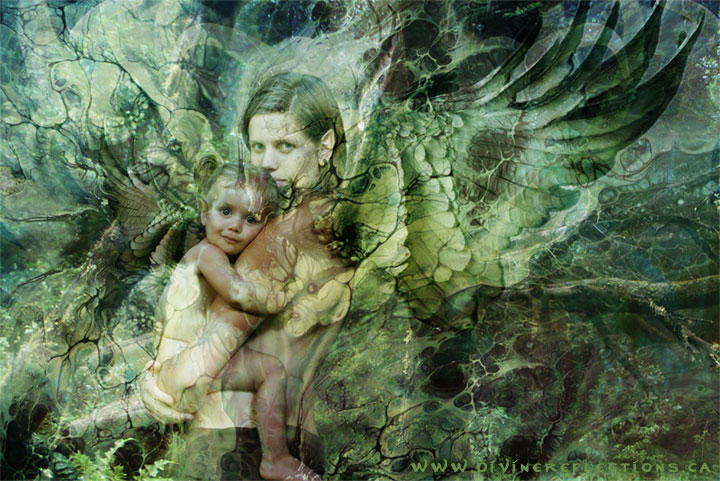
Marriages among Fairies themselves are very rare, for they regard love as a low and unworthy feeling. The birth of Fairy children is even rarer, especially since they do not incarnate, they cannot give birth on their own and require a human’s help. Moreover, they often cannot nurse their infant, so they like to leave their children with humans, taking human infants in exchange. In place of the baby they leave a young or, conversely, an extremely aged Fairy, from whom their human ‘parents’ receive no help. He torments his “parents” with constant whims, whines, demands to be fed, yet he does not grow and never leaves the cradle. At first the changeling looks exactly like the child he replaced, but quickly changes: becoming ugly and irritable, forever fretful. He bites, pinches — in short, miserable is the mother who has been given him. Sometimes he behaves as a simpleton, but sometimes he displays supernatural wisdom.
At the same time, death among Fairies is also rare, since being outside time they are not subject to old age or disease, though they can die of grief (which is extremely rare) or be killed (by means of special contrivances, which is no more frequent).
In that case the whole people of fairies mourn the dead, organizing so-called “enchanted funerals“. Since fairies do not possess an immortal soul, their death is final, without hope of rebirth or reincarnation. This is another reason the “Enchanted People” moved into the Interworld: there they can live indefinitely long.
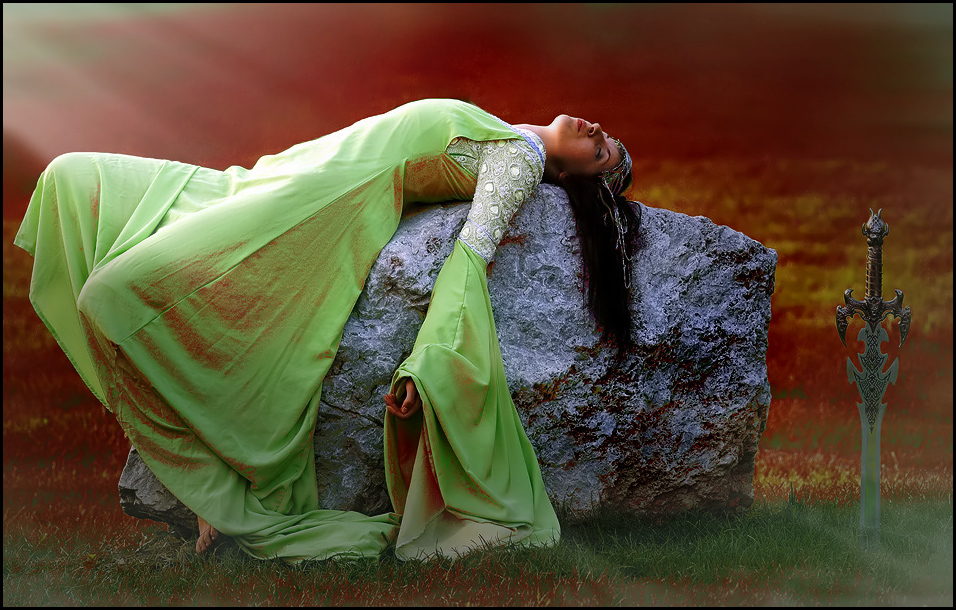
Overall, fairies are not only the primary aborigines who inhabited Midgard long before humans appeared there, but also an integral part of the general disposition of forces.
For modern people to recover a correct understanding of the Enchanted People means not only to restore “historical justice”, but also, more broadly, to loosen the constraints of one’s worldview and to reintroduce into the world that flow of Magic and Freedom that was bestowed upon it by the children of the Two Mothers.
Everything described is not so fantastic. In 2005, I personally met 2 leprechauns. And I wasn’t the only one who saw them. I was in the company of quite respectable people with academic degrees who have no idea what the world described by Tolkien is all about or who Tolkien is. For well-known reasons, I always hide my awareness on this matter among such a contingent (the audience is tough). I can say for sure that one leprechaun was about 1 m tall, the other shorter, one held the other like children hold hands, only – by the paw. Both had huge eyes and stood on two legs. They seemed very curious, but they appeared because there was a woman in our company with a beautiful silvery soprano, singing. It was already getting dark (it was autumn, but warm). And already in the light of the headlights, we saw four pairs of huge eyes. Since there were professional hunters among these people, they thought that these were stray dogs. But I, not seeing them fully yet, immediately realized, because I know that all from Elves to fairies and similar beings respond to music and beautiful voices, particularly classical vocals. When these two beings were illuminated by the headlights, the scholars were simply stunned: before us stood something resembling small dogs, but with wonderfully expressive faces, and most interestingly – on their hind legs, like bipeds, and the taller being was holding the shorter one by the paw (like in cartoons). The scholars gathered the remnants of their meal, kebabs, and we, with the woman who was singing, gave them all the chocolate candies and chocolate-covered marshmallows. Judging by the expression in the little one’s eyes, he had a feast for his stomach. But we silently quickly gathered and left. I really had to convince the whole group not to leave any trash and definitely not to try to light a fire in the presence of these beings to burn all the trash we took there with us. But I can say for sure that these are indeed those beings, so, with all my sober scientific mind, I can say with certainty that this world is right here, next to us on this planet, in our reality (about which we, as I now understand, know nothing), and not somewhere in the afterworld. Here! And elves are right here, and other races. And in general, I want to say to you,
Master Enmerkar, THANK YOU SO MUCH!!!! You have so much wonderful information here, and it is laid out in such a simple and understandable language. THANK YOU!!!!!!!!!
Very interesting story! In which country did these events take place? In which city?
Intriguing article, it was very engaging to read), and about the story of the “anonymous” are you sure that they were leprechauns and not some cryptozoological creatures, like the infamous snowman?
Having read a bit of Slavic folklore, I was surprised… They had very similar descriptions of “divine people,” interestingly, it seems that not only Britain is filled with passages to their world, and it could very well be Kyiv, for example 🙂
Britain is filled with its special magical spirit, the imprint of the forces of those peoples and beings that inhabited its lands, (which the above-mentioned article and many legends of people recount). The entire land from Ireland to Wales-England, in free, clean places of mountains-forests, cliffs above the sea, is permeated with a specific, enchanting, attractive atmosphere, not found elsewhere (in rare exceptions) on this planet. Especially in large cities polluted by the technological development of the local inhabitants. Anonym: the described beings have no direct relation to the race of leprechauns, who lack such zoomorphic canine traits. These are surely other ‘guests’.
How to stand with one foot in the witch’s ring?