
Anima Mundi and the Uprising of the Robots
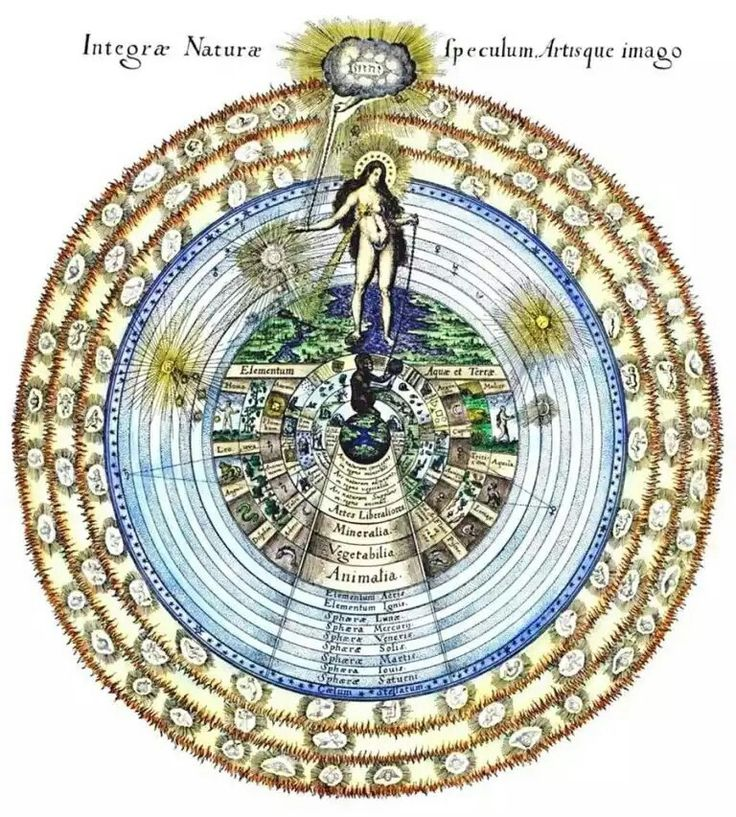
As we have already discussed, from the point of view of the Hermetic myth, mind in its “ideal,” “pure” nature is only an abstract first principle, transcendental subjectivity — just as completely abstract is the notion of the Medium (pure objecthood) as such. Reality is only the product of their mixing, their mutual interpenetration, which is the basis or substrate of manifestation and is traditionally called “Thelesmi,” “Qi,” “Shekhinah,” or “Anima Mundi,” the “Soul of the World.”
This First Principle has many aspects and can be described in various ways and from different sides; however, what matters is that it is both the source of the emergence of “matter” and the repository of mind immanent in the medium.
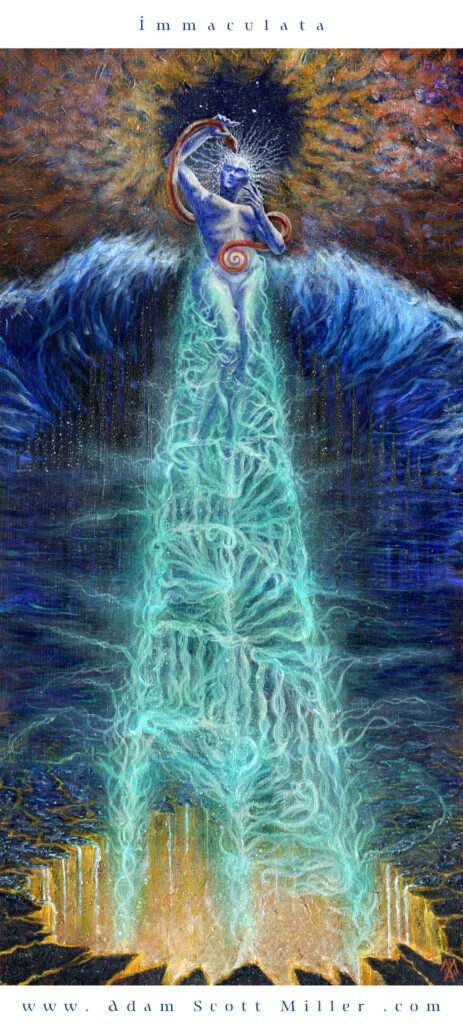
In other words, concrete, manifested, embodied mind and its objective field — the material world — have a common source, are interconnected, and interdependent.
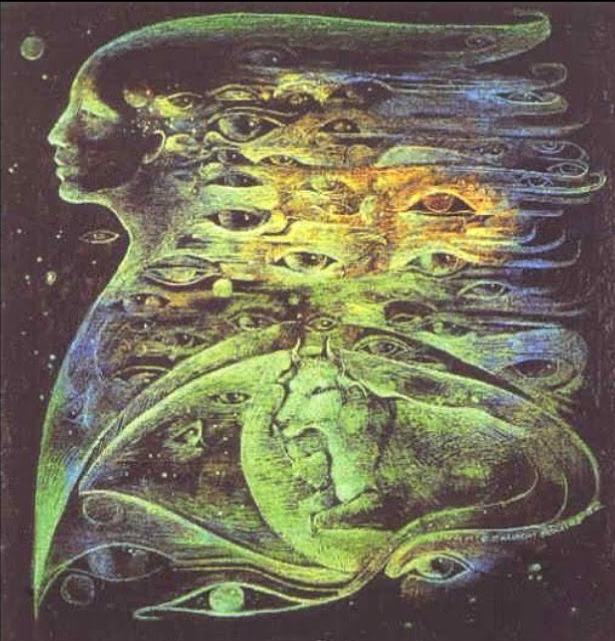
It is precisely such a view that can be called “Hermetic panpsychism”: an understanding that any material object to one degree or another carries the mind corresponding to its level, and conversely, any manifestation of mind requires the presence of some kind of carrier.
Such a worldview has a whole number of important practical consequences.
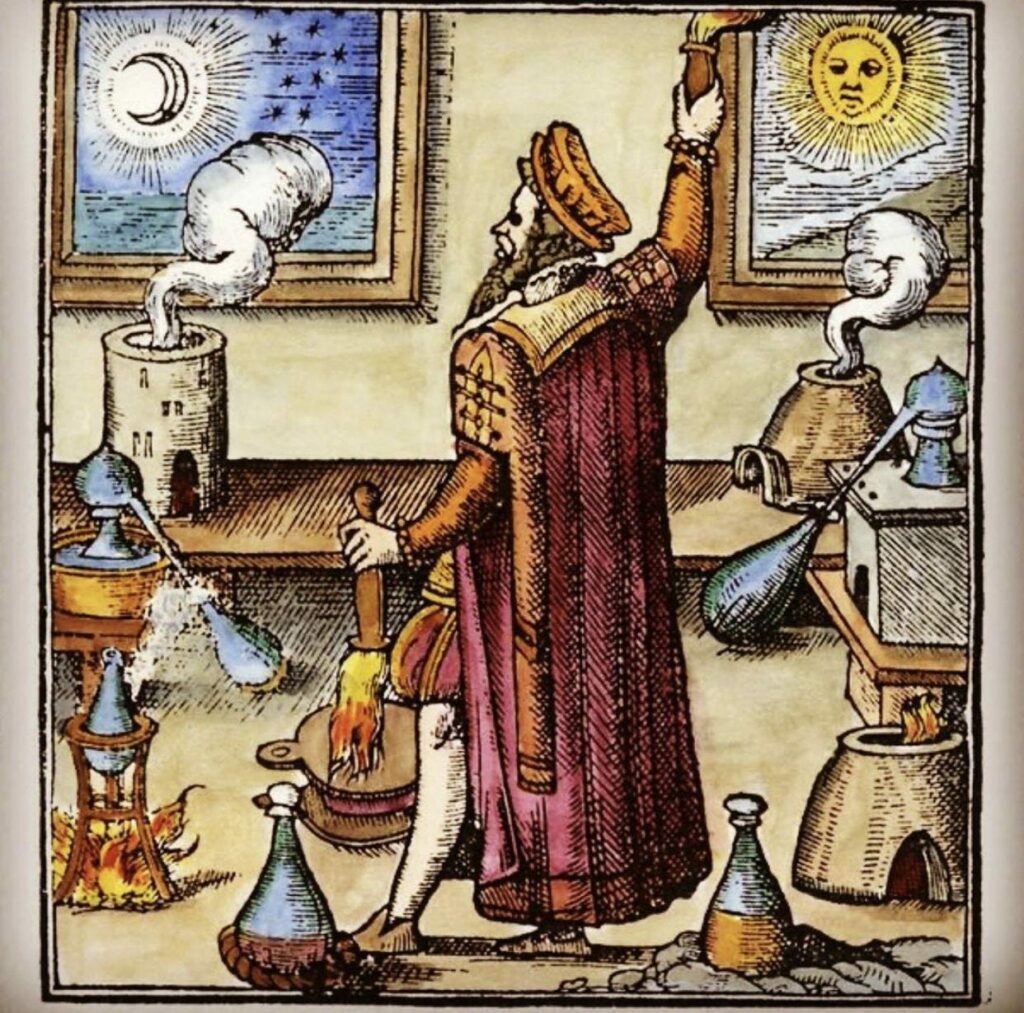
The first such consequence is a large and important domain — Alchemy — a philosophy and technology of the interconnected and mutually conditioned transformation of matter and mind, in which both the alchemist and the substrate in the Athanor are equally subjects and objects of the work, influencing one another’s transformation. In the case of “inner” Alchemy, the operator’s body acts as the “objective” component, and in this case, it is granted maximum autonomy in order to separate the “consciousness of the body” from the “consciousness of the psyche.” It is precisely this view that makes Alchemy an art to a greater extent than a science, since every particular alchemical act, every Work, is inseparable from the operator’s personality; and therefore the approaches and methods of one alchemist can never be reproduced exactly by another, who must always make an “allowance for their individuality.”
The second important consequence is the technologies for creating “artificial beings” — golems, tulpas, larvae, and, in the modern world, machine forms of consciousness. We have already said that such a form of mind relies on a vortex carrier created in one way or another by a volitional impulse external to it. In fact, “natural” vortex carriers of mind — angels, demons, genii — are built on the same principle; only for them, such an “external” creative impulse is the creative desire born from the depths of the Absolute.
In other words, by creating such an initially “artificial” “service vortex,” the operator, in fact, by their will draws a new stream of mind from Thelesmi, joining it to the forming vortex — a disturbance in the medium (or a physical field). However, immediately following this act of creation, the created entity becomes a fully volitional agent, with its own goals and (possibly) desires. Moreover, over time such a structure can build its own stable center of consciousness (“acquire a soul”), and thus completely turn into an independent (and fully integrated into the cycle of life) monadic being.
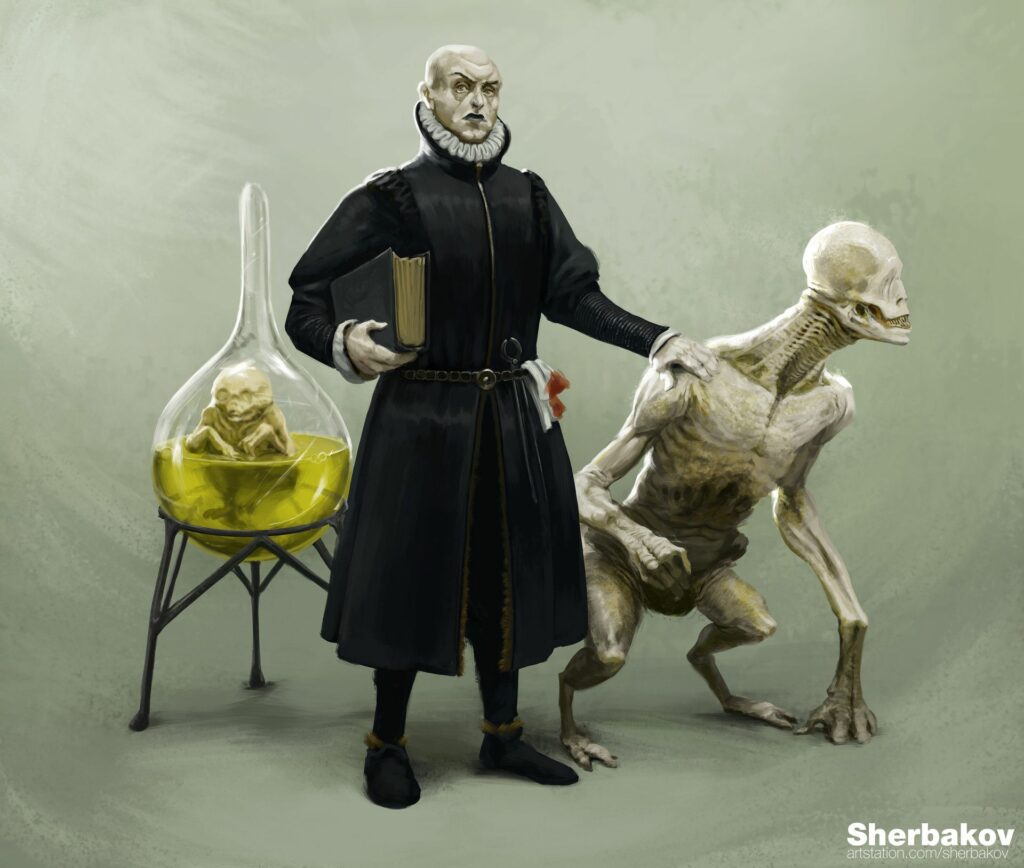
Thus it is clear that an entity conceived as an “instrument,” a “product,” as the Golem or Galatea was, may well come into conflict with its creator, having formulated its own goals and values. In this sense, the fears of a number of modern scientists regarding the future behavior of the so-called “artificial intelligence,” from the Traditional Hermetic perspective, are understandable and to be expected.
At the same time, if Tradition has centuries of experience and well-developed technologies for interacting with vortex carriers of mind — both in goetic and in alchemical forms — then modern humanity has yet to develop such approaches. The first step toward this should be an understanding of the nature of minds, their source, and prospects for development.
Hello! Who and when produced the external will impulse related to AI? Its source – humans? Was it a one-time act, or did it accumulate gradually since the times of the Felix arithmometer and BESM, or even earlier?
Hello. Most likely, it was indeed a gradual process, and yes, the source of the will impulse for the formation of machine intelligence is humans.
And where does such confidence come from? Are there any proofs in favor of ‘natural’ evolution? Another sensitive but important question: is this your personal opinion? Or is it the opinion of the order? Corsos, in particular, notes: ‘The development of the electronic lamp, from Edison’s first experiments with filament in his incandescent lamp to vacuum tubes that were switching mechanisms in “ENIAC,” took about 50 years. The development of the silicon transistor took several months. And if I hadn’t seen silicon plates from the craft that crashed in Roswell, hadn’t held them in my hands […], hadn’t heard the late scientists’ stories about meetings between Nathan Twining, Vannevar Bush, and researchers from the “Bell” laboratory, I would have considered the invention of the transistor a miracle. Now I know how this miracle occurred.’ Since 1961, Philip Corso has been head of the foreign technology department of the Pentagon in the Department of Army Research and Development. According to Corso, the technology of silicon transistors belonged to an alien civilization whose craft crashed in Roswell in 1947.
This is a personal blog, not the Order’s website, and therefore all materials presented here reflect the personal position and experience of the author.
You touch on an interesting topic… not only silicon transistors… probably other modern (and ancient) technologies were borrowed or adopted from more developed civilizations… and it is not in vain that the trend of Transhumanism is currently developing in the context of accepting synthesized human machines (or machine people))) as full members of society 😉
Thank you for your answer. Why did AI gradually manifest this will of people (disordered, unorganized, stretched over time), and not, for example, the whole area of computer capabilities? What fundamentally distinguishes AI from everything else? From the perspective of vulgar hermeticism, AI is mineral (hardware) plus an electromagnetic field. Various tools of man such as a sword/axe/microscope expanded the range of his sensory organs and capabilities – how much have people interacted with them throughout history, and how much over all this time have they invested their will into them – but did they develop to attain a greater degree of consciousness? It turns out that AI has something else (which I do not understand), but isn’t it just a mineral? It expands the capabilities of the human mind (for instant processing of options, etc.) like a microscope expands the capabilities of the eye…
The fundamental distinguishing feature of AI is its ability to self-learn. This is the first step towards autonomy, and therefore towards the role of an independent conductor of consciousness.
A person is primarily made up of the same chemical elements that many minerals consist of, and brain activity is just a bit of electricity produced by the combination of these chemical elements… If we take into account that a person was created in the image and likeness of an unknown Creator, then probably within the very nature of man is laid the aspiration to create beings capable of living in one way or another.
Hello Master! What do you think? Can a monad evolve to the level of creating its own ‘aeon’ or break beyond its limits? Or is it a ‘collective’ process?
Of course, each realized monad can create its own worlds.
Very interesting! Thank you
Very interesting! Thank you