
The Abyss and the ‘Left-Hand Way’
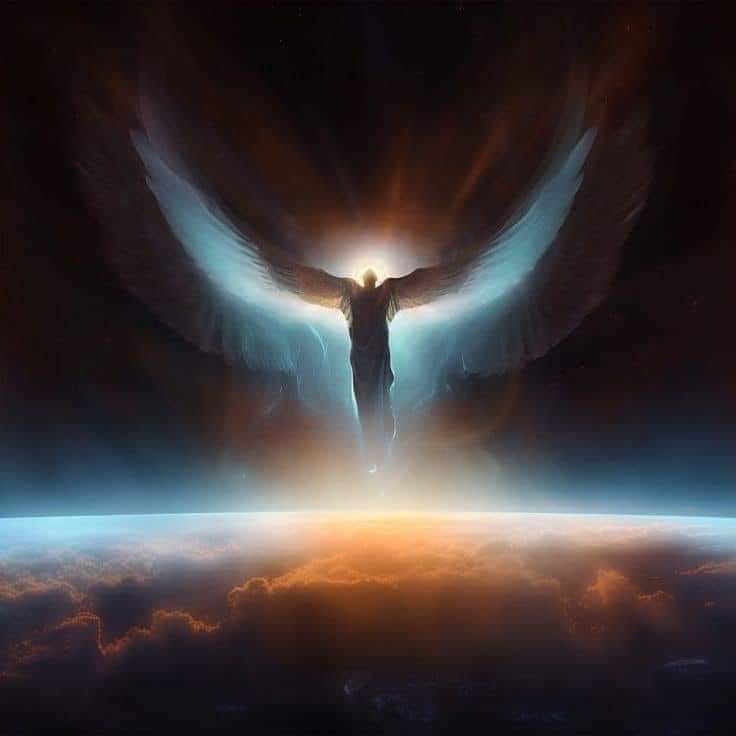
It is well known that two Paths lead to the summits, very different in nature, technique, and ideology, yet equally effective Paths which different Traditions call “Holiness” and “Severity”, Realization and Renunciation, Cosmos and Chaos; and the most neutral term is the “Left- and Right-Hand Paths,” although with equal accuracy they could be identified as the Paths of the “Upper” and “Lower” sources.
Despite the fact that these Paths are parallel and their stages in many ways “mirror” each other, “anchoring” respectively in the Pleroma and the Abyss, using these Oceans as sources hampers dialogue and interaction between adepts. Ultimately Pleroma and Khoshek are indistinguishable, and perfection on either Path means Liberation; however, until the final attainment, the approaches, methods, and views often conflict and are incompatible.
Both sources are potential, inexhaustible, and totipotent; however, the “upper,” pleromic, ocean, pouring light into the Tree of Life through the Crown, draws one toward full realization, whereas the “lower,” tehomic, enters through the Roots of the Kingdom and draws one toward the Darkness teeming with possibilities.
The adept of the “right hand” passes through stages of self-realization, while the adept of the “left” undergoes self-dissolution; the former’s allies are light-bearing, while those of the latter are often frightening and destructive.
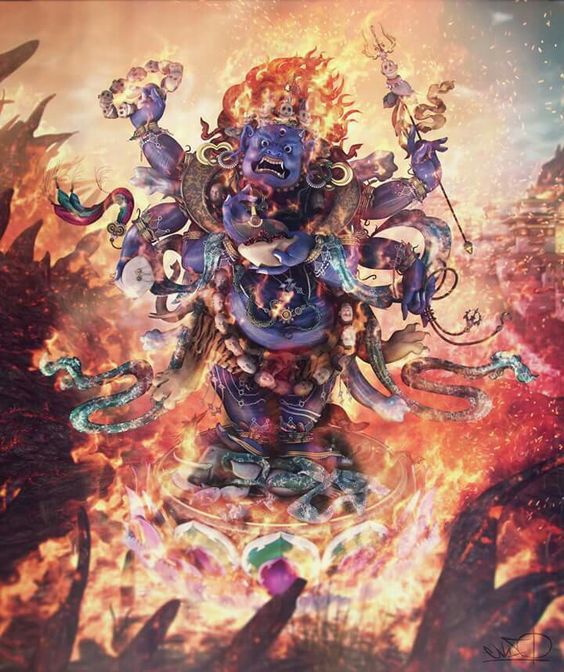
Wrath, repulsion, and death are the forces the adept of the “lower” sources uses. These forces, freed from selfish motivations and personal limitations, as pure energy, are capable of sweeping away all the layers built up in the pure mind in countless cycles of its incarnation.
At the same time, the forces activated on the “Left-Hand Path” are, in fact, great generative currents reversed — toward the source and disincarnation — and therefore they are traditionally compared to “huge chained dogs,” indicating that their power is great; however, to control them the practitioner also needs special preparation. If a weak or insufficiently brave person tries to awaken these forces, then, like fighting dogs, they may tear the person apart.
If one of the main dangers on the “right” Path is “getting stuck in bliss,” contemplating ‘light’ visions that paralyze development, then on the “left” Path such an obstacle turns out to be self-destruction; the adept of the “right” Path risks becoming a “spiritual paralytic,” while the adept of the “left” — a “spiritual leper.”
The adept of the “upper” sources contemplates all objects in their ideally realized state, and risks falling into the belief that “the world is already perfect, and therefore no development is needed and no effort justified.” The adept of the “lower” roots, however, sees the entire universe as a totality of First Principles, the primordial play of potential energies, and therefore also risks falling into a barren state, seeing no reasons to bring forces out of the game of an omnipotent, but wanting nothing, chaos.
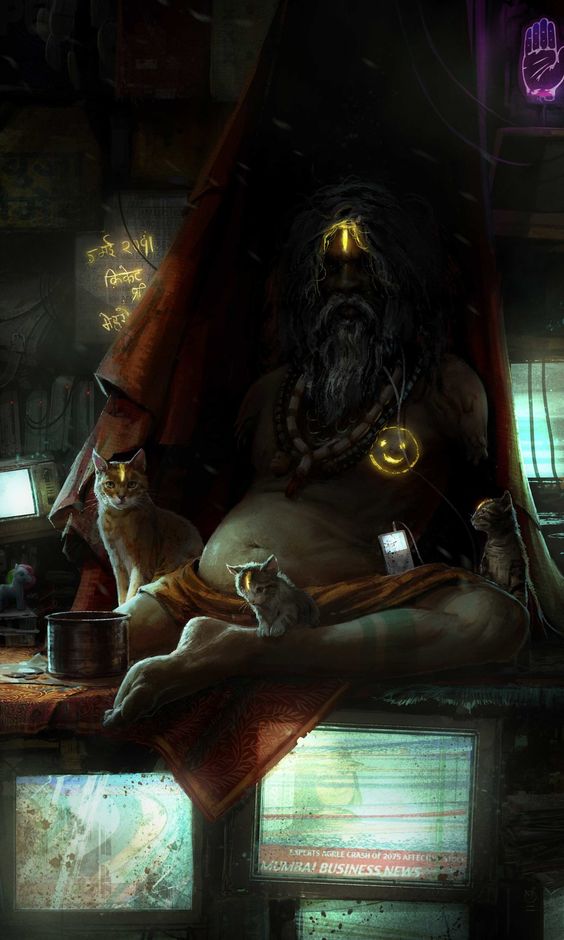
Accordingly, the “strayed” traveler of the Right side is a blissful, self-enamored, spiritually impotent person who imitates “universal love,” closed off within the dead shell of false light; and the lost adept of the Left side is an embittered and prideful misanthrope who despises the world and people.
Accordingly, Predators long ago developed and use strategies of “hunting” both kinds of travelers: to the former they “slip” emasculating light-bearing images, and to the latter — gothically attractive, socially isolating destroyers.
At the same time, the correct vision of the Pleroma as an ideal goal, on the contrary, gives strength and motivation for avalanche-like self-realization and a leap into the Infinite — just as the vision of the Abyss as the universal first principle, the world’s womb, imparts a striving for inexhaustible creativity.
The Right-column path is the path of a constant search and realization of “true desires,” that is, tendencies that arise in the mind as a natural result of its development and make further expansion possible. The Left-Hand Path, on the contrary, is a constant search, identification, and rejection of everything “accreted,” non-essential, imposed, and arbitrarily imposed.
It is clear that affinity for each of the paths is determined both by the prior mental experience and by the environment in which it takes incarnation. The correct choice of “one’s own” Path requires a clear understanding of its nature, and successful progress along it requires seeing its foundations and driving forces, as well as awareness of the barriers and obstacles along it.
Hello. Do we really need to choose paths? After all, performing the Kabbalistic cross, we do not balance the forces, Geburah and Gedulah? And Buddha spoke of the middle path, without falling into extremes?
And in general, can one walk two paths of ascension, left and right side, in one life? It seems only Milarepa could do so, or not?
“The Middle Path” means relationship, not a mechanism of movement. It means a path free from attachment and rejection, that is – from clinging or throwing away certain elements. At the same time, for example, even in Vajrayana, it is recommended to persistently practice one Idam, rather than trying to master the maximum number of practices. So yes, the path must be chosen.
I also prefer the concept of the middle path rather than falling into extremes.
However, it is also true that to ‘achieve success,’ it is better to persistently practice something single than to scatter among many practices.
Thank you Master!) I laughed along with you in the part where you talked about the spiritual impotent imitating universal love. Maybe my path is left. If we follow this gradation. There is certainly enough darkness on it. And it bites until scarring.
I stumbled upon another concept. There is also a 4th path, Negativocentrism. Is this nonsense and a calque on the Left Path or is there some truth to it? As I understood, this path is the achievement of the Absolute/Brahman/Spandha. https://www.donna-anna.org/dictionary/negativocentrism.php.
I quote: ‘At the same time, the correct vision of the Pleroma as an ideal goal, on the contrary, gives strength and motivation for an avalanche-like self-realization and a leap into Infinity, just as the vision of the Abyss as the universal primal source, the universal womb, gives rise to a striving for inexhaustible creativity.’ How does Realization (self-realization) differ from creativity, specifically in this context? Am I correct in understanding that, for example, the ultimate realization of the Right-Handed Traveler is a Sage/philosopher/Theurgist (in short, the achievement of Wisdom and the true nature of Mind/Wisdom). How does realization appear on the left path? Buddhism, as a self-movement along the path, still leaned more towards the right hand, although I think there was also the Left?
Realization on both Paths looks the same – as the destruction of particular identification and the transition to universal identification.
Indeed, lately there is a growing understanding that the search for creation is not somewhere outside, in something external, but inside oneself. It is currently difficult to concentrate on the inner due to distracting external factors. You force yourself to refuse many but unnecessary things, coordinating the development of body and spirit.
Hello. Both the left and right paths have their drawbacks. The middle path goes through the arcana of the devil and ends near Keter with the card of the Fool (which is probably why it is the highest trump). On the middle path, one can become a gnostic (with equal amounts of gnosis and reason), but there are indeed many questionable results. People tend to dismiss the middle path. For me, it is the only one that does not lead to the dissolution of the personality.
I watched a video about Valentinian Gnosticism. “The Abyss,” Tichon, and Kenoma are identical terms? In your opinion, how does pleroma differ from Kenoma? Can one, say, remotely approach the state of either through personal experience? Or any examples? Because all this is very abstract… there’s nothing for the imagination to latch onto.
The Abyss ‘in itself,’ as a dark field of potentials – is Tichon; If we relate to it as a ‘passage,’ if we try to create a ‘wormhole’ in it to rise above our limitations, to reach a higher level, it is called ‘The Chasm,’ ‘Abaddon,’ or ‘Limit,’ ‘Choros’; If we consider it as the source of manifested reality, as the principle, it is spoken of as ‘Ahamot’ or ‘Duate.’
In general, it is incorrect to think of the Abyss in terms of space since it is a field of possibilities, and thus, from the perspective of the manifested world, it cannot be measured or described; it can be spoken of as both Infinity and as a point.
Kenoma is the material world in its aspect of limitation, the world of objects, the world of ‘classical physics,’ in which only some of the possible interactions are realized, while others are ‘neglected.’ Pleroma is such a state of manifestation in which all potentials of each object and all possibilities of interaction between all objects are fully realized. It is clear that Pleroma and Kenoma differ not essentially, but only – to the extent of the limitation of the perceiver’s view. That is, the less we see our potentials and our interactions – the more we are in Kenoma; the clearer our view is, and thus the broader the possibilities – the closer we are to Pleroma.
I see. Thank you for your answer. There are no limitations at the level of the mind. For example, the same world of ideas (eidos) according to Plato or its analog in Tantric Dzogchen ‘King of All-Creating’ (Kundzed Gyelpo). As I understand it, one who follows the PLR does not pursue the goal of achieving the limitations of the material world (Kenoma). I think Kenoma can also be compared to the concept of Dust in Kabbalists, which is opposite to ashes.
Interesting thoughts came to mind, and I wanted to share. Opportunity as such has no potential; it simply exists. The potential belongs directly to the idea itself, which unfolds/realizes itself already in space, in some environment through dialectical mechanisms (Hegel). An opportunity cannot be EXHAUSTED. The idea, however, implies some completion, realization, perfection. Here it’s unclear whether it simply exhausts its potential, or reaches some ‘satisfactory’ level of realization. As I understand it, realized ideas, that is, already eidos, are sent to the Pleroma and form a single harmonious whole. Also, regarding Desires, they cannot be directly related to possibilities; desire implies a Desiring subject, i.e., a subject.
Dear En, please help me sort this out…
Does the Path of the Left Hand (Harshness) relate to the left pillar/column of the Tree of Sefirot (Hod-Gevurah-Binah), and does the Right Hand (Holiness–Netzach-Chesed-Chokhma) relate to the Right pillar/column of the Tree of Sefirot? Thank you.
Yes, that’s right; these Paths differ in the route of ascent through the Tree, which, however, on the PLR subjectively looks more like a descent into the depths.
Dear Enmerkar, thank you for the answer. Another question is bothering me. In your book (Kabbalah of the Mage/chapter Holiness and Harshness), you refer to the group of neophytes on the path of Netzach or the Right Hand as ‘worshippers of all-oneness,’ while the PLR on the sefirah Hod is labeled as ‘worshippers of all-understanding.’ Furthermore, you say that on the Left Hand path one can turn into harsh worshippers of death or Satanists of the Sabbatean sect, which I understand since the worlds of the sefirah Hod relate to the worlds of Afterlife from which 13A Death emerges. However, I do not understand how the group of neophytes on the Right Hand path in Netzach can turn into ‘smiling lovers of light TYPICAL OF CHRISTIANS-EVANGELISTS,’ since Christianity ‘sits’ on channel 21, mystical Christianity on 20A, and they enter the sefirah Hod, while in Netzach enters 19A (Islam) and 18A (Taoism, Buddhism). Where did Christians come from in the Right Hand path of Netzach? And why are there no ‘smiling’ Muslims there? Master, I kindly ask you to clarify this question.
Any system, especially one as extensive and universal as Christianity, can manifest itself at different levels, even up to the highest. However, each system has its ‘preferred,’ internally related paths, routes, and technologies. And Christianity goes through the stages of Faith (Yesod), Unity (‘Sobornost’) – Netzach, Mysticism – Tiferet, the Good God – Chesed, and all the way to the Light of Holiness – Chokhma.
Hello. I’m trying to discern the difference between the two primordial abysses, those above and below the cosmic tree. If I understood correctly, the one above is Pleroma, and the one below is Tcham? If I’m wrong, please correct me.
You mentioned here, and I quote: “Pleroma is a state of manifestation in which all the potentials of each object and all the possibilities of interaction between all objects are fully realized.”
I would place “manifestation” in quotes here. What is meant by manifestation is not the usual understanding we have; it refers to Potentiality. What is potentiality? It is the essential form/definition within which all variations of possibility are EXHAUSTED.
A good example: Let’s take a circle, into which an infinite number of polygons can be inscribed, yet they will never attain roundness—that’s one aspect. Additionally, these polygons are interconnected and have continuity, meaning they are of the same KIND, allowing one to transition to another.
Another analogy is from physics, regarding the state of “SUPERPOSITION,” a state in which all possible states of a thing are simultaneously realized.
However, I thought, the circle itself exhaustively contains the variations of the possibility of “Polygonality,” yet these variations have not yet been “played out” (actualized in reality—canceling out some and “protruding” only one). This still cannot be called a state of “pleromaticity.” It needs to be that each of these variations of possibility is “played out” separately from the others, and then they must all be gathered in one place, integrated in the form of a thing where the principle of superposition is realized. Thus, Pleroma has two levels: pure potentiality (the potential for the potentials themselves, the potential for the essential definitions) and the potentiality itself, “pleromaticity.”
My question: Based on what I wrote above, what can we say about Tcham? I find it somewhat difficult to discern the logic.
It seems that the common foundation for Pleroma and Tcham is—Possibility. Simply put, in Pleroma it is realized (whatever that might mean), while in Tcham it exists in a primordial “form”? But in Tcham (as a boiling abyss), there are distinctions between possibilities, or is this distinction achieved only through Pleroma? I also see an analogy with Platonic Ideas here, but you wrote that pleromatic reality and Eidos/Ideas are fundamentally different things. Then how does one abyss differ from the other? If they were identical, no movement would have begun. But the common foundation is the category of Possibility. It’s just unclear how possibilities in Pleroma differ from possibilities in Tcham. These abysses are Abstract principles.
Some kind of endless Luciferian fragmentation of concepts and meanings, where a clear and coherent construct, suitable for practical application in the real world, turns into a pile of barely noticeable grains of sand, into dust. Perhaps all our abstract and theoretical assumptions should be tied to our rich practical experience?
“Do you have clarity regarding these two ‘abysses’ of the Techoms, Pleroms?))”
Somewhat, if I can say so about clarity. And, in both cases, it is related to my life here. There are bridges.
To the discourse on the Pleroma. Based on this, what then is this infamous matter, Tohu? And what is the need of the Fullness, the Pleroma, in the Abyss of Tohu? Without each other, these are abstractions. The essence is Nothing. The Pleroma without Tohu is essentially a limit, which has nothing to define. And Tohu is simply the Apeiron, where any limits are absent?