Attracting Attention
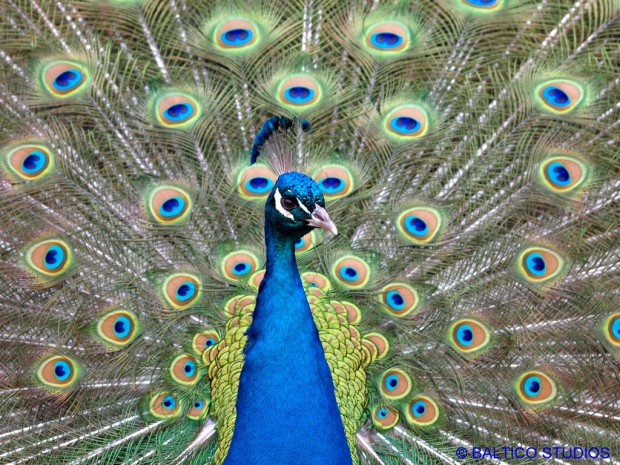
Human society, shaped by sexual selection pressures, has developed numerous ways in which one individual can attract the attention of another.
Moreover, attracting attention becomes a powerful motive and often even a need for the individual.
It is believed that the need for attention is as natural and inalienable a human trait as the need for food or sex.
And, of course, to a large extent this is true. The roots of this need lie in the activation of energy currents, in setting them in motion, which occurs when one receives attention.
But it would be surprising if a powerful destructor had not been built upon this need.
And it, of course, has been developed and implanted in the mind.
Attention is the force by which the mind creates its world. By directing the focus of the mind toward surrounding reality, a being isolates individual objects from the world’s continuity, shapes them, determines their place in its worldview, and establishes a relationship with them.

Accordingly, any focusing of attention is an energetically significant process, the formation of an energy current.
When that flow is balanced, that is, when the direction of attention leads to the general expansion and development of the mind, it is justified and effective.
In many cases the channel of attention is a major route for energy outflow.
Of course, as always, it is all a matter of control.
Controlling attention often gives rise to major difficulties.
The problem is that attention directed at a being always activates that being’s energy and sets it in motion, which is subjectively experienced as a positive process. It is precisely this “positive reinforcement” that underlies the “dependence on attention.” Having grown accustomed to it, the being begins to chase and fight for attention, turning into a demon and a predator.
A being with an attractive type of energetic structure, by drawing a large amount of attention, receives a great deal of additional energy and, accordingly, experiences pleasure. But when this process gets out of control, such a being becomes dependent on external attention and gradually starts acting in a more usurping, predatory manner, fights for attention, seeks attention by any means, and, as a result, becomes Qliphothic.
A being with an expansive type of energy, by attracting excessive attention, loses a lot of energy, is ‘unraveled’ by attention, and consequently experiences a decline in power, which at first is imperceptible and masked by the euphoria arising from the general activation of energy. When an expansive energetic structure becomes the focus of another’s attention, attention creates a channel through which this expansive energy can flow out, and the moment of that outflow is also subjectively perceived as pleasure, even though it leads to an overall decline in power.
For the Magus it is very important to keep his power in as stable a state as possible, to avoid both dependence on external sources of energy and uncontrolled outflows of energy.

Therefore, it is not surprising that from ancient times the Magi strove to be inconspicuous and developed many methods that allow them to control energy currents into and out of them.
And among these means, control over one’s own attention, as well as over the degree of attention directed at the Magus himself, occupies a primary place.
A Magus never seeks to stand out; he does not chase attention, valuing only the attention of those who are energetically resonant with him. At the same time, the Magus does not fall into a dependence on “inconspicuousness,” does not hide, and does not flee. That is, for a Magus both excessive attraction of attention and excessive cutting off of attention channels are ineffective, since in the first case his energetic integrity is violated, and in the second, his interaction with the world is impoverished. Therefore, the avenues for expanding his mind are reduced.

As I understand it, the outflow of energy through the channel of attention can be even greater if accompanied by feeling (vector). But practice shows that the greatest outflow of energy (and decline of strength) occurs as a result of experiencing emotions that are not specifically directed and generally cloud focus. How does the outflow occur in this case? How can it be avoided?
Dear Enmerkar, please tell me, is it correct to understand that attention (as well as its absence) can, depending on the situation, carry both an influx and an outflow of energy? If the previous statement is true, what negative consequences can beings with attractive and expansive types of energy structures experience when they lack attention?
Attention itself establishes a channel of interaction between energies. And where the energy flows is determined, firstly, by the nature of the interacting systems, and, secondly, by their intention. A lack of attention is bad due to the absence of interactions, and therefore – limiting development. After all, as they say, the best way to believe in oneself is for someone else to believe in you.
It seems to me that someone else’s attention dissipates consciousness. I don’t feel any benefits, let alone surges of energy. And I don’t need someone’s faith in me. If I am not confident in myself, then how can I proceed 🙂
Solve et coagula (Dissolve and coagulate) The attention of others dissolves consciousness for subsequent use. Whenever there is dissolution, there is an ally whose faith in the traveler serves as a guiding map leading through the condensation of dispersed consciousness. Interestingly, attention can possibly be referred to as the light filling the ‘vessels’ or attention shapes the ‘vessel’.
Hello! Did everyone notice the little smiley at the bottom of the page? Or am I the only one so absent-minded and just noticed it now?
…no one ever taught us to Pay Attention to how and where our Attention is directed and how to Effectively Redirect Attention…………..yet this is an important part of the Energy Education that we naturally need, although we often don’t even realize it)
“A person seeks attention because they need it.
It is a part of their human nourishment.
Receiving and using attention happens similarly to searching for and consuming food.
Too little attention causes signs of hunger.
Excessive attention “overfills” an individual, and they lose the ability to comprehend anything else.
A person is at a stage where they crave attention and are not aware of it. They desire not the object of attention but the attention itself received from the object.
They are similar to a child, savage, or animal in that they have a need that paralyzes them, as its satisfaction is not organized properly.
If human beings had not developed the habit of regular nourishment, in a similar manner, they would be of no use at all, as they would constantly impulsively interrupt their activities to eat.
Those able to give and receive the necessary amount of diverse quality attention are incomparably more effective and free than those whose lives are subordinated to a passionate pursuit of attention, in the absence of a clear understanding of their situation.”
>>>>>>>>>>
Idris Shah “Knowing how to know”