Possession and Union
A well-known maxim holds: the tighter you hold something, the easier it is to lose it.
Like all elegant formulas, it rarely lends itself to analysis, being accepted as given, and therefore makes excellent soil for the cultivation of destructors.
Indeed — both extremes — the thirst for possession and apathetic non-attachment — fit perfectly into the conceptual field that arises around the notion of “ownership“.
However, it turns out that both the drive to have and the refusal to accept are equally unpromising from the point of view of development and the expansion of awareness.
On the one hand, “possession” implies a dualistic perception: the distinction between who can possess and what can be possessed. Such a perception leads to a sense of separateness, of separation from the world’s unity, and to falling out of the Flow of Power. At the same time, the refusal to accept signifies the same separateness, the same isolation, merely in another guise. As mentioned, any forms of opposition are essentially the same and cause a system to close in on itself and deprive it of the possibility of development.
“Holding on” means violence, it means subjugation, and of course that cannot be a productive state. However, the actualization of potentials within oneself that occurs in any productive interaction implies a reorganization of the system, since the entry of a new element into a stable system is always accompanied by a global regrouping of that system’s elements, which, of course, also requires some effort. It is very important not to confuse the effort spent on holding something that has been “artificially” attracted to a given system — that is, actual possession of something — with the effort necessary to incorporate another, to hold or possess them — these are destructive efforts; if efforts are directed at oneself, to transform the mind, to ready it to receive the new, ready to unite with the other — such efforts are a necessary element of development.
We have also said that a consumer attitude — toward another being, toward an object, or toward Power — turns a person into a demonic, predatory creature living at others’ expense, and therefore preventing awareness from developing and removing them from the Flow of Power.
On the other hand, non-attachment and the indifference that often follows produce a non-receptivity to Power, since a necessary condition for the entry of Power is the readiness and the attractive capacity of the vessel to receive that Power — in essence, Power does not flow where it is not wanted.
From the standpoint of the Magical Myth described here, the condition for effective possession is the mutual compatibility of two elements, and in this case one can no longer say precisely who possesses whom — a union into a single, pleroma system occurs, where each element is harmonically linked to every other element, not absorbed by it, but united without losing identity.
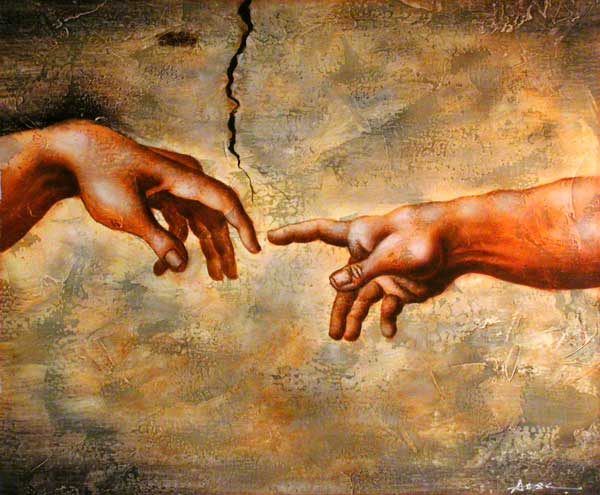
Put differently, rather than possessing something, the Magus unites with it, finds it within themselves and realizes unity with it. We have already said that the Myth we describe uses the word awareness precisely to denote such a realization within oneself of new elements, new potentials and possibilities, occurring through the interaction of the mind with the elements reflected in it.
It must be said that such union lies at the foundation of the Magical view of the world: even the most primitive sorcerous descriptions know that two objects, having once interacted, maintain a link forever (this is the basis of contagious magic) — that is, they unite into some new system. In principle, the whole world process is founded on the gradual finding within each microcosmic being of elements of the surrounding macrocosm, their actualization, realization, and thereby the actualization of the potentials of the Macrocosm itself in the aspect of that individual mind. A mind that has fully realized the Macrocosm within itself becomes identical with the Absolute mind of the Great Spirit. Accordingly, the Great Spirit, having realized itself in each Psychocosmos, attains full actualization — and that is the essence and meaning of the world process.
The question is only how such a system is constructed, according to what principle and how harmoniously. If the basis of the system’s construction is the drive of some elements to subdue others — we have a Qliphothic structure, leading to aggression and predation; if the individual elements of the system mutually reinforce one another, and each element within the system is stronger than outside it — then we have development and the Pleroma.
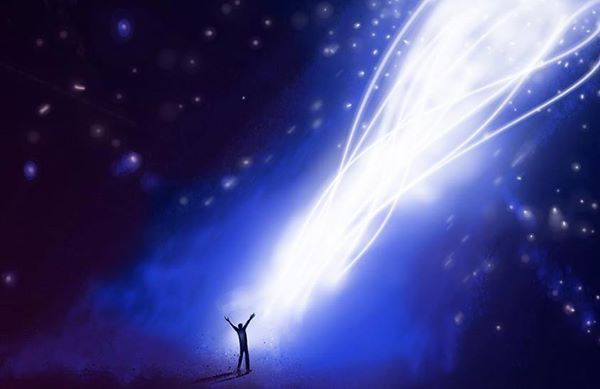
If people, bound to one another by ties of spiritual kinship, do not make efforts to help each other, they lose the precious chance for development that the intertwining of their fates provided them.
Very often a powerful and harmonious system is undermined and destroyed under the influence of small destructors, whose foundation is the same thirst for possession.
Instead of sorting out who is more right, instead of asserting oneself at another’s expense, it is very important to understand that Power is in unity, and to hold that unity with all your strength, understanding that the maxim cited in the first paragraph actually only means: “the harder you hold something, the harder others will try to take it from you.”
Thus, awareness requires above all one consideration — what will happen if it is nevertheless taken away — will you become stronger or weaker for that — and under no circumstances allow the part necessary for the development and perfection of the whole system to be taken away. But also — under no circumstances cling to that which only hinders development.
Thus, the Magus’s struggle for possession reduces to the struggle for the integrity and harmony of himself and his Way. This struggle is not one of opposition but of the harmonious inclusion of elements brought to awareness, and the Magus’s resistance does not signify a form of connection but, on the contrary — a refusal to create disharmonious systems: the realization of oneself, the actualization of one’s potentials, and the awareness of one’s identity with the Great Spirit in one’s unique individual aspect.

A well-known maxim holds: the tighter you hold something, the easier it is to lose it.
Like all elegant formulas, it rarely lends itself to analysis, being accepted as given, and therefore makes excellent soil for the cultivation of destructors.
Indeed — both extremes — the thirst for possession and apathetic non-attachment — fit perfectly into the conceptual field that arises around the notion of “ownership“.
However, it turns out that both the drive to have and the refusal to accept are equally unpromising from the point of view of development and the expansion of awareness.
We have said that a consumer attitude — toward another being, toward an object, or toward Power — turns a person into a demonic, predatory creature living at others’ expense, and therefore removing them from the Flow of Power.
On the other hand, non-attachment and the indifference that often follows produce a non-receptivity to Power, since a necessary condition for the entry of Power is the readiness and the attractive capacity of the vessel to receive that Power — specifically, Power does not flow where it is not wanted.
From the standpoint of the Magical Myth described here, the condition for effective possession is the mutual compatibility of two elements, and in this case one can no longer say precisely who possesses whom — a union into a single, pleroma system occurs, where each element is harmonically linked with every other element.
In other words, instead of possessing something, the Magus unites with it. It must be said that such union lies at the foundation of the Magical view of the world: even the most primitive sorcerous descriptions know that two objects, having once interacted, maintain a link forever (this is the basis of contagious magic) — that is, they unite into some new system.
The question is only how such a system is constructed, according to what principle and how harmoniously. If the basis of the system’s construction is the drive of some elements to subdue others — we have a Qliphothic structure, leading to aggression and predation; if the individual elements of the system mutually reinforce one another, and each element within the system is stronger than outside it — then we have development and the Pleroma.
If people, bound to one another by ties of spiritual kinship, do not make efforts to help each other, they lose the precious chance for development that the intertwining of their fates provided them.
Very often a powerful and harmonious system is undermined and destroyed under the influence of small destructors, whose foundation is the same thirst for possession.
Instead of sorting out who is more right, instead of asserting oneself at another’s expense, it is very important to understand that Power is in unity, and to hold that unity with all your strength, understanding that the maxim cited in the first paragraph actually only means: “the harder you hold something, the harder others will try to take it from you.”
Thus, awareness requires above all one consideration — what will happen if it is nevertheless taken away — will you become stronger or weaker for that — and under no circumstances allow the part necessary for the development and perfection of the whole system to be taken away. But also — under no circumstances cling to that which only hinders development.
Thus, the Magus’s struggle for possession reduces to the struggle for the integrity and harmony of himself and his Way.
Thank you for the detailed response to one of my questions! From my experience, I can add that you tend to hold on tighter and cling, usually when you are afraid of losing, and really, the fear of loss and the attempt at possession often lead to loss.
True, this is simply a somewhat different aspect. I have already written several times in other articles that ‘what someone fears, that will happen to them’. Here I just wanted to emphasize that sometimes it’s absolutely necessary not to let go, no matter how much the environment convinces you to do so. Sometimes letting go means clearing the path, but sometimes it means losing part of yourself.
It seems to me quite acceptable to allow for a small and controlled indifference. If the power weakens at one end, more will be applied at the other to maintain stability. But if indifference becomes desired and final, then a rupture occurs due to the imbalance of power. And its loss. ‘The fewer girls we love, the more they like us.’
Playing with the demonstration of indifference can be effective, but it’s dangerous to fall into lies. Of course, all is about control, and the main thing is not to get carried away.
Can one then say that by letting go of something important, one changes themselves and strays from the Path? Often permanently?
I believe that the release of the parasite of consciousness when it manifests is relevant. Is possession and merging with it pointless, or is it somehow possible to use the de-structured entity?
One could say … the more you think about losing something, the more effort is spent on ‘holding’ it. In fact, a struggle with oneself ensues, and it’s obvious who benefits from that.
I will allow myself a small analogy with physical processes … if two elements, by crossing their trajectories, enter into mutual fields of action, then both their trajectories and their speeds must change. If the elements unite, then further movement occurs along one trajectory with the same speed; if they repel each other, then the elements change their trajectories and speeds depending on the angle of encounter, the difference in potential. This may lead to a) a weak change in trajectory with an increase in speed (a push) or decrease in speed (rebound) b) a strong change in trajectory with a decrease in speed (correction) c) a reversal of trajectory with significant loss of speed, even to stopping (collapse). All this banal physics can also be projected onto human relationships. Some encounters give us a push in our aspirations, others open new paths, while others lead to the destruction of the current system of values. If we add memory to the elements, they will maintain a connection between them even after their crossing. Each element evaluates the occurrence differently, but only upon unification does this evaluation coincide. Similarly, this happens in relationships with people. When uniting, the evaluation from both sides is equally positive; however, in the case of a push/rebound, uniting between people has not actually occurred, so despite the temporary closeness, one side will remain the recipient and evaluate the connection positively, while the other, the giver, will evaluate it negatively. The desire of one side to hold on, while the other wants to pull away will mutually increase until the dissonance between the illusory union and actual trajectories becomes obvious to both sides.
*** even the most primitive descriptions of sorcery know that two objects, having interacted once, maintain a connection forever *** This statement is usually accepted without objections, but is it really impossible to sever or displace any connections with others? How then are new connections formed? Or do all connections between objects that will ever be formed already exist now?
Yes, perhaps there is a way to sever them or replace them with others? These updated ‘doppelgängers’ remind me of a scratched record. 🙂 The same thing… You are already implying Guys, let’s live harmoniously. They still play their cinema. Clowning, in a word. And those ‘doppelgängers’ that I would like to remain only lightly echo in my ears and briefly delight my eyes.
Connections can be severed, but not completely; an imprint will be preserved – that is a condition for the integrity of the world (albeit not complete): ‘Or will all connections between objects that will ever be formed already exist now?’ in the potential medium: everything is connected to everything, that’s why there is the possibility of interaction in the manifested, and which connections WE will actualize and maintain depends on OUR choice. Having minimal connections with ‘unnecessary’, ‘foreign’ etc., both inside and outside is the key to the Purity of the magician.
Harmonization and wholeness lead to the realization of intent. Intent is the fuel through which manifestation becomes possible. Underestimating the power of intent is a serious mistake. Decode your true intentions— and you will see the deepest aspects of your being. I believe that in order to launch the mechanism of realizing our intention, we must announce it to the world once we become aware of it. It is necessary to transmit this vibrational impulse to the network of life that surrounds and nourishes us.
Great is the man who uses metal utensils as if they were gold.
But equally great is he who uses golden utensils as if they were metal.
Oh, Juga in the last picture 🙂 This particular book yanked me in my youth out of a clear and harmonious world, where everything was described simply and understandably. It yanked me into a world where nothing is clear, I began to doubt my beliefs, and over time everything turned upside down and hellishly so XD It was a good time. Although now the book seems silly, back then it was a breath of fresh air. It’s true, at some point, everyone starts searching for answers in their own way.