
Albedo without Rubedo
Cleansing of the stream of consciousness, necessary for its normal functioning, is of course recognized as the most important stage of development by all schools and traditions.
We have already discussed that several strategies have been developed for this.

The first — “settling” — is characteristic of the schools of the Eastern Way. The mind is “calmed” and freed from eddies and disturbances through practices of concentration and contemplation; as a result the “murk” — that is, the obstructing, clouding affects, deprived of their energy supplied by attention — “settle” to the “bottom”, losing relevance for the mind. If practice on this Way continues, and the practitioner is sufficiently honest with themselves, those clouding affects, emptied out and cast down to the “bottom” of the mind, turn into a kind of “husk”, an inert material that no longer obstructs the free flow of the mind. True, if the practitioner is insufficiently diligent and the clouding has not been adequately “drained”, it remains as “settled murk” that can rise again with any sufficiently strong disturbance of the mind. Indeed, there are many known cases of monks or meditators who, after long years in seclusion, “fell into all sorts of excesses” after a chance encounter with a woman passing by or a casual visit to a casino.
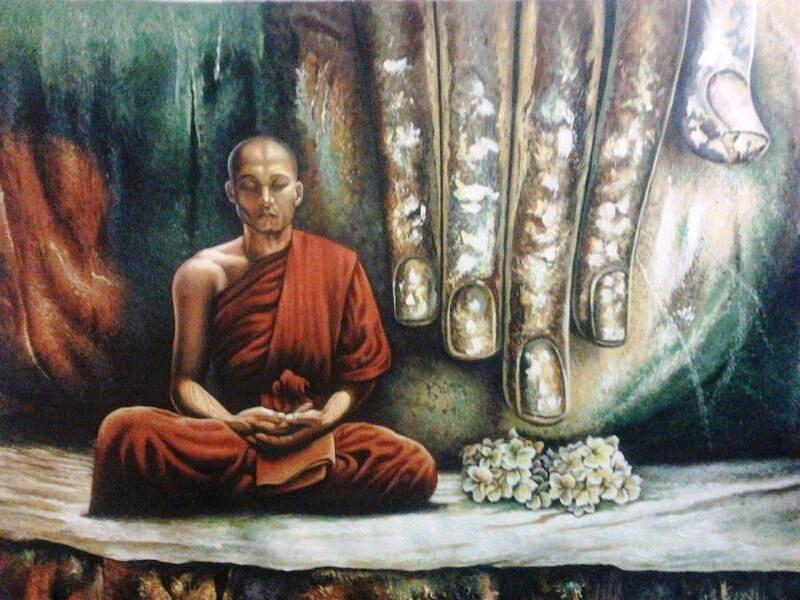
Nevertheless, if the intention of cleansing is sufficiently strong and wholehearted, this danger can be avoided, and the result of this method of purification is a clear space of mind resting on a solid foundation of affects that no longer interfere.
The second method — “filtration” — is more characteristic of the schools of the Western Way. The essence of this approach is the detection, identification and step-by-step removal of destructive elements from the mind. The adept of this Way studies themselves, finds destructors in their mind, and “releases” the energy held in them, thereby depriving them of vitality and relevance to the mind. The idea of this approach is that any destructor, once exposed to the light of the mind, loses its power over that mind. The result of such practice can be compared to removing specks from water one by one, filtering them out, which leads to the purification of the flow of the mind itself; and the husk, unlike on the Eastern Way, is gathered not on the “bottom” of the mind but on its “shore”, and likewise congeals into an inert “stone”, compacting without requiring attention.

For a complete picture note that there is a third way of cleansing — “distillation” — the Way of direct action of Divine energy upon the mind, as a result of which the mystic’s mind is “lifted up”, leaving all impurities behind on earth, and either completely dissolves into the divine, or sublimates into a new, cleansed state. It is clear that this Way is the lot of few: it requires both special predisposition and particular approaches, and its outcome is difficult to predict.

As for the two “basic” Ways, their result is of course the cleansing of the mind, its “clarification”, which in alchemical language is called the stage of albedo — whitening. A practitioner who has reached this stage is free from interfering influences, and is therefore called “perfect” in the East — an arhat — and in the West a Free Adept.
And although the “husk” cast off in the course of practice remains merely inert ballast, it nevertheless cannot be entirely disregarded, because under some persistent destructive influence it can be ground back into the dust of obstructing affects and contaminate the mind — if not of the practitioner who cast it off, then of someone else.

Therefore, after, and better yet — simultaneously with — cleansing there should take place a transformation of the flow of the mind, an alteration of its manifestation aimed at the birth and strengthening of the ability not merely to “discard” destructors, but to transmute them, depriving them even of the possibility of further clouding. This stage is alchemically called rubedo and corresponds to the emergence of the “philosopher’s stone” — that is, the ability to turn the “base metals” of affects into the “gold” of pure awareness.
Of course, rubedo is most effectively achieved on the basis of an already completed albedo, yet the realities of life are such that often cleansing is only finished in advanced old age, and there is simply no time left for transformation. Note also that a tilt toward rubedo with neglect of albedo will most likely lead only to the disintegration of the mind, since very often the “contaminating” components are so firmly integrated into the structure of a person’s personalities and subpersonalities that they are, in effect, “load-bearing structures”, and attempts at their abrupt transformation or dissolution are fraught with madness and loss of mental stability.
Therefore, for the Magus, “cleansing” and “transformational” efforts are two complementary aspects of their practice to which they must direct their efforts, maintaining a balance between them on their Way.

The crisis of motivation does not always occur due to laziness (in the context in which you mentioned it). It can stem from conflicting programs, conflicts between conscious and unconscious behavioral scripts, meaning the mind directs actions, but something unclear gets in the way. Thinking, pondering, reflecting does not always lead to understanding expressed in action, but can lead to building coherent logical constructs that remain there in the mind without being implemented in existence. Intuitive impulses are not always constructive. An intuitively yearning desire to manifest might be a desire to implement automatic reaction programs, i.e., breakthroughs from the subconscious (from the shadow), ineffective action patterns that naturally lead to empty dispersion of energy but at the same time lead to a release of tension (in the broad sense) and to obtaining pleasure or negative enjoyment. When a desire for constructive, developmental realization is present – it does not weaken due to a lack of means, energy, or time, and cannot be covered by a veil of misunderstanding. It breaks through like a living seedling through the asphalt of obstacles and without ‘tuning the sharpness.’ But if in its place there was something contrived by the mind, whispered by ‘intuition’ (in the context I mentioned above) – then such a desire will undoubtedly lose its initial impulse. One can learn more effective programs of perception, responding, behavior. This is painstaking work, a daily process of self-tracking, analysis, conclusions and restructuring of the entire integrity of the human being. The question is Meaning. What is the meaning of all this Albedo and Rubedo personally for You? And are you sure it’s your desire? What if you don’t make it in time before death?
The article does not clarify what Rubedo is. Here you write that it is the ability of transmutation. But it is developed even at the stage of Nigredo. When Rubedo is typically mentioned as a concluding stage. So, from your perspective, are Albido and Rubedo parallel processes? That is, Rubedo as a gradual formation of some core. If we draw an analogy with the Egyptian system where Ba + Ka = Akh, then Akh is the philosopher’s stone of Rubedo or the state of Albedo without chaff?
The alchemical process is an inner transformation, a transmutation of the deep foundations of matter or consciousness, which concludes with the acquisition of ‘invasiveness’ of this transformation. That is, if at the initial stages the system can only transform itself, then upon completion of the Work, it gains the ability to induce the same transformation in others. Rubedo is the capacity to induce ‘nobility’ or ‘enlightenment’ in other, inferior or obscured, subjects. The philosopher’s stone is the ability to transform lower forms of existence into higher.
I understand, thank you!