
Sitri’s “Heart-Eaters”

In much the same way that the desire to give oneself over to the unity of love is distorted at the level of emotions by King Belet, the desire to take into oneself, to incorporate the beloved into oneself within one’s own self, is distorted by a “junior” analogue — the prince Sitri.
These two impulses, being two parts of a single process of union, should ideally lead to a “fusion without mixing” — the unity of the pleroma: each participant gives everything and at the same time receives everything, and the power moves harmoniously, mutually amplifying each mind and bringing it to new heights of development.
However, when the energy of the Prime Demon intrudes between these impulses, dividing them, they are easily distorted: the desire to give oneself becomes a loss of self, and the desire to absorb another into oneself becomes a striving to seek worship and adoration without reciprocating while giving nothing in return.
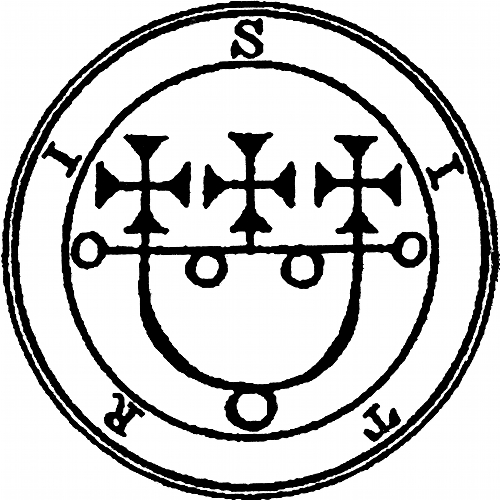
The “Lemegeton” describes Sitri thus:
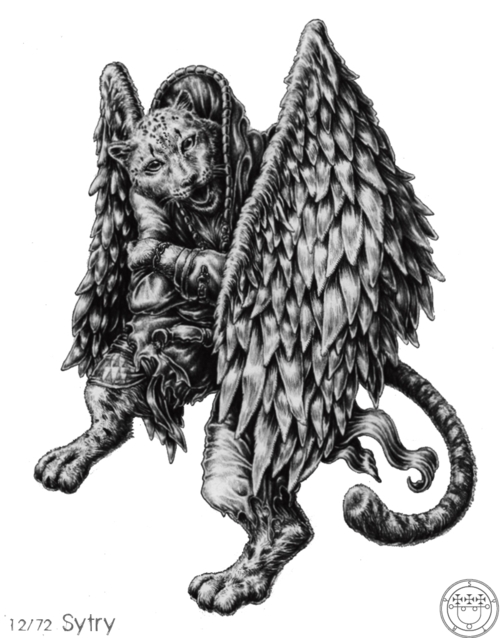
“Sitri (Sitri) — the twelfth spirit, a great prince. He first appears with the head of a leopard and the wings of a griffin, but after the master has pronounced the conjuration he can take on a human form, and very beautiful. He kindles the love of men for women and of women for men, and, if desired, he can also show them naked…”
Note the final remark. Understood figuratively, it points to the demon’s ability to strip the one possessed of all defenses, handing them over to the power of the possessor.
How well known and widespread are those “fatal” figures who collect broken hearts… How readily they can inflict pain on others in their thirst for self-affirmation and the satisfaction of their ambitions… Woe to anyone who falls into the snare of Sitri’s marionettes.
The images of a leopard and a griffin emphasize the demon’s domineering nature, as does the planet Jupiter, under whose influence he stands. Behind the smile of the one possessed by the Infernal Prince hides the predatory, insatiable gaze of the consumer.
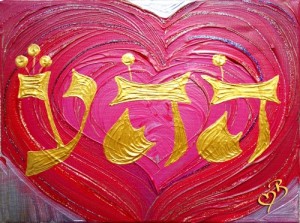
The Genius Hahaiah, whose influence distorts Sitri, “opens secrets inaccessible to mortals, sends dreams, endows with intelligence and discretion…”, and as an expression of the striving for resonance and mutual amplification, his motto is “God is a refuge.”
But by turning that refuge into a prison, the power becomes distorted and demonized.
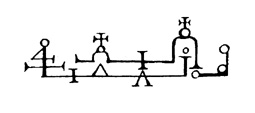
Unlike Belet, who works on the level of emotions, Sitri’s influence manifests in actions; therefore the “heart-eaters” are usually fairly callous and cold-blooded, and Sitri’s influence is often preceded or accompanied by the workings of Asmodeus and/or Belfegor.
It is completely obvious that Sitri’s influence is very painful and traumatic for the one whose heart falls under the possessor’s power, but for the demon’s host this influence is by no means beneficial. On the contrary, while the suffering inflicted by the “collector” can contribute to development by strengthening and purifying the emotional sphere and making the sufferer less susceptible to Belet, Asmodeus, and Belfegor, for the possessed the demon’s influence is wholly destructive. It not only reinforces an incapacity to love; it fills him with pride, adding Luciferian influences to the collection of masters dominating his mind, and trains him to consume, depriving the mind of even the earliest seeds of development.
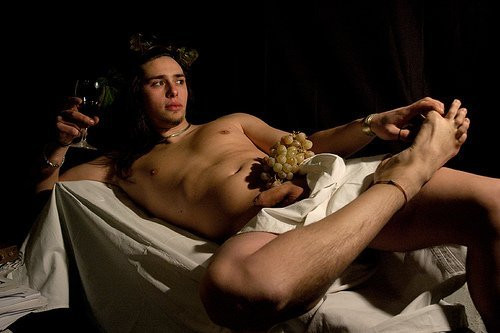
For the victim of a “heart-eater,” the chief danger is becoming disillusioned with love and becoming bitter and emotionally hardened; for the “collector” himself, to these dangers is added a dependence on other people’s attention, qliphothizing the mind to its very foundations.
For a Magus whose power naturally attracts attention, the danger of falling under Sitri’s influence is likewise quite real. To resist the demon, one must cultivate in oneself a deep respect for another’s individuality, for another’s ways, and for another’s feelings. Only by filling himself with compassion and the desire to promote the development of another’s individuality, by refusing to impose his will, by refusing to propagate his Way and his decisions, and by refusing to parade his achievements, can a Magus stand against the spirits of consumption, with Sitri among them. And in no case let himself be flattered by others’ attention; under no circumstances should he allow manipulation of others’ feelings.
So the correspondence Demon – Genius by numbers. The numbers of spirits in Lemegeton correspond to the numbers of the geniuses of Shemhamforash….. I was looking for some special correspondences 🙂
Certainly. That’s why Lemegeton presents descriptions of the Gatekeepers in this order – according to the order of change in the astrological circle.
Is the current fullness of consciousness with all sorts of information, keeping users of it in a certain niche, and partially possessing them, a manifestation of their individuality?
Exists only to the extent that this fulfillment of information does not lead in klipot to the scattering, freezing, or rotting of the life force of the users.
Is there a possibility for a person who is possessed by this demon to realize that they are possessed? And if they do realize it, can they find a way to escape the power of this demon? Can an outsider influence this situation in any way? How can one fight this if they missed the “beginning” and the stage is already quite advanced, almost in full bloom?
You mentioned that people who lack the capacity to love can love as well if they become part of someone else. I don’t understand – do they somehow magically become part of someone else and then suddenly start to love? It’s a vicious circle. If a person cannot love in principle, they have no reason to want to, especially if they don’t understand it and are not capable of it…
The major problem with any close contact with destructive forces lies in the fact that a person does not see their own problems; on the contrary, they are convinced that they are acting correctly. If during the invasion phase one can still “come to their senses” and reject destructive impulses, then at the stage of possession (which most often occurs – https://en.enmerkar.com/drugoe/oderzhanie-i-oderzhimost), it becomes virtually impossible to distinguish one’s own aspirations from destructive impulses on one’s own. Once consciousness has made a choice in favor of listening to the demon during the invasion phase, it will subsequently defend that choice with all its strength and drive away any doubts about its correctness. At this stage, external help is often needed, along with great patience and considerable skill from the one who wishes to help.
The problem of obsession lies in the fact that a person does not see this problem. By giving consent to cooperate with a demon at the stage of invasion, a person chooses to listen to its voice as their own, and subsequently can no longer independently distinguish between these voices. Therefore, situations of ‘self-exorcism’ are extremely rare and are more of a remarkable exception than a worthy trend. Correspondingly, it usually requires someone who can either ‘exorcise’ the demon through ‘direct’ exorcism, or guide consciousness from cooperation with destructive forces to one’s own true nature. This particularly concerns distortions of the basic sense – love. The chance for those who have fallen into dependence on these distortions lies only in that someone will be able to see their true nature beneath the layers of detractors, love this nature, and withstand the demon’s attacks despite all its efforts and tricks. It is clear that this ‘someone’ must be very pure, very strong, and selfless.
So many qualities are required at once that even individually they are rare, and here they must all be present… I have not met such people. If you cut contacts with the demon, if you do not respond to its provocations, will it go away? What is the use to it from someone who does not engage in its game? As I understood, the game consists in convincing the person of some of their delusions-distortions, so that later, disappointed, they again fall into depression, suffer… and essentially feed this demon with their suffering.
You know, actually I am wrong that I haven’t met such people. It’s just that they don’t have ‘clean, selfless, and strong’ written on them… They are simply like that and externally do not differ from others, but they are like that)
I don’t really want to write this, but what if it’s a trap? For the weak, obviously, but what if for the strong too? That is, for example, this strong wants to pull out the weak one possessed and becomes a victim of this nastiness. After all, the demon is cunning, that is, the strong must be strong enough to resist deceit, to avoid being drawn into the abyss under various pretext…