
Beleth’s “Fan Clubs”

One of the brightest and most sacred longings available to the human soul is the longing for love — selfless, focused on its object to the point of complete disregard for one’s own interests in favor of the beloved.
And, of course, as inspiring and formative as this longing is, its distortion is equally destructive.
The Lemegeton singles out four Gatekeepers Belial, Gaap, Asmodeus — and Beleth — as the foremost. This is not surprising: they each pervert the primary driving force of development — love — from different angles. Belial replaces unity with egregore dependence; Gaap replaces hierarchy with despotism; Asmodeus replaces love with sexual attraction; and Beleth replaces self-giving with self-oblivion.
The threshold between “self-sacrifice” and renouncing oneself is so thin that it is almost indistinguishable, and, of course, it is precisely this substitution that is marked by the destroyer of “royal” dignity.
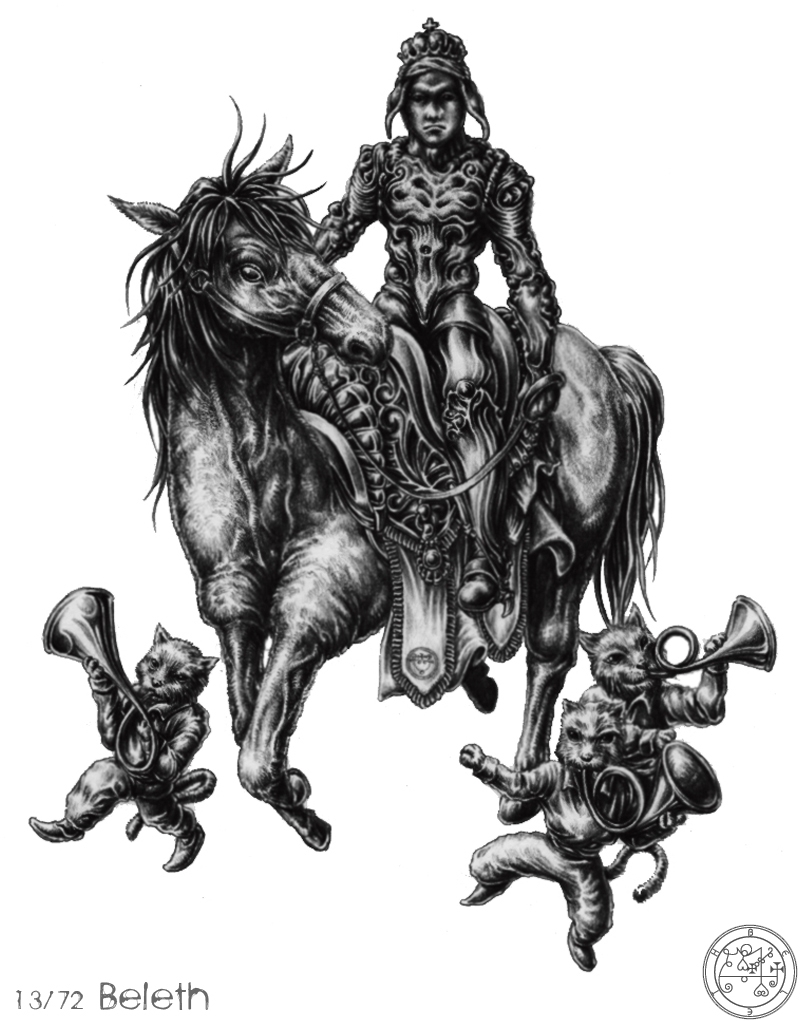
“Beleth (Beleth) — the thirteenth spirit, a terrible and mighty king. He rides a pale horse, and before him trumpets sound and various musical instruments play. The conjurer must be courteous to him, because Beleth is a great king; he should be shown the respect due to kings and princes who serve him. This great king can cause love in all its manifestations for men and women, if the master conjurer wishes to satisfy his desire…”
“At his first appearance he is very fierce…”
Beleth’s power lies in his ability to exploit the urge to dissolve into the beloved, and the demon provokes a loss of individuality instead of finding oneself in love.
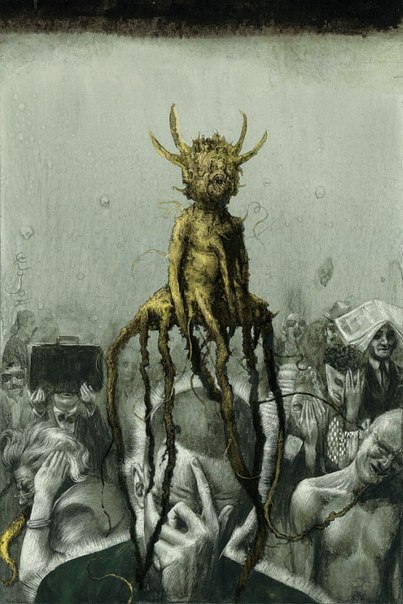
Bright manifestations include all manner of fan clubs, whose members are so enthralled with the object of their worship that they lose all sense of proportion. It should be noted that the object of worship is often driven to obsession by the demon paired with Beleth — Sitri, about whom we will speak in more detail later.
But less extreme forms of Beleth’s influence are common as well: a wife groveling before a tyrannical husband is not always motivated only by fear; she may call it ‘love’, and of course she is under the control of the Fierce King. The Oedipus complex, as well as attraction to an older brother or sister, often contains a strong Beletian element. Ultimately, reverence for a guru or Master can slide into Beleth’s realm if that reverence leads to a loss of individuality.
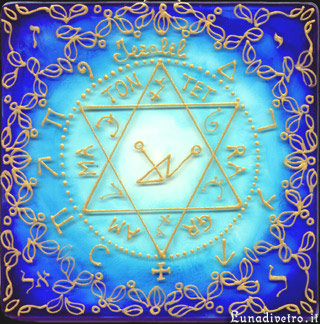
Genius Iezalel, expressing the original force of the 13 Gates of the mind, is the spirit of fidelity, devotion, and constructive attachment. It is the spirit that allows one to find one’s happiness in the happiness of the beloved, to discover the fullest expression of one’s individuality, to help elicit individuality in another person — a spirit of mutual complementarity. The Jupiterian influence under which this Genius operates makes it prone to distortion when relations shift from synarchy to monarchy, and it is precisely here that Beleth appears. The Genius’s motto — “God, glorified in all things” — points to the all-encompassing nature of love, its synarchic character.
Beleth, however, leads many “musical instruments” before him, deafening the senses and dulling awareness. The sign of Leo and the Sun’s activity also help the demon manifest his overpowering force since his influence targets the Sun — Tiphereth.
The “pale horse” upon which the demon sits signifies total control and subjugation of the mind, its dejection and dysfunction.
Resistance to the demon means recognizing in a relationship not the quality of a “maelstrom” in which one longs to drown, but the Sun that lights the way. Self-sacrifice, so important for non-selfish interaction, does not lie in “renouncing oneself,” but in extending the self beyond its limits, including another person in it, and ideally the entire cosmos. Love free from Beleth is not fixation on a partner but an expansion of the self, self-knowledge, and expression through interaction, forming a more integrated, freer system. Love must not enslave any participant, must not turn anyone into a despot or a slave, but should mutually strengthen and enrich each person’s mind. And only when the union makes each participant stronger than they were separately can the relationship between them be considered constructive.
“Love should not enslave any of its participants, nor turn anyone into a despot, nor into a slave, but rather mutually strengthen and enrich consciousness. Only when the union makes each participant stronger than they were separately can the relationship between them be considered constructive.”
En Merkar, why in practice is it not so?
Why is there necessarily a slave in love, and how can they fight with themselves? Or how can a despot not make use of their slave? After all, for this, the slave needs to be liberated. And there are often cases when the despot turns into a slave. Why does this happen? Thank you.
Escape from freedom, a hard state and lifestyle, when there’s no definitive answer, when one must be ready to make decisions at any moment, because it could be a moment of changing reality, including the reality of a loved one.
Are followers of most religions not victims of Belial?
No, they are not all 🙂 Because no religion teaches the suppression of individuality. Until, of course, this religion is muddied by unscrupulous interpreters.
What does “The Sun, illuminating the Path” mean?
Including on a domestic level, if possible.
The Sun – Tiferet, harmony that gives the Path balance and equilibrium. On a “mundane” level, relationships based in Tiferet are balanced relationships, where “I am for you, and you are for me” means “I make you stronger,” that is, I think (not in a forced or anxious way, but as a matter of course) about how to support your development, and you, in the same way, naturally help my development.
How to exit/balance if the balance is disrupted? (Strongly/systemically….), and I don’t want to step back….
The desire to “limit” oneself in order to “make space” for another is a fundamental characteristic of the manifested world: it emerges when God “contracts” His presence, performing “tzimtzum.” Hence, it is inherent to consciousness to want to “let others live.” But of course, this aspiration can easily become distorted, turning into various forms of disharmonious interactions. One such example is the pair of Belet-Sitri, two forms of self-loss—through the denial of one’s own value and through the denial of another’s value.
Maybe the whole problem lies in replacing the state with an object? We ignore the new state or ‘cannot accommodate’ it and replace it with something else: a person, an attraction, a duty.
An interesting detractor has emerged: “if I do something for the world, can I ask for something in return?”.
It seems like nothing special has been done yet, and it has already popped up.
A close moment. There is a thin line between detractor/non-detractor. The thing is that one can ask from the world without doing anything for it, of course, if honor and conscience allow. And if they do, then the world will respond and give back. (But obviously, in human society, it is usually not accepted to ask; it is accepted to demand and take without asking for what is supposedly yours – this is the detractor.) So it turns out that even when you do something for the world, you can ask for something… (By the way, when you ask, you give to the surrounding world.) The main thing is not to try to impose on the world that your actions are very important for it, and that it MUST give you something in return. In that case, it turns away… If the world responded to the request, a side effect may occur: you get what you need without doing what you wanted… and you no longer want to take action. And this, in my opinion, is already a dangerous thing, for which it is worth “hunger” and not ask for anything.
And generally, of course,… the more you do, the more you can ask.
Theo, thank you for your point of view; I feel a grain of truth in it 🙂
As for ‘to ask’… I thought a bit and decided that if it is simply asking, then it won’t be a sincere desire. After all, sincerity comes from the heart and might not be consciously recognized immediately.
It seems to me that we should feel the world, and it should feel us.
I personally have a good attitude towards desires – they can be similar to origami, with something completely different on the surface than what is truly there. For me, each of them speaks to my real and important need, which can be explored with interest. Regarding the world – that’s an interesting question. I observe many people who are just beginning to get acquainted with magic. This cluster believes that the world is kind and provides everything needed. They have a tendency, when encountering any entity that seems at least somewhat friendly, to ask for something right away. This is neither good nor bad; it’s probably just one of the forms of interaction with the world, and there’s also the form of exchange. Neither a request nor an exchange seems to involve theft. And I also know that all the best things that have happened to me in my interactions with the world or with people (I’m a very big fan of people; each person is truly a whole world) have been gifts.