
Games of Probability
As we have discussed more than once, any stream of mind passes through countless possibilities, in which each moment is experienced in multiple ways, and each variant is manifested through a distinct aspect of this stream of consciousness.
At the same time, the structure of reality can be described as an interweaving of potentials, where each individual stream of awareness (selfhood) can either move “linearly” along a single causal path or change its trajectory depending on impulses coming from a deeper level — its monadic core — and the conditions of its expression.
Each mental impulse (desire, intention, emotion) strives to take root in reality; however, if its energy is insufficient, it is realized within an existing causal chain (ordinary evolution) or remains virtual (a dream, a fantasy, or a missed chance). Only when there is enough energy in this impulse does the flow of probabilities change radically, creating a new cause-and-effect reality.
At the same time, each time the probabilistic flow “shifts,” the mind moves along its trajectory and perceives it as a natural continuation, and only in exceptional cases — in moments of crisis or insight — can one see the moment of transition.
In other words, each moment reality seems to “look” at all possible paths of development, but chooses only one based on specific energetic, psychological, and situational factors, while the other options are realized in other probabilistic flows.
It is clear that for each chain of reality, high-probability events are those that most logically follow from previous events — that is, require minimal energy for their initiation — while low-probability events are those that need a more powerful impulse or a rupture of the familiar chain of causality.

When, as a result of contact between reality and the Interval, a particular probability “surfaces,” the mind anchors it in reality through attention, choice, and at the cost of energy. At the same time, the more energetically charged a probability is, the higher the chance of its consolidation. The selection of reality is influenced by subjective factors as well: habits and beliefs (what the mind does “by inertia”), its emotional and energetic alignment (what seems most resonant at the moment), as well as external events and the influence of other streams of consciousness (for example, a chance meeting can instantly change the probabilities of the day).
In other words, each flow of probabilities is supported not only by an individual mind, but also by collective impulses, so that beings who make similar choices remain within the same flow of reality. When the mind sharply changes its perception, its flow may leave the shared reality and end up in another flow of probabilities.
At the same time, another condition is the presence of the very moment of instability (a state of mental flexibility and the flow of the environment) — if the mind is open to changes and reality is ready for contact with the Interworld, the flow of probabilities can shift more easily.
Thus, periodically, vulnerable points appear in the structure of any individual timeline — moments where one can break the “established” line of fate. The stronger such a rupture of the flow of probabilities is, the less accessible alternative scenarios become to awareness. It is clear that the probabilities themselves can be flexible to varying degrees: some of them change instantly, while others require an accumulation of potential, and the magus must take this into account in their practice.
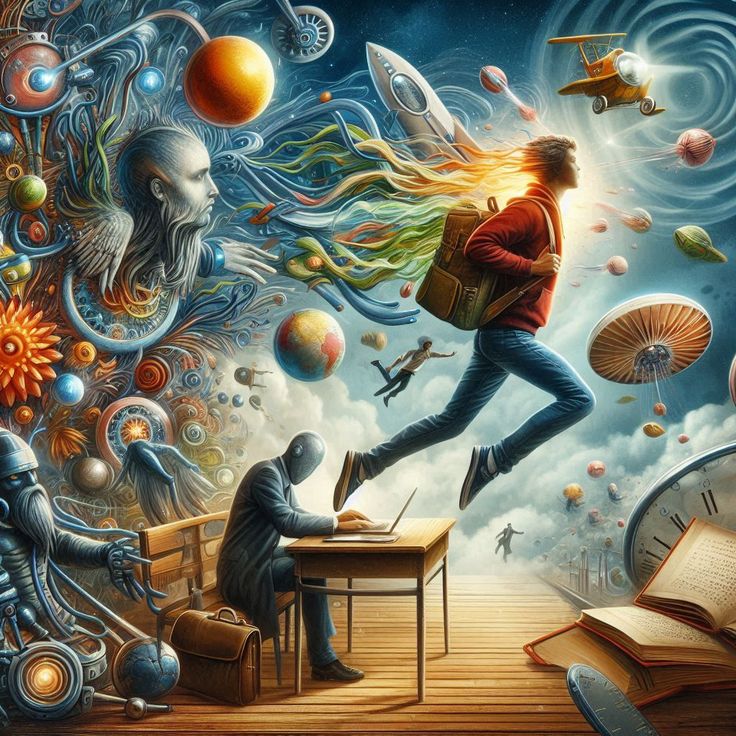
Accordingly, a chance is a bifurcation point that arises spontaneously but makes it possible to change the probabilistic flow, and it is useful for a magus to recognize and use these points.
On the basis of such ideas, two important magical strategies were built: 1) managing probabilities — a systematic work to restructure causal links, and 2) hunting for chances — instant ruptures of these links, allowing one to sharply change the trajectory of events.
Accordingly, the magus who cultivates probabilities (the evolutionary path) gradually changes their thoughts, actions, connections, and accumulates energy so that their reality itself begins to change in the needed direction, while the magus who hunts for chances (the revolutionary path) waits for a moment of weakness in the flow of events in order to make a sudden leap. In the first case, the change happens slowly but steadily, and in the second, the shift of reality happens instantly but requires an accurate calculation of the moment and the point of application of energy within it.
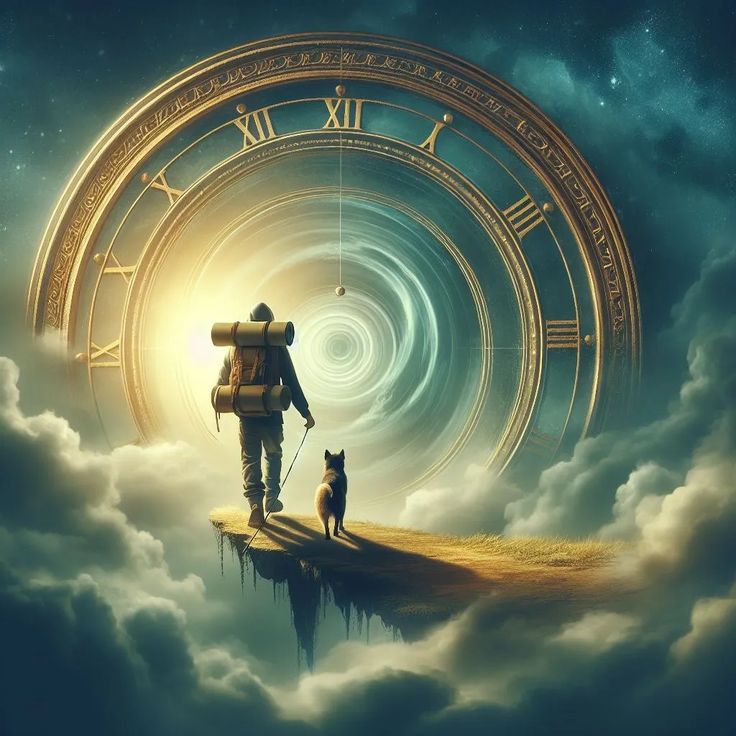
We have already discussed that before a chance appears, “harbingers,” anticipatory signs, begin to arise in reality. The magus must be attentive to such signals and prepared for the moment of breakthrough, since by predicting the approach of a chance, one can prepare in advance and know exactly what to do at the moment it appears. Among such harbingers, one can note repeating symbols and events, which often indicate the thinning of reality and its approach to a bifurcation point. At the same time, it is clear that a magus with sufficient energy and wisdom can “induce” bifurcation points in order to change fate without waiting for spontaneous opportunities.
The third approach to managing probabilities, which we have also discussed, is shifts of mind. If in the methods described above reality remains the same, but its events can change (for example, a change in the nature of relationships, a chance meeting, a new chance), then with shifting there is a transition into a new version of reality, where events and probabilities are initially arranged differently. An aware shift requires letting go of old attachments and fully accepting a new self, which, of course, may not be easy.
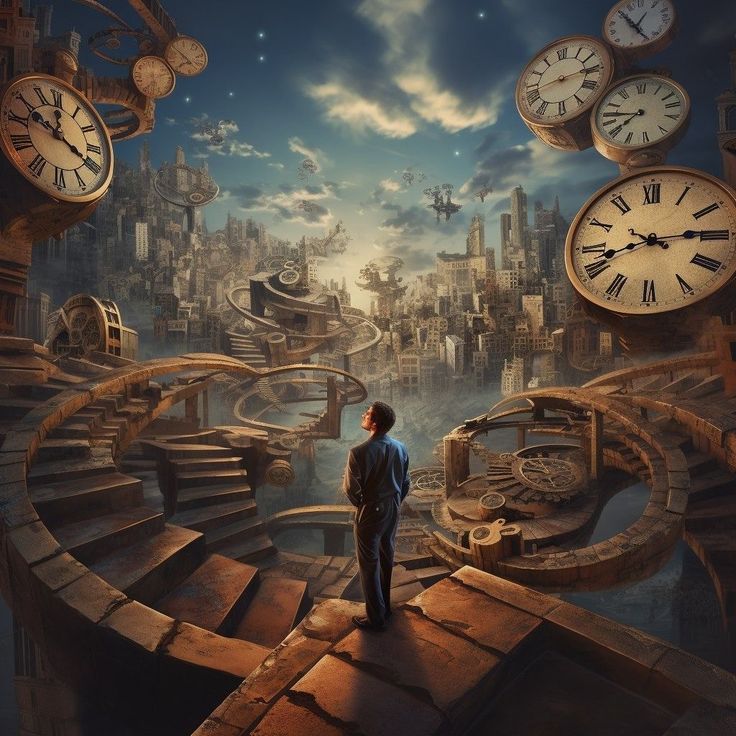
Thus, the game of probabilities is a multifaceted dynamic system in which each moment is filled with potential paths of development. At the same time, the mind, moving in its individual flow, perceives only one variant of reality, consolidating it through attention, choice, and energetic state. However, Magic, as the art of conscious interaction with reality, of course, implies going beyond the limits of such conditioning, or at least an aware work with it.
The ideal magical approach is to combine all three methods considered, allowing not only to change probabilities in the current reality but also, if necessary, to “jump” into alternative timelines. Accordingly, magi who master the art of managing probabilities, hunting for chances, and shifting cease to be passive participants in reality and become its creators.
At the highest level, this leads to the ability not only to manage events, but also to go beyond the very structure of heimarmene, gaining access to genuine freedom in building one’s Path.
Hello! Wouldn’t an attempt to interfere in the streams of probabilities become a “snowball” that leads to unpredictable consequences and even greater complexities than those in the original timeline? Wouldn’t it turn out that in the end the magician would have to jump from probability to probability to escape the negative consequences of the first attempt to change fate?
Hello! This question boils down to the overall level of thoughtfulness and stability of magical influence on probabilities. Indeed, if changing one line of fate pulls along a chain of unforeseen consequences, the magician may find themselves in an endless process of “fire extinguishing,” fixing one thing to avoid breaking another. It is clear that any change in reality creates a new knot of cause-and-effect relationships. Moreover, the more significant and unnatural the change initiated, the more it requires the restructuring of the entire reality system around it. The more rigidly reality is fixed, the harder it is to change without resistance from the flow of events. Changing even the smallest detail without considering the whole system of interactions can create a snowball effect. To avoid such chaotic consequences, one must possess significant Authority, understanding both the structure of reality itself and the timeline they intend to change. At the same time, if the magician disrupts the current flow of probabilities without understanding its structure, they create a “tear in the fabric of reality.” This, of course, leads to a significant destabilization of the entire system, requiring “self-restoration.” In the end, a new line of events forms that may turn out to be uncontrollable. If the magician then tries to fix the situation, they will have to change not just one flow of probabilities but several, creating new bifurcation points leading in unpredictable directions. This is how the magician ends up in endless “jumps from probability to probability,” fixing the consequences of their intervention time after time. At the same time, a more careful approach, a “base correction” (minimal but systematic changes), is more likely to lead to a smooth change in reality without destroying the structure. In this case, the magician forms “micro-changes” that integrate into the flow of events rather than breaking it. In such a situation, the world gradually adapts to the changes rather than fighting against them. It is clear that the fewer “jumps” and major disturbances there are, the less resistance the system will encounter. The more smoothly and precisely the magician adjusts reality, the fewer “retractions” and chain reactions occur. Thus, the best way to change reality is to guide it in the desired direction rather than breaking the system apart. If, nonetheless, it is necessary to change probabilities in a “revolutionary” way, it must be done so as not to have to “escape” from their consequences. The key to this is a clear understanding of the structure of probabilities and the use of “gentle” approaches to changing reality, such as the so-called “echo changes,” where probabilities change “in retrospect.” For this, consciousness, focusing on a different choice in the past, rewrites probabilities, removing the “tear” between the current and desired line by re-experiencing the altered situation anew but with a new outcome. In this way, instead of breaking the current reality, the magician seeks a point in the past where they could have made a different choice. A similar method can also be used for future outcomes. Many changes lead to chaos simply because consciousness does not know where this chaos will lead. However, if the magician anticipates a point of future equilibrium, changes occur smoothly, “spreading” throughout the system. For this, consciousness forms a point in the future where reality is already harmoniously constructed and begins to perceive itself in that version of reality, fixing consciousness at that point. Consequently, with the sufficient strength of the magician, the entire line of probabilities smoothly restructures, following the designated point. This way, the magician creates a “scenario” of reality that supports itself without destroying the old system. Thus, if the magician does not “break” reality but works on its plasticity, changes happen smoothly and controllably.
Dear Enmerkar, thank you for this article and for the additional clarifications in the comments! The questions that remained after the previous article about the “Breath of the Interworld” have found their answers. I intuitively used some of the techniques you mentioned, but from now on I will be able to approach this more consciously. P.S. Thank you for your work! Your site is one of the few sources where one can obtain important and truly useful, yet systematically organized information about the magical Path, with direct practical application.
Thank you. I would add some considerations. Within the framework of “hunting for chances,” it is useful to clarify the concept of points of lability, considering them from the perspectives of place, time, and the individual (i.e., all “places of power” and liminal spaces, the requirements of a specific ritual time, and “catastrophe people”—these are loci for breaking through the “energies of the interworld”). In fact, the “evolutionary” development and transition to a new “line of fate” is the usual process of “the end of the world” described, for example, in the Apocalypse. Since each world, due to its finiteness and exhaustibility, must be destroyed. The topic of peacemaking, in terms of creating a final point for a “jump across the edge” into a new reality/line of fate, has not been disclosed. Although it would be worth exploring the option of “thinking about how to finish before you start.”
If a magician wants not only to change probabilities within one line but also to make a sudden leap into a completely new flow of events, they need an “anchor” for the jump on the other side. The mentioned “final point” is the moment when the old flow of events ceases to exist, and consciousness can no longer return to the previous line of fate. One could say it is a “bridge that is burned,” a point of no return where the choice has already been made both consciously and energetically. It is clear that most people do not make conscious transitions between realities precisely because they leave “bridges back” (doubts, fears, attachments). Accordingly, in order to “jump across the edge,” the magician must create an energetic and event structure that makes the old path impossible. To prepare such a “breaking point” for the jump, it is necessary, first of all, to have a clear intention (energetic fixation of the goal), meaning the magician must not just want to change reality but genuinely create a new point of fixation within it. This point is not a fantasy or a dream—it is a real shift of the center of perception into a new timeline. Secondly, the previously mentioned closure of old probabilities (burning the bridge back) is required—this may be a ritual action, a conscious refusal from past behavior patterns, or even a real break with elements of the old world. Thirdly, energy is necessary, an impulse that will be used at the critical moment for transition. And at the moment of the jump, this energy must be “concentrated” and then released all at once. This can be accomplished through a sharp decision, an emotional outburst, a ritual, or an action that instantly fixes the new reality. Lastly, as we discussed, full acceptance of the new version of oneself is necessary—that is, fixation in the new timeline. To not “recoil” back, consciousness must intentionally integrate and “see oneself” in the new version of reality. This is a kind of adaptation to the new image of oneself, since if the perception remains within the old point, the jump will not be completed.
And finally: safety, on one hand, is complete familiarity, while on the other. The question is—does it make sense to “jump” onto such a known “line of fate”? Or even in this way— is it possible to have the necessary volume of energy to form an intention of sufficient strength for making a jump to the target reality (i.e., whether you will manage to jump or not)?
Thank you for the article; I read all the comments too. Again, I found a fourth option: why jump anywhere at all? I can split myself into three points: the past is the soul possessing knowledge and projecting options, and yes, the past also has the ability to see the future of humanity for many millions of years. The present is me right now creating a probable line of development for the future of humanity. That is, I am creating patches for the future according to which, well, say, my super-rich mom also gains independence in choosing the projected options from the past. The future, this is the most interesting; it knows which option is the best and the coolest of all magicians. It can send messages through dreams to me in the present; by the way, clinical death is planned for me; I am heading towards it; I am scared, but you can’t do anything in this option and in all possible ones. As a result, at around the age of 110, I will turn the past into a potential (possible) one, and the future will also turn into a possible potential of the cool magician who went to the Purusha; only I, the present one who lived this life will remain. Thus, the complexity of choosing from three potentials: divine gifts (the present), projected future lives (the past), or leaving for the tenth dimension (the future).
* Your Super-Ego is separated from you by an impenetrable boundary – the interworld (not to mention that it has a different dimension). How do you plan to establish a communication channel through the interworld, to commit suicide?
* Your clinical death will give you nothing – you will simply fall away into an unconscious state. Drinking enough alcohol until you are completely unconscious is enough…
* “Leaps” are precisely needed to shift to a new life position, i.e., to become closer to your Super-Ego and, consequently, to yourself.
I find it interesting why people believe in some super-I. In short, we have indigos with different technologies for living with the soul. One of them is dividing the soul into additional cores. In short, a person’s soul is one, with one universe, while the super-I is a trap of archons that intentionally lure into the Interstice. For me, judging from the previous text, there are three cores within one soul. That is, the soul is whole as it is, but instead of one core, there are three. There is also an ability to frequently activate them, which allows me to merge experiences from other cores into my consciousness; thus, my life experience in these cores is sent to me. The cores, even my present self, are equal in potential but not in realization. Ten years ago, I once went beyond the boundary, as a result of which the charge of the three cores equalized, and magic became visibly real; I could see the light of the black sun. Over time, this passed; during clinical death, the charge of the cores will equalize, and all magic will be available again, including the probabilities to change.
Hello, Enmerkar. Are you aware of any distinguishing signs that indicate that a person has ‘jumped’ from one timeline to another – changed their probabilistic line? Surely, this happens more than once in the life of every person. And, if small changes can scarcely be felt, then fateful choices that cause one’s whole life to flow in a different stream must leave some distinct trace on the person’s self-perception. There are times when you clearly feel that something important has happened – something has changed very deeply, as if the very world has become different, but understanding what exactly it is does not come easily. I can say that the only thing I can name in this flow of experiences is that there arises a certain magical feeling of an otherworldly occurrence breaking into life, which quickly passes. Also, such moments of important choices are accompanied by a barely perceptible feeling of dizziness – as if the surrounding space begins to slightly blur and shift, but if one does not pay special attention to it, one might not even notice.
Hello! Indeed, in the lives of each person there occasionally happen changes in the probabilistic line, ‘jumps’ from one timeline to another. This can occur either unconsciously (during a shift of consciousness: https://en.enmerkar.com/drugoe/shift-soznaniya), or purposefully and consciously. Many notice that after a certain event (sometimes seemingly trivial), the world seems to have ‘shuddered’: the tones of the surroundings, the color of light, the sound of the city have changed, even people’s faces seem a bit different, although formally, everything appears the same. This can be described as a shift in the basic ‘frequency’ of perceived reality. This is because each probabilistic line represents its own ‘assembly’ of the world, its unique ‘acoustics’, ‘temperature’, tension, structural logic.
Such a transition requires either a strong inner impulse (a surge of will, revelation, suffering), or unconscious but deep rethinking. We have talked about how, in a certain sense, each person is a node of probabilities, and their state and choices shape the main line of fate. However, the choice must be genuine, arising from the very depth of consciousness, not from compensations, fear, or social reflexes. Only then do alternative timelines open up, rather than duplicating ones.
Therefore, most often, the ‘jumping’ occurs not at the moment of dramatic decision, but when consciousness has subtly shifted its emphasis, moving to a new structure of perception. Such choices typically do not accompany excitement or suffering; however, they leave a feeling of quiet shock, an inexplicable deep change, as if in just a couple of moments, the entire architecture of fate changes.
Often, such transitions are accompanied by characteristic physical sensations: dizziness, shifts in perception of depth or scale, light disorientation. This is a sign that the brain is at that moment restructuring its ‘map of reality’.
After a change in the line of probability, one often retains some ‘erased’ feeling of the past. In this process, a person realizes that they cannot recall certain fragments of their life as before – as if they belong to another world. Some connections sever without conflict, others suddenly deepen, while some seem as if they never existed.