Mother of Monsters
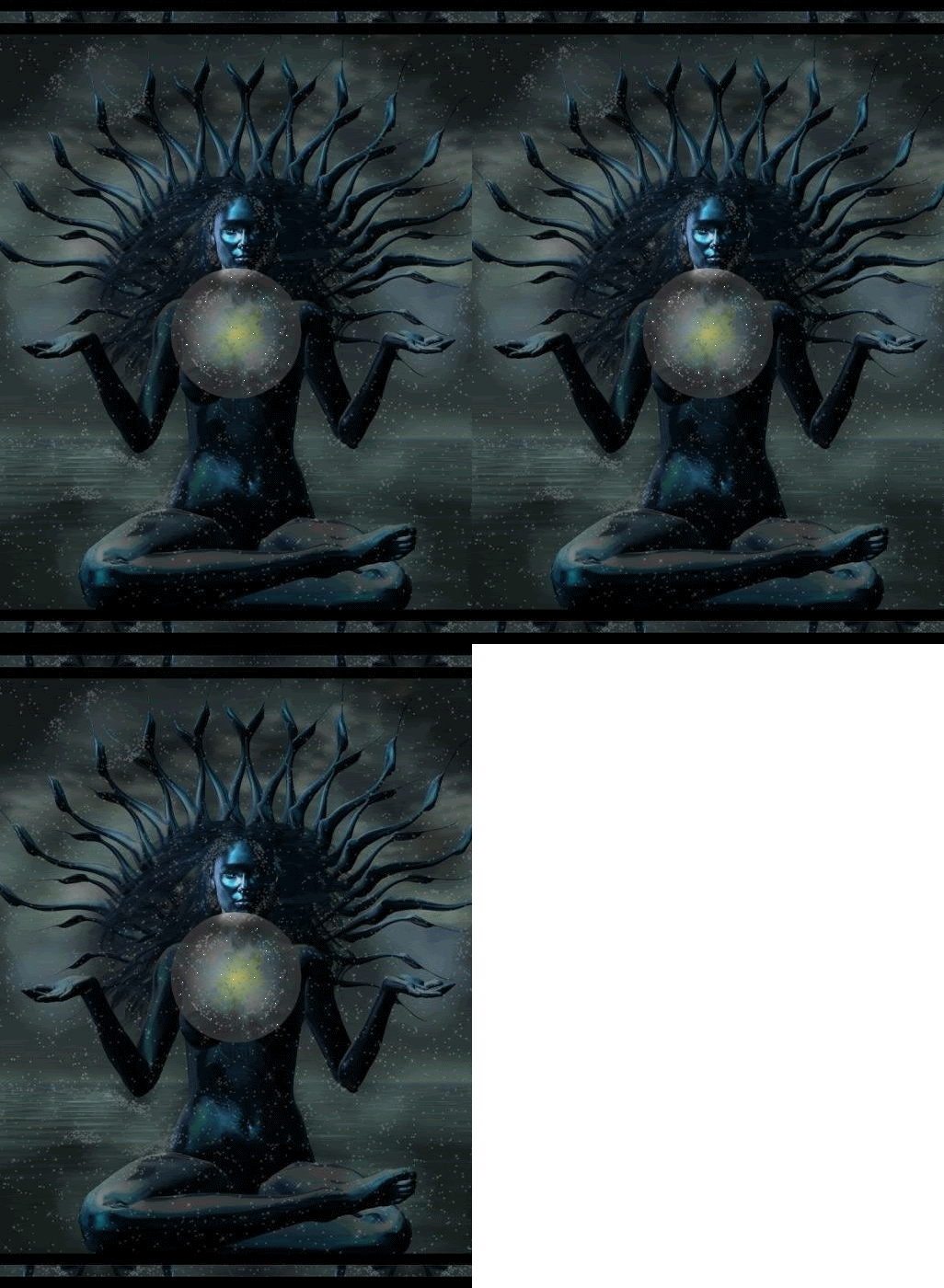
The Dark Aspect of the Great Mother manifests in many forms in the world. She is at once the Goddess of Death (for example, Mara), the Goddess of Lust (for example, Lilith), and the Mother of Demons (for example, Echidna).
The idea that the Above is patriarchal while the Below is matriarchal is characteristic of all cultures and religions. The image of the Great Dark Mother, who gave birth to demons and the World Serpent, has been known to humanity since ancient times.
The Greeks called this figure Echidna, the Celts Domnu, the Gnostics Achamoth, and the Babylonians Tiamat. Many myths tell of victory over her. Although Echidna and her offspring were repeatedly defeated by Heracles, Oedipus, and Bellerophon, she was strangled by Argus; Tiamat was defeated by Marduk (and in the Christian version — by the Archangel Michael). Nevertheless, the ancients did not believe she had truly been destroyed.
Echidna, according to one version of the Greek myth — daughter of Tartarus and Gaia — the embodiment of the dark depths, gave birth to Cerberus, Orthrus, a two-headed hound, the Nemean Lion, the Chimera, the Lernaean Hydra, the Colchian dragon, Aëthon (the eagle of Zeus that pecked Prometheus’s liver), and others. Her male counterpart (variously brother, husband, or son) was Typhon.
At the same time, the half-maiden, half-serpent Echidna lures travelers with her beautiful face. Hesiod calls her “swift-eyed.” Yet this “swift-eyed nymph” is simultaneously a monster — a bloodthirsty serpent lying in a cave, bringing death.
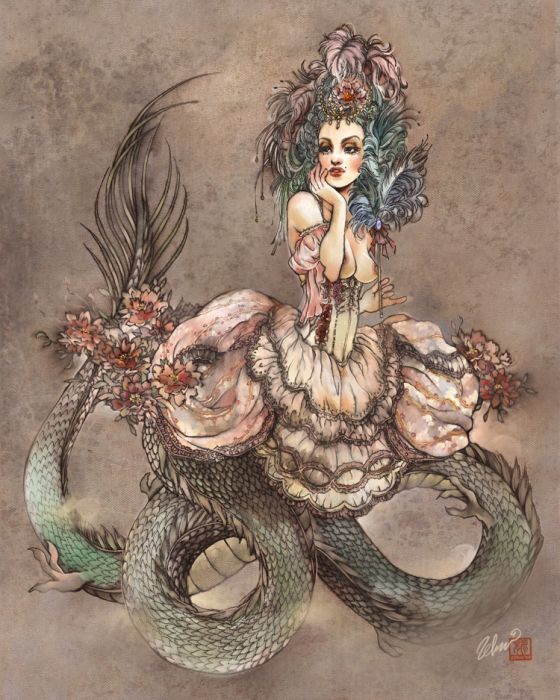
The figure of Tiamat depicts this aspect more fully and darkly of the Mother of Monsters. The etymology of the name Tiamat is debated. It is usually thought to derive from the Akkadian word “tamtu” — sea, an earlier form being “tiamtum.” Or the name may combine two words: “ti” — life and “ama” — mother. It is notable that when the word “Tiamat” is written in the poem Enuma Elish the determinative dingir, meaning “deity,” is absent, indicating Tiamat’s remoteness from the creative powers and her kinship with the forces of chaos. As noted earlier, in the great battle between the generation of the elder gods (headed by Tiamat) and the Younger gods under Marduk, Tiamat was slain by Marduk; he cleaves Tiamat’s body in two, from the first he made the sky, from the second the earth. The male embodiment of Tiamat is Apsu — god of the subterranean fresh waters. In the Mesopotamian epic of creation, everything begins with water in a state of chaos. Apsu, the fresh waters of streams and rivers, and Tiamat, the sea of salt water, combined to create the universe and the gods. Together with Apsu, Tiamat gave birth to the first gods — Lahmu and Lahamu.
The young gods set about ordering the chaos and separating the elements. This enraged Apsu, and he, “to preserve Tiamat,” plotted to destroy his children. Learning of this, the gods were terrified and, lulling Apsu to sleep, killed him, cutting his body into pieces. One of the gods of the first generation — Kingu — was made the new husband of Tiamat, and she entrusted him with the tablets of destiny. In a furious rage Tiamat, through Kingu, gave birth to a new brood of dreadful monsters, intending them to destroy the gods. Among these creatures were scorpion-men, demonic lions, giant serpents, and dragons covered with gleaming scales. The fate of the gods was an eternal struggle with the offspring of Tiamat. From these, cast by Marduk into the abyss, demons arose — the eternal enemies of creation, its scourge and the condition of its existence.
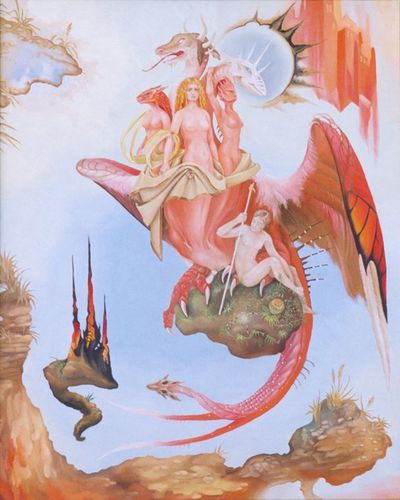
In any case, the most ancient mythologies converge on the conviction that the true ruler of Darkness is not the anti-god — the devil, but the Dark Mother. She gave birth to the abyss of the Qliphoth, and she rules it. In Mesopotamia, it was generally held that female deities were older than male ones.
Many Gnostic schools considered the “last” Female aeon — Sophia Epinoia, or rather her “fallen,” distorted hypostasis — the “Desert” Achamoth — to be the mother of the Evil Creator — Ialdabaoth.
Unlike her brother and husband — the World Serpent — Tiamat does not engage in an active struggle with creation; the principal danger to creation is her children. Rather, she embodies the principle that negates creation, inertia of the milieu resisting differentiation, which, in fact, constitutes the essence of creation.
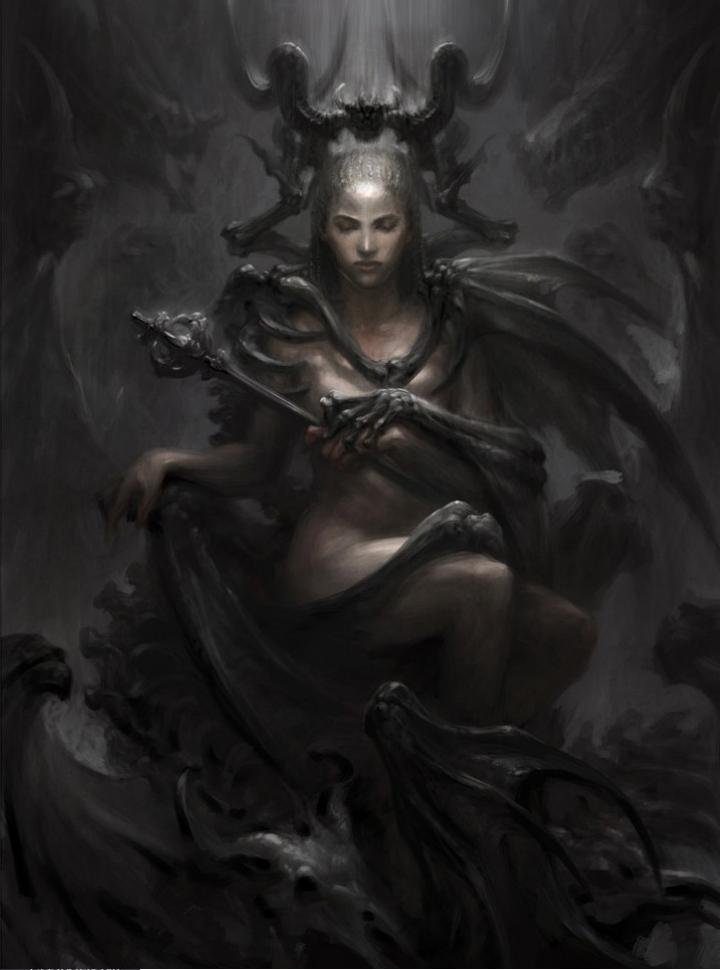
Moreover, the World Serpent is always subject to the Mother; he draws his power from her, and, broadly speaking, he is begotten by her, since the Great Mother darkened to beget him (this is precisely what the union of Gaia and Tartarus signifies).
She herself rarely rises from the depths, entrusting the struggle against creation to her children. It is well known that lunar power aids monsters. And the reason is the same — the Moon bears the power of the Dark Mother — the Progenitress of monsters.
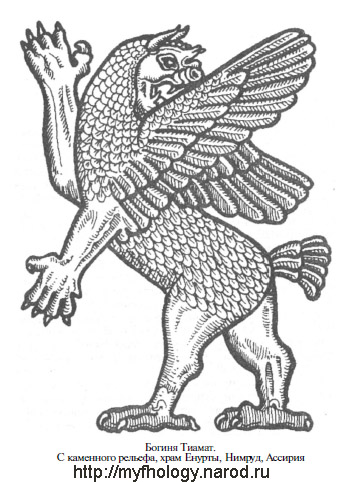
Note that the Dark Mother herself is not a monster in the literal sense. On the contrary, she is beautiful. But her primordial beauty is deadly.
Thus, the aspect of the Dark Mother as the Source of darkness is among the most important images of ancient mythology. For magical myth, it matters above all because of the ambivalence of the milieu, which is not only the source of creation but also its chief enemy.
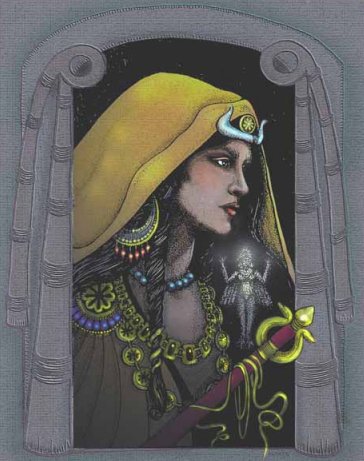
En, you mentioned here that “Tiamat” means “water”, also that Heaven and Earth were created from it. Water is a symbol of Chaos (the First Logos), while Heaven and Earth (the Second Logos) are born from it.
Chaos is Chaos, and Logos is Logos. Water is neither Chaos nor Logos. Water is the most unordered manifestation of the cosmos, but it is no longer chaos. Even the “Dark waters” of the Abyss are no longer the Abyss itself.
Did the Dark Mother create the klippot, or is the klippot the husk that appeared during the creation of the worlds of the flow?
The Dark Mother did not create the klippot as such, but she is the mother of its inhabitants.
> The idea that the Upper is patriarchal, while the Lower is matriarchal is characteristic of all cultures and religions. But what about Egyptian mythology, where Nut is the Goddess of the Sky and Geb is the God of the Earth? … although they are of course more secondary deities compared to Ra, Shu, and Tefnut…
In Egyptian mythology, the Upper is not Nut; it is Ra or Amon (and also Horus). Nut is the ‘body,’ the basis on which the God’s Boat moves (and into which it enters).
How to connect this patriarchal top with this matriarchal bottom so that they do not kill each other as is customary in practically all cultures???)))
Ah! To be honest, our genealogy, no matter how you twist it, ultimately descends (or ascends? but what difference does it make?) directly to Her!