Goetia and Theurgy
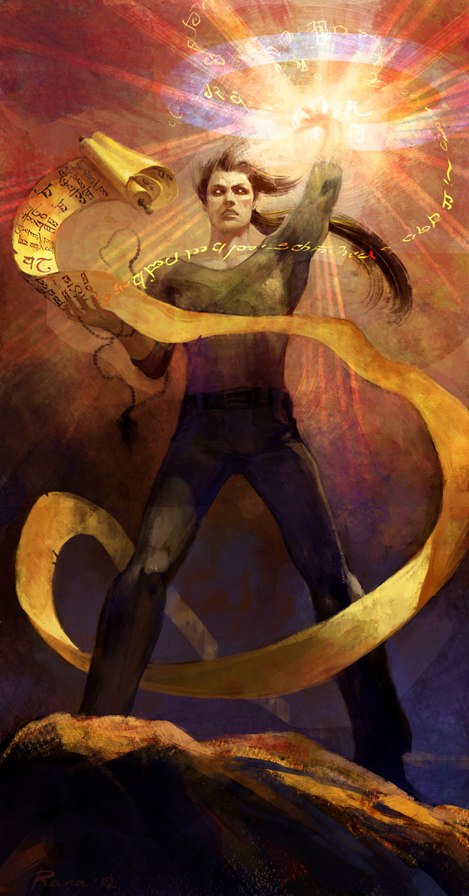
The Golden Dawn magical system, despite all its shortcomings, proved the most successful development in Western magic thanks to one very important fact – it was the only system of the modern era that combined effective interaction with both Free beings and ministering spirits.
Most of the other systems concentrated either on summoning ministering spirits (as, for example, classical Solomonic practice), or on appealing to the gods (as the pre-Christian magic of Egypt and Greece, or the core of contemporary Wicca).
The extraordinary efficacy and attractiveness of the “Enochian” system is also largely due to the fact that its portal operations affect both boundary ministering forces and interaction with Free beings – the children of Domnu.
Magi who concentrate solely on one kind of governing spirit restrict the flow of their energies and are like athletes who train only one muscle group, forgetting about all-round development.
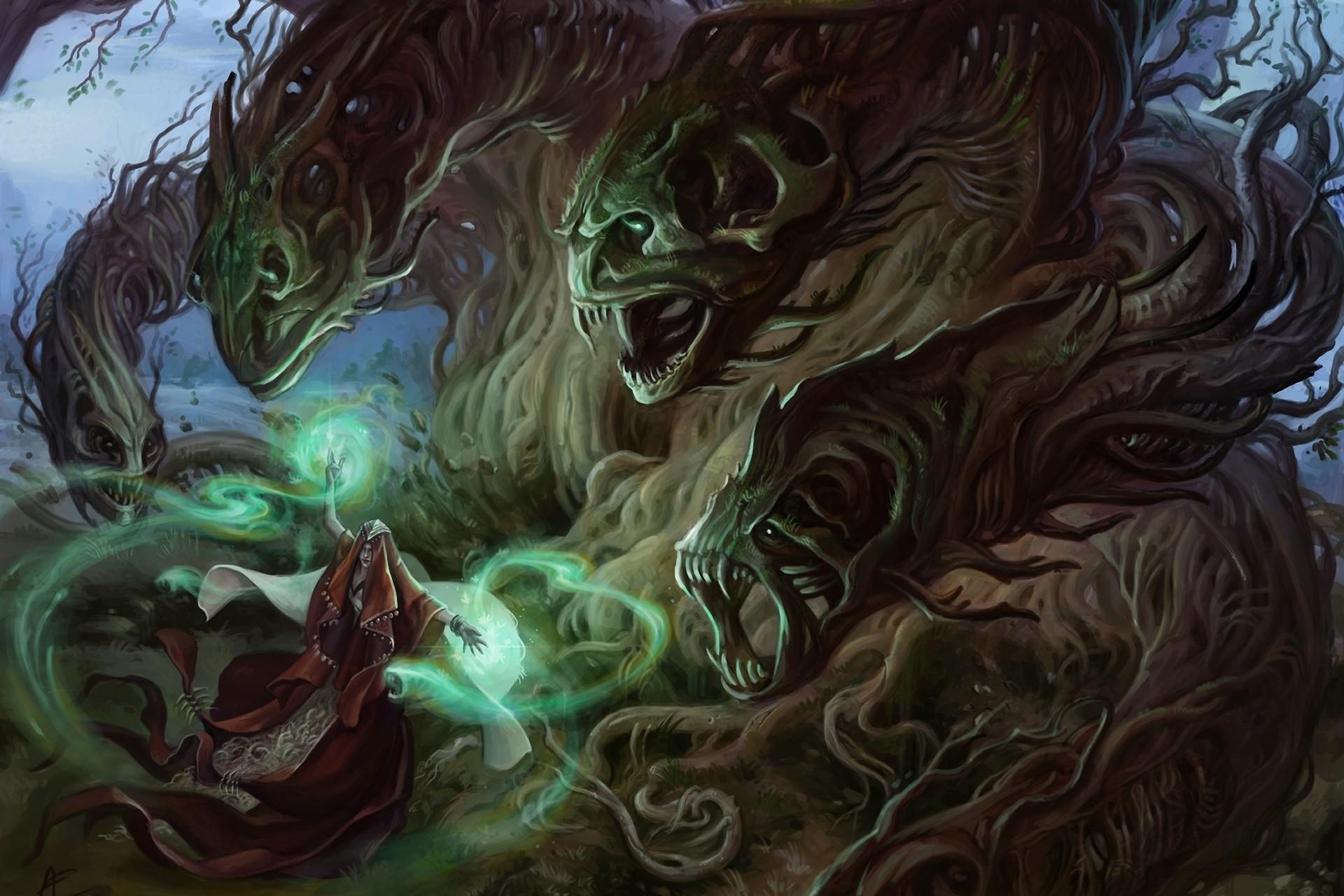
Meanwhile, goetia gives the magus a sense of purpose and trains his will and intellect, while Theurgy generates in him a sense of the sacred and develops an evolutionary impulse.
Furthermore, interaction with both the neutral and the polarized components of any current allows one to perceive the flow more fully, in all its diverse wholeness, and thus to expand the field of consciousness more effectively.
As mentioned, for example, the correct perception of the character of any secondary causality requires attending to an entire complex of beings – of both Free and ministering nature.
Nevertheless, the degree of universality, flexibility and plasticity of energies required for interaction with such a wide range of forces is, of course, rather difficult to attain and requires serious effort to develop and maintain.
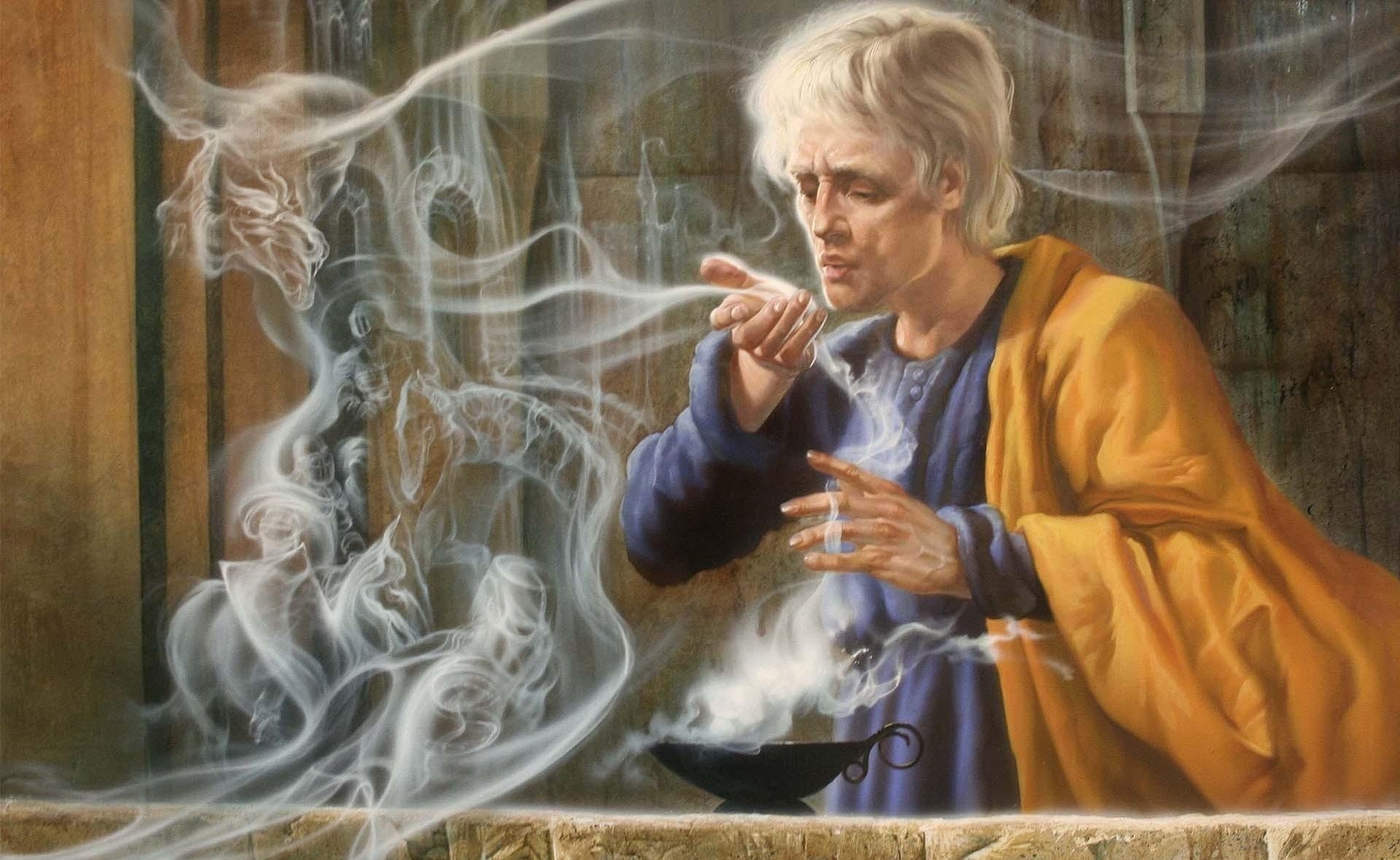
In the end, it all comes down to the same universal and most important action for the Magus – pleromization of his being – the attainment of wholeness, not by shifting the center of gravity to one pole, not by neutralizing polarity by androgynization, but by proper integration.
However, in practice both processes must run simultaneously.
On the one hand, the Magus must expand the range of interactions available with various energies. And this does not necessarily mean the “classic,” “full-strength” appeals or evocations. A Magus can interact with energies more lightly, without pulling them out of the common flow or diving into the whirlpool of mighty forces, but by touching them, skimming their surface, weaving his energies with those of the current to the degree accessible to his level of development.
On the other hand, the Magus must in parallel organize hierarchically and integrate his psychocosm, and the higher the degree of cosmic order and coherence of his mind, the wider the range of energies with which he can establish correspondence.
That is precisely why the systematic nature of a Magus’s training is so important. It must be balanced, and all actions must occur in parallel in both the macrocosm and psychocosm.
And a Magus must not confuse the modes of interaction with the forces he contacts.
If he tries to call the gods by imposing his will on the Governing Lords — he risks being burned by the Primary Fire; if he calls to the angels, by activating receptivity — he risks receiving an Ibbur.
Knowing when to “press” with the will, and when to open himself to perception, is yet another very important skill a Magus must learn.
Hello Enmerkar. The western tradition, particularly hermeticism, is associated with a certain psychurgy, but it provides a very vague description of this phenomenon. However, you have never mentioned this teaching in your blog. Although you do occasionally touch on the topic of astrology. On the website about the western tradition, you can find quite dubious brochures about mesmerism in the section on psychurgy. Is psychurgy authentic? And what is it, anyway?
In ancient times, people did not distinguish the psyche as a separate category, nor did they separate the individual’s consciousness from the manifestations of consciousness in general. Thoughts and feelings were considered to be suggested or, at least, inspired by gods or spirits. Accordingly, controlling consciousness was achieved through controlling the world, through interaction with gods/spirits/demons. A person of the New Age has become accustomed to delineating their stream of consciousness from consciousness as such, developing a sense that they can control themselves in isolation, that individual consciousness is a separate system. It cannot be said that this view is more or less accurate than its predecessors, but it stems from somewhat different premises, and thus requires different practical approaches. Thus, the idea of managing one’s own cosmos of consciousness, one’s own energies emerged. And the question of how successful this system will be for a given individual boils down to how much their self-perception corresponds to the accepted norms within it.
Thank you for the hint. The consequence of such a separation of consciousness is many disorders; in particular, it has led to the birth of many false stereotypes, such as: man is the crown of nature; man controls nature, etc., while forgetting that man is part of nature. The result of such forgetfulness is evident.