Elements and the Kabiri
Although Magic is fundamentally a pragmatic worldview oriented toward practice, its perspectives are far removed from technicism and technological dependence that afflict modern science and some “borderline” disciplines. Magic is not only a technology; it is also poetry, and it uses and relies not only on analytical intellect but also on holistic intuition. Therefore, very often both the value systems and the modes of action of magical and scientific practitioners differ substantially.
For example, is there a difference between using a candle or an electric flashlight in ritual work; whether to prefer a paper or an electronic book for reading; or whether to wear clothing made of natural or synthetic fabrics? Any traditionally oriented practitioner will choose the former, though perhaps hesitate when asked to explain why. Most often such choices are justified by the “eco-friendliness” of natural goods, although a closer look shows that in most cases this is far from the truth. Indeed, producing paper books requires cutting many trees, “natural” fire leaves a large carbon footprint, and electric cars rely on power plants whose activity can be destructive. Nevertheless, it is intuitively clear that “natural” goods do possess some advantage that allows people to maintain a stronger connection with deeper energies.
To justify the selective use of objects in sacred and “everyday” practice, the Magi introduced in antiquity a distinction between “elemental” and “kabiri” energies.
We have already discussed that the Tradition calls Elements (στοιχεῖον) any stable formation that integrally “encloses” the mind within itself. In magical usage the word most often denotes only those in which a particular element — fire, earth, air, or water — predominates, which somewhat narrows the term’s meaning. Despite the possibility of one element dominating, each element has a complex structure, and is an androgynous ‘alchemical salt’.
Unlike Elements — those “whole,” quaternary structures — a number of processes, forces, and energies are arranged in a considerably simpler way and lack the wholeness of manifestation. Such forces and agents are traditionally called kabiri (Κάβειροι, from “كَبِير” — “great”) — named after a group of ancient Greek gods of natural powers.
This division of energies was already accepted in Alexandrian schools and likely has roots in ancient Egyptian conceptions. The ancient Egyptians, having learned to generate electricity with primitive galvanic cells, discovered that the energy obtained in this way, although usable for various practical purposes, possessed a certain “incompleteness”; consequently, while they used electric light for “technical” work — for example, when painting walls in dark rooms — for ritual purposes they always preferred torches, i.e., living fire.
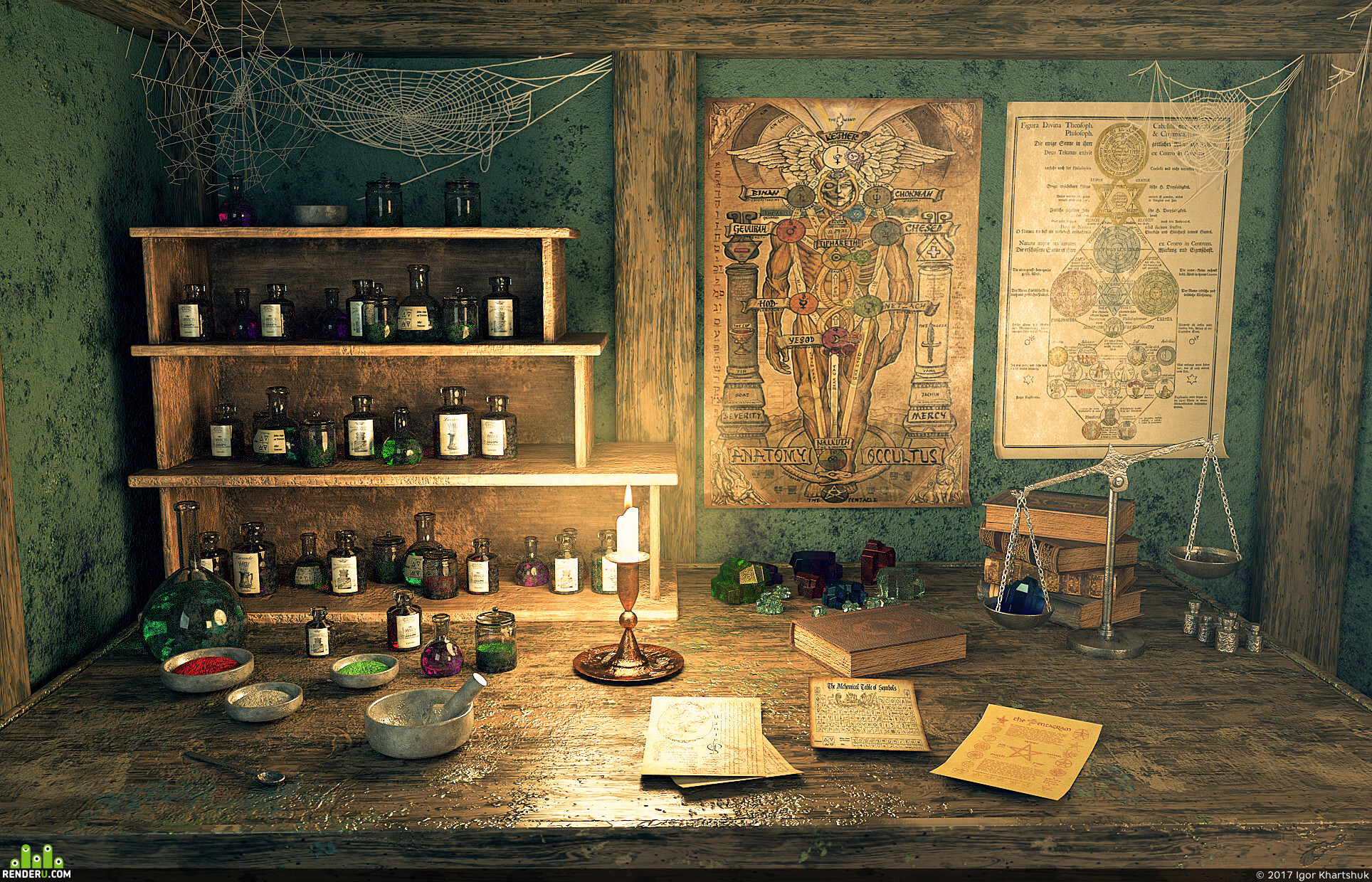
Contemporary traditionalist schools distinguish electrical, luminous, magnetic, chemical, seismic, gravitational and other kabiri, assign to them small-scale forces and interactions.
Accordingly, by using a candle or a torch for illumination (or as an offering) we employ the element of fire, which includes light, thermal, and chemical kabiri, and unfolds according to the tetragrammatical law: oxidation (י), encompassing the combustible material (ה), produces ionized gas (ו), capable of initiating new chains of oxidation (´´ה). In this model the kabiri can be matched to visible radiation (light), infrared (heat), and electronic transitions (chemical), while the aggregate element is their “salt.” At the same time, a burning lightbulb in ordinary conditions, although it manifests activities of the electrical and luminous kabiri, is unable to “ignite” another bulb nearby — that is, it lacks ´´ה and therefore possesses an incomplete, non-elemental nature of manifestation. Similarly, synthesized, distilled, or desalinated seawater lacks elemental completeness.
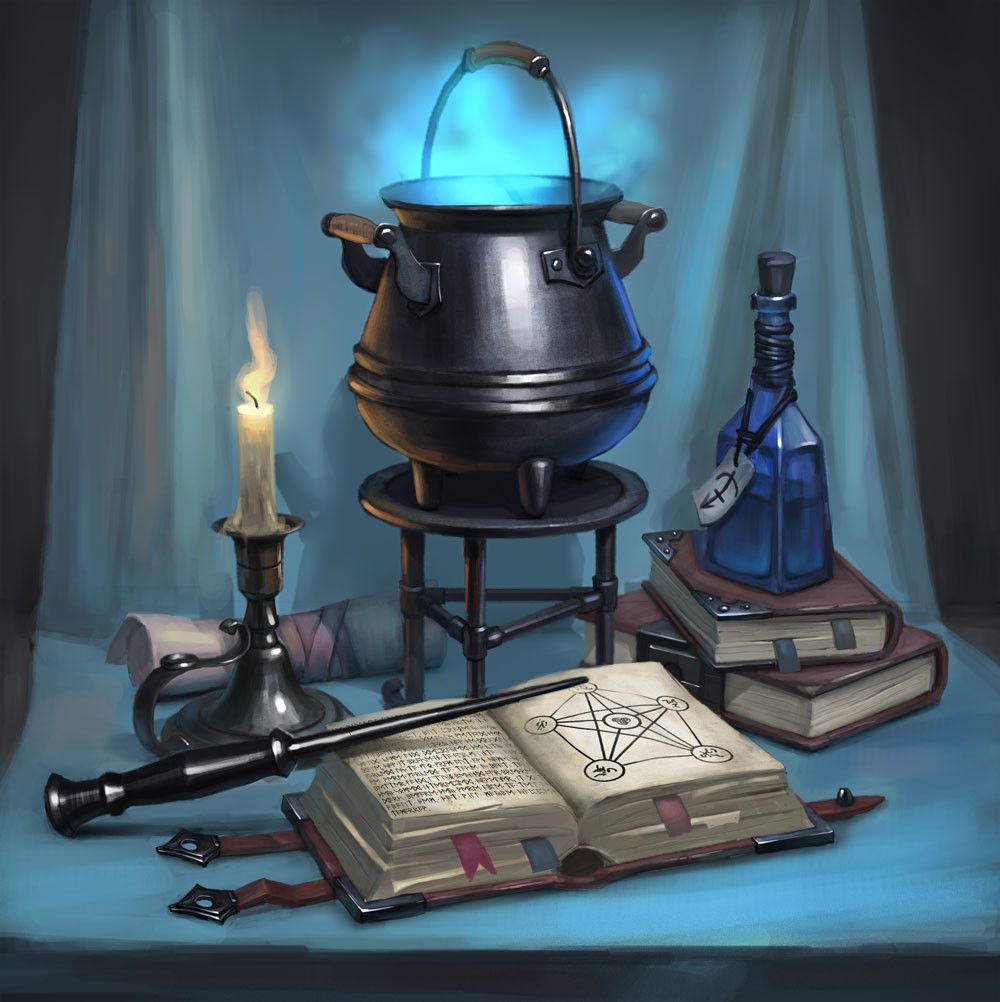
It is clear that for simple everyday purposes the kabiric “incompleteness” does not limit usability and can even be an advantage. However, for ritual needs it can prove insufficient or defective.
As we have already discussed, Magic is a threshold, “expanded” worldview that does not claim scientific completeness or exhaustive description of physical processes and phenomena, but is primarily focused on going beyond them. It is hardly possible to find a purely “scientific” justification for the division mentioned; it makes sense only in contact with the knowing mind, and pertains more to their reflection in attention than to the forces “in themselves.” Yet whether one can separate knowing from the known is a large question — one in which modern quantum physics converges with traditional Magic like nowhere else.
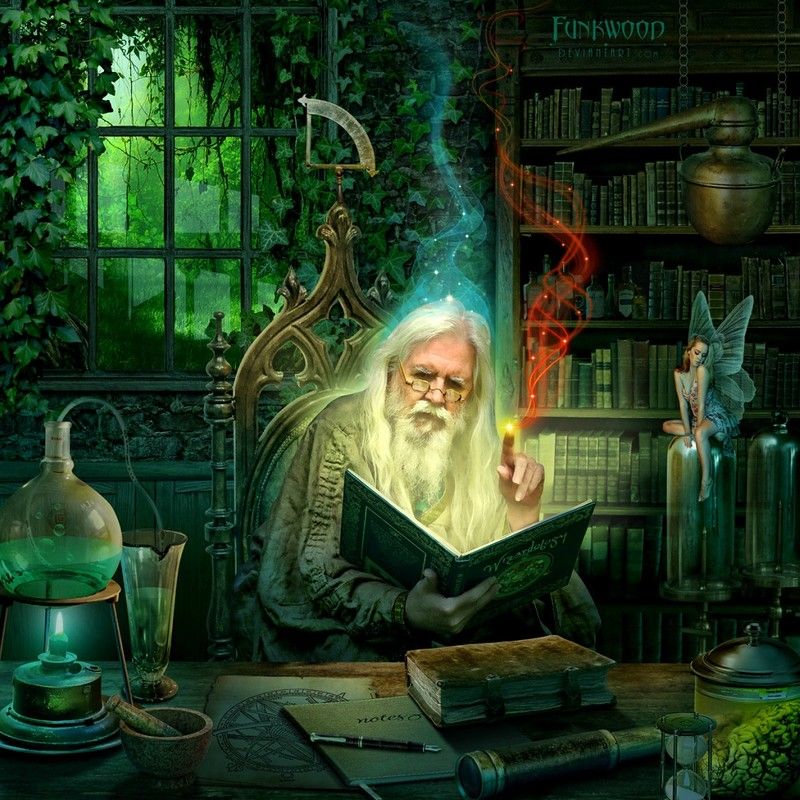
In any case, the empirical experience of the Magi shows that it is presumptuous to invoke gods or demons while illuminating a magic circle with a cellphone flashlight, and if any “gods” are present under such conditions, one would do well to doubt their nature and intentions.
For a Magus seeking effective manifestation together with fuller development of one’s awareness, it is important to preserve a healthy rationality without sliding into mechanistic thinking, and to cultivate poetic and mystical moods without descending into hysteria or neuroticism. Understanding where one can and should take the route of simplification, and when it becomes flattening and reductive, is also important for such effectiveness.
How cleverly and beautifully it is explained!