Elements: worlds within worlds
As we have already said, the magic tradition holds that the energies constituting the Absolute’s differential potential are grouped in a certain way, and each group of energies, interacting with consciousness, gives rise to a representation of a thing, an object, or, as they say, a “partzuf“. Partzufim are any closed, self-contained objects or phenomena. As long as the movement of consciousness from one partzuf to another occurs continuously, one says that these partzufim belong to the same world. However, some partzufim are separated from one another by a barrier of perception, so that consciousness cannot perceive them simultaneously. In that case, the partzufim are said to belong to different worlds.
However, even within a single world, where consciousness moves relatively freely, large partzufim are identified as separate from one another, whole and closed, so that they are effectively distinct worlds, with the only difference being that the transition between them does not cross the threshold of perception.
Such “private worlds” are traditionally called elements. The word “stikhiya” comes from the ancient Greek στοιχεῖον (pl. -α) — “letter; element, principle”. For us, the first meaning is most important — elements are indeed the letters with which the words of the poem of creation are written.
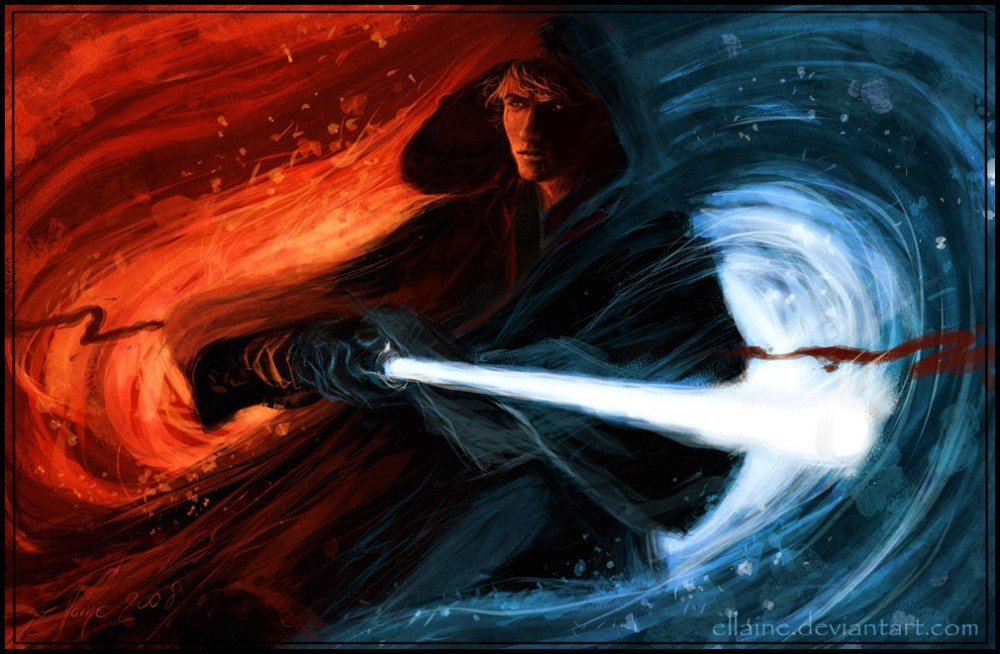
Thus, an element may be any aggregate of objects closely bound to one another, within which consciousness can exist independently separately from other elements. Everyone is familiar with the “physical” elements — the element of fire (not to be confused with the Element Fire), the element of air, and so on. In conversation, the words “element” and “stikhiya” are often treated as synonyms, but that is not so. An Element is a result of abstracting and discarding properties, the product of the “contraction” of mind. The element of fire, though dominated by that element, also includes other elements.
Elements include the sea and the river, any clearly bounded geographical feature (mountain, valley, etc.), a tornado, a forest, and so forth. No less familiar are the elements of emotion, the elements of love or hatred, “astral elements”, the mental elements, and, finally, the elements of life and death.
It seems that the division into elements arises only within the perceiving mind, and this is partly true. But behind this division stand real, concrete assemblages of energy blocks, “dharma“, so one can assert that elements exist objectively.
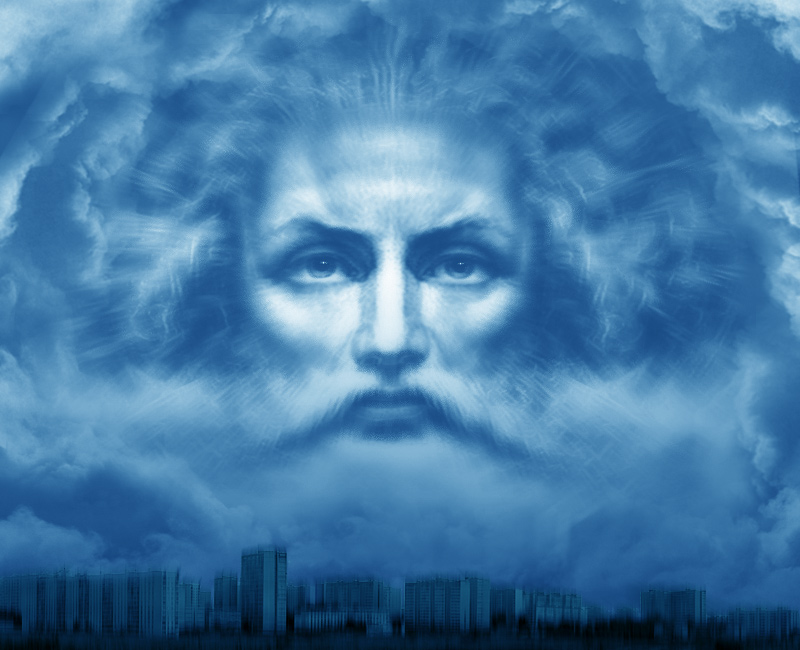
And finally, one more very important point: according to the magical tradition, behind each element stands the entity that governs it — a deity or a ministering spirit — for whom that element is as much a “middle part” as, for a human, his “outer body“. From this point of view, one can say that an element is a manifestation of a deity’s power (and likewise of an angel or a demon). The ancient Slavs, for example, considered fire to be the manifestation of Rarog — one of the aspects of Semargl, and according to Northern myth, one can say that the storm on the physical plane and inspiration on the psychic plane are manifestations of Odin’s element. It is precisely this personification of the elements that is the key to understanding their essence, for to understand a governing being’s character is to understand the element’s character.
The deities of minor elemental formations, as we have already said, are nowadays called Stikhials.
Various magical currents prefer either to associate themselves with a particular element (one can encounter, for example, magi of “fire” and “water”, as well as magi of “life” and magi of “death”), or to consider themselves “outside the elements.” Yet regardless of this, they are either constantly or intermittently within the field of influence of various elements, and this influence must be taken into account.
Enmerkar, can water in a glass be called an element?
Of course, even in a spoon. Water as an element is interconnected, and a glass of water is closely related to the entire Ocean.
Thank you, now it’s clear!
Hello, EnMerkar. Are you familiar with the creatures made of four elements (fire, water, air, earth), “held together” by the ether (the fifth element)?
We are all such beings)))