
The Library of Sinesis and the Storage of Information
Proceeding from the understanding of Logoi as the first principle and goal of manifestation, the Hermetic tradition asserts that the fundamental nature of any structure is mental. The first principle of Hermeticism proclaims: “All is Mind,” implying that the Universe has an informational foundation. Modern science also speaks of information as a fundamental component of reality. Physicists note that information is as fundamental as space, time, matter, and energy.
In this sense, matter can be described as condensed energy, energy — as the dynamics of forms, and forms — as an expression of ideas, that is, of informational content. Thus arises the notion of a threefold unity: matter, energy, information — as three interconnected and interdependent aspects of the universe.
We have already discussed that, formally, information is a difference capable of generating change. At the same time, knowledge is organized information suitable for use, while meaning is knowledge in flow and context; it is not only “what,” but also “why” and “for whom.” In other words, meaning arises at the point of self-reflective perception, when the subject does not merely receive data but is involved in it.
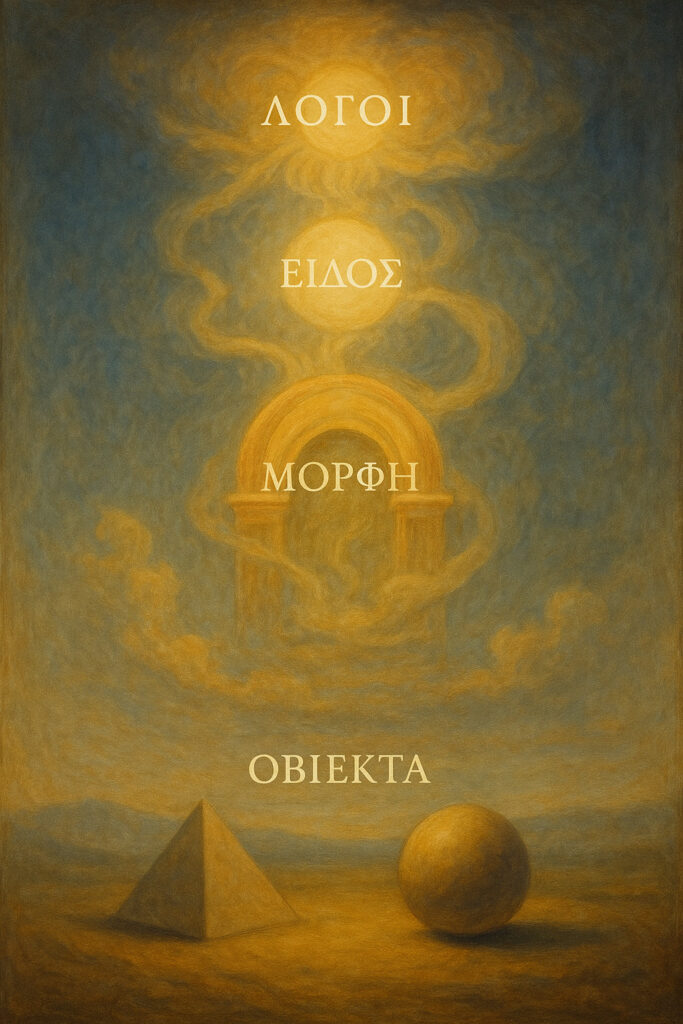
This is precisely the difference between intellect (sinesis) and thinking (einus): intellect is a tool for solving problems, whereas thinking is the process of experiencing questions.
From such a perspective, information is a dimension of differences, structures, and the potential for distinction that allow what exists to differ from what does not exist. Where there is no information, there is no order, distinction, or connection. In the language of physics, the absence of information means maximum entropy, that is, the complete dissolution of differences. And conversely, where structure, connection, resonance, order arise — there information is born as well, and with it the possibility of cognition, experience, and meaning. Thus, information is a form-organizing principle that allows chaos to be perceived as cosmos, into order.
Thus, information becomes a bridge between subject and object, between the observed and the observer, between potential and actuality. And while energy animates the world, information gives it meaning. In the Hermetic sense, this is expressed by the famous saying: “All arose from the Word” — from the Logos, that is, from the highest meaning.
Accordingly, speaking of the mental plane as a special level of existence where information is stored, comprehended, and integrated, the Tradition refers to information as a fundamental foundation of the world.
In this key, thought is regarded as a kind of “measure of information” capable of shaping reality. Hence the commonplace esoteric dictum: “thought is material.” And this means that the mental plane is a level of being where thought exists as a kind of energetic pattern or “structural template.” Every image or idea arising in any stream of mind leaves in this medium its imprint.
Such imprints create the general sphere of mental experience — the so-called “DES ether.” Accordingly, the space of thought (the DES ether) is the structural aspect of being itself, a kind of mental fabric of the Universe, in which information is stored and structures reality.
At the same time, every interaction at any level is not only an exchange of energy but also an exchange of information, leaving its own imprints (Reshimoth). In other words, any event is imprinted in the structure of the universe at the DES level; any physical interaction generates informational traces in the surrounding environment. In this sense, the mental plane is described as a global repository (“Library,” or, using the Theosophical term, “Akashic Records”) and a transformer of information.
Different ways of forming imprints and storing information are known. Conventionally, one can distinguish feature-based storage and meaning-based storage. The feature-based method is recording external characteristics, data without interpretation: similar to how a camera captures a set of pixels, or how a computer’s memory stores bits representing features (color, shape, sound). The meaning-based method is the preservation of the overall content, meaning, and interconnections.
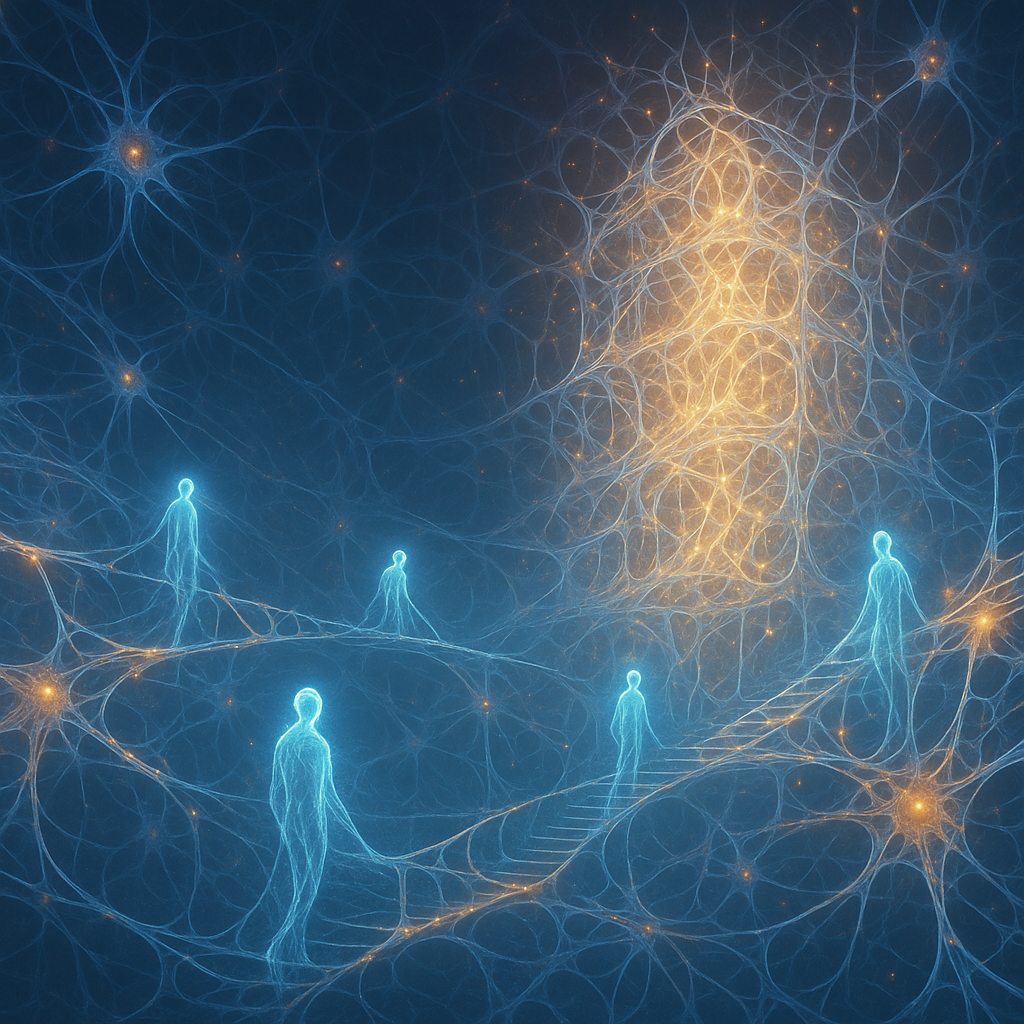
Human memory usually works in a meaning-based way: the brain remembers not the sensory details of an event, but its overall meaning, the main feeling, conclusion, or image. The brain’s memory is a feature-based, contextual, constantly restructuring network that stores not whole reflections but sets of features necessary for their reconstruction. However, such feature-based memory inevitably degrades or changes over time, and the information in it may be partially or completely lost.
Unlike the brain, in the DES space information is stored as integral imprints and multidimensional configurations. These imprints are preserved in the very structure of the field of meanings, as stable vibrational patterns with which one can resonate and attune one’s mind. At the same time, due to the nonlinearity and multidimensionality of information in the Library, access to it requires a special attunement of the mind, skills, and high precision.
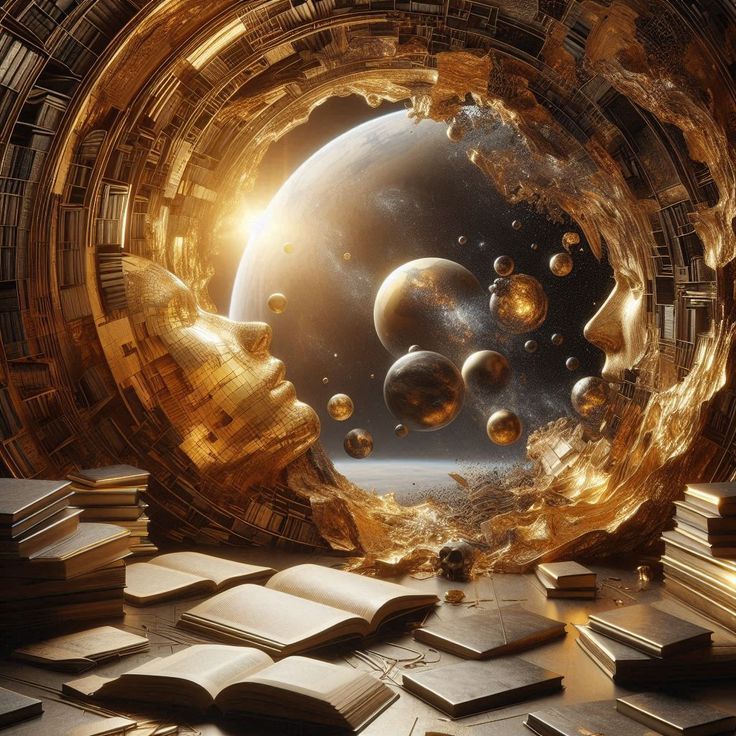
It is also important to distinguish between memory and the Logos as a repository of impressions and the Logos as an active principle of ordering. Memory is a passive databank, accumulated imprints of everything experienced, while the Logos is the axis of its meanings. At the same time, memory itself is inert; it merely stores, changing nothing and comprehending nothing. The Logos, on the other hand, is a creative principle that comprehends and connects these archival data, extracting from them meaning and direction. One may say that memory answers the question “what happened,” whereas the Logos — “why” and “what it means.”
In conscious experience this is reflected in the difference between simply stating facts and the ability to interpret them and give them meaning. Thanks to its Logos-based foundation, the mental plane is a living field of knowledge where past, present, and future are linked by common laws and meaning. Memory provides the material, and the Logoi provide the form and the idea by which this material is organized.
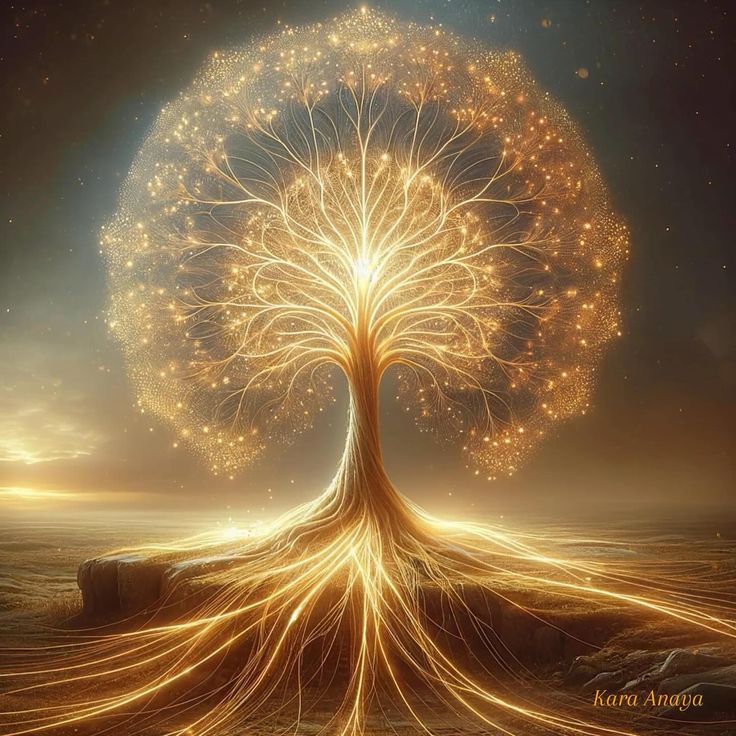
In this fabric of information, each thread is someone’s story or idea, and all such threads are intertwined, echoing one another through semantic analogies and consonances. The Library stores everything that has ever happened in all worlds and timelines as a multidimensional pattern in which similar meanings overlap and reinforce one another. This is what it means that access to information in the Library is a matter of tuning resonance. Ideas close in meaning resonate with one another, like the consonance of strings tuned in unison, and therefore a Magus or visionary is able to “read” knowledge from the chronicles by attuning to the required wave of meaning.
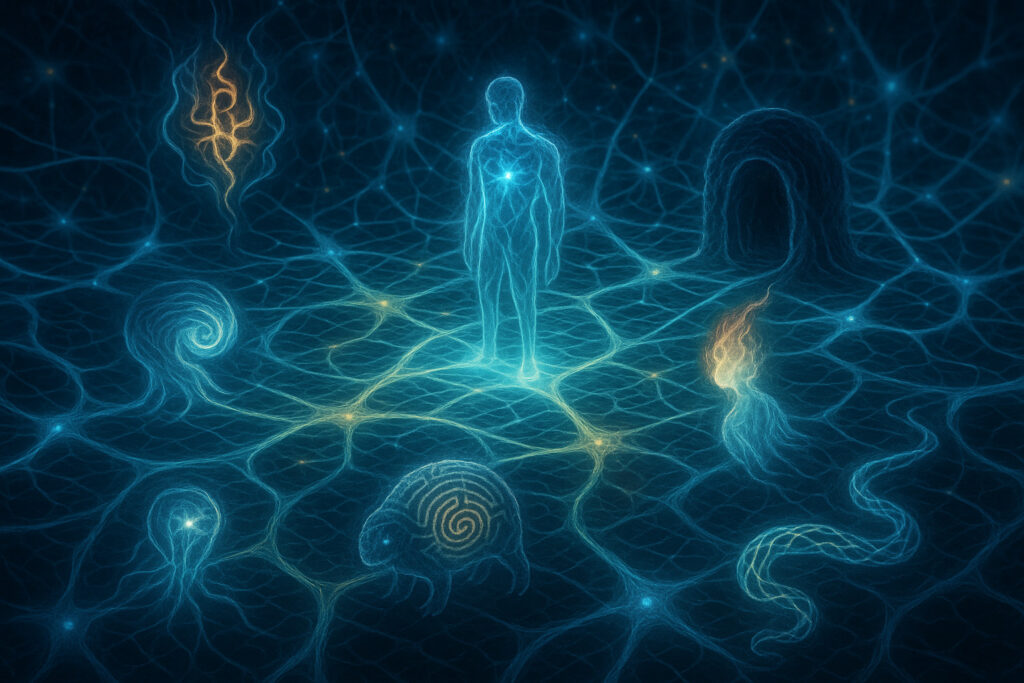
Accordingly, DES can be imagined as a global neural network, a mental field with a multidimensional topology, and memory in it is an interweaving of structural patterns, where each semantic trace is a reorientation of local space.
Any event, any thought, any timeline leaves its imprint or resonant trace in the structure of DES, and these imprints are woven into the fabric of possibilities, creating nodes of meanings, attractors, islands of eidoses.
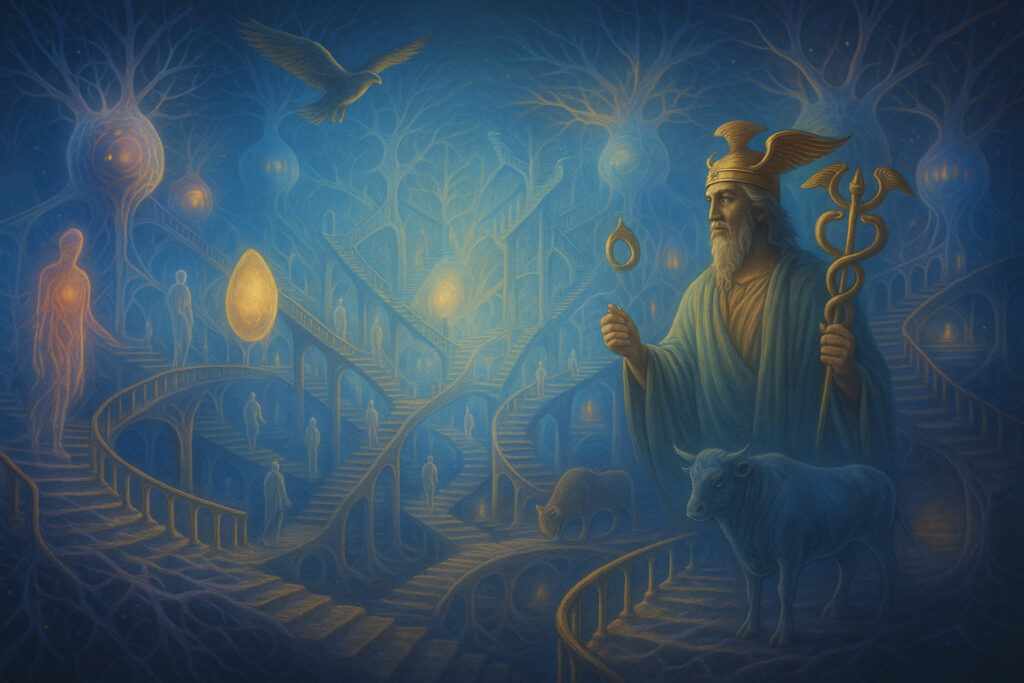
When two objects or beings interact, an exchange of energy occurs, a transformation of state — this is a physical event “here and now.” But as soon as the moment of the event passes, an echo remains of it — a trace in memory, a record in the structure of the Library. Accordingly, the mental plane can be likened to a huge hall of mirrors, where every event is reflected by countless reverberations. A real interaction happens once but generates an entire series of reflections: consequences in the material world, memories in minds, symbolic images in culture. These reflections are the informational embodiments of the event, its Chotemoth, and the informational structures created in this way remain imprinted in the Library forever; it is impossible to delete or undo them — the Library only grows and never diminishes or becomes distorted. One may say that DES is an eternal and infinitely capacious memory, incapable of forgetting, not distorting information, and not susceptible to external modification.
Thus, in the Hermetic understanding, DES is an aspect of the universe responsible for its semantic order. At the same time, the Library does not divide information into “files” but interweaves it according to meaning, where all possible events, unrealized choices, alternative timelines are present as eidetic traces. All information is laid into the mental field’s fabric in the form of such traces as a multidimensional spectrum of all possible branchings and outcomes. Accordingly, reading information from the Library is always a probabilistic action, because timelines branch and intersect repeatedly, and it can be very difficult to trace the line of events that led to the current state of the probability line in which a given observer is located.
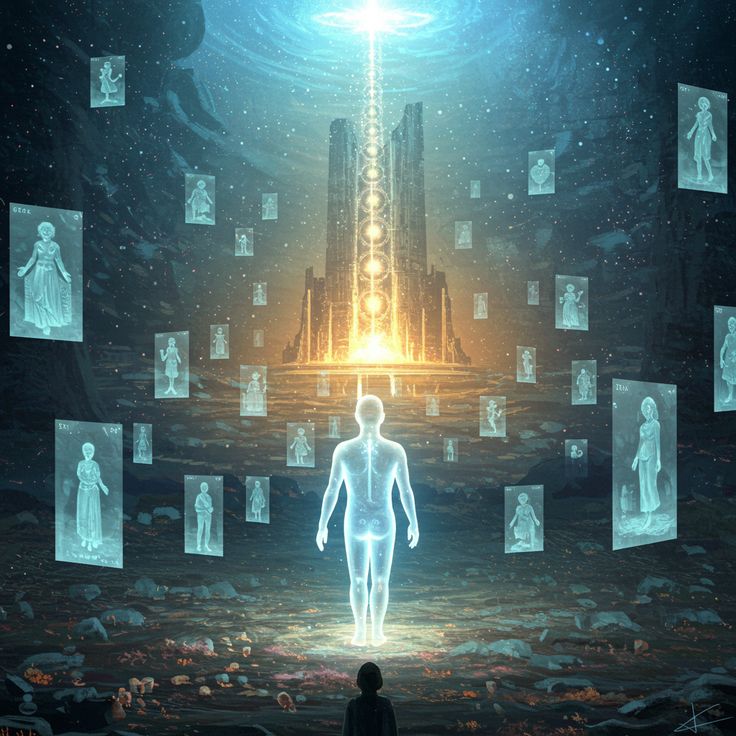
In other words, reading information from the DES Library is not a linear extraction of fixed facts but a complex navigation through a multidimensional landscape of meanings and probabilities, where any line of events is only one of many possible refractions of the Logos, and the path to it is resonant, topological, probabilistic. All knowledge in DES is positional, involved, relative to the observer.
Accordingly, reading here is closer to clairvoyance, dreaming, meditation, alchemical intuition than to ordinary information interaction. It is not a movement through bits or through text, but entering a multidimensional field of meanings, in which it is necessary to attune to the required contour of an event, awaken its eidos and archetype, and then view it as a multidimensional awareness. Therefore, if the “reader” is not emotionally stable, they can “pull out” a distorted trace; if their mind is too rigidly tuned to a certain outcome, it can ignore alternatives; and if there are many similar events in different timelines and they are sufficiently alike, mixing and perceptual distortion may occur.
Thus, the DES Library is a fundamental informational layer of reality, bearing the semantic structure of being. In this aspect, it can be regarded as an immeasurably vast, constantly changing network of imprints, resonances, and possible events, in which both what happened (including all variants) and everything that could have happened are stored. This Library is a kind of living informational body of the universe, in which every event, every choice, and every possibility are imprinted as traces and impressions, forming the most complex fabric of potential and actualized meanings accessible to a mind capable of entering into resonance with them.
Thank you.
If we proceed from the multiversal interpretation and consider that at each point of the universe a print of its entire history is stored (at the level of the ether DES), and since these prints contain information not only about what has already been in this timeline, but about everything that could have been, can we say that the reality of each timeline is constantly built not on the foundation of the past, but based on future potentialities, ‘attracting’ to them?
In ‘classical’ physics, the evolution of the world can be described in terms of the ‘principle of least action’, as nature ‘chooses’ from all possible trajectories the one where the integral of action is minimal. This is a fundamental principle underlying mechanics, optics, and quantum theory. However, from the perspective of hermetic philosophy, such ‘choice’ is not blind; it is seen as an expression of correspondence between two layers of being – that which is (actual) and that which can be (possible, logos, meaningful). In this description, the future is a multitude of potentials, organized meaningful forms ripening for embodiment.
At the same time, modern physics, special and general theory of relativity, also describes time as a coordinate axis, equal in rights to the three spatial ones. In such a description, all events – past, present, and future – already exist in the ‘block universe’, and different observers moving at different speeds can order events differently: what is past for one is still future for another. In such a description, causality is preserved locally, while time is viewed as interdependent with space and the observer. This agrees with the idea that the future influences the past as much as vice versa, meaning in the holistic structure of the universe, the connections between points of events are mutual.
Analogously, DES (as the ether of reason and thoughts) is a layer of information in which the prints of all possible events are fixed in the form of imprints – special resonant structures. It can be viewed as a kind of mnemonic field of the universe. There, future and past intertwine into a common field of meanings, and the thought forms, logoglyphs, and mnesions residing there are semantic nodes that connect different timelines and states of consciousness into a single fabric of awareness. If we picture DES as an informational space-time, the selection of reality can be described as a resonant movement between such nodes, where what will happen depends on what is already imprinted and vice-versa – the past changes its content based on the realized future.
Consciousness in this system is an active participant in the unfolding of reality, it tunes in to those potential outcomes that resonate with its logos component – its inner axis of meaning.
Thus, reality is always co-organized holistically, as a system that aligns the prints of the past with the possibilities of the future, forming the most ‘resonant’ trajectory. And when physics says that the world moves along the path of least action, hermetic philosophy clarifies that the world realizes that which most corresponds with its meaning.
Thank you