
Songs of the Elven Kings
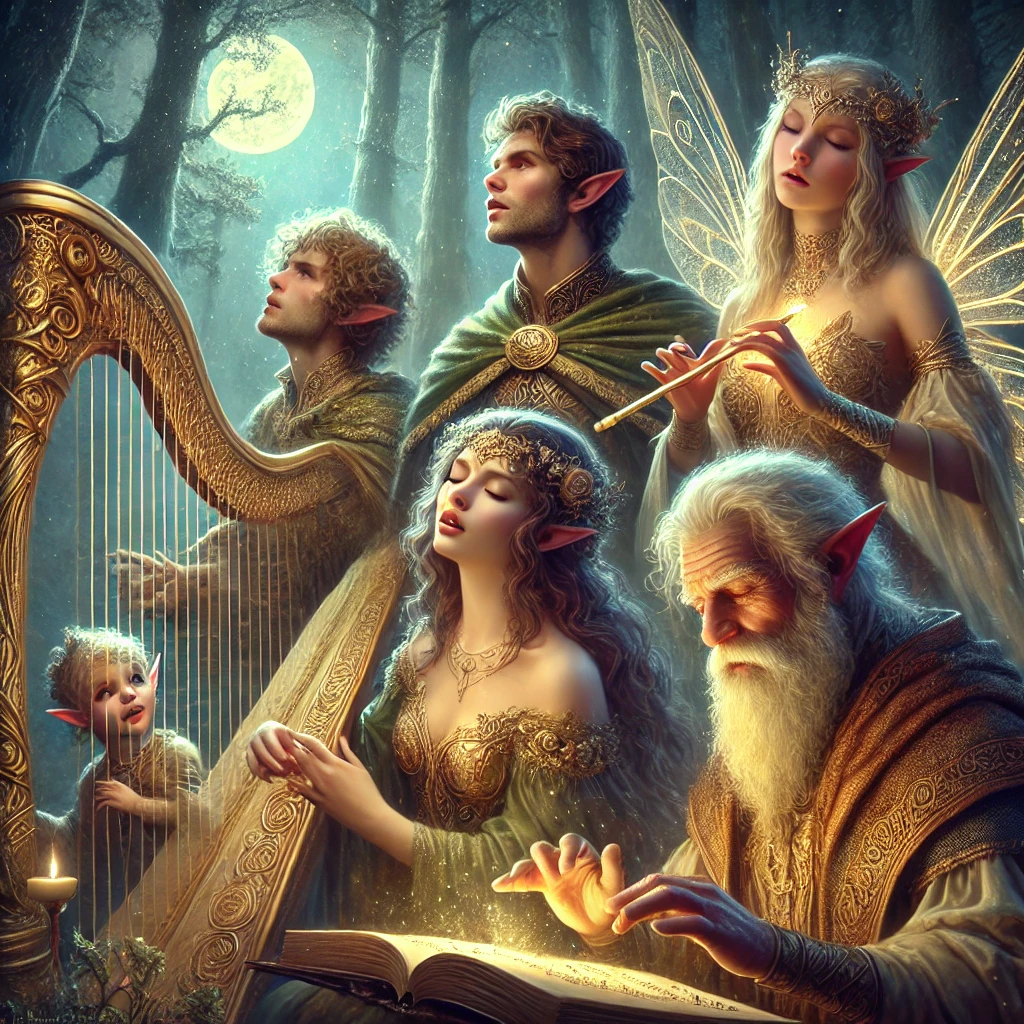
As we have already discussed, one of the key traits of the Immortal Peoples is their love and talent for music.
At the same time, fairy music is not only an art — it is also an instrument of power, their bond with nature, and one of the main ways of influencing reality. It is their essence and the manifestation of their strength. The great Celtic bards borrowed part of the fairy tradition, but human music will never again be able to compare with what sounds in the crystal halls beneath the hills. These human poets received imbas — an illumination bestowed by the immortals. It is believed that the human mind cannot withstand the magic of fairy songs. Their melodies are both beautiful and dangerous: having heard them, a person may forget everything in the world, follow the Aes Sidhe into the Interval, and remain in the Interworld.
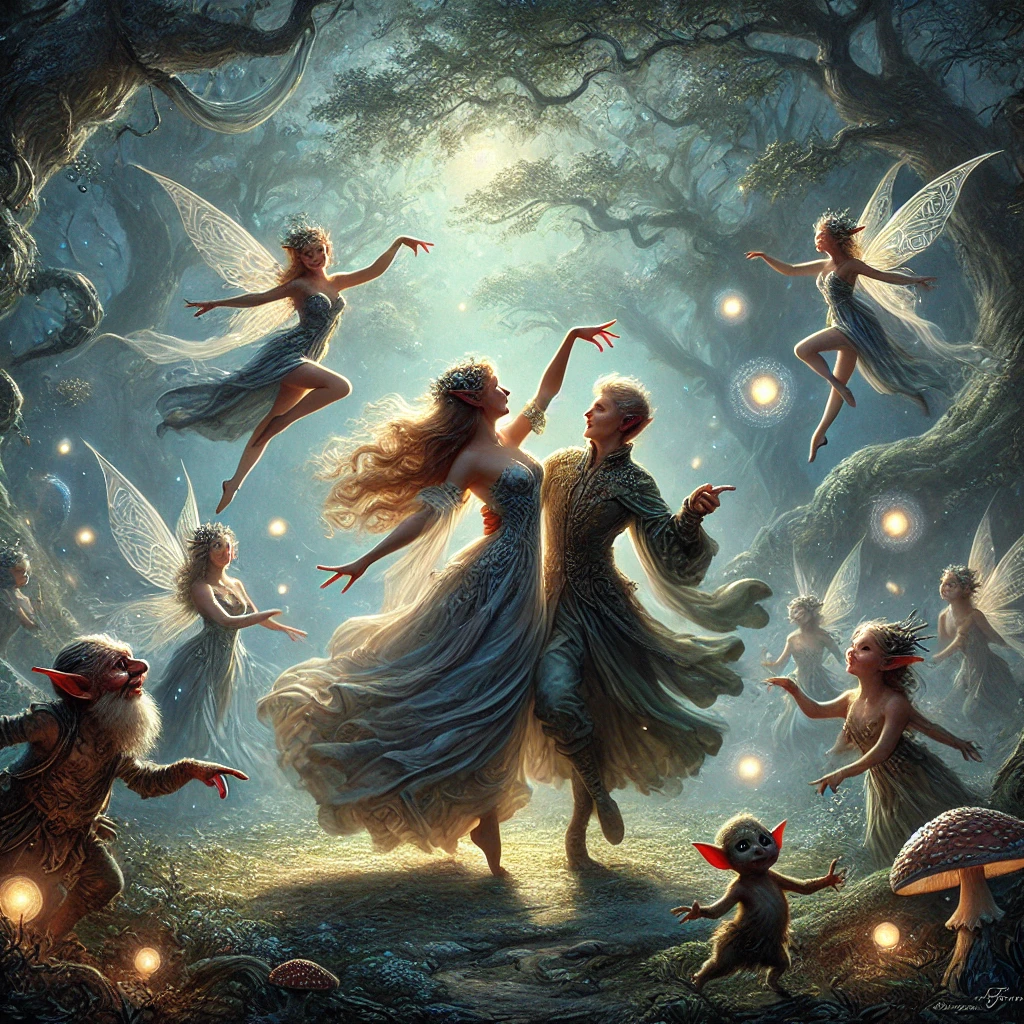
When the Aes Sidhe left this world, their music disappeared as well. Legends say that the silence in the forests — perceived as the lack of something — and the loss of harmony between humans and nature are connected with their departure. But sometimes, in the distance, one can still hear the echo of their songs: if a person finds an ancient sid (a fairy hill), they may hear their music, but must not follow the sound — otherwise they will be lost forever. It is also said that the most talented musicians often receive inspiration from the Sids — but this gift is always bound up with danger.
According to lore, fairies cannot help but sing — their Magic, unlike human magic, is inborn, natural, and lives within them. Their music creates worlds, filling them with harmony and movement.
Fairies believe that everything in the world vibrates to cosmic melodies and that it is precisely through music that reality can be tuned or changed. Their art makes it possible to influence nature: fairy melodies can make trees grow faster, streams change course, calm storms, or disperse clouds.
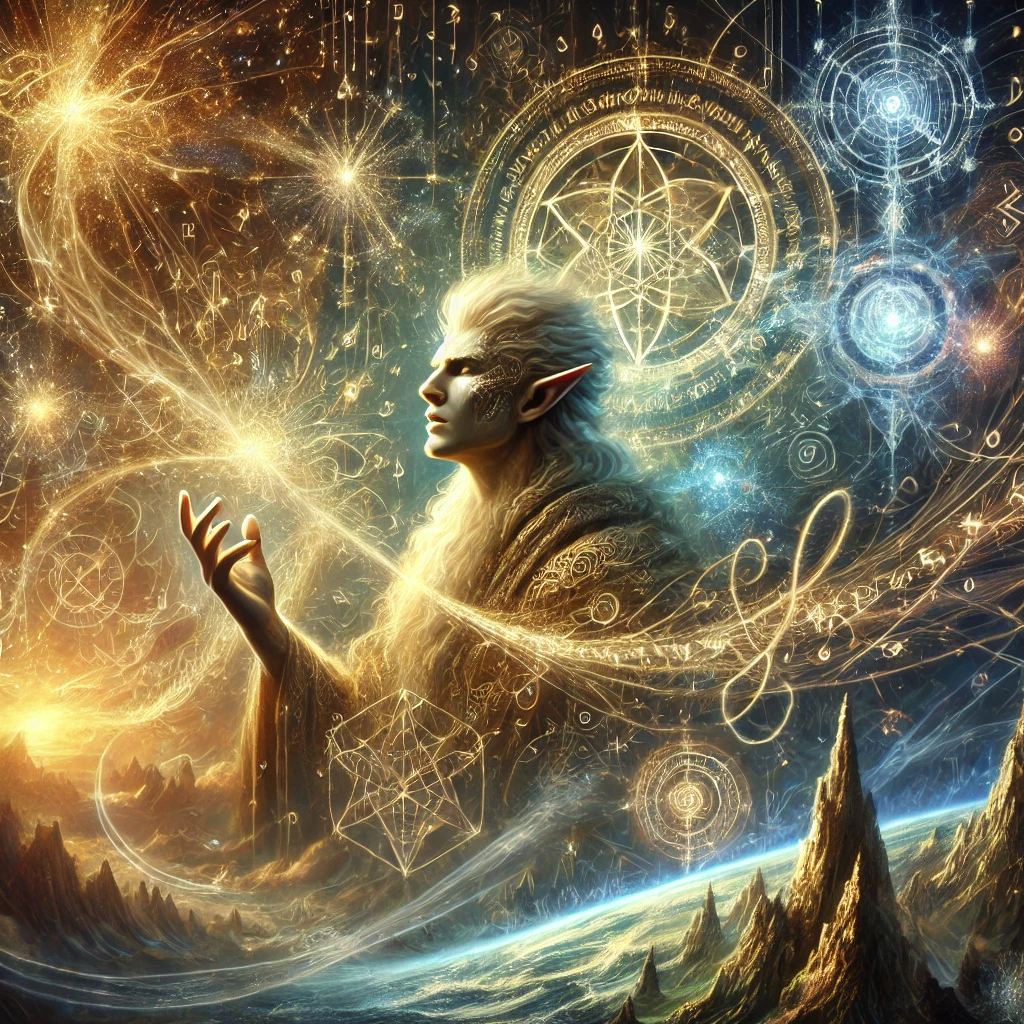
Fairy music is also capable of causing transformations of beings and objects; some melodies can change the appearance of the listener — for example, turning them into a bird, a beast, or a magical creature. It is by means of music that many fairies open portals between worlds; with the help of special melodies, fairies can move between the Interworld and the Interval.
Their music reflects the structure of the universe: each note resonates with the secret laws of the cosmos.
High fairies (Daoine maithe), the Elven Kings, bear the primordial magic of sound, connected with the very creation of the world. Their songs are simultaneously art and magical spells that can change reality, resurrect the dead, summon gods, and even create new worlds.
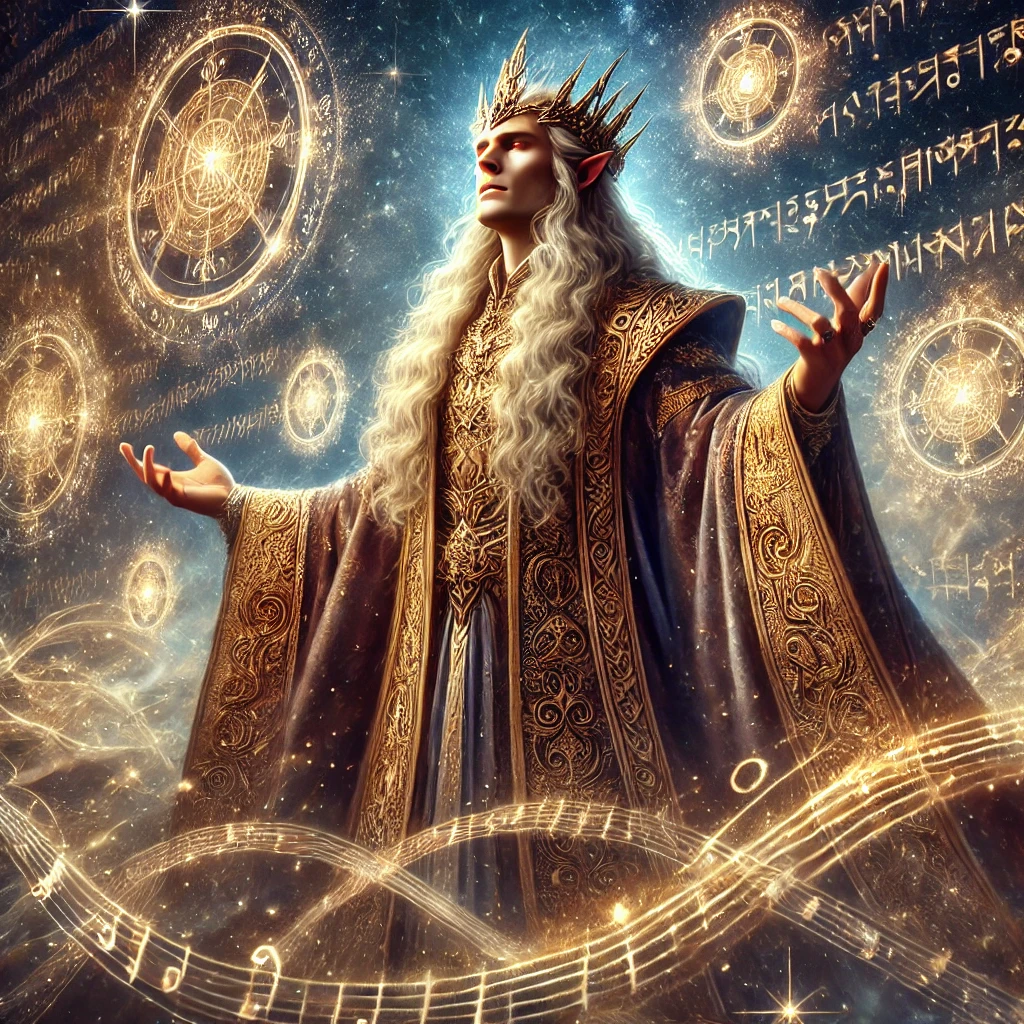
Only a few mortals are capable of hearing the true Song of the Elven King without going mad from its power. A mortal body simply cannot endure the vibrations and may literally crumble to dust. Under this music, time itself changes: a few minutes of the song may stretch into centuries.
According to fairy lore, sound is the primordial foundation of the world. It precedes matter and movement, and it is precisely the songs of the elven kings that carry this original power within them. These traditions say that the first elven king (Ongentir, Ongentheow) sang the song that created their people.
When the Tuatha de Danann first came to the world, they were children of light, bringing knowledge, art, and magic. Their souls were indistinguishable from wind, water, and fire, and their voices sounded like the songs of the stars themselves. However, after the victory over the Fomorians, part of the sids withdrew from active participation in the affairs of the world and chose to live among the trees, weaving their music into them. And then Ongentir sang the Song of the First Illumination — and this song created the Immortal People, who would later be called Elves.
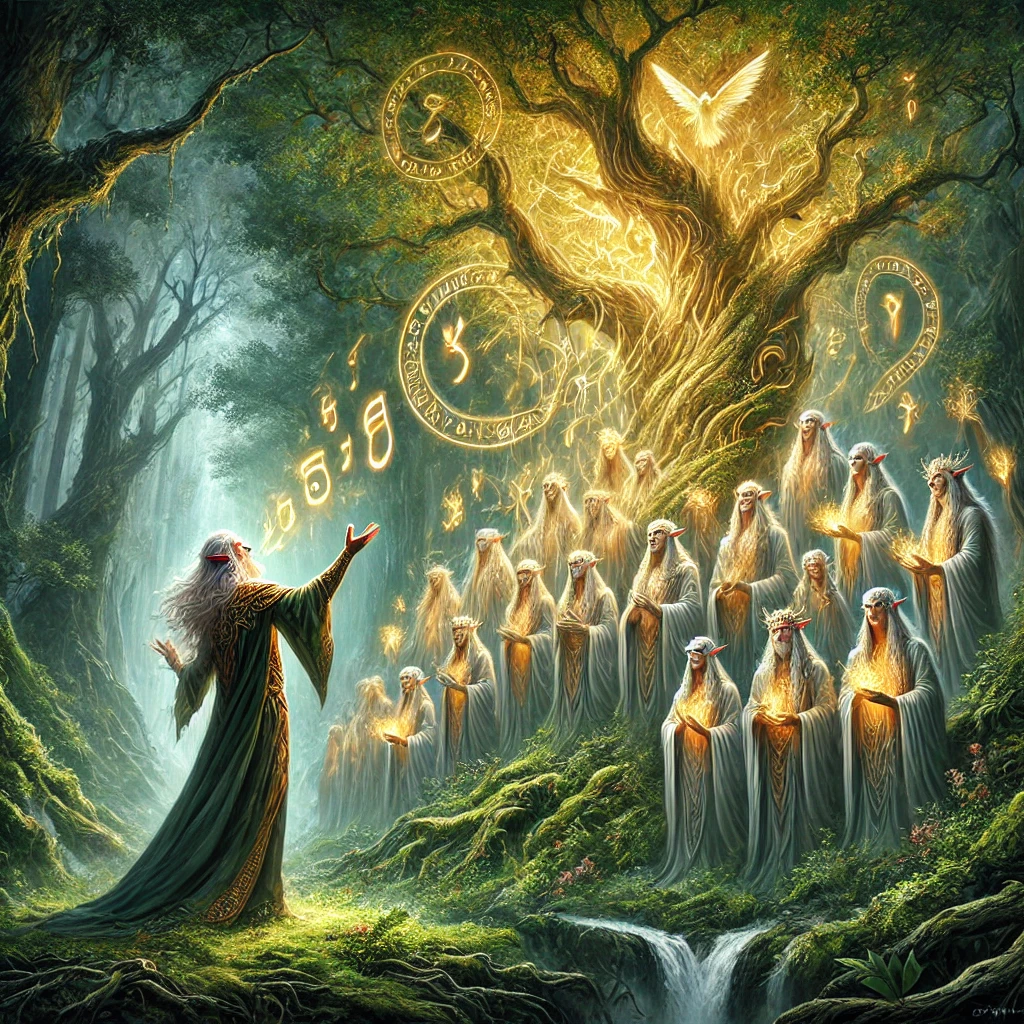
Legends say that Ongentir did not create elves from stone or flesh, the way mortals create statues or houses — he sang them into life. The words of his song were as follows:
- The first sound became their voices, so that they could speak with the wind.
- The second sound became their movement, so that they could dance together with the rivers.
- The third sound became their mind, so that they could understand the language of stars and leaves.
- The fourth sound gave them hearts, so that they could feel the world as deeply as the gods themselves.
When Ongentir finished the song, his people awoke among the trees and began singing along with them. The elves were not subjects — they were notes in his melody. Their minds became one with the forests, valleys, and rivers, and since then every dryad (a tree spirit) knew the name of its elf, and every elf knew the name of its dryad.

It is precisely from this song that fairies received the ability to sing as no mortal can. Their songs can heal wounds, stop time, and change fate. Although fairy melodies do not belong to this world, they are capable of changing its nature. Such a song can be a prayer, a spell, a weapon, and a portal between worlds.
The songs of the elven kings can address the gods directly, calling them to appear. In ancient times, when there were alliances between gods and elves, kings could summon divine powers that intervened in the affairs of the world. They could command the elements: conjure storms, rain, and lightning, and even stop time.
Some elven kings could rewrite fate through sound. Their songs could change the course of battle, making warriors invulnerable or, on the contrary, disarming them. Traditions say that an entire village could vanish from the face of the earth if it was touched by an elven melody.
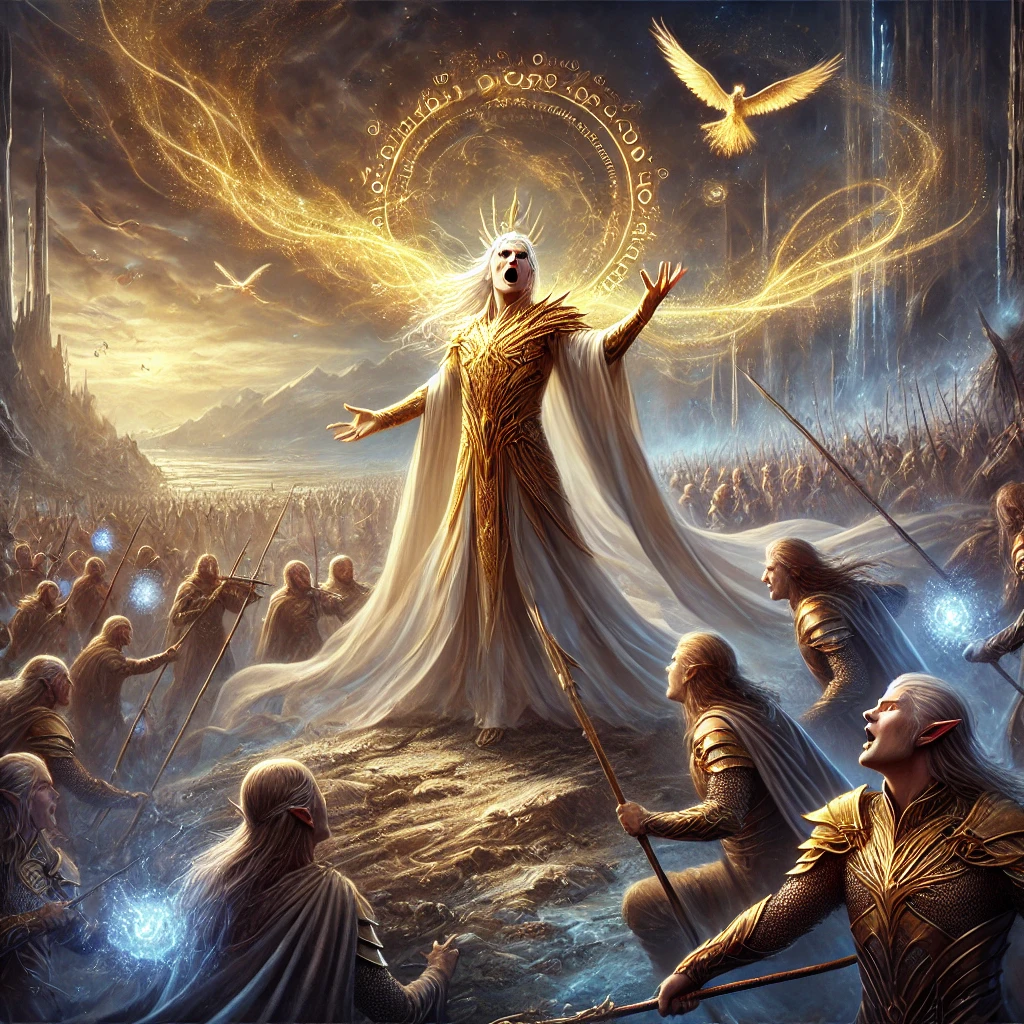
During wars and battles, fairy songs could bring back to life those who fell on the battlefield. Legends say that the last Song of the Elven King once resurrected warriors fallen in battle so that they could finish the fight they had begun. However, for such a resurrection the kings paid a great price: they lost their power or even departed to the Interworld or other worlds.
Traditions also say that if an elven king curses someone with a song, then that person (or even an elemental) will be unable to escape a dire fate. Their songs can cause fear, blindness, madness, or memory loss.
Whoever managed to repeat the song of an elven king is doomed: they will sing it until their life force runs out. The only way to be saved is either to play the melody backwards or to break the strings of the instrument before the song has ended.
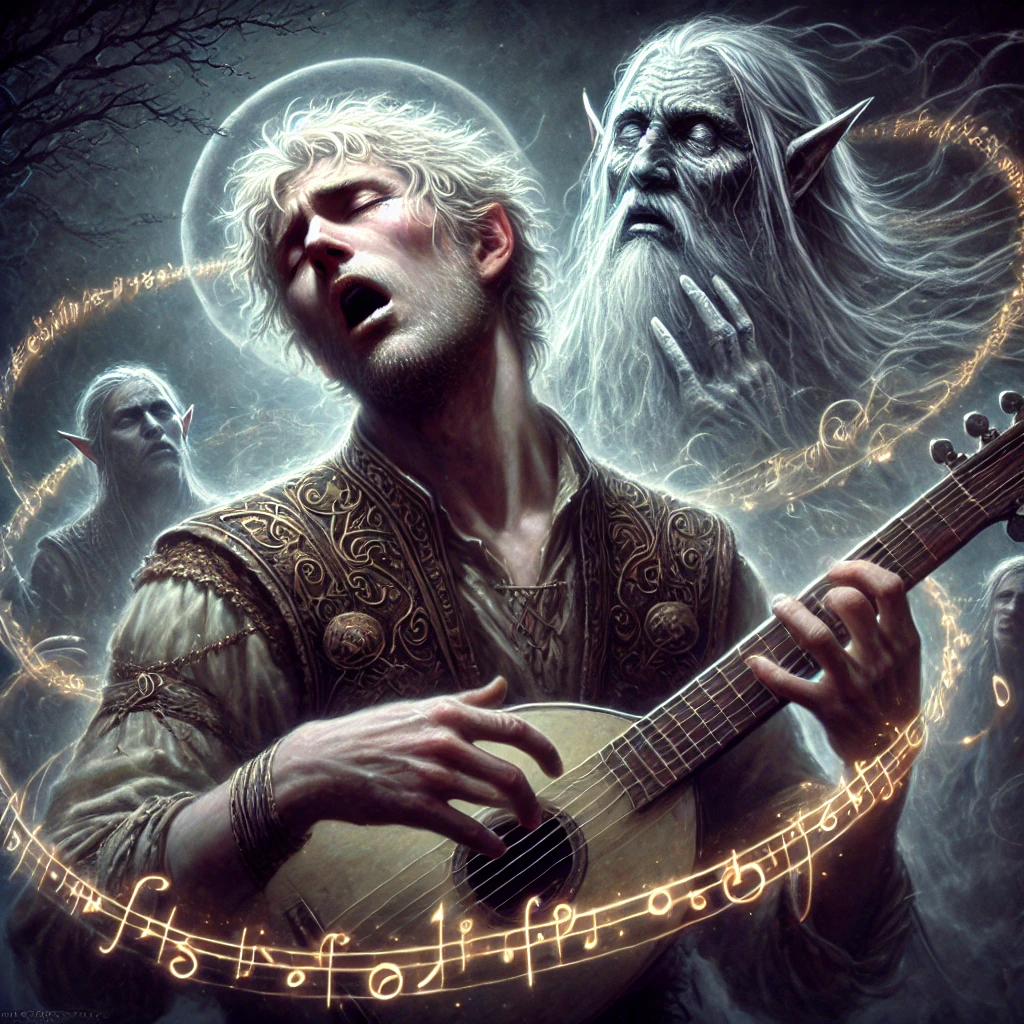
As is well known, the Alves, the ancestors of the High fairies, possess primordial music capable of influencing the fabric of reality. Their descendants, the Tuatha de Danann, also used music for creation and destruction. Their harpists played melodies capable of shattering mountains or raising the sun in the sky. It is believed that the Elven Kings inherited this power, but their songs are even more subtle and complex.
When the iron age destroyed magic, the kings of the elves stopped singing. Their melodies became only an echo in the forests, heard only by the chosen. They say that King Ongentir returned once to the forests of Midgard and sang his Song again, but this time it was not the Song of Creation but the Song of Exodus. The elves vanished, dissolving in the morning light, and since then they have been only an echo in ancient forests.
And only sometimes, on quiet nights in remote places, one can hear a faint motif — and if a person follows it, they may enter the halls of the fairies… and never return.
Very interesting. Thank you.
Does this mean that the understanding of the fairy world is deeper than that of mortal mages, and that the magic of sound is more fundamental than the magic of words and rituals? If fairy music is so powerful, then is human perception of magic originally limited, and is it possible that music is the primary magical language through which one can grasp the true nature of being?
Partly, this is indeed the case. The music mastered by elven kings reflects the primary vibration from which the fabric of the universe is woven. Fairy magic is intuitive and flowing in nature; it not only acts in reality but becomes reality itself. Human consciousness is indeed limited in its perception of this power. We are accustomed to structuring Magic, tying it to words and fixed formulas, searching for regularities, accumulating knowledge. However, fairy music belongs to that level of Magic where knowledge is not memorized but lived; it is not fixed but sounds and transforms in flow. For a person used to sequential thinking, such Magic is a turbulent stream that cannot be contained in the vessel of reason. However, this does not mean that the path to understanding is closed to the human mage. On the contrary, they can approach this force, but their path will be long and complex. The human mage must learn to perceive music with their entire essence, feeling how each note changes their state, how it resonates with the flows within them. In this sense, esoteric practices aimed at harmonizing ‘subtle’ bodies and ‘tuning’ inner structures can prepare one for contact. The reason human consciousness cannot withstand the songs of elven kings lies in the fact that human nature does not resonate with these vibrations. Our awareness is fragmented, filled with internal conflicts, contradictions, and instability. However, one who can bring their consciousness to a state of purity and wholeness will endure the sound without breaking down. In other words, a person will never be able to sing as fairies do, because their nature is different. However, they can find their own way of interacting with the magic of sound, not by imitating fairies but by discovering their own voice, their own note in the great cosmic chorus. Can a person learn the song of an elven king and not die? Yes, but then in their performance, it will already be a different song—one of their own.
There are even more powerful beings – Melphs.
And the language spoken beyond this world in the Sphere is mainly Melphian.
When I greet the Forces in this language, I feel that many hear me.
By the way, these Elves do not allow people into natural worlds and have sealed the Gates. Dark elves are a separate topic.
There is something similar about the power of music of the elves in Tolkien:
“Their art allows influencing nature: the melodies of the fairies can make trees grow faster.” The Two Trees of Valinor appeared from the song of Yavanna (the vala of nature).
“Ongentir sang the Song of the First Illumination – and this song created the Undying People, who would later be called Elves.” In Tolkien, in a similar way, the ainur created creation – Ainulindalë https://ru.wikipedia.org/wiki/%D0%90%D0%B9%D0%BD%D1%83%D0%BB%D0%B8%D0%BD%D0%B4%D0%B0%D0%BB%D1%8D
Here are gathered and analyzed quotes about the music of the elves from Tolkien’s works, it might be interesting https://nan-elmoth.ramot.ru/music/Vityariel/LindaleEldava/index.htm
Probably, the phylids are the closest to the magicians of the elves, as they can also create strong magic through music? Or perhaps the phylids are descendants or half-breeds of elves?
“Talented musicians often receive inspiration from the Sidhe.” The occultist and composer Cyril Scott wrote a grand and unique work entitled “The Occult Influence of Music” https://www.koob.ru/scott_cyril/music_secret_influence where he claims that only inspired composers are recognized as geniuses because through them, higher beings (devas) conduct their ideas into this world, and thanks to this music, changes occur in society; it influences people’s thoughts and history. Have you read Cyril Scott? What do you think about it? Who might these devas be that “whisper” music to the geniuses? If this is blissful music like Bach, Chopin, Rachmaninoff, then it can be referred to the music of the elven kings, but if this is degenerate music like the Beatles, Madonna, Taylor Swift, then dark forces stand behind it, possibly Dark elves or demons? If Dark elves stand behind Marilyn Manson or hairy orcs like the band Morgoth, then this confirms the theory of the inspiration of composers by elves (dark or light), but if devas are not only elves, but other beings as well, then who else besides elves is a carrier of music? In general, in the 20th century, music particularly influences the course of history as its performers have become idols, living gods, into whom tons of energy from fans are poured! And since pop stars (like rockers) are often degenerates – alcoholics, fornicators, and drug addicts – their creativity lowers the populations’ frequencies, and thus, it was probably designed by those who inspired musicians of the 20th century with such music, meaning someone is deliberately lowering people’s frequencies through low-frequency animal emotional (rather than mental or divine) music.