
The Idleness of Orobas
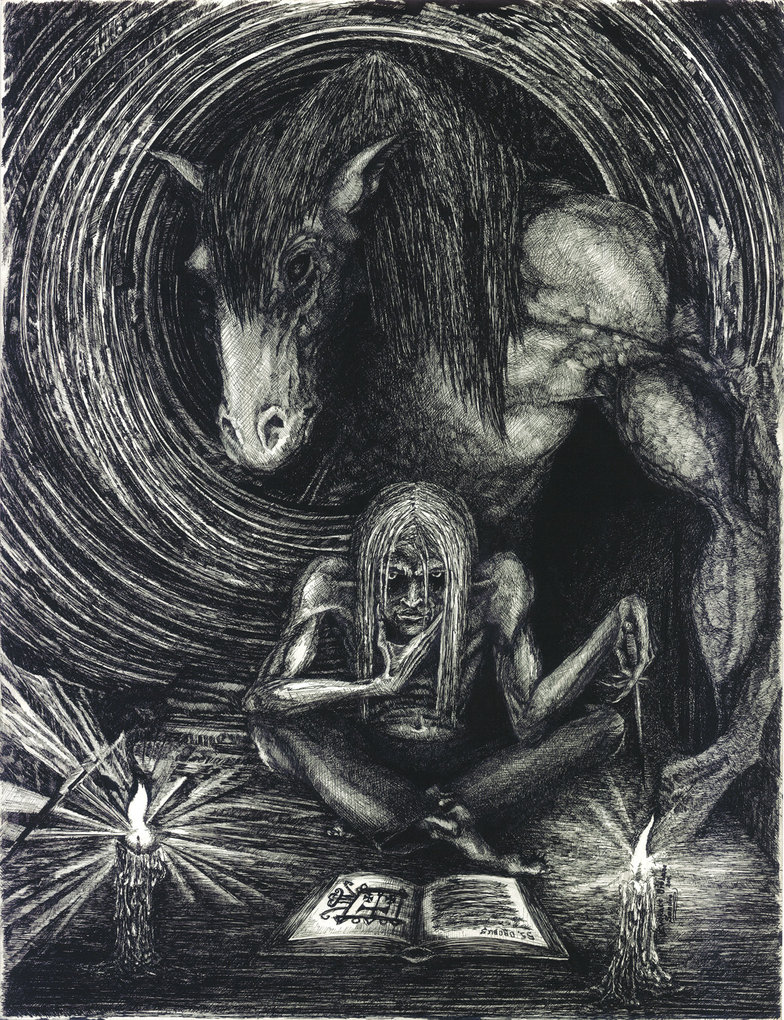
Among liminal spirits the Lemegeton system singles out several forces that take on a horse-like form within the Triangle of Art.
We have already said that this image is associated with support that these forces supposedly provide, and that it is precisely the illusion of such help that is their trump card in gaining control of a person’s mind.
The urge toward concentration, inward immersion, and self-purification is one of the most fundamental properties of human nature. The human mind, striving for development, must from time to time withdraw from bustle and activity, and plunge into self-knowledge and reflection. This attraction is embodied in the figure of the Genius Mebahiah, whose motto — “God Eternal” — reflects withdrawal from time, from the flow of events, into a frozen “here and now” — the eternity of self-contemplation.
And, of course, the vision of “eternity,” the conventionality and even illusoriness of any manifestation, can quite easily create the impression that activity is pointless and endeavors are useless. “Why fuss, since everything is already here and now!” asks the mind, and a quiet voice answers: “Better to think, sit, sleep. The world will not run away; there is no need to strain.” The mind, treading a thin line between abysses, then falls into one — the abyss of idleness. Naturally, the other abyss — immersion in a senseless cycle of useless actions — is no better, but lying like a rotting heap, complacently considering itself wise and experienced, is hardly an attractive prospect for the Magus.
One way or another, in a mind lacking vigor the gates to loss of power open, and the Lemegeton calls those gates Orobas.
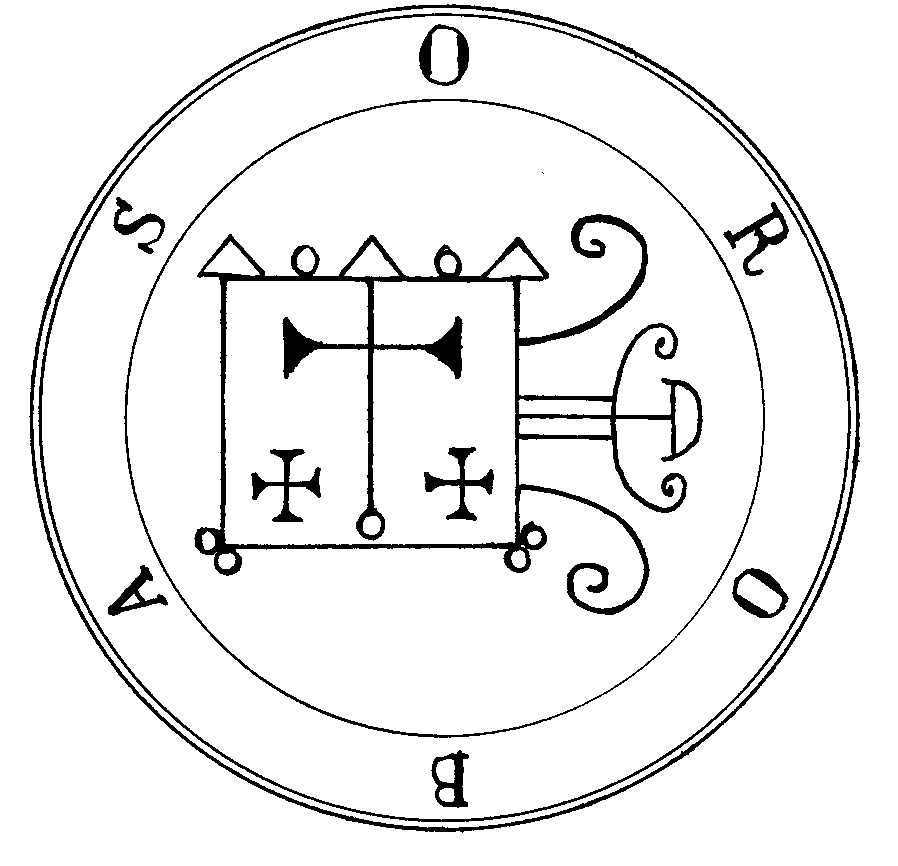
«Orobas (Orobas) — the fifty‑fifth spirit, a great and powerful prince. At first he appears in the form of a horse, but then, at the conjurer’s command, takes on the form of a man. His role is to tell of things past, present, and future; he grants ranks and ecclesiastical authority, and the patronage of friends and enemies. He gives truthful explanations of questions of theology and the creation of the world. He is very loyal to the conjurer and protects him from temptation by any spirits.»
Let us analyze this description.
We have already noted that the horse image reflects the impression of possessing a resource provided by this spirit. As soon as the mind thinks it has support, it becomes comfortable and quiet; it risks falling under the Prince‑Prelate’s sway. Note that the idleness of Orobas is not merely laziness and torpor; it is the consequence of a distorted understanding of the value of action and being in the world. It is precisely this “elevated” character of the deception the demon creates that is reflected in his ability to bestow “prelacies” — that is, high spiritual ranks. And “protection from temptation by other spirits” means an absence of irritating influences on the mind, which luxuriates in its inactivity.
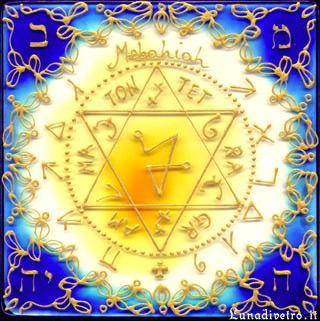
Mebahiah is thought to aid in the continuance of lineage since the Psalm corresponding to him says, “And thou, O Lord, shalt endure forever, and thy remembrance unto all generations.” At the level of mind this implies the ability to generate fruitful ideas. Accordingly, when Orobas distorts such a stream of Power he brings the mind into a barren state of complacency and arrested development.
The activity of Orobas operates on the level of emotions; he suppresses the desire to act by appealing to a sense of false equilibrium and deceptive harmony. Astrologically Orobas blocks Jupiter — that is, he suppresses that creative, productive activity which should itself be the fruit of deliberate and conscious decision. By replacing airy activity with watery currents of emotion, he leads the mind into a thick, misty state, robs it of the ability to see clearly and far, and lulls it with short-sightedness.
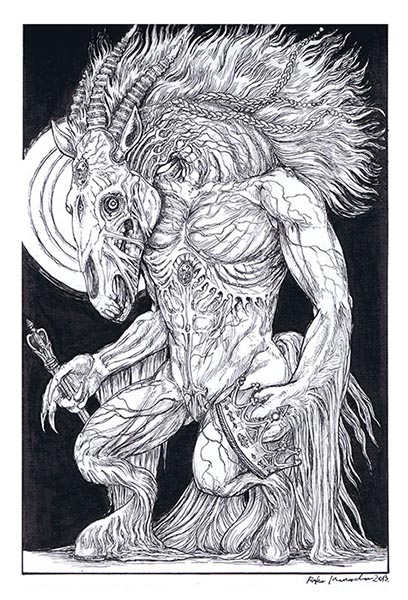
For the Magus it is very important to track the moment when self‑contemplation and reflection cease to be fruitful, when they stop being means of actualizing potentialities and turn, at the Psychocosmos level, into the same gilgulic cycles in which Macrocosmic activity so readily becomes trapped.
The Magus’s attention must control both currents — his actions on the level of Being and his reflection on the level of mind. Just as the Magus’s actions must be conscious, the Magus’s mind must be active.
And preventing immersion in an empty cycle of deeds is no easier than holding the mind back from idleness. The Magus must act, and his actions must be conscious. The Magus must withdraw into himself, but these withdrawals must not be a mask for laziness and halted development. When the Magus acts, he must watch that his mind does not lose its intensity. When the Magus contemplates, he must watch that his realizations do not cease. Neither the Magus’s body nor his mind should be lax; he must maintain vigor at all levels of his existence, and only then will he attain that integrity of development necessary for high effectiveness.
I started reading this blog because of the demons. Not because they were particularly annoying in any way, but simply because I couldn’t understand many things — I kept toiling away, but where was the root? What is this multi-headed hydra? In general, I think this section and the article about the gates are the most important here. Because there are plenty of books and methods in the library for each of the peculiarities of our consciousness; people have lived and written about this for a long time, and the problems are basically the same for everyone. And I believe that each demonic manifestation has its own “singer,” in the sense that there’s some author who sees it as the main thing and a panacea, along with their admirers. For some reason, Charles Bukowski popped into my mind. Not that people exactly worship him — it’s just how they live.
With everyone involved — personally, I wanted to do something. In my opinion, what is here called the beginning of the path is practically impossible without confronting the darker side of oneself, with what we usually don’t show ourselves. To simply know that it exists; otherwise, consciousness plays a funny game — it seems to crave purification, as if it’s genetically embedded. But this usually appears as a struggle against something whose pressure the consciousness feels within, but manifested in other people. I’ve already written this and will say it again: my understanding of all this is rooted in a psychological workshop where we explored our shadow. It was comically simple — imagine a burning circle with a person standing inside it, then fill that circle with everything you simply hate in others — gather it all, remember specific people and their traits, and take a step inside. I was surprised when, inside that circle, I became everything I thought needed correcting in others. It was like a madhouse on wheels — fellow participants in their circles laughed wildly, and their faces changed; I clearly remember what I experienced too. Then, under the supervision of the facilitator, we simply had to mentally extinguish that circle. But it had to be done well, because it was quite obvious who hadn’t done it — their faces had a somewhat manic look. In general, it’s not worth repeating alone; it’s better for someone to watch. But since then, I haven’t had any questions about the existence of a dark side and my own sanctity. And there appeared a chance to know it all and bring it into harmony. The article about Orobas suits me — I didn’t even know it was another area of the shadow. It’s not just my character (this is how it usually looks). I will take this on in the near future and write later on how it goes. I’m doing all this without a circle and other magical things, as I believe we have a wonderful 5D model in the form of reality and ourselves.
Thank you. It’s a very insightful article (I wish I had read it earlier…).
What does it mean – blocking the emotional waters? Is there an analogy with chakras, with the svadhishthana?
In the case of Orobas, energy in the chakras usually does not concentrate and immediately disperses to something else, and if it does concentrate, it turns out chaotic and unusable. This state is felt as a false fullness.
——————
I understand that Orobas is responsible for passive idleness. I wonder which demon is responsible for active idleness that is all about hustle?
So, the image of a horse in dreams, interpreted as love in dream books, is this incorrect interpretation?
It seems to me that this question is interesting to explore) In my opinion, energies described with the same symbol, especially in a dream, have my consciousness definitively taking the nearest understandable symbol for the waking mind. In general, all horses are probably connected by something common) If energy takes on such a form, then it itself may also turn out to be similar. For instance, I heard an advertisement in the office about some dietary supplement, and they said that about 15% of modern antidepressants are made based on St. John’s wort. And also I personally know that this herb was used in the past to ward off ‘evil spirits.’ The world is, in general, an interesting thing to me.
Don’t rush to trust interpretations from internet dream books 🙂 Who compiles these dream books and where does this someone get the ‘correct’ interpretations? In psychological associative tests, the image of a horse is associated with a partner (friend, husband, lover), but relationships with a partner can be both constructive and destructive. Dreams should be considered as a whole, taking into account colors, time of day, surrounding circumstances, but most importantly – it is what you feel at the moment of perceiving the dream images. This will help interpret the dream images correctly for you.
Hello, Enmerkar. Can you tell me, is the appearance of demons or various spirits one of a set of characteristic forms that reflects their inner essence and that they can assume at will? Or does their manifestation arise from the interaction between the spirit and the consciousness of the operator, and if so, can the same spirit appear to different people in different guises depending on which images representing its essence and existing in their consciousness they bring to life and activate with its presence?
Hello. Of course, the image of the spirit is how the consciousness of the perceiver reacts to its properties. However, since the archetypical basis of consciousness is similar among people, it is not surprising that they react to the same energies in similar ways, meaning they perceive similar images. However, it is certainly possible that people whose structures of consciousness differ significantly, or who are simply in very different states, interpret the same energy differently, seeing the spirit in different forms.