Points of No Return
The development of awareness, the course of a Magus’s life, does not flow like a calm river but like a mountain torrent, full of waterfalls and sharp bends. A great power that sweeps away obstacles can at the same time become a hindrance, for it leaves no time to look around and take a deep breath. Therefore the ability to stop, to look about, and to take stock of one’s Way is a necessary condition for harmonious movement.
The state of battle in which the Magus dwells simultaneously gives him a sense of life’s fullness, the weight of intense labor, and unexpected turns in the Way.
We have said that the flow of time is uneven, and the course of life is likewise non-uniform — and this is where free will finds its basis, arising within a world of conditioning and necessity.
Whether one speaks of a Magus or of a human, their life is a passage from one state of choice to another, from one fork in the Way to the next, and each choice, on the one hand, opens the way to certain possibilities, but on the other — closes it off to others.
For the Magus this movement is even more pronounced, and on the Magus’s Way such “forks” are traditionally called “points of no return.”
On the one hand, a point of no return is a point of new opportunity that the Magus may seize, or may forgo.
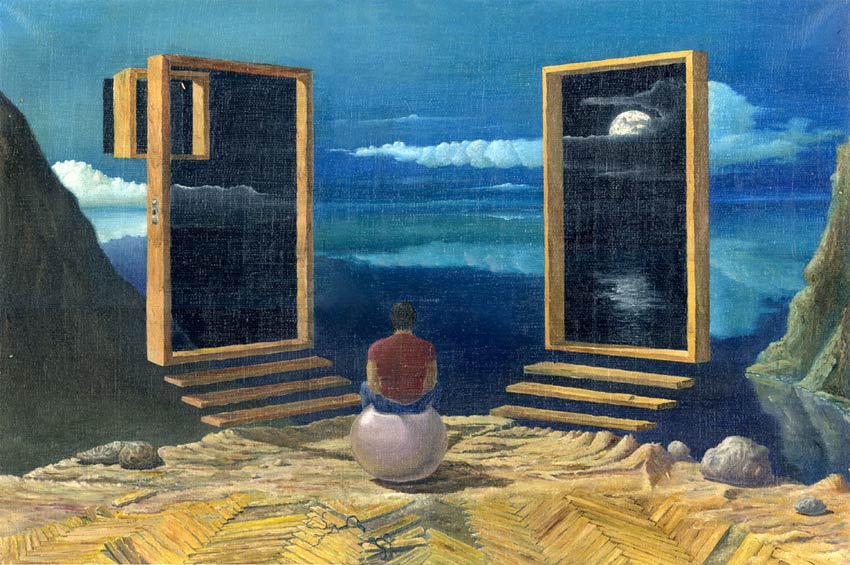
But on the other hand — even a missed opportunity at such a point does not imply that he can return; it signifies a definite choice, and therefore has definite consequences. In other words, even by avoiding a decision, a person is making one.
Such a point marks the beginning of the Magus’s Way: a person may hesitate for a long time, deliberate, pace back and forth and gauge the Way, but sooner or later a moment arrives when any decision becomes final. If at that moment the person steps forward, he sets foot on the Way of Magic; if he continues to hesitate — he loses the chance to take that Way, and continues along the human trail, or becomes a profaner. Moreover, having passed the “point” and entered the Way of Magic, the traveler will never be able to be human again, even if he becomes a lost Magus.
The same is true of progress along the Way itself — from time to time its turns and branches require a swift response and a choice on which much depends — the effectiveness of a section of the Way or even of much of it.
The sense that a point of no return has been passed occurs to every traveler occasionally, and even those who comfort themselves with the assurance that “you can always start again” know deep down that this is an illusion: there will be no true beginning, and if there is one, it will be a completely different story.
At the same time, the ability to sense the approach of points of no return is one of the Magus’s important skills; it allows him to assess his strategy in good time and prepare for the inevitable choice.
Nevertheless, the approach of points of no return does not always happen automatically according to the internal logic of the Way; sometimes the Magus’s own actions put him into such points.
Understanding which actions, rituals, and events allow retreat, and which are final, irreversible, helps the Magus build his Way with minimal loss. If he senses that after a certain action “there will be no return,” it means that the action places him precisely at a point of no return — with all the attendant consequences — and such an action must be undertaken with the utmost composure. The Magus must evaluate each step not only for its immediate effectiveness but also for the choice he makes in taking it.
This understanding prevents frivolous behavior, forces the Magus to weigh his capacities and intentions carefully, to conform to the Rules of the Game he has chosen, and thus to be an impeccable Magus.
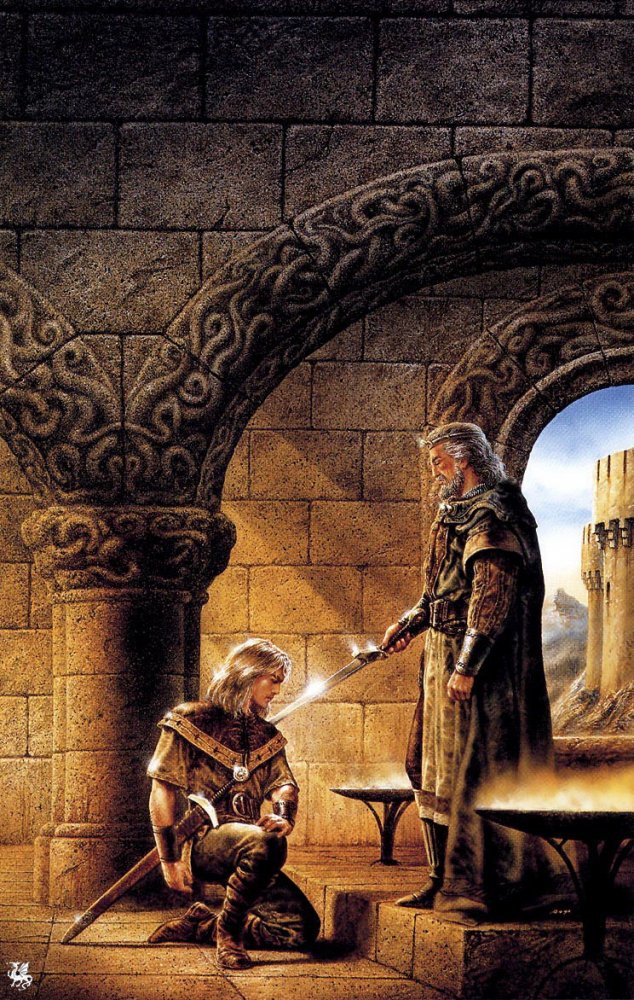
To mitigate the adverse effects of the heterogeneity of Time, Flow, and Path – it is useful to engage in strategic planning. One can set not only distant abstract goals but also intermediate (and preferably concrete) ones. This approach will also help to soberly assess one’s movement. If everyone reflected on the ‘points of no return’ – there would be significantly less foolishness in the world…, but alas…
Are there even ‘points of return’? There are no loops in time, but one can approach a conditional point by different roads… on the other hand, each point of choice opens its own path with unique characteristics. Choosing A or B can only be assessed from the perspective of an error at that moment in time, but from the perspective of the entire Path, these options are equivalent. It is this set of ‘errors’ and ‘correct’ choices that makes our Path individual.
The Path is individual not because ‘one comes to certain points by different paths,’ but because those very points themselves are different, more precisely, different aspects of them are reached by different Travelers. And regarding ‘points of return’ – it depends on how one defines ‘return.’ It is about the fact that sometimes certain opportunities close forever, and returning to them is impossible, but over a certain period of time, while they are still open, returning to them is possible.
Is a bifurcation point and attractors a model of a point of no return?
One can say so 🙂 From the perspective of thermodynamics 🙂 However, if the path at the bifurcation point is unclear, then at the point of no return – it is more or less predictable.
…And, considering the gravity of the complex choice, the figure of the cheerful Fool, widely opening the door to the Unknown, becomes increasingly appealing: ‘Oh, where has our fun gone!’ And fools are lucky! )))