Motivation for the Way
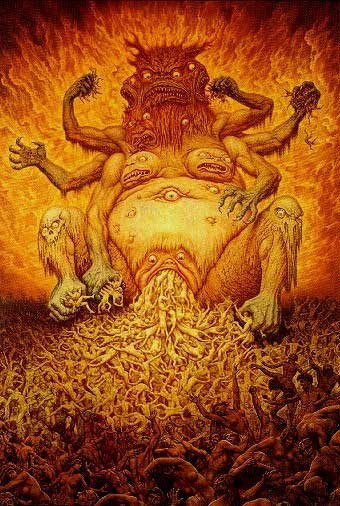
As mentioned, very often the reason a person is drawn to the Way of Magic is fear.
This can be either a conscious fear or a more subtle one — fear of death, fear of a gloomy afterlife, fear of society and its open conflicts — or more veiled forms of fear: fear of being “like everyone else,” fear of not being great enough or not powerful enough, and so on.
In fact, the majority of destructors that undermine a person’s mind include an element of fear one way or another. Delusions of grandeur and various forms of possession or obsession arise when fear deprives the mind of its freedom to discern.
Of course, fear as a natural and normal reaction to the unknown is not inherently bad or wrong; it is dangerous only when it dominates the mind, in its capacity to engulf the whole mind and paralyze its ability to act.
Therefore, setting out on the Way under the influence of fear, a person, on the one hand, gains an opportunity for development, but on the other hand often lacks sufficient motivation to overcome the obstacles encountered on the Way. And Magic as Play turns into a toy, valuable only so long as it satisfies this or that whim of the person; the traveler at best remains a philosopher-theorist, and more often becomes an aggressive desecrator, bent on proving his greatness at all costs, asserting himself by denying the diversity of Ways.
And in this respect it is obvious that as long as fear is the sole or primary motivator in movement along the Way, movement itself has little chance of success.
Regardless of what the initial impulse was to take the Way, effective progress along it is possible only if 1) that Way corresponds to the inner nature of the traveler and 2) the true motive for moving becomes an inner fire, a genuine desire to be a Magus, to go forward regardless of obstacles and defeats.
It is impossible to attain enlightenment by following prescriptions or reading books. Moreover, it is impossible to attain enlightenment simply by following the Way. Great achievements appear only when the traveler becomes one with their Way. Of course, discipline is important. Of course, Tradition is necessary. But above all it is the unquenchable striving for development, for self-identity, pure at its core and not rooted in fear or insecurity, that matters.
Strict adherence to rules and following prescriptions are important only as the foundation on which this striving can arise; they have no independent value and by themselves lead nowhere.
That is to say, if magical (and likewise any other practices leading to the expansion of awareness) practices are performed out of fear, a sense of duty, they have little value; actions that truly foster the development of the mind are only those carried out from inner desire, in clear accord with the voice of the practitioner’s heart.
Until a person feels an inextinguishable yearning within themselves for the Way as such, they need assistance, since they are at a preparatory stage of the Way (in the Western Tradition this is described as the Degrees of Seeker, Devotee, Philosopher and Practitioner) and do not have an inner driving force for development. Moreover, the Way will bring little benefit to someone who does not feel an inextinguishable yearning to follow the Way. And the true Way begins only when the Magus becomes “self-motivated,” having no other motives than development itself.
Only someone who has gone through the path of self-affirmation can become a mage. The Toltec motto: ‘Truth is more important than social beliefs, and anyone feeling the need to align their knowledge with social approval is a person unworthy of the truth.’
A very strong motivation can be the search for truth, or the desire for knowledge. This is an irresistible desire to understand what is happening in the true light. The perception of Runes as a primary source of energies leads to standing on the Path. If I understand incorrectly, please advise.
wave: You are not alone in that understanding. Runes as a primary source of energies are closer, clearer, and most importantly more pleasant to me than any other symbolic system describing oneself and the surrounding world.
For one who has embarked on the path, it is necessary to have a symbolic system for describing oneself.
And the motivation is the following:
If one who has embarked on the path does not describe himself with a symbolic system that is close to him as a primary source of energies, then someone else will describe him with their symbolic system.
And if I reject any description, then what?
Any description is a template. If someone describes me in their system, then it will only mean that the described has been defined by them in their framework, their coordinate matrix, no more.
If you have noticed, that is what most people usually do.
Go beyond the border and you will feel the depth of this World.
A person is attached to the Earth. The description of the Earth can be rejected by losing the Body :).
Describe the Earth and feel life in the depth of this World.
Going beyond the border of this World means going out of the giligul.
The ‘discord’ in the usage of terms is very noticeable: as they say, let’s agree on the definitions. I am a recent reader of this blog and feel the necessity for unity in terminology for all participants. The author, of course, does not count. Perhaps a glossary section is needed, as links in the text lead to new texts, etc. Essentially, it comes down to honesty with oneself: if it’s beyond your grasp or you don’t understand—then be quiet. Otherwise, it’s definitely a profanation. Magicians, sages are unique by their nature, but every path exists for each individual. I think that is why we come to Existence. For the sake of Right.