Magi: Theorists and Practitioners
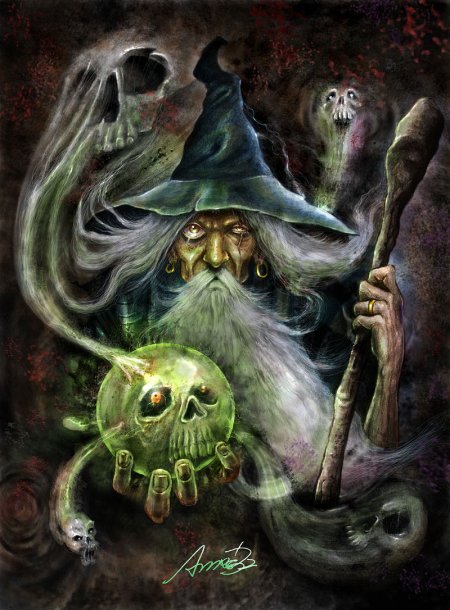
People involved with the hidden reality of the cosmos are traditionally divided into three groups.
As is often the case, one group represents the thesis, the second the antithesis, and the third the synthesis. Also, as usual, members of the opposing poles are convinced they are entirely right, while the middle and neutral groups, in their view, are fools and weaklings.
The first group comprises the so-called Magi-practitioners. They readily use terms such as “astral”, “elemental”, “demon” and so on, often adding, “I have worked with them”, while possessing only a very rough idea of what those terms mean. All their activity is aimed at achieving a practical result, which they regard as the sole criterion of Power.
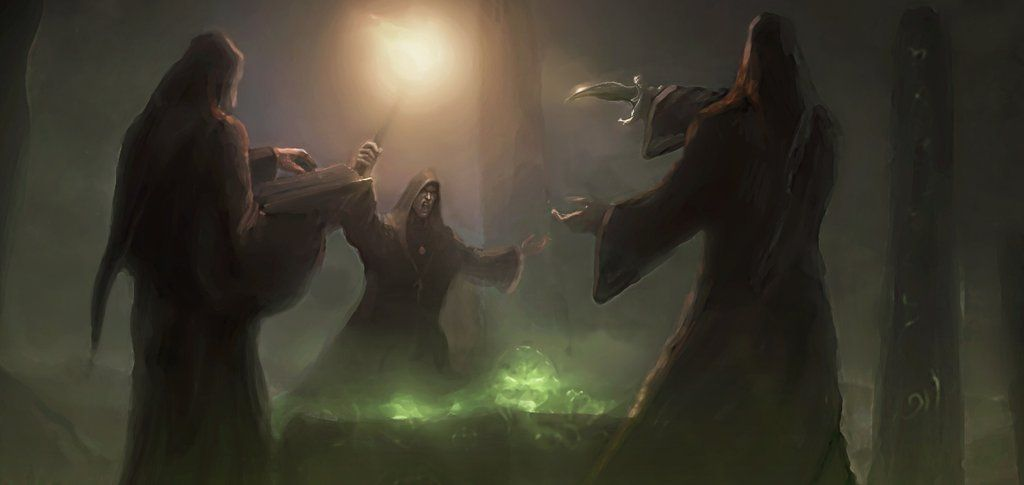
Two kinds of wayfarers fall into this group. One consists of those of limited intellectual ability who cannot make sense of the concepts and categories, and therefore dismiss them as “nonsense”, “crap” and “pseudo-esotericism”. It is only natural for a person to label what they cannot understand as rubbish.
The second category of Magi in this group are people who are born with great Power that sweeps aside obstacles in their path and guarantees success even without understanding the mechanisms at work. In fact, these Magi are like people driving nails with a bulldozer. Their enormous Power makes them as successful as they are vulnerable — vulnerable like the cumbersome World War I tank.
In their youth people of the first group often achieve considerable success, yet their use of Power is inefficient, so in maturity or old age they face a decline of Power and two possible outcomes: they either become stupid, aggressive braggarts — increasingly powerless and aggressive, often take to drink or commit suicide — or they come to their senses and learn to use effectively their remaining Power.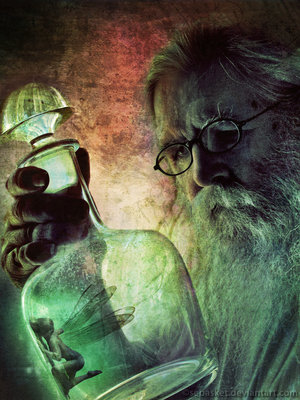
The second large group, opposed to the first, consists of the so-called “occultists“, “theosophists” and “esoterics“. Most have an extensive repertoire of theories explaining what occurs both in the overt and the hidden reality, yet it never occurs to them to test those hypotheses. It is well known that until the 17th century science accepted that spiders had six legs simply because Aristotle wrote it. For almost two thousand years no one thought to count the legs — after all, it had already been written and accepted by authority. Many ‘esotericists’ behave the same way — they accept theories on faith, at best using only far-fetched proofs and explanations. In effect, for such people Magic is a religion, an object of faith rather than a way of life. By old age they usually attain considerable wisdom, often a clear understanding of the actual state of things, but they typically do not dare to cross the Threshold they can clearly see and understand but have never experienced.

Broadly speaking, neither of these can truly be called Magi. The former are better described as “sorcerers”, the latter as “philosophers”.
Traditional training in Magic has always given equal weight to theoretical and practical combat skills. A Magus must, on the one hand, clearly understand what he is doing and what happens in response to that action, and on the other hand must possess practical, embodied knowledge of how to act most effectively. Only in that case will his actions be powerful and effective. Only in that case will his battles, whether won or lost, spur the acquisition of Power, Wisdom and Authority.

On my Way I met many sorcerers and philosophers. I also encountered Magi. What is remarkable is that among the Magi I never heard the aggressive attitude toward dissent common among sorcerers, nor the haughty contempt typical of philosophers. My Master often said, “Do not do what you do not understand,” and, “Test in practice everything you have understood.” These two principles became a reliable support in my life, preventing me from sliding into either fruitless theorizing or mindless practice. To me the notions “practice” and “technique”, so popular in quasi-magical circles, are as alien as empty assertions.
I firmly believe that it is comprehensive training that can turn a person into a Magus, and moreover I stand behind every word I have written, because each of them has been tested by my experience.
Imho, your blog consists 100% of theory. It’s all very interesting and informative, but I would still like to practice 🙂 For example, there is only a little time left until Samhain – and this is a good day to try your strength. What do you advise?
Absolutely correct – the blog consists only of theory, and otherwise, in my opinion, it cannot be – I do not believe in Magic over the internet, and I do not believe in distance learning of Magic, which is why the blog is not intended for these purposes. It serves only as a reason for reflection. Regarding Samhain – try traditional rituals – threshold fire, any kind of Hunt for power 🙂
“Regarding Samhain – try traditional rituals – threshold fire, any kind of Power Hunting”
Could you advise where to find detailed practical instructions for such rituals?
Oh! There is no doubt about the truth of what is written! Without a doubt, it’s impossible to share knowledge with magicians, just as it is to make a philosopher act. But from my own experience, I know that friendship between a philosopher and a magician is possible, but on mutually beneficial terms. Friendship, in general, is a very important thing!
If all magicians understood how truly important friendship is, there would be much more power in the world…
Thank you, a wonderful article, although I am more accustomed to calling the ‘Golden Mean’ exactly ‘Practices,’ but the main thing here is not the ‘names’ but the content. Thank you once again.
You are terribly twisting the soul when you say that there is no practice in your blog. It would be more accurate to say that there are no “Practices” and “Techniques”. But there is more than enough practice as such.
And for everything else, the same Grimoires are quite enough. 🙂
Yes, it is indeed a great thing to combine practice and theory.
I agree with Dmitry. Those who are attentive saw and understood what to focus on and what to do. And the concept of “practice”, it seems to me, does not mean in the direct sense: Do this and this, and you will get this, no. I take something on faith, applying it to myself (through experience), and if I feel that I am changing for the better, starting to perceive or feel something differently, then it suits me and it works. This is the essence of practice.:)
One of the foundational elements of G.I. Gurdjieff’s system is the concept of the ‘three brains’ – the volitional, emotional, and intellectual. These ‘three brains’ correlate with the Three Primary Elements Intellectual = Aleph (Air), Emotional = Mem (Water), and Volitional = Shin (Fire). Likely, those who become theoretical occultists, philosophical occultists, quite often simply have an overdeveloped intellectual brain to the detriment of the others. In fact – this is a version of ‘Weak Yoga’ according to Gurdjieff. The armchair occultist knows a lot, but can realistically accomplish nothing. If Power = Knowledge, multiplied by Experience, then with experience equal to zero, Power is also zero. Indeed, such people cannot cross that boundary they are so aware of, but they often cannot cross it precisely because they lack either the Will Power (i.e. the ability to overcome obstacles in the way of desire, the ability to oppose a single ‘I WANT!’ against numerous ‘I would like to’) or emotional fervor. Of course, maybe this chair-bound occultist digs in books, writes philosophical treatises – and he is fine with that. And in that case, it is certainly his right to live like that. But often, this approach also damages the person himself, as well as their environment. For they find themselves unable to effect certain changes in their lives towards harmonization. And among their close ones, they create the impression of a detached weirdo. They create problems for everyone around – for parents, for their wife (if there is one), for friends. In fact, they do not bring them Light. In truth, they push them away from the Light, discrediting the Teachings they profess. At best, they eventually come to an understanding that something needs to change. However, they do not know how to do that, and, most importantly, where to do it. And, trying to solve this problem, they once again fall into intellectual reflections, rationalizations, and speculations. And in the end, they do not reach anything specific. Because, due to their intellect blocking any possible other ways of interacting with the Universe (even while engaging in sex and experiencing orgasm, they think about how they experience orgasm), they do not interact with the Universe but with their judgments about it.
I will speak from the position of a ‘theorist’ and ‘philosopher’, since that is how I feel in the world of magic. I’m not sure that philosophers don’t want to cross the line outright. It seems to resemble: ‘I cannot’, rather than ‘I don’t want’, a kind of feeling of powerlessness, blindness, given that one has a head on their shoulders, understanding, and in everyday life, much is given… Furthermore, this is accompanied by a terrible envy towards intuitive practitioners, witches, and wizards who ‘do that thing’, but because they do not have to search for keys to the world of magic for a long time and painfully, as I have to. It seems easier for them – they just need to turn on their head and explore that world they are already in. And this ‘search for keys’ sometimes leads to despair, especially when for you, magic is truly a religion, but suddenly one day you realize that in fact, you do not believe. And then sometimes arises the desire simply to call upon a hellish demon, getting a beating from him for a lifetime if not worse, but certainly understand how business is done) So it seems to me, from the position of a ‘theorist’, that wizards definitely have certain advantages.
“Do not do what you do not understand,” and “Test in practice all that you have understood.” – until you do, you won’t understand, and even then you will understand only what you want to understand – isn’t that so?
As always!!! Clearly! Cool!! Thank you.